Journaling Frost and Weather in the Garden
Some of the links on this website are affiliate links, which means that if you make a purchase through these links, I may earn a small commission at no additional cost to you. As an Amazon Associate, I earn from qualifying purchases. I only recommend products I genuinely trust and believe will bring value to my readers. Also, some of the content was created with strategic use of AI tools. For more information, please visit the Privacy Policy page. Thank you for supporting my blog and helping me continue to provide valuable content. Gardening is more than growing food—it's where God grows us. If you're hungry for a faith that feels grounded again, I wrote a book for you. Download my free eBook: Rooted in Grace: A Christian Guide to Intuitive Gardening
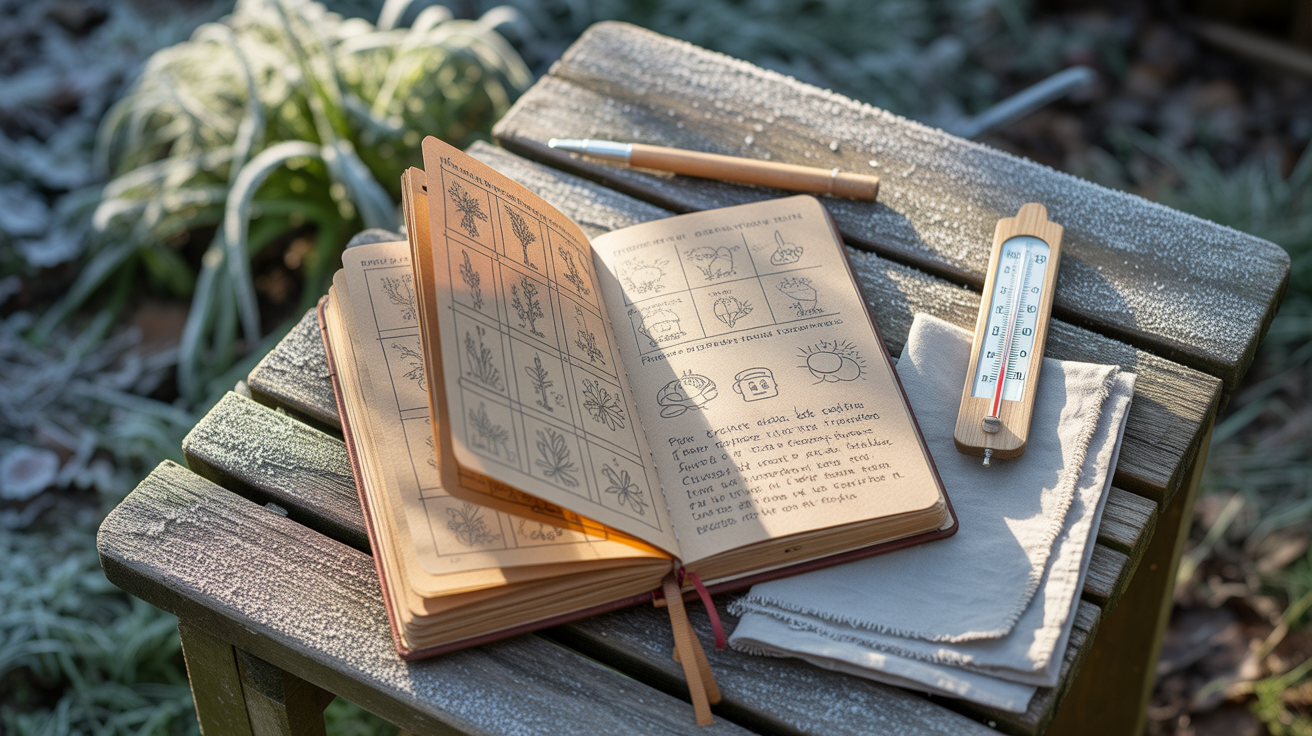
📓One of my most valuable gardening tools doesn’t live in the shed—it lives on my desk. A journal.
I started writing down weather notes almost by accident. One year, I scribbled “frost came early—lost basil overnight” in the margin of a notebook. The next spring, I noted “late cold snap—covered tomatoes just in time.” Over time, those notes became a map of my garden’s rhythms—when the frost usually comes, how long it lasts, and what survived.
In Zone 9, our winters are mild but unpredictable. A single frosty night can wipe out months of work. Keeping a frost and weather journal is one of the best ways to notice patterns, prepare ahead, and grow more resilient each year.
And beyond the soil, weather journaling reminds me of life itself. We walk through seasons of warmth and sudden chill, of abundance and of pause. Recording those rhythms helps me see God’s faithfulness across the years, even in the cold nights.
🌱 1. Why Journal Weather in the Garden?
- Pattern recognition: Helps you anticipate frosts and seasonal changes.
- Better planning: Guides when to sow, cover, or harvest.
- Microclimate awareness: Your garden’s frost dates may differ from the official charts.
- Resilience: Reflecting on past challenges prepares you for future ones.
👉 Journaling isn’t about perfection—it’s about paying attention.
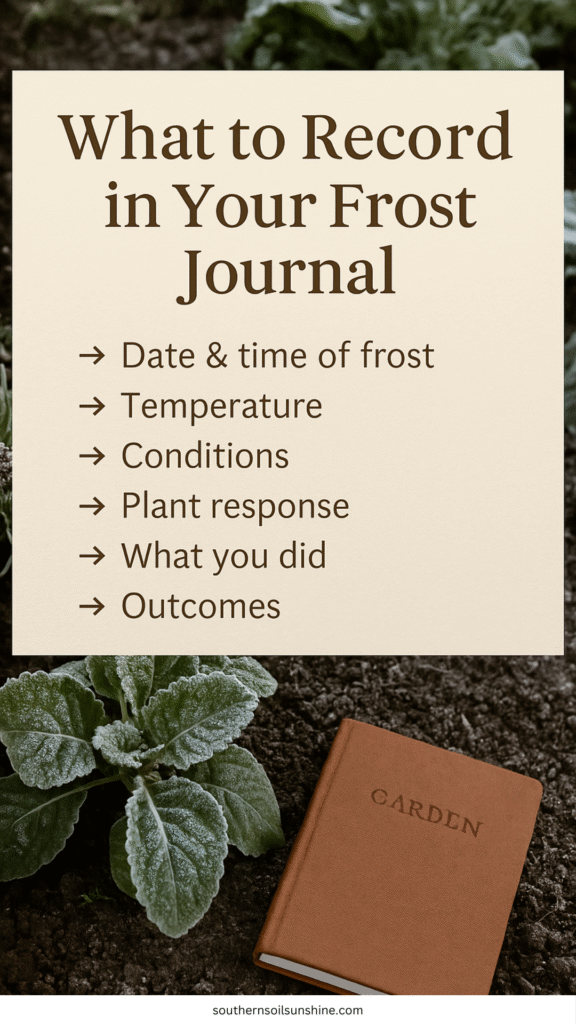
🌿 2. What to Record in Your Frost & Weather Journal
- Date & time of frost or weather event.
- Temperature: Both air and soil if possible.
- Conditions: Clear, cloudy, windy, or still.
- Plant response: Which crops survived or failed.
- What you did: Covered plants, watered, harvested early.
- Outcomes: Lessons for next time.
👉 Even quick notes like “light frost, basil gone, kale fine” build a library of wisdom over the years.
🪴 3. Tools for Journaling Weather
- Soil thermometer: Confirms planting readiness.
- Frost cloth or covers: Observing their effectiveness is worth recording.
- Garden journal: Any notebook, digital app, or printable tracker.
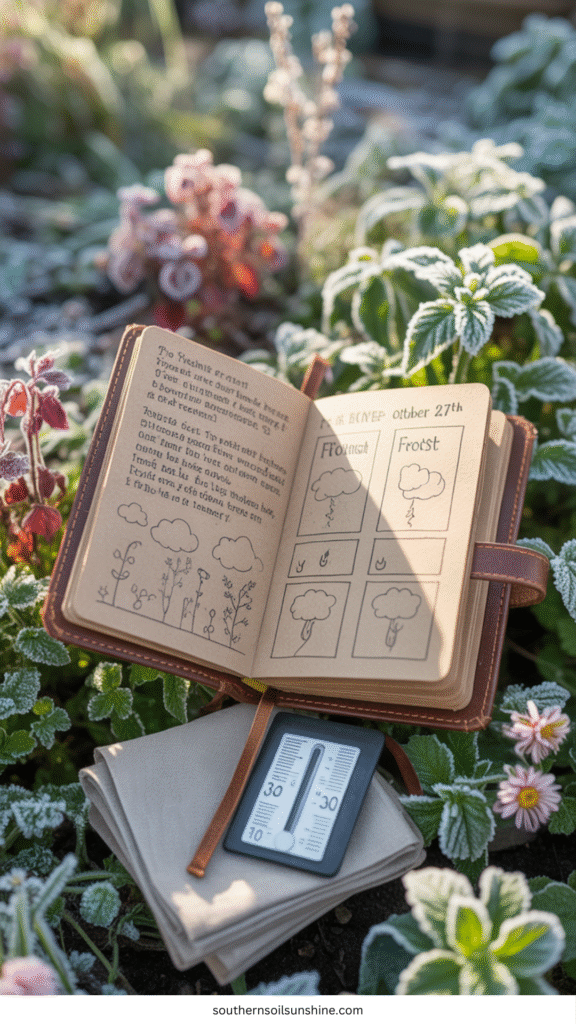
- Photos: Before and after shots help you see patterns visually.
Zone 9 tip: Because frosts are infrequent here, it’s easy to forget them. Journaling helps you remember the rare events that matter most.
🌼 4. How to Develop a Weather Journaling Habit
- Keep your journal handy. Store it near the back door or in your garden bag.
- Write short notes. Don’t aim for essays—one or two sentences is plenty.
- Record regularly. Even weekly observations build patterns.
- Include emotions. “Sad to lose basil, but kale is thriving” matters—it shapes memory.
- Review seasonally. Look back at the end of winter to notice patterns.
👉 Journaling is less about length, more about consistency.
🌞 5. Patterns to Watch in Zone 9
- First frost: Usually late November–mid December, but varies.
- Last frost: Often mid-February–early March.
- Unusual swings: Warm spells followed by sudden chills.
- Wind + frost combo: Causes more damage than frost alone.
- Cloud cover: Cloudy nights are warmer; clear nights frost faster.
Over time, these notes will help you predict and protect with greater accuracy.
🍂 6. Using Journals for Garden Planning
Your weather notes become tools for the next year:
- When to plant: Don’t sow beans until soil temps are above 60°F.
- When to cover: If frost came Nov. 28 last year, be ready by mid-November.
- What survives: Kale thrives through frost; basil doesn’t.
- Where to plant: Certain beds may frost earlier than others.
Your garden journal becomes a personalized almanac.
🙏 7. Faith Reflection: Remembering God’s Faithfulness
The Bible often calls us to remember. Journaling weather is another form of remembering—seeing how God carried us through sudden frosts and surprising seasons. When I flip back through old notes, I’m reminded not only of plants lost or saved, but of prayers answered, lessons learned, and grace that covered me.
📝 Journal Prompt ✍️
Think back to a “frost” season in your life—sudden cold or unexpected loss. What did you learn in that season that you might not have seen otherwise?
🌿 Grace Note
Friend, frost will come. Weather shifts suddenly. But your journal—your record of resilience—reminds you that both gardens and souls recover. May each note you write be a testimony of grace, a breadcrumb trail of God’s faithfulness in every season.
✨ Free Printable
👉 Download your Frost & Weather Journaling Tracker, including:
- Frost and weather observation log
- Space for plant responses and actions taken
- Seasonal reflection questions
- Reflection prompt + grace note
🌻 Related Garden Wisdom
- Related: Frost Protection Basics for Beginners
- Related: How to Use a Soil Thermometer
- Related: Creating a Summer Garden Observation Habit
- Related: Midseason Garden Journaling Ideas
🎧 Podcast & 📖 eBook Mentions
For more encouragement, listen to The Rooted in Grace Podcast, where I share rhythms of soil and soul. And if you’d like to root your life in intuitive, grace-filled gardening, explore my eBook Rooted in Grace: Intuitive Gardening for the Soul.
🍁 Final Thoughts
Weather journaling doesn’t prevent frost, but it helps you face it with wisdom and peace. Each note builds a record of resilience and a reminder of faithfulness.
So grab a pen, step outside on those frosty mornings, and write. Your garden will thank you—and so will your future self.


3 Comments