Journaling Frost and Weather in the Garden
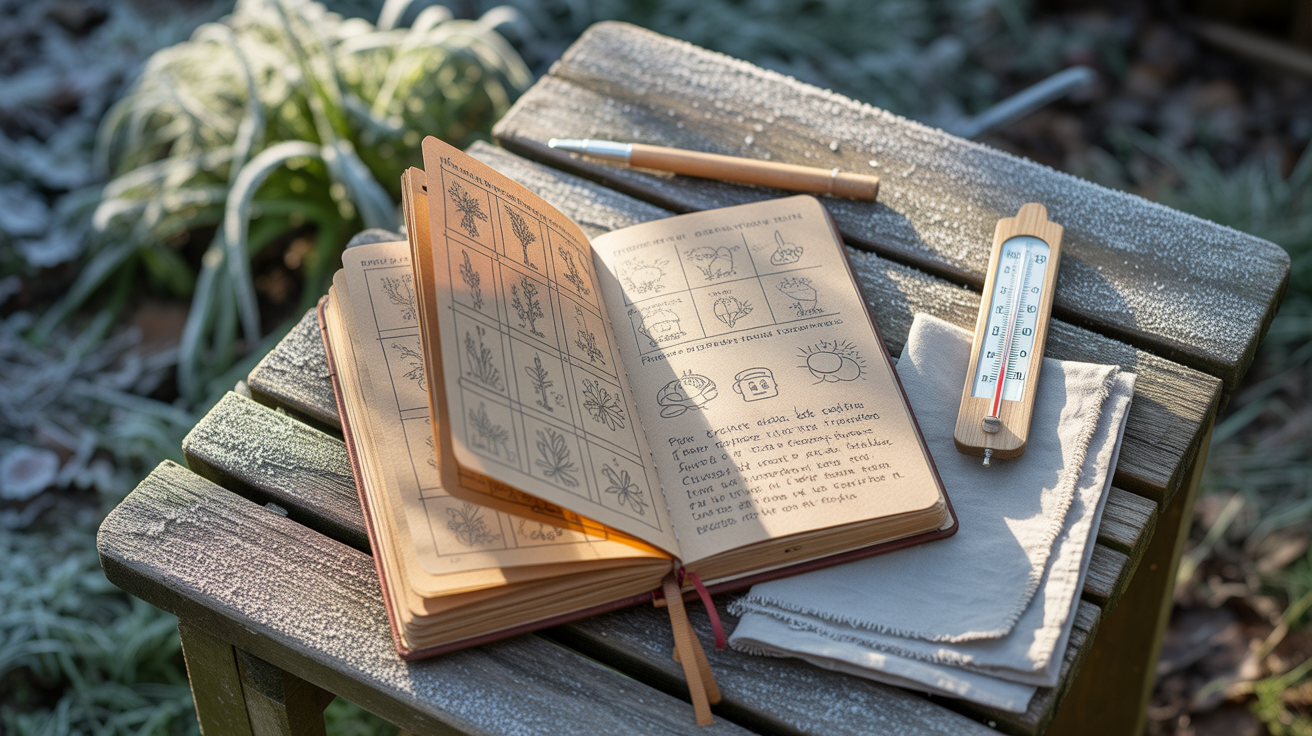
Journaling Frost and Weather in the Garden: Your Personal Climate Map 📓
One of my most valuable gardening tools doesn’t live in the shed—it lives on my desk. A journal.
I started writing down weather notes almost by accident. One year, I scribbled “frost came early—lost basil overnight” in the margin of a notebook. The next spring, I noted “late cold snap—covered tomatoes just in time.” Over time, those notes became a map of my garden’s rhythms—when the frost usually comes, how long it lasts, and what survived. They became something more, too: a record of patience, timing, and trust.
In Zone 9 Houston suburbs, our winters are mild but unpredictable. A single frosty night in December can wipe out months of work. A warm spell in January can fool us into planting too early. Keeping a frost and weather journal is one of the best ways to observe the patterns that shape our gardens, to reflect on what we’ve learned, and to respond faithfully when the cold comes again.
And beyond the soil, weather journaling reminds me of life itself. We walk through seasons of warmth and sudden chill, of abundance and of pause. Recording those rhythms helps me see God’s faithfulness across the years, even in the frost-touched mornings. 🌱
Free eBook
Rooted in Grace
A Christian guide to intuitive gardening — the whole book, free. Tell me where to send it and it’s yours in a minute.
Why Journal Weather in Your Garden?
When I first started gardening in Zone 9, I relied on the official frost date charts. October 15 as the average first frost date. April 15 as the average last frost date. But my garden didn’t always follow the averages. I learned that some years, frost arrived in late November. Other years, it held off until after Christmas. One memorable year, we had a hard freeze in mid-February that caught everyone by surprise.
That’s when journaling shifted from nice-to-have to essential. Here’s what a simple frost and weather journal gives you:
Pattern recognition: Over three, five, or ten years of notes, you see your garden’s true climate rhythm, not the textbook version. You notice that frost often comes on clear, still nights. You observe that cloudy nights stay warmer. You begin to predict.
Better planning: When you know your actual frost dates, you can decide with confidence: Is it safe to plant tender tomatoes yet? Should I sow cool-season crops now? When do I need to have frost cloth ready? These decisions become less guesswork and more intentional.
Microclimate awareness: Your garden’s frost zones may differ from your neighbor’s, even a few blocks away. My low-lying garden bed stays colder longer than the raised beds closer to the house. Recording this helps you protect what matters most.
Resilience through reflection: When you’ve recorded what happened last winter, you’re not starting from scratch. You’re building on experience. And there’s something deeply grounding about realizing: We survived this before. We can handle it again.
Sanda’s Tip: Keep your journal handy—near the back door, in your garden bag, or on your phone. Journaling isn’t about perfection. It’s about paying attention in the moment, when the frost is real and the stakes feel high.
What to Record in Your Frost & Weather Journal 🌿
You don’t need a fancy system. The best journal is the one you’ll actually use. Here’s what I recommend tracking:
Date and time of frost or weather event: Write down exactly when something happened. “Hard freeze, 6 AM, January 18” is more useful than “it frosted.” This builds a timeline you can reference each season.
Temperature: Both air temperature and soil temperature, if you have a soil thermometer. Air temp tells you what happened. Soil temp tells you what comes next. If soil is 55°F, beans aren’t ready. If it’s 65°F, they might be.
Conditions: Was it clear or cloudy? Windy or still? Humidity high or low? These details matter. A clear, still night frosts faster than a cloudy one. Wind with frost means more damage.
Plant response: Which crops survived? Which didn’t? “Light frost—basil killed, kale fine, collards fine, spinach fine. Tender pepper plants showed leaf damage but recovered.” That’s gold. That’s knowledge you can act on next year.
What you did: Did you cover plants? Water before frost? Harvest early? Record your actions so you can evaluate whether they worked.
Outcomes and lessons: “Covered tomatoes with frost cloth—saved them. Note: need more cloth for next year.” Or “Didn’t harvest basil early enough—lost it all overnight. Start harvest protocol in November from now on.”
Sanda’s Zone 9 Note: Because hard frosts are infrequent here, it’s dangerously easy to forget them between seasons. You might go three years without a significant freeze, then one December night wipes out your whole herb garden. Journaling forces you to remember. Keep notes visible—not buried in a drawer.
Tools That Support Weather Journaling 🪴
You need very little to start, but a few tools make it easier:
| Tool | Why It Helps | Zone 9 Note |
| Soil thermometer | Confirms when soil is actually warm enough for planting. Takes guesswork out of timing. | Essential for seed starting. Soil needs 60°F for beans, 65°F+ for tomatoes. |
| Frost cloth or row covers | Observing their real effectiveness—what stayed covered, what didn’t, how much protection they gave. | Different weights for different protection levels. Record which weight you used and results. |
| Any notebook or journal | Paper, digital, app, printable tracker—whatever format you’ll actually use consistently. | Some prefer photos + timestamps. Others use a simple spiral notebook. Use what feels natural. |
| Camera or phone for photos | Before and after pictures show damage patterns and recovery visually. Over years, they reveal what thrives. | Photo of frost-damaged basil next to unharmed kale teaches more than any description. |
That’s it. You don’t need fancy tools. You need consistency.
Building a Weather Journaling Habit 🌞
Journaling only works if you actually do it. Here’s how I’ve made it stick:
Keep your journal handy: Store it near the back door, in your garden bag, or in your phone’s notes app. When you notice something—frost on the leaves, a sudden warm spell, plants looking stressed—write it down right then. Don’t wait until you forget the details.
Write short notes: This isn’t creative writing. One or two sentences is plenty. “Hard freeze 6 AM—killed tender herbs, kale fine. Covered nothing because we were asleep.” Done. That’s useful data.
Record regularly, even in mild weeks: Weekly observations—”70s all week, plants thriving, no rain”—build patterns. By spring, you’ll see: Last February was unusually warm. This year it’s right on schedule.
Include emotions and observations: “Sad to lose the basil after months of care, but it was worth trying. The kale and collards made it through fine—they’re the reliable ones.” These reflections matter. They shape how you garden going forward, what you’re willing to risk, what you protect.
Review seasonally: At the end of winter—mid-March or early April—sit down and look back. Read your January notes. Your February notes. Notice: When did frost really come? How long did it last? What worked? What would you do differently?
Sanda’s Garden Wisdom: Journaling is less about length, more about consistency. A five-word note you write is worth more than an essay you meant to write but didn’t. Start small. Build the habit first. Let the depth come naturally.
Zone 9 Houston Frost Patterns to Watch 🍂
Our Houston Zone 9 winters have their own personality. These are the patterns I’ve tracked over years:
| Pattern | Typical Timing | What to Watch |
| First frost | Late November–mid December | Usually comes later here than charts predict. Some years not until mid-December. |
| Last frost | Mid-February–early March | Can be as late as mid-March. One surprising freeze in April changed my spring planting forever. |
| Warm spells + cold snaps | January–February pattern | We warm up to 70s, lull you into spring, then frost returns. This kills early-planted tomatoes regularly. |
| Wind + frost combo | Most damaging frosts | A 35°F night with wind damages more than 28°F on a still night. Wind strips plant protection. |
| Cloud cover effect |
When Your Journal Becomes a Garden Archive 📚
After a few years of consistent notes, something shifts. Your journal stops being just a practical tool and becomes something deeper—a living archive of your garden’s story. I have entries from 2018 where I wrote “unexpected hard freeze, January 17, killed everything tender.” Flipping to 2021: “January 17 this year—stayed mild. Did frost cloth anyway, just to be safe.” The journal lets me hold both years in my hands at once.
In Zone 9, this matters because our winters vary so wildly. One year might be brutally cold by our standards; the next year, we barely see frost. A gardener without a journal might think, Last winter wasn’t so bad, so I’ll plant early this year—and get caught off guard. But a gardener with three or five years of notes reads the patterns honestly. You see that while mild winters happen, cold ones are inevitable. You prepare accordingly.
Your journal also becomes a record of what thrived in your specific microclimate. My notes show that ‘Winterbor’ kale has survived every single frost I’ve recorded—even the brutal February 2021 freeze. But my basil? Tender annual basil fails predictably around 40°F. That’s not general gardening knowledge; that’s *your* knowledge, earned through observation and recorded in these pages. When you’re deciding what to plant next fall, that archive speaks louder than any seed catalog promise.
Beyond the practical, there’s something quietly sacred about opening an old journal entry. You read: November 2019: “Lost the rosemary to an early frost. Sad—it was thriving just two days ago. But the thyme and sage made it. These quiet plants are the reliable ones.” And you realize you’re not just reading about plants. You’re reading about yourself—your hopes, your losses, your growing wisdom. Gardens teach us in seasons, and journals hold those lessons.
The Microclimate Advantage: Why Your Neighbor’s Frost Date Isn’t Yours 🏘️
Here’s something many gardeners miss: the official Zone 9 frost dates for our area are broad guides, but they don’t account for the dozen microclimates within a single suburban neighborhood. My garden is in a slight low-lying area near a tree line. My friend three streets over has a garden on a slight rise, fully open. Our frost dates aren’t the same—and journaling is how I discovered this.
After tracking frost events for three years, I noticed something: in years when frost comes, my lower garden gets hit harder and later than her open-air garden. A frost event that damages her tender plants on December 10 might linger in my beds until December 15. The cold air settles in my low area like water in a basin. But—and this is the gift of that discovery—I also noted that my beds stay warmer in light frosts because the trees and nearby structures hold warmth. It’s a tradeoff.
Microclimate journaling helps you map these subtle advantages and vulnerabilities. Do you have a south-facing bed that warms faster in spring? Write it down. Does your garden near the house stay warmer because of radiant heat from the walls? Record it. Is there a spot that’s always wetter and slower to drain? Note which plants struggled there. A nursery employee in Houston can tell you general Zone 9 facts, but only your journal tells you the specific truth of your land.
This is especially valuable when you’re deciding where to plant something tender. If you have three years of notes showing “the northeast corner frost hits first and hardest,” then you know not to place your only citrus tree there. You protect it in the warmer south-facing spot instead. That’s not luck; that’s observation with purpose.
From Weather Data to Faithful Tending: What Journaling Teaches Us About Care 🌱
I’ve come to believe that frost journaling is actually a spiritual practice, though not in a dramatic way. It’s subtle. Gentle. It’s the practice of paying attention to what is, rather than what you hoped would be. It’s the discipline of writing down hard truths—”this plant died despite my care”—without blame or false optimism. And it’s the gift of returning to those notes the next year with the quiet confidence that comes from experience.
When January frost is coming and you pull out your journal to review what happened last winter, you’re doing more than planning. You’re tending to memory. You’re honoring what you learned through loss. You’re preparing with neither despair nor naive hope, but with something steadier: informed faithfulness. You cover the tender plants not because you’re certain they’ll survive, but because you’ve learned what care looks like in this climate. You prepare. You act. You trust what comes after.
That rhythm mirrors something deeper about how we move through seasons—not just in gardens, but in life. We don’t control the frost. We can’t command spring to come. But we can pay attention. We can learn from what happened before. We can show up with what we’ve learned and tend what matters most. And in the waiting, in the watching, in the simple act of writing it down so we remember, we’re building something like faith—not faith that bad things won’t happen, but faith that we can face them, learn from them, and grow.
Ready to Go Deeper in the Garden?
If this article resonated with you, you might be ready for something more than tips.
- Download the FREE Rooted in Grace eBook
- Get the Rooted in Grace Print Book on Amazon
- Join Rooted Reset
- Follow on Instagram – @southernsoils
- Save on Pinterest – @southernsoilsunshine
- Join on Facebook – Southern Soil Sunshine
“The garden is not just a place to grow plants – it is a place to grow yourself.”
Free eBook
Before you go — the book is yours
Rooted in Grace: A Christian Guide to Intuitive Gardening. No cost, no catch. Read it on any device, at whatever pace the season allows.




3 Comments