
Reflecting on Garden Successes
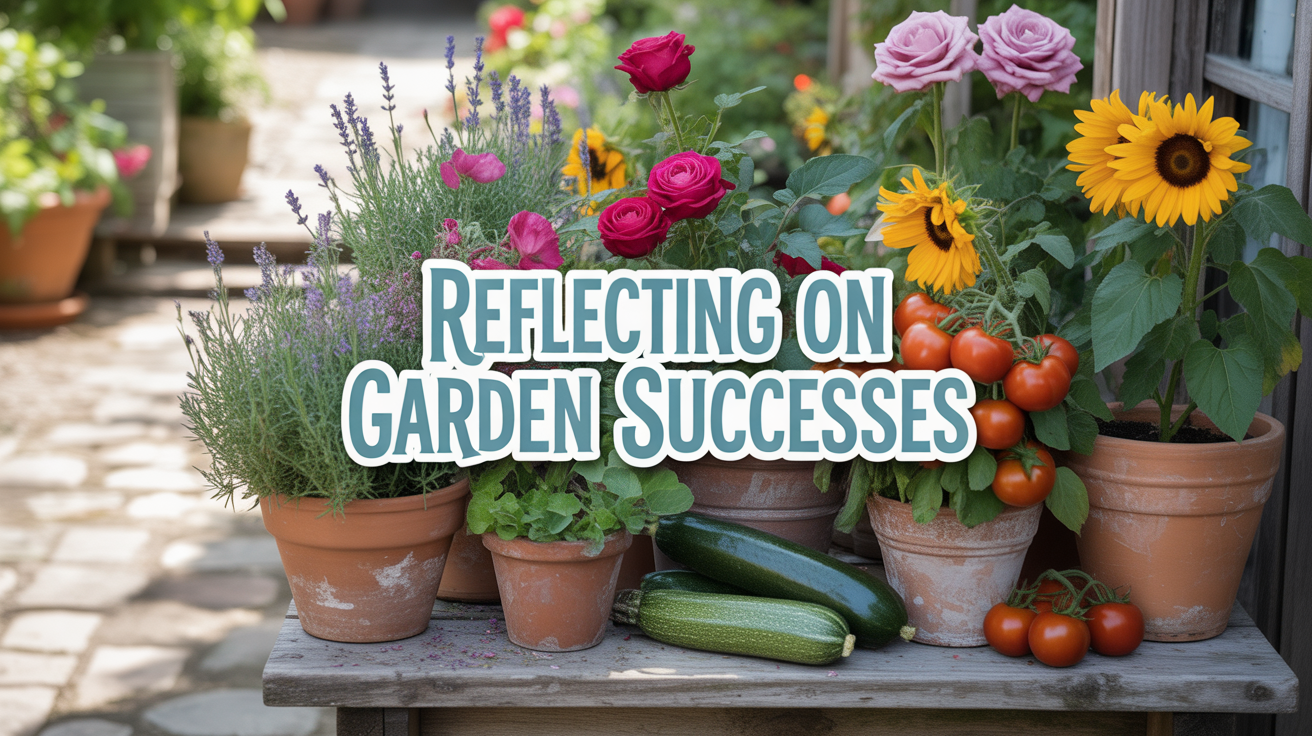
Reflecting on Garden Successes: Pausing to See What Bloomed 🌱
At the end of every gardening season, it’s so easy to spiral into what didn’t work. The squash bugs that decimated the plants. The tomatoes that never quite ripened before that brutal August heat. The weeds that seemed to multiply overnight. But here’s what I’ve learned, friend: if we slow down and truly observe what did flourish, we miss out on one of gardening’s most sacred rhythms—gratitude.
I remember one season when squash bugs nearly stole my joy. I was discouraged, frustrated, ready to give up. But then I sat with my garden journal, flipping through photos and notes, and something shifted. There were armloads of basil drying on my kitchen counter. Bouquets of zinnias that had bloomed all the way into November. Jars of tomatoes lined up like little victories. I had been so focused on what failed that I had almost missed the quiet, steady successes happening all around me.
That’s when I realized: reflecting on garden successes isn’t just about celebration. It’s about stewardship. It’s about seeing clearly what worked, what to repeat, and how to carry lessons faithfully into the next season. And spiritually? It’s a rhythm of gratitude—pausing to acknowledge God’s generosity in every harvest, every bloom, every moment we get to work alongside His creation.
Free eBook
Rooted in Grace
A Christian guide to intuitive gardening — the whole book, free. Tell me where to send it and it’s yours in a minute.
Why Reflection Matters More Than You Think
You know that feeling when you rush headlong into November planning before you’ve even cleaned up the summer beds? That’s when we lose the gift of reflection. Slowing down to honor what has already grown serves us in ways that go beyond the practical:
Sanda’s Tip: Set aside one quiet afternoon before you start planning next season. Grab your favorite beverage, find a comfortable spot (maybe on your porch overlooking the garden), and simply reflect. This pause is where wisdom lives.
Encouragement: Reflection reminds you that progress is absolutely happening, even on seasons when everything felt hard. In Zone 9, where we garden nearly year-round, this is crucial—we need to see the victories in order to stay energized.
Clarity: When you identify which crops thrived with minimal fuss, which varieties tasted the best, or which garden rhythms actually sustained you, you’re building a personal gardening knowledge base. This is more valuable than any generic guide because it’s yours.
Planning: Reflection directly guides next season’s choices. It answers the question: what do I actually want to grow again? This transforms planning from obligation into joy.
Gratitude: Perhaps most importantly, reflection trains our hearts to see gifts rather than just losses. It’s a spiritual discipline, really—noticing that we’re not the ones making things grow. We’re stewards, observers, faithful participants in something far larger than ourselves.
Redefining Success for Your Zone 9 Garden
Here’s a truth I wish someone had told me earlier: success in the garden doesn’t always look like overflowing bushels or Instagram-worthy harvests. Success is deeply personal, and it shifts with the seasons and the seasons of our lives.
Maybe success is the first ripe tomato you pluck in July after weeks of watching and waiting. Maybe it’s a single zinnia that bloomed exactly when you needed beauty most—when you were grieving, or overwhelmed, or just needed to see something radiant. Maybe it’s trying a vegetable for the very first time and tasting it, even if you only got three or four of them. Maybe it’s sharing a handful of fresh basil with a neighbor and watching their face light up. Maybe success is simply keeping a garden alive through a difficult season—and that, friend, is no small thing.
Sanda’s Zone 9 Note: In our Houston heat, sometimes success looks different than it does for gardeners up north. Keeping lettuce alive past mid-February? That’s a victory. Having cilantro that didn’t bolt in spring? Absolutely worth celebrating. Hardy mums that made it through our brutal September heat? That’s stewardship in action. Don’t diminish what you’ve accomplished just because it doesn’t look like a magazine cover.
The garden teaches us humility. It shows us that we’re not in control, but we are responsible. And when we pause to recognize what grew well, we’re acknowledging both our effort and God’s faithfulness. That’s success.
Practical Questions to Guide Your Reflection
Instead of vague reflection, let me offer you some questions that will help you dig deeper into what actually happened in your garden this year:
Which crops thrived with the least effort? These are your candidates for next year. In Zone 9, I’m always amazed at how reliably okra, purple hulls, and black-eyed peas grow with minimal fussing. If something gave you abundance with grace, that’s worth noting.
Which plants tasted the best, or stored the longest? Flavor memory is real. If you grew a tomato variety that tasted like summer itself, you’ll want to grow it again. If you put up jars of salsa or pickles that made everyone at your table smile, that’s data worth keeping.
Which flowers or herbs brought the most joy? Not every beautiful thing has to be productive. If zinnias made your heart sing all season, that’s success. If you cut bouquets of basil and the scent alone felt like a blessing, that matters.
Which garden rhythms supported you best? Did journaling help you stay grounded? Did watering in the early morning become meditation? Did walking the garden with your grandchild create memories? These rhythms are part of why we garden.
Where did you feel most connected to God in your garden? This is the deepest question, and it’s worth asking. Was it watching seeds sprout? Was it during the quiet of harvest? Was it in failure, when you learned to let go? This reveals what your garden is really teaching you about faith.
Tools for Capturing and Recording Success
You don’t need fancy systems. You just need consistency. Here are some simple tools that help you capture your successes so you can revisit them:
| Tool | What to Record | Why It Matters |
| Garden Journal | Sketches, notes, variety names, planting dates, observations | Creates a personal record you’ll treasure and learn from |
| Photo Albums | Plant stages, blooms, harvest moments, seasonal changes | Visual memory is powerful; great for year-to-year comparison |
| Harvest Log | What you harvested, approximate weights, jars canned, meals made | Helps you see productivity and plan quantities for next year |
| Gratitude List | Three to five garden joys you’re grateful for at season’s end | Redirects your mind toward abundance, not scarcity |
Here’s the beautiful part: these records become your comfort on hard gardening days. When you’re discouraged in January or frustrated by pests in June, you can flip back and remember: yes, you have grown things. Yes, you have created beauty. Yes, you have been faithful to this calling.
Celebrating Success Creatively
Reflection without celebration is incomplete. You’ve worked hard. You’ve learned. You’ve grown alongside your plants. That deserves to be honored. And here’s the gift: celebration doesn’t have to be elaborate to be meaningful.
Make a harvest meal. Invite friends or family. Gather whatever your garden produced this year—even if it’s just tomatoes, basil, and peppers—and create something together. Share the story of each ingredient. This multiplies the joy and honors the work.
Create bouquets. Cut those last blooms and bring them inside. Zinnias, celosia, dahlias, sunflowers—whatever you grew, let them grace your table. This is celebration in its simplest, most beautiful form.
Scrapbook or journal pages. Pair your favorite photos with short reflections about what that moment meant. You don’t need artistic skill—just authenticity. These pages become treasure.
Say thanksgiving prayers. This might feel formal, but I encourage you to name your blessings aloud. “Thank You for the basil that grew so abundantly. Thank You for teaching me patience through the tomatoes. Thank You for the neighbor who stopped by to admire the flowers.” Spoken gratitude carries power.
Using Success to Plan Forward Faithfully
Reflection isn’t only about looking backward—it’s also about preparing wisely for what’s ahead. This is where reflection becomes action, where observation transforms into next season’s choices.
Sanda’s Garden Wisdom: The intuitive gardener observes what worked, reflects on why it worked, and responds by intentionally repeating those conditions. This cycle—observe, reflect, respond—is how we become better stewards of our little patch of earth.
Repeat what worked. If a certain tomato variety produced abundantly, plant it again. If your bush beans thrived when planted on a specific date, make a note to repeat that timing. If you found that morning watering kept your herbs healthier than evening watering, commit to that rhythm.
Scale up crops you loved. If you grew three zucchini plants and wished you’d grown five, that’s data. If you preserved one batch of salsa and your family devoured it, consider doubling next year.
Adjust timing and spacing based on success. Zone 9 gardening requires precision about timing. If your spring crop of lettuce thrived but your fall crop struggled, adjust your planting date. If tomatoes were crowded and got more disease, give them more space next time.
Share lessons with others. Teaching multiplies joy. When you tell another gardener what worked for you, you’re multiplying the blessing. You’re also often discovering new insights as you explain your methods.
Faith Reflection: Gratitude for Growth 🙏
Psalm 126:3 says, “The Lord has done great things for us, and we are filled with joy.” When we reflect on our garden successes, we’re participating in this ancient rhythm of gratitude. Every tomato, every flower, every herb that grew is a testament to something far larger than our effort.
We till the soil. We plant the seeds. We water and weed and tend. But we don’t make things grow. That mystery belongs to God. When we pause to reflect on what flourished, we’re acknowledging both our responsibility and His sovereignty. We’re saying: I did my part faithfully, and God did the part
The Quiet Power of Seasonal Comparison 📊
One of the most underrated parts of reflecting on success is comparing this year to the last. I know it sounds simple, but there’s something almost magical about laying your journal entries side by side and noticing patterns. Maybe your okra thrived this year when it struggled last year—what changed? Did you plant it later in the season? Add more mulch? Plant it in a slightly different location where it got afternoon shade during those brutal August weeks? In Zone 9, these small shifts matter enormously because our growing season is so extended and our heat so intense.
When you compare seasons, you’re not being boastful or competitive—you’re being intentional. You’re asking: what did I learn? What conditions actually serve my garden best? Houston gardeners especially benefit from this practice because our springs can be wildly different year to year. One March might be warm and early; the next might bring unexpected freezes that set everything back. By noting what worked when, you develop an intuition about timing that no generic guide can give you. You start to recognize your own little garden’s personality, and you respond to it with growing wisdom.
The Unexpected Lessons Hidden in What Didn’t Work
Here’s something tender I want to name: sometimes our greatest successes are wrapped inside our failures, and reflection helps us unwrap them. Maybe the squash bugs devastated your summer crop, but that taught you to try succession planting or to grow squash in spring instead. Maybe the tomatoes struggled in August heat, but now you’re planning to grow heat-tolerant varieties like Roma or San Marzano instead. Maybe the weeds overwhelmed one bed, but that bed taught you exactly where you need more mulch or a different watering strategy next year.
The invitation of reflection is to look at these struggles without shame and ask: what did this teach me? What am I becoming as a gardener because of this difficulty? In Zone 9, we learn early that gardening isn’t about perfect control—it’s about working with the rhythms we’re given, even when they’re challenging. The gardener who has struggled with our summer heat isn’t failing; they’re learning. They’re developing the deep patience and adaptability that makes for a beautiful, resilient garden.
Documenting the Intangible: When Success Isn’t Measured in Pounds
There’s a type of garden success that rarely gets recorded, and yet it might be the most important. How did gardening change you this year? Did you find yourself more grounded? More patient? More aware of God’s presence? Did you discover that thirty minutes of pulling weeds settled your anxious mind? Did you notice that sharing tomatoes with neighbors deepened those relationships? Did growing something from seed to harvest restore your sense of agency during a season when so much felt out of control?
These victories rarely show up in harvest counts, but they absolutely deserve reflection. When you look back on your gardening year, ask yourself: who did I become through this work? What did my hands learn that my mind needed to know? In our rushed world, the garden’s greatest gift might be the rhythm it teaches us—the way it insists that some things can’t be hurried, that growth takes time, that we are held by something greater than our own effort. That’s not just gardening success; that’s spiritual formation happening in the soil.
Ready to Go Deeper in the Garden?
If this article resonated with you, you might be ready for something more than tips.
- Download the FREE Rooted in Grace eBook
- Get the Rooted in Grace Print Book on Amazon
- Join Rooted Reset
- Follow on Instagram – @southernsoils
- Save on Pinterest – @southernsoilsunshine
- Join on Facebook – Southern Soil Sunshine
“The garden is not just a place to grow plants – it is a place to grow yourself.”
Free eBook
Before you go — the book is yours
Rooted in Grace: A Christian Guide to Intuitive Gardening. No cost, no catch. Read it on any device, at whatever pace the season allows.





3 Comments