
How to Create a Summer Garden Observation Habit

How to Create a Summer Garden Observation Habit 🌿
Every summer morning, before the heat rises and the day gets away from me, I try to walk the garden slowly, coffee in hand, notebook nearby. This isn’t just about checking off tasks—it’s about tuning in. Observation is where intuitive gardening begins. It’s the quiet noticing that leads to right action, the gentle nudge that something needs water, a stake, or simply a moment of appreciation. This daily habit has completely changed the way I garden—and it’s made me a better steward of the life around me.
Let me walk you through how to create a meaningful garden observation habit this summer, especially here in Zone 9 where the Houston heat demands attentiveness and the growth is fast and furious. 💧
Free eBook
Rooted in Grace
A Christian guide to intuitive gardening — the whole book, free. Tell me where to send it and it’s yours in a minute.
Why Observation Matters in Summer ☀️
Summer growth can be explosive—tomatoes doubling in size, vines creeping out of bounds, bugs sneaking in overnight. Here in the suburbs of Houston, where temperatures can hit 95°F by mid-June and humidity wraps around us like a blanket, a regular observation routine becomes essential, not optional. When you’re tuned in to what’s really happening in your garden, you move from reactive firefighting to faithful, intentional care.
| Benefit | Why It Matters in Zone 9 |
|---|---|
| Catch issues early | Spot pests, disease, or heat stress before they escalate (spider mites and whiteflies thrive in our humidity) |
| Respond instead of react | Reduce overwhelm by taking small daily steps before summer burnout sets in |
| Maximize harvest | Know when to pick tomatoes, peppers, and squash at peak ripeness before the heat stops production |
| Deepen connection | Grow in gratitude and awareness as you tend each plant—a spiritual practice of presence |
| Water wisely | Feel the soil, not just follow a schedule—essential in our unpredictable summer rain patterns |
The Morning Walkthrough: A Gentle Routine 🌱
This can take 5 minutes or 25—what matters is consistency and intention. Here’s what I recommend for our Houston heat. The best time? Early morning, between 6:00 and 7:30 AM, before the temperature climbs and the sun becomes too intense. You’ll be more present, and the plants are at their most perky after the cool night.
Step-by-Step Summer Observation Flow
Start with stillness. Breathe. Glance over the whole garden before diving in. I like to stand at the garden’s edge for a moment and simply observe the overall landscape—the color, the movement, the energy. This is where your intuition wakes up. Ask yourself: What does this space need from me today?
Notice the edges. Look where weeds creep, pests hide, or water runs off. In Zone 9, the edges of beds and near fence lines are where weeds explode and pest populations gather. This is also where drainage issues show themselves during our occasional heavy rains.
Check key crops. Touch the soil near tomatoes, peppers, and squash. Are they dry? Are flowers forming? In Houston’s heat, plants can wilt dramatically by afternoon, so morning watering decisions are crucial. Feel the top 2 inches of soil—if it’s dry, it’s time to water deeply.
Observe the leaves. Yellowing? Curling? Holes? These are your early warning signs. Leaf texture changes often happen before visual damage spreads. In our climate, watch especially for powdery mildew on summer squash and fungal issues during humid stretches.
Look up and down. What’s happening under the canopy or at the base? Inspect the undersides of leaves where spider mites and whiteflies love to hide. Check the soil line where diseases often start.
Watch for visitors. Are bees buzzing? Are ants farming aphids? Pollinators and pests both tell stories. In summer, a healthy garden should have bees visiting flowers—if you’re not seeing them, your plants may be stressed or your neighborhood needs more blooming plants.
Record one insight. Just one. You don’t need a full journal every day—one clear note is enough. Maybe it’s “tomatoes need staking” or “aphids on basil—try water spray” or simply “bees visiting the zinnias.” This single observation creates the bridge between noticing and responding faithfully.
Sanda’s Tip: Keep a small notebook in a Ziploc bag with a pencil right by the garden gate! In Houston’s humidity, paper disintegrates fast, so I use a waterproof notebook or laminated pages. The Ziploc protects everything and makes it easy to jot notes between coffee sips. 📝
Tools to Support Your Habit 🔍
Consistency comes easier with a little structure. You don’t need fancy systems—just what helps you show up faithfully.
| Tool | How It Helps |
|---|---|
| 📝 Simple notebook | Gives you a quick way to log daily notes—nothing fancy required |
| 📷 Your phone camera | Snap a picture of changes over time—especially helpful for tracking pest progression or growth stages |
| 📒 Dedicated journal section | Use a dedicated section for “Summer Morning Notes”—helps you flip back and see patterns |
| ⏰ A 10-minute timer | Set it so observation doesn’t morph into a chore or consume your whole morning |
| ☕ Your favorite beverage | Makes the habit feel like a ritual, not a task—I’m serious about this one |
Practical Prompts for Summer Observation 💭
Use these reflection questions to guide your noticing when your brain’s still foggy from the heat or an early wake-up:
“What’s new since yesterday?” Change is the language of a living garden. In summer, growth is rapid—a tomato plant can put on inches in a week.
“Is anything struggling?” Wilting? Discoloration? Pest damage? Early notice means early intervention.
“What can I harvest today?” Ripe zucchini hidden under leaves? Basil ready for pinching? A harvest mindset keeps you engaged and grateful.
“Where do I see joy in the garden right now?” Maybe it’s butterflies on the coneflowers, or the first ripe tomato of the season. This question roots your gardening in delight, not just duty. It’s spiritual stewardship.
“Where might I need to prune, stake, or mulch soon?” Prevents problems before they happen. In Zone 9’s intense summer heat, fresh mulch (2–3 inches) helps retain moisture and keeps soil cooler.
⚠️ Watch Out: The Houston summer heat is relentless. If you notice wilting plants in the late afternoon, don’t wait—water immediately and deeply. However, don’t water in the evening or at night; wet foliage in our humid climate invites fungal diseases. Early morning watering is your safest bet, delivered at the soil line rather than overhead.
Observation as Faithful Stewardship 🙏
These daily moments of observation are more than garden management—they’re a spiritual practice. When you show up consistently and attentively, you’re saying yes to faithful stewardship. You’re choosing presence over perfection, care over control. You don’t need to catch everything. You don’t need to write essays. This habit is about presence, about knowing your garden the way you know a dear friend. You notice how they’re doing, not to diagnose or fix, but to truly see them and respond with love.
In the intense summer months here in Zone 9, when the heat presses down and the demands feel endless, this quiet morning ritual becomes an anchor. It grounds you. It reminds you why you garden in the first place—not for Instagram-perfect rows, but for the deep satisfaction of knowing your land, tending it faithfully, and receiving its gifts with grateful hands.
Quick Reference: Summer Observation Checklist 📋
What to Notice Each Morning (5–10 minutes):
✓ Overall garden health and color at a glance
✓ Soil moisture near key crops (feel, don’t just look)
✓ Any wilting, yellowing, or discolored leaves
✓ Signs of insects (damage, pest presence, beneficial visitors)
✓ Flowering stage and harvest readiness
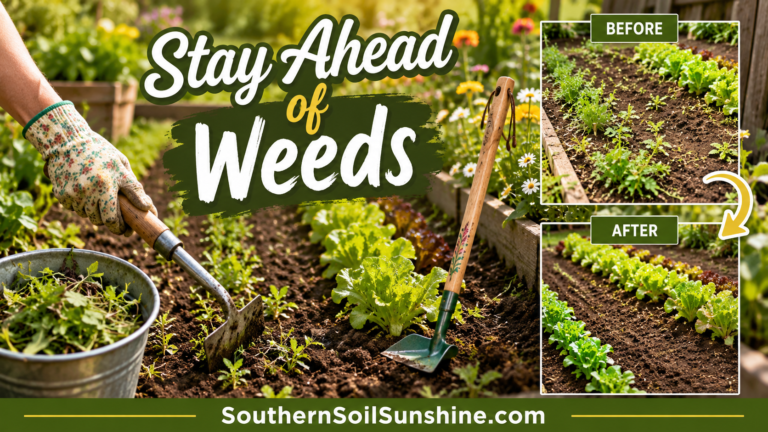
✓ Weeds at the edges and in beds
✓ Water drainage patterns, especially after rain
✓ One actionable observation to record
This summer, I encourage you to build this habit with gentleness and consistency. Start small. Maybe just 5 minutes tomorrow morning. Notice one thing. Write it down. The transformation—in your garden and in your own sense of presence—will follow naturally, one quiet morning at
The Heat-Watch: What Changes in Our Brutal Zone 9 Summers 🌡️
Here’s something we don’t always talk about: observation in Zone 9 summer is different from observation in spring or fall. The heat itself becomes a living thing you’re tracking, not just as a number on a thermometer, but as it shows up in your plants. By mid-June, when nighttime temperatures stay above 75°F consistently, your garden enters what I call the “heat response phase,” and your observation habits need to shift slightly to match.
During peak summer heat (July through August), plants make survival decisions we need to notice. Tomatoes and peppers stop setting new flowers when nighttime temps stay above 75°F—this isn’t a failure on your part; it’s the plant’s wisdom. Squash and cucumbers accelerate their ripening cycle, sometimes producing smaller fruit or fewer blossoms because the plant is focused on seed production and survival, not abundance. Lettuce, spinach, and cool-season herbs bolt or fade away. Observing these shifts helps you stop expecting spring-like production and instead appreciate what is possible in the heat.
Watch for the telltale signs of heat stress as you walk: leaves that curl upward at the edges (not down—that’s different), a grayish or dusty cast to foliage, flowers dropping without setting fruit, or fruit developing sunscald (pale, papery patches). In our humidity, these symptoms can overlap with water stress or disease, so observation becomes detective work. Touch the soil first. If it’s moist but plants still look stressed, you’re likely seeing heat exhaustion, not drought. This changes how you respond. Instead of more water, stressed plants sometimes need afternoon shade cloth, mulch refresh, or simply acceptance that they’re taking a summer rest.
The insects change too. Spring brought aphids and young spider mites, but peak summer brings populations—massive whitefly colonies, thriving spider mites, and occasional Japanese beetles. Your observation habit should include a specific “flip and inspect” routine for leaf undersides at least twice a week during July and August, when pest pressure is highest. Early detection of spider mite webbing or whitefly clouds means you can intervene with water spray or neem oil before populations explode beyond control.
Sanda’s Zone 9 Note: Our Houston humidity is both a gift and a challenge. While it means we rarely have the absolute dry-air spider mite crises of Arizona, we’re incredibly susceptible to powdery mildew, leaf spot diseases, and root rot if we’re not careful with watering and air circulation. If you notice any white powdery coating on leaves—especially on squash, zucchini, or cucumber—that’s your signal to increase spacing, thin foliage slightly, and water only at soil level. Once powdery mildew takes hold in our climate, it’s tough to shake. Prevention through observation is everything.
Reading the Soil Language: What Your Garden Floor Tells You
I spent years doing the obvious observation work—checking leaves, counting tomatoes, spotting bugs. But it took me a while to realize that the soil is actually speaking the loudest, especially in summer. Your observation habit will deepen dramatically once you learn to read what the soil is telling you, and this is where Zone 9’s intense heat and occasional heavy rains create a unique conversation worth tuning into.
During your morning walk, kneel down and feel the soil at the base of your plants, not just at the surface. Push your finger 2–3 inches deep. In Houston summer, the top half-inch can feel dry while 2 inches down is still damp—this is information. Dry surface with moist deeper soil? Your mulch is doing its job; hold off watering today. Dry all the way down? You need water, but probably not as much as you think; a deep soak at soil level for 20–30 minutes is better than daily shallow sprinkling. Soil that feels soggy or smells sour? That’s your red flag for poor drainage, and in our humidity, soggy soil invites root rot faster than almost any pest.
Pay attention to soil color, too. Summer heat can “bake” unprotected soil, and you’ll notice it darkening less or looking grayish. This is a sign that soil biology is stressed and organic matter is breaking down fast in the heat. If you see this, it’s time to add a fresh layer of mulch and consider whether you need to increase compost applications in fall to rebuild that living soil layer.
The soil also tells you about nutrient cycling. In peak summer, heavy-feeding plants like tomatoes and peppers are pulling nitrogen fast. If you notice yellowing leaves on the lower part of the plant (while upper leaves stay green), that’s likely nitrogen depletion—normal in midsummer but worth noting so you can side-dress with compost or a balanced fertilizer. If all the leaves yellow together, including new growth, that might be magnesium deficiency (common in our slightly alkaline soil) or a watering issue. Observation helps you distinguish between these possibilities before you panic or overfertilize.
The Rhythm of Rest: Recognizing When Your Garden (and You) Need a Break
One of the hardest observations to make in Zone 9 summer is recognizing that some slowdown is good, not a failure. Because we have such a long growing season, we can garden almost year-round, and that abundance sometimes tricks us into thinking we should always be producing, always be harvesting, always be maintaining at full intensity. But peak July and August often call for a gentler pace.
Watch your plants for the signs: newer growth slowing even though you’re watering; fewer flowers despite adequate sun; plants that look tired despite no visible problems. These aren’t cries for help; they’re signals of natural summer dormancy. Many plants know something we sometimes forget—that rest is essential for a strong fall harvest. A tomato plant that’s slowed its growth in late July often rebounds beautifully in August when temperatures moderate even slightly, producing abundant fruit for September harvesting.
Ready to Go Deeper in the Garden?
If this article resonated with you, you might be ready for something more than tips.
- Download the FREE Rooted in Grace eBook
- Get the Rooted in Grace Print Book on Amazon
- Join Rooted Reset
- Follow on Instagram – @southernsoils
- Save on Pinterest – @southernsoilsunshine
- Join on Facebook – Southern Soil Sunshine
“The garden is not just a place to grow plants – it is a place to grow yourself.”
Related reading
Free eBook
Before you go — the book is yours
Rooted in Grace: A Christian Guide to Intuitive Gardening. No cost, no catch. Read it on any device, at whatever pace the season allows.


17 Comments