
How to Start a Reflective Garden Journal
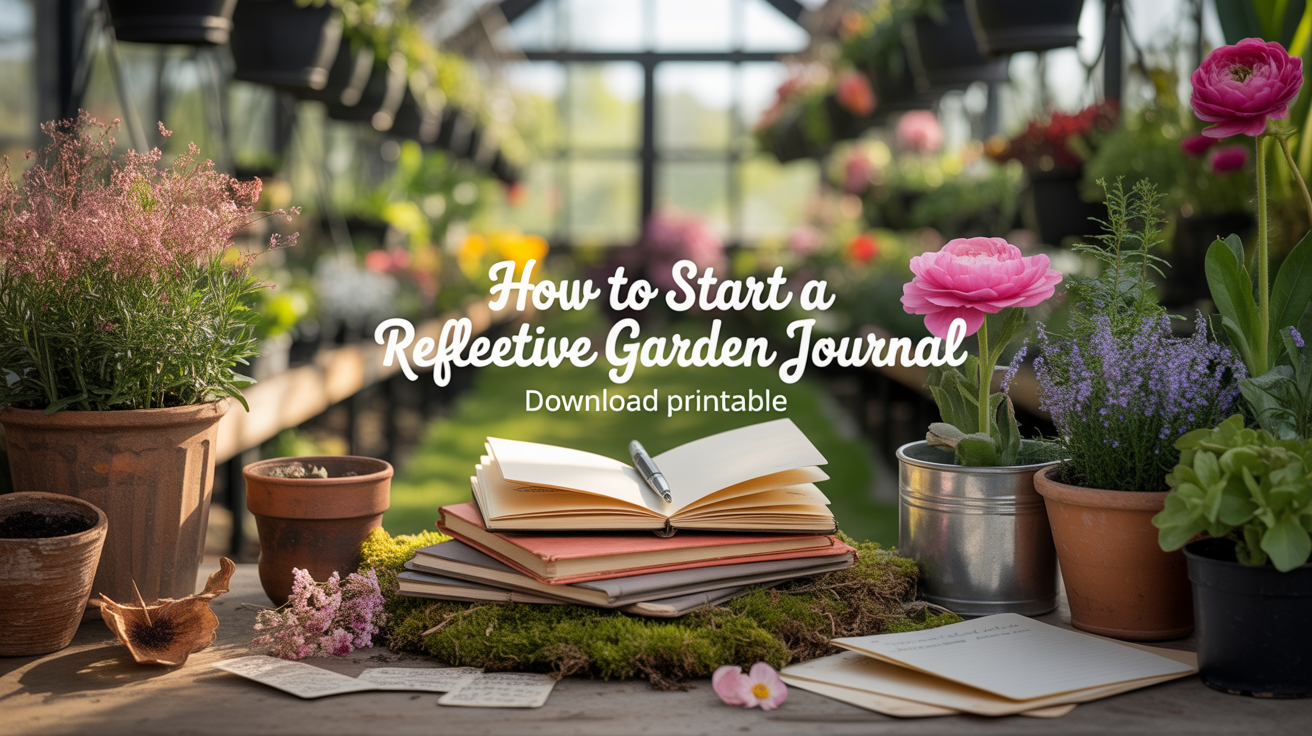
How to Start a Reflective Garden Journal: Finding God’s Lessons in the Soil 🌸
The garden has a way of slowing us down. Every seed holds a secret, every bloom whispers a story, and every harvest is a reminder that growth takes time. When I first started journaling in my garden, I thought it would simply be a practical place to track dates, seed varieties, and what came in from the harvest. And yes, it became that—but something unexpected happened.
My notebook transformed into something sacred. It became the place where I laid down not just observations, but also my thoughts and prayers. It became a mirror for what God was teaching me through the soil, through patience, through watching things die and come back to life. A reflective garden journal isn’t just about gardening—it’s about noticing. It’s about pausing to record both what the soil is producing and what the Spirit is cultivating in you.
Free eBook
Rooted in Grace
A Christian guide to intuitive gardening — the whole book, free. Tell me where to send it and it’s yours in a minute.
Why a Reflective Garden Journal Changes Everything 🌱
When we garden in our zone 9/Houston heat, we’re working against time and temperature in ways that demand attention. But a reflective journal does more than help us remember which tomato variety thrived in August—it transforms our daily tasks into spiritual practices.
Sanda’s Tip: Your journal isn’t meant to be perfect. Mine is stained with soil, marked up with coffee rings, and filled with sketches that would never win an art contest. That’s exactly what makes it real and useful.
Let me walk you through why keeping a reflective garden journal has become one of my most cherished practices:
Memory Keeper: Gardens in our Texas heat move fast. What bloomed brilliantly in May might have completely given up by July. Journaling captures those fleeting moments—the unexpected beauty of a passion flower vine, the exact date your first pepper turned red—that you’d otherwise forget.
Problem-Solver: When aphids return or a plant suddenly fails, your past notes reveal patterns and solutions. Over three years of journaling, I’ve learned that my herbs always get spider mites by mid-August, which means I now plan my spray schedule accordingly. That’s knowledge only time and notes can teach.
Encourager: On the days when nothing seems to work—when you’ve lost a plant you loved or the heat has scorched your hopes—flipping back to earlier pages reminds you of harvests past and growth you’ve already accomplished. On difficult mornings, I read my autumn entries and remember that there’s always another season coming.
Spiritual Anchor: Reflective notes turn daily tasks into sacred rhythms. Watering becomes prayer, pruning becomes surrender, weeding becomes meditation. When you pause to write about these moments, you’re acknowledging that gardening is spiritual work.
Legacy Builder: Your journal becomes part of your garden’s story—one your children or grandchildren might treasure someday. I have my grandmother’s garden notes, and they are more precious to me than almost anything she left behind.
Choosing Your Journal Style ✍️
The beauty of a reflective garden journal is that there’s no wrong way to start. The best journal is the one you’ll actually use.
Classic Notebook
This is what I use, and it’s still my favorite. A simple spiral-bound or hardcover notebook is affordable, flexible, and forgiving. Choose lined pages if you write more than you sketch, unlined if you prefer open space, or dotted if you like a middle ground. I prefer a composition notebook because it’s sturdy enough to withstand being carried in and out of the garden.
Bullet Journal
If you love structure, trackers, and charts, a bullet journal setup works beautifully for garden notes. You can create custom layouts for seasonal plans, pest tracking, and yield tallies. It requires more planning upfront, but it’s incredibly satisfying if that’s your style.
Binder or Folder System
This approach lets you add printed prompts, seasonal checklists, seed packet collections, and pressed flowers. You can reorganize, add dividers by season, and make it as elaborate as you want. It’s perfect if you like flexibility and the ability to expand as your garden grows.
Digital Journal
If you love typing or snapping garden photos with your phone, apps like Notion, Evernote, or even a simple Google Doc work wonderfully. You can combine words, pictures, even video clips. Some gardeners love uploading photos of pest damage or unusual growth patterns for reference later.
Sanda’s Zone 9 Note: If you choose a paper journal, keep it somewhere sheltered but accessible—a covered porch, a garden shed, or a weatherproof container. Our Houston humidity can wreak havoc on notebooks left sitting in the garden beds. I learned this the hard way.
Essential Tools to Keep Handy 🖊️
You don’t need much to get started. Here’s what I keep within arm’s reach:
| Tool | Why It Matters | Zone 9 Tip |
| Pens and pencils | For writing observations and reflections | Use ballpoint pens—pencil smudges in humidity |
| Colored markers or watercolor pencils | For sketching plants, highlighting notes, adding visual interest | Watercolor pencils are less likely to bleed in humidity |
| Tape, glue stick, or photo corners | For attaching seed packets, plant tags, photos, pressed flowers | Acid-free glue protects your notes long-term |
| Ruler or straightedge | For drawing bed layouts, charts, or clean lines | Helpful for sketching your suburban lot layout |
| Sticky tabs or bookmarks | For quick reference to current season pages | Mark this month’s observations at a glance |
What to Record in Your Reflective Journal 🌿
The magic of a reflective journal is that you get to decide what matters. Here’s how I organize my pages:
Practical Observations
These are your facts—the information that helps you garden smarter next year. Record the weather conditions (including our brutal Houston humidity levels), what’s sprouting or blooming, frost dates, heat waves, and any pests or pollinators you spot. For zone 9 gardeners, I especially note when I see the first frost warning and when our last spring frost typically passes (usually around mid-April). Keep track of unusual weather patterns. When did it rain? How much? Was it an unexpected freeze? This becomes invaluable data over time.
Reflective Notes 💭
This is where your journal becomes sacred. Write about “Today I noticed…” moments—beauty that caught your eye, frustrations that taught you something, small miracles in the garden. Reflect on how gardening is teaching you patience, humility, or joy. Note verses that come to mind while you’re tending plants. Capture prayers that rise up while your hands are in the soil. One of my favorite journal entries from last summer says: “Pulled weeds for an hour in 95-degree heat and realized I was completely at peace. God was there in the sweat and the thorns.”
Creative Expressions 🎨
Quick sketches of plants, leaves, or garden layouts don’t need to be artistic. Simple line drawings help you remember what grew where. Press flowers between pages. Tape in photos of your most successful blooms. Add inspirational quotes that speak to you. Doodle in the margins. Let your journal reflect your personality.
Data for Growth
Record seed sowing dates and harvest dates side by side. Note your bed rotation—what grew in bed A, B, and C each year so you don’t repeat disease patterns. Keep yield tallies. How many tomatoes did you can? How much basil did you dry? Over time, this data helps you plan better harvests and know which varieties are actually worth the space in your suburban lot.
Sanda’s Garden Wisdom: I keep a simple monthly observation grid that includes columns for Date, Weather, Plant Notes, What I’m Learning, and Gratitude. This one-page template keeps my reflections focused without feeling overwhelming. Some months I fill every line; other months I just capture what matters most.
Seasonal Journaling Rhythms for Zone 9 🌞❄️
Our zone 9/Houston seasons don’t follow the traditional spring-summer-fall-winter pattern, so let’s adjust our journaling rhythm to what actually happens in our gardens:
Early Spring (February-March)
Write your hopes and plans for the season. This is when you’re planning beds, deciding what to plant, dreaming about the summer harvest. Reflect on what worked last year and what you want to try differently. As temperatures start warming, note the first signs of growth. When do your perennials break dormancy? When should you start seeds indoors? This is the season of anticipation.
Late Spring and Early Summer (April-June)
Record planting dates, germination rates, and early growth patterns. Note which seedlings thrived and which disappointed. This is also when we’re racing against the heat—write about when things started struggling as temperatures climbed. Document what bloomed beautifully before the heat hit. Gratitude notes are especially powerful here.
Intense Summer (July-September)
In our Houston heat, many of us shift to a maintenance mode rather than growth. Journal about what’s surviving the heat, which varieties are surprisingly heat-tolerant, and how you’re adapting your garden practices. This is the season of learning perseverance. Note pest patterns—what bugs thrive in our heat? When do they appear? What works to manage them? Keep track of watering schedules and any heat-stress patterns you notice.
Fall and Cool Season (October-December)
Fall is when our gardens truly come alive again. Write about replanting cool-season crops, the relief of lower temperatures, and the abundance of fall harvests. This is a season of renewal and gratitude. Many of us find that our most productive growing happens in these months. Document varieties that do exceptionally well in our zone 9 fall. Plan for spring while everything feels fresh.
Winter Rest (January)
Use January to review the past year. Read through your journal and reflect on patterns, successes, and lessons learned. Plan for the year ahead. This is when I do my most spiritual reflection—looking back at the entire growing
The Rhythm of Reflection: Beyond Tracking 📓
Here’s what I’ve discovered about reflective journaling that pure record-keeping doesn’t capture: when you pause to write about your garden, you’re actually slowing down enough to see what’s happening. In our busy Houston lives, we rush from one task to the next, deadheading spent blooms without really noticing them, watering on autopilot, harvesting without pausing to acknowledge the miracle of it. A reflective journal forces—in the gentlest way—a moment of presence.
Each time you sit down to write, you’re asking yourself questions that go deeper than “Did the peppers grow?” You’re asking “What did I feel while tending them? What surprised me? What confused me? Where did I see God’s fingerprints?” These questions change everything. A simple afternoon of weeding becomes a meditation on letting go. A plant that didn’t make it becomes a lesson in acceptance. Even failures, when reflected upon in writing, transform into wisdom.
Zone 9 gardeners have a particular gift here: our unpredictable Houston weather—the surprise freezes, the record-breaking heat, the humidity that seems to have a personality of its own—teaches us constantly that we’re not in control. That’s actually a beautiful spiritual teacher if we pause to notice it. Your journal becomes the place where you process that humility, that surrender, that learning to work with the land rather than against it.
Creating Prompts That Speak to Your Soul 💭
If you sometimes sit down with your journal and feel stuck—unsure what to write beyond the facts—consider keeping a list of reflective prompts nearby. These aren’t rules; they’re invitations. When you’re struggling to know what to capture, a good prompt can unlock something deeper.
Here are prompts I return to again and again, especially ones that resonate with zone 9 gardening:
“Today the garden taught me about…” This open-ended prompt invites you to notice lessons without forcing them. Maybe today the garden taught you about resilience (that tomato came back after the heat wave), or about timing (you planted too late and the frost came anyway), or about beauty in unexpected places (a weed flower you’d never noticed before).
“What’s growing that surprises me?” Use this when you want to capture wonder. Sometimes it’s literal—a volunteer plant you never planted, a color more vivid than you expected, a bloom lasting longer into summer heat than you thought possible. Sometimes it’s about your own growth: “I’m surprised by how patient I’ve become” or “I’m surprised how angry I got at the slugs—what does that tell me?”
“If this plant could speak, what would it tell me right now?” This playful prompt opens imaginative reflection. A struggling eggplant might “say”: “I’m trying, but I’m too hot and too tired.” A thriving basil might “say”: “Thank you for pinching my tops regularly—it makes me stronger.” This anthropomorphic approach often reveals truths about what our plants actually need and what we need to adjust.
“Where did I notice God today?” This is the explicitly spiritual prompt. It might be a verse that popped into your head, a moment of unexpected peace, a conversation overheard that felt like a message, the way light hit the morning glories, or a sudden understanding about your own life. These moments often happen in gardens if we’re paying attention.
Sanda’s Tip: Write your favorite prompts on index cards and tuck them into your journal. On days when the blank page feels intimidating, shuffle through and pick one. This simple act removes the friction between you and reflection.
When Your Journal Becomes a Conversation with God 🙏
The most unexpected gift of keeping a reflective garden journal is discovering that it becomes a form of prayer. Not structured, formal prayer necessarily—though some of my most profound entries are direct prayers written to God—but prayer in the truest sense: honest conversation
Ready to Go Deeper in the Garden?
If this article resonated with you, you might be ready for something more than tips.
- Download the FREE Rooted in Grace eBook
- Get the Rooted in Grace Print Book on Amazon
- Join Rooted Reset
- Follow on Instagram – @southernsoils
- Save on Pinterest – @southernsoilsunshine
- Join on Facebook – Southern Soil Sunshine
“The garden is not just a place to grow plants – it is a place to grow yourself.”
Free eBook
Before you go — the book is yours
Rooted in Grace: A Christian Guide to Intuitive Gardening. No cost, no catch. Read it on any device, at whatever pace the season allows.




2 Comments