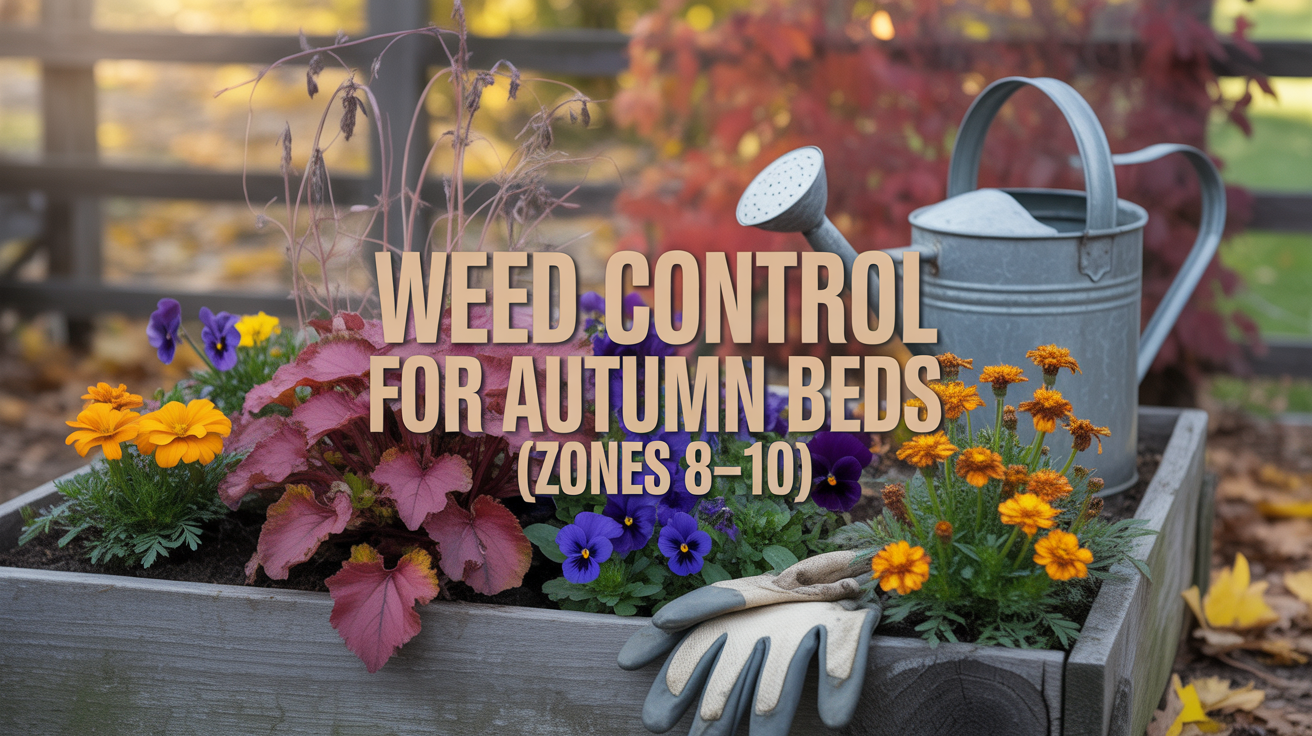
Weed Control for Autumn Beds (Zones 8–10)
Weed Control for Autumn Beds: The Faithful Gardener’s Guide 🌱
By the time the cicadas quiet down and that September heat finally loosens its grip, I’m ready to exhale—and also to acknowledge the nutgrass still waving at me like an uninvited guest to every garden gathering. 😅 But here’s what I’ve learned the sweaty way, right here in our Zone 9 Houston heat: the weeds you ignore in autumn are the ones that come roaring back in spring with their entire extended family in tow.
Autumn weeding isn’t about achieving some Pinterest-perfect bed. It’s about clearing sacred space for what’s coming next. Those little acts of faithfulness now—a few minutes of pulling, some mulch spread with intention—they add up to a quieter, happier spring garden. And isn’t that worth the effort?
Sanda’s Garden Wisdom: Pulling weeds isn’t about guilt over mess or perfectionism. It’s about making intentional room for the good things God is calling you to grow. Every weed you remove in October is one less fight in March.
Free eBook
Rooted in Grace
A Christian guide to intuitive gardening — the whole book, free. Tell me where to send it and it’s yours in a minute.
What Weeds Are Whispering: Listening to Your Soil 🕵️♀️
Here’s something that changed how I see weeds: they’re not just freeloaders. They’re messengers. If we get quiet and listen, they’ll point us toward what our soil is asking for. I think of it like reading the garden’s journal—if you know the language, the weeds tell you stories about drainage, fertility, and soil structure.
In our Houston area, certain weeds show up like clockwork, and each one is telling us something real about what’s happening beneath the surface:
| Weed | What It’s Telling You | Zone 9 Timing |
| Dandelion | Soil compaction, thin organic matter | Fall & spring germinator |
| Purslane | Damp spots, overwatering signals | Summer-fall, fades with heat stress |
| Clover | Low nitrogen, thin fertility | Fall & winter active, peaks Oct–Feb |
| Nutgrass (Sedge) | Drainage issues, disturbed soil | Year-round pest in Zone 9 |
| Chickweed & Henbit | Cool, moist, fertile patches | Peak Sept–March, love our cool winters |
When I see chickweed carpeting a bed in November, I don’t just pull it and move on. I observe: Why here? Why now? What does this tell me about how I’m watering, or whether this bed needs better drainage? That moment of reflection—that’s where the faithful gardening happens. We’re not just fighting weeds; we’re learning our land.
Five Practical Strategies for Autumn Weed Management
Weeds respond best to a layered, intentional approach. No single strategy works for everything, but when you combine several methods with consistency, you create an environment where good plants thrive and weeds struggle. Let me walk you through what actually works here in Zone 9.
1. Hand-Pulling and Hoeing: The Old Ways Still Win
Sometimes the most faithful thing is also the simplest. Pull weeds after a good rain—or after you’ve given the bed a deep watering—and the roots come loose so much easier. A sharp hoe, used regularly in quick ten-minute passes, becomes your quiet companion in the garden. Consistency beats intensity every time.
In our Houston heat (even in “cool” autumn), watering in the evening and pulling the next morning is your best rhythm. The soil is cooperative when it’s moist but not waterlogged, and you’ll get those deep taproots without breaking them off halfway.
Sanda’s Zone 9 Note: Our clay-heavy soils make weed removal trickier than in sandier regions. Never pull when soil is bone-dry or when it’s been heavily rained on—you’ll either snap the roots or compact the bed. Wait for that sweet middle ground: moist, friable, ready to give up its weeds.
2. Mulching with Autumn’s Abundance
October and November bring us leaves, pine straw, and shredded hardwood mulch—free gifts from the season if we know where to look. Spread mulch 2 to 3 inches deep over your beds to suppress weed seeds, regulate soil moisture (crucial in our Texas climate swings), and insulate roots through whatever cold snaps come our way.
Over time, this mulch breaks down into living compost, feeding the soil while keeping weeds in check. It’s one of the most faithful investments you can make in your beds right now. But here’s the thing: don’t pile mulch against plant stems or tree trunks. Give everything a little breathing room. Mulch against stems invites rot, fungal issues, and makes trouble for spring.
Sanda’s Tip: In Zone 9, I use a mix: pine straw around acid-loving plants (like blueberries and camellias), shredded hardwood mulch in vegetable beds, and whole leaves in perennial borders where they’ll break down quietly through winter. Variety keeps the soil alive and interesting.
3. Solarization and Sheet Mulching for Empty Beds
If a bed is sitting empty and you’ve got a few sunny weeks ahead, solarization is like hitting a reset button. Lay down clear plastic sheeting for 4 to 6 weeks of autumn sun. The heat builds up under the plastic and kills weed seeds, dormant spores, and soil pathogens. By January, you’ve got a cleaner slate to work with.
For a gentler, slower approach that also feeds the soil, try sheet mulching: layer cardboard (remove staples!) and cover it with compost, aged manure, and whatever organic matter you’ve got. This smothers weeds while improving fertility. By spring, you’re planting into rich, dark earth.
4. Cover Crops: Green Blankets That Work While You Rest
Instead of leaving soil bare (which invites weeds to fill the void), plant a cover crop. In our Zone 9 autumn, winter rye, hairy vetch, and crimson clover are your friends. These green blankets outcompete weeds, fix nitrogen back into the soil, and protect against winter erosion. Come spring, you cut them down and turn them under—instant living mulch feeding the bed.
This is such faithful work. You’re planting in September or October, and by March, you’re working with soil that’s been held, protected, and enriched all winter long. There’s something deeply right about that rhythm.
5. Vinegar and Targeted Sprays: Use with Intention
A 20% vinegar solution works as a natural herbicide for pathways, edges, and between pavers. I use it sparingly and intentionally—it’s non-selective, meaning it’ll damage your good plants if it drifts. A spray bottle in hand, a steady morning application on a calm day, and you’ve got a chemical-free option for spot-treating the persistent stuff.
In Houston’s humid climate, though, prevention always beats treatment. If you’re using vinegar, you’re probably already playing catch-up. Better to stay ahead with mulch and consistent hand-pulling.
Your Faithful 10-Minute “Weed Walk” Routine 🌤️
I find that consistency beats intensity. Here’s the rhythm that keeps my Zone 9 beds calm:
Monday, Wednesday, Friday: A quick hoe pass through open areas, and I pull anything that’s thinking about flowering. Stopping them before they set seed means hundreds fewer seedlings to fight next spring.
After rain: Hand-pull carpets of chickweed and henbit while the roots are loose. This is your golden window—don’t miss it.
Weekly edge check: Edges and pathways are your first line of defense. Weeds establish there first, then spread inward. Keep borders clean, and the beds stay cleaner longer.
Monthly top-up: Check your mulch depth. Houston’s heat and rain can break things down faster than you’d expect, and thin spots invite weed seeds. Just add a bit more—don’t bury plant stems.
This rhythm takes about 10 minutes per session, and it keeps things manageable. Ten focused minutes three times a week beats two frantic hours on a Saturday when everything has gotten away from you.
Sanda’s Garden Wisdom: If a bed will rest until spring, don’t leave it bare. Bare soil is an open invitation to every weed seed in the neighborhood. Cover it—mulch it, sheet mulch it, solarize it, or plant a cover crop. Give the soil something to do besides growing weeds.
Planting Through Autumn with Weeds in Mind
When you’re tucking in garlic cloves, onion sets, or cool-season crops in September and October, think about your weeding strategy at the same time. Garlic especially loves a clean, well-mulched bed. The cleaner your bed at planting time, the less you’ll be fighting both weeds and your garlic for resources through winter.
Before you plant anything in autumn, do one thorough bed prep: remove large weeds, loosen the soil if it’s compacted, work in compost or aged manure, and then mulch generously. This upfront work pays dividends all season long. Your plants will thank you, and the weeds will be discouraged from the start.
Zone 9 Autumn Weed Management Quick Reference
| Strategy | Best Timing | What It Does Best |
| Hand-pulling and hoeing | After rain or evening watering; three short passes a week | Removes weeds before they set seed, in ten minutes instead of a lost Saturday |
| Mulching two to three inches deep | October and November, topped up monthly | Smothers weed seed and steadies moisture through our Texas swings |
| Solarization | Four to six weeks of open sun on an empty bed | Kills weed seed, spores, and pathogens for a clean January slate |
| Sheet mulching | Anytime a bed will rest until spring | Smothers weeds while it feeds the soil underneath |
| Cover cropping | Sown September through October | Outcompetes weeds, fixes nitrogen, and holds the soil all winter |
| Vinegar spot-spraying | Calm, dry mornings; paths and edges only | Chemical-free control where nothing good is growing |
| Loosening compacted soil | Early autumn, right after Labor Day | Cuts weed pressure at the source instead of fighting the symptom |
Understanding Houston’s Specific Weed Pressure: Why Autumn Matters Most
Here’s something I’ve learned after years of gardening in this particular corner of Zone 9: our autumn weed window is actually your most critical fighting chance of the entire year. While gardeners in cooler zones enjoy a true dormancy period, we’re working with a completely different timeline. Our soil temperature doesn’t truly drop until mid-December, which means weed seeds are still germinating well into October and November. And our “cool” season—October through March—is exactly when many winter weeds thrive in our humid, mild climate.
The weeds that matter most to us aren’t the tender annuals that summer heat burns down. They’re the cool-season opportunists: chickweed, henbit, clover, and bitter cress. These germinate when fall rains soften our hard, compacted clay soil. If you don’t address them now, they’ll establish deep roots through our mild winter and flower before you even realize spring has arrived. By April, when you’re desperate to plant summer vegetables, you’ll be pulling mature weeds instead of preparing beds.
This is why the faithful autumn weed walk matters so much here. We’re not fighting a spring battle that’s already lost—we’re interrupting it before it starts. The nutgrass, the perennial sedges, the winter annual seeds sitting dormant in your soil profile? They’re counting on you being too busy, too hot, or too discouraged to pull them now. Prove them wrong, and spring opens up with genuine breathing room.
Reading Your Soil’s Health Through Weed Patterns: A Reflective Practice
I want to invite you into something that changed how I see weeds entirely. Instead of viewing them as enemies, I started treating them as a diagnostic tool—almost like a soil health thermometer. When you slow down long enough to really look at where certain weeds are clustering, you’re reading your garden’s story.
In our Houston clay, certain patterns show up consistently. Heavy clover growth often signals either overwatering (our clay holds moisture beautifully, sometimes too beautifully) or nitrogen-depleted soil. When I see that carpet of clover in a bed, I ask myself: Am I watering based on my schedule, or based on what the soil actually needs? Am I feeding my soil, or just feeding my plants? Those are different questions, and they lead to different solutions.
Chickweed loves the exact same conditions—moist, cool, fertile soil—but it spreads like a living blanket in November through February. Its presence tells me that my mulch barrier might be thin, or my spring compost application is sitting right where weed seeds want to nestle. Henbit, which looks delicate and pretty but will absolutely take over a bed by spring, flourishes in slightly different spots—often where drainage is imperfect or where I’ve loosened soil without covering it.
And then there’s nutgrass, our Houston special. This isn’t a weed we can “outcompete” with better plants. Nutgrass thrives in disturbed soil and damp areas. Its presence is telling me something structural about a bed: maybe the drainage needs work, maybe it’s been too much foot traffic, maybe my watering practices are off. Simply pulling nutgrass without addressing why it loves that spot is like cleaning mold off a wall without fixing the leak.
Sanda’s Zone 9 Note: Keep a simple garden notebook—even just your phone’s notes app works. When you see heavy weed clustering, jot down the location, the weed type, the weather pattern that week, and what you’re observing in the soil. Over a few seasons, patterns emerge. You’ll start predicting where problems will show up, and you can address them preventatively instead of reactively.
The Role of Soil Compaction in Our Houston Beds: A Seasonal Opportunity
One thing I notice that many Zone 9 gardeners don’t talk about enough: our autumn is actually the perfect season to address the soil compaction issues that make weed control so exhausting. By September, months of summer foot traffic and heavy rain have packed our native clay as hard as concrete in many spots. Weeds LOVE compacted soil—their seeds are waiting in that hard crust, and their taproots can penetrate where your good plants struggle.
This is why I do my major soil-loosening work in early autumn, right after Labor Day. The soil is still warm enough to work easily, but we’re moving past peak summer heat. This is when I’ll break up compacted pathways between beds, loosen the top three to four inches of tired vegetable beds with a broadfork or digging fork, and work in compost without fighting summer’s oppressive heat. Once you’ve loosened that soil and given it a good layer of fresh organic matter, you’ve already cut your weed pressure significantly.
Loose, healthy soil naturally suppresses weeds better than hard, depleted soil. Your good plants can root deeply and outcompete weeds for resources. Earthworms and soil organisms can do their work. Everything shifts. And here’s the thing about doing this work in autumn instead of spring: you’ve got the whole winter for that loosened soil to settle, for amendments to integrate, and for soil biology to reestablish. By spring planting time, you’re not just recovering from cultivation—you’re working with healthier, more stable beds.
The fatigue we feel as gardeners often comes from fighting the same problems year after year. But sometimes the solution isn’t a new strategy—it’s timing.
What the Weeds Have Taught Me About Timing
I used to weed in a panic. April would arrive, the beds would be knee-deep in henbit already gone to flower, and I would spend an entire Saturday out there yanking and muttering, convinced I had failed the garden somewhere back in the winter. And I had — but not in the way I thought. I had not failed to work hard enough. I had failed to work early enough.
That is the honest lesson of autumn weeding, and it took me several Houston seasons to learn it. The work is not harder in October. It is easier. The soil is softer, the air has finally let go of us, and the roots come up without a fight. Ten minutes on a Wednesday evening in November does what two hours in April simply cannot, because by April you are not weeding anymore. You are excavating.
I think God tends us the same way. He rarely asks for the dramatic overhaul. He asks for small, unglamorous attention paid in the right season — the thing dealt with while it is still small enough to pull with two fingers. We would often rather wait until a problem feels big enough to be worth our effort, and then throw ourselves at it heroically. But faithfulness is quieter than that. Faithfulness is the ten-minute walk with a bucket at your hip, three times a week, whether or not anyone ever notices the bed is clean.
So go out this week, while the ground is still warm and still willing. Pull whatever is flowering. Spread mulch over the bare places. Sow a cover crop across the bed you are letting rest. None of it will photograph well. All of it will show up in March.
You are not behind. You are early — and early is the whole gift of autumn.
🛒 Shop This Post
What I actually reach for when I am clearing and covering autumn beds here in Zone 9.
- Scuffle hoe with long handle The tool that makes a ten-minute pass possible, sharp enough to slice weeds off at the crown.
- Long needle pine straw mulch What I spread around the acid-loving plants; it knits together and stays put through our rains.
- Clear polyethylene sheeting, 4 mil For solarizing an empty bed through four to six weeks of autumn sun.
- R&M Organics compost The layer that goes over cardboard when I sheet mulch, and into every bed at prep time.
- Aged compost and manure blend For autumn bed prep, when the soil has the whole winter to integrate it.
- No-till cover crop seed mix A green blanket for beds resting until spring, so weeds do not fill the void.
- 20% concentrated horticultural vinegar For paths, edges, and between pavers only; it is non-selective, so save it for a calm morning.
- Walensee broadfork For loosening compacted beds after Labor Day, which cuts weed pressure at its source.
These are Amazon affiliate links. If you buy through them I earn a small commission at no extra cost to you — and I only link gear I actually use in my own Zone 9 garden.
Ready to Go Deeper in the Garden?
If this article resonated with you, you might be ready for something more than tips.
- Download the FREE Rooted in Grace eBook
- Get the Rooted in Grace Print Book on Amazon
- Join Rooted Reset
- Follow on Instagram – @southernsoils
- Save on Pinterest – @southernsoilsunshine
- Join on Facebook – Southern Soil Sunshine
“The garden is not just a place to grow plants – it is a place to grow yourself.”
Free eBook
Before you go — the book is yours
Rooted in Grace: A Christian Guide to Intuitive Gardening. No cost, no catch. Read it on any device, at whatever pace the season allows.