Fall Planting Guide: What to Grow in Your Zone 9 Garden Right Now
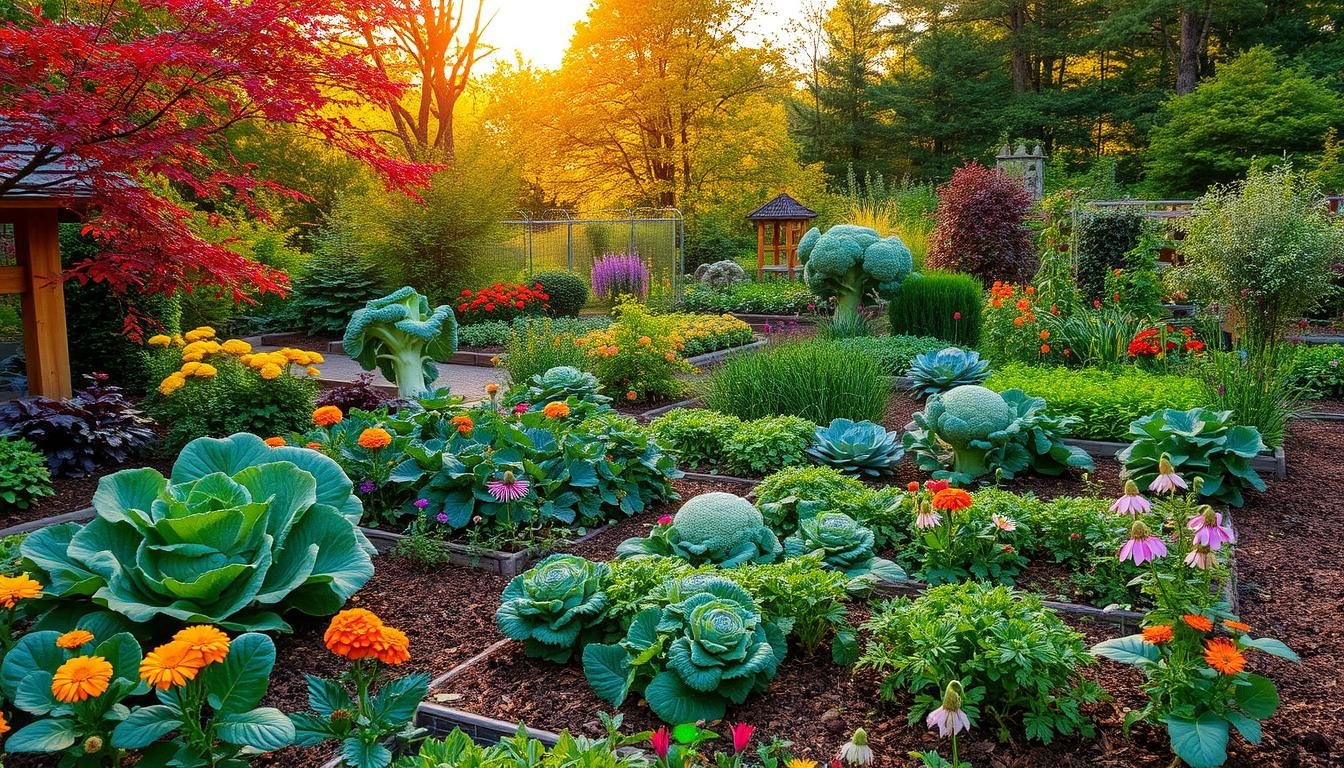
Did you know Zone 9 gardeners have 285 frost-free days a year? This long growing season is perfect for autumn gardening1. As I sit on my porch, enjoying sweet tea and the breeze, I’m amazed by our Mediterranean climate’s fall planting opportunities.
Our USDA hardiness zone 9 covers areas from California’s coast to Florida’s humid landscapes2. This variety brings many gardening traditions and crops to try. With temperatures around 25°F, we can grow many cool-season vegetables and flowers.
When August comes, it’s time to start fall seeds indoors. Broccoli and cabbage are great for autumn gardens1. But we can still plant warm-season crops in early fall2.
Fall planting in Zone 9 celebrates nature’s abundance. From crisp lettuce to vibrant snapdragons, it’s a time to enjoy. Let’s explore the wisdom of southern gardeners and find the best fall planting guide for our season.
Understanding Zone 9’s Unique Growing Season
Zone 9 is a dream for gardeners with its long growing season and gentle winters. It has a Mediterranean climate, ideal for growing many types of crops. Let’s explore what makes Zone 9 a haven for gardeners.
Temperature Ranges and Frost Dates
In Zone 9, winter temperatures usually stay between 20°F and 30°F. The last frost is around March 1st. The first frost happens between November 25th and December 13th. This long frost-free time lets you garden almost all year34.
Mediterranean Climate Characteristics
Zone 9’s climate is like the Mediterranean, with hot summers and mild winters. This weather is perfect for gardening in a Mediterranean style. The ground rarely freezes, so many plants can grow well. It’s smart to use drip irrigation to save water during dry times4.
Growing Season Length and Advantages
The long growing season in Zone 9 has many benefits. You can plant warm-loving crops like okra and sweet potatoes in May. By July, it’s time to start your fall garden. This long season means you can plant and harvest many times a year3.
Mild winters are a big plus in Zone 9. Trees, shrubs, and vines grow faster and need more trimming. Tropical fruits like avocados, citrus, and passion fruit do great here, adding variety to your garden4.
Zone 9’s special climate and long growing season open up endless possibilities for gardeners. Whether you love growing vegetables, fruits, or flowers, this zone is perfect for your gardening journey.
Free eBook
Rooted in Grace
A Christian guide to intuitive gardening — the whole book, free. Tell me where to send it and it’s yours in a minute.
Essential Garden Preparation for Fall Success
Fall gardening offers a fresh start for our outdoor spaces. It’s a chance to get rid of the old and welcome new growth. Let’s explore the main steps for getting your garden ready this season.
Clearing Summer Crop Debris
Begin by removing all summer garden leftovers. Take out those cucumber vines and bean poles. This clean start is vital for rotating crops and managing soil health. Clearing debris stops pests from staying in your garden beds5.
Soil Preparation and Amendment
It’s time to care for your soil. Mix in compost or well-rotted manure to improve its health. For organic gardeners, natural options like rock phosphate and greensand are great for adding nutrients6.
Organic Fertilization Methods
Choose organic fertilizers to feed your fall crops. Mushroom compost and alfalfa blends are excellent choices. Since some places limit fertilizer use during summer rains, fall is ideal for feeding your garden6. No-till methods keep the soil structure and microorganisms healthy, essential for soil health.
| Task | Benefit | Timing |
|---|---|---|
| Clear debris | Pest prevention | Early fall |
| Add compost | Soil enrichment | Mid-fall |
| Apply organic fertilizers | Nutrient boost | Late fall |
By doing these steps, you’re preparing for a successful fall garden. Remember, good preparation is crucial for effective crop rotation and a great harvest.
Fall Planting Zone 9: Optimal Timing Calendar
Living in zone 9 is a dream for gardeners. Our mild winters and long growing seasons offer endless possibilities for autumn gardening. Let’s explore the best times to plant your favorite crops78.
August kicks off our fall planting calendar. It’s time to start cool-season crops. Begin with broccoli, cabbage, and Brussels sprouts indoors for later transplanting. Direct sow bush beans, cucumbers, and summer squash in late August7.
September is a busy month in our gardens. Continue planting warm-season crops like okra and Southern peas. It’s also great for sowing carrots and beets directly in the garden. Start your leafy greens indoors for a rich fall harvest79.
| Month | Indoor Planting | Outdoor Planting |
|---|---|---|
| August | Broccoli, Cabbage, Brussels Sprouts | Bush Beans, Cucumbers, Summer Squash |
| September | Leafy Greens | Okra, Southern Peas, Carrots, Beets |
| October | Tomatoes, Peppers | Radishes, Peas |
October brings cooler temperatures, ideal for planting radishes and peas directly. It’s also the time to start tomatoes and peppers indoors for a second crop. Our mild winters let us enjoy fresh veggies all year98.
Our zone 9 planting calendar is flexible. Watch local weather and adjust your planting guide as needed. Happy autumn gardening!
Cool-Season Vegetables for Your Autumn Garden
Fall is the perfect time to grow cool-season crops in Zone 9. Our gardens come alive with frost-tolerant vegetables. Let’s dive into the cool-season vegetables that make autumn gardening rewarding.
Leafy Greens Selection
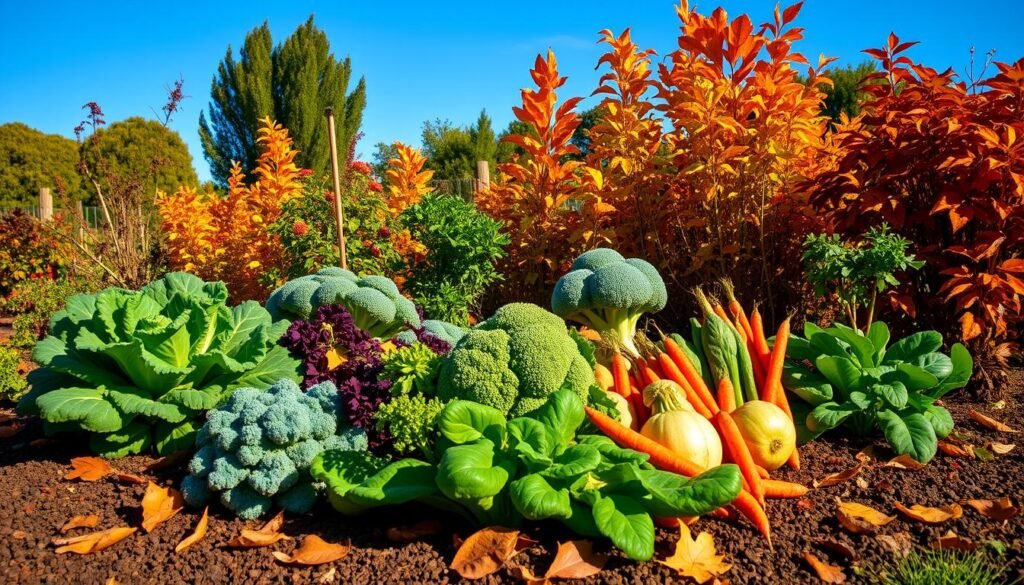
Leafy greens shine in fall gardens. Lettuce, spinach, and Swiss chard thrive in our autumn weather. They not only handle light frosts but taste sweeter after a cold snap.
In Zone 9, January is great for planting Swiss chard, leaf lettuce, mustard greens, and spinach10.
Root Vegetables Options
Root vegetables are autumn garden heroes. Carrots, beets, and turnips can be planted now. They store well and offer a rich harvest.
In Zone 9, January is perfect for planting beets, carrots, parsnips, radishes, and turnips10. Areas with 6-7 hours of direct sunlight are best for fall plants11.
Brassica Family Crops
The brassica family excels in fall gardens. Cabbage, broccoli, and cauliflower do well in our cooler autumn temperatures. Late August and early September in Zone 9 are for starting seeds indoors for these cool weather crops, including Brussels sprouts10.
Transplants give you a 4-6 week head start over direct seeding11.
Don’t forget to plant garlic and onions for a spring harvest. These cool-season vegetables add flavor and variety to your meals. With the right care, you can grow into early winter in warmer regions like Zone 911.
Heat-Tolerant Varieties That Extend Into Fall
Fall planting zone 9 is perfect for Mediterranean climate gardening. As the weather cools, some veggies keep growing. Let’s look at the varieties that make your garden bloom in autumn.
In zones 9 to 11, gardeners face challenges like water scarcity and high air moisture12. But, many heat-loving plants can still thrive in your fall garden.
Okra, Southern peas, and sweet potatoes are great for September planting. They love the warm soil and give a big harvest before the frost. Summer squash and cucumbers, planted in late August, keep producing until it gets too cold.
| Vegetable | Planting Time | Harvest Period |
|---|---|---|
| Okra | Early September | Late October – Early November |
| Southern Peas | Mid-September | November – December |
| Sweet Potatoes | Late August – Early September | November – December |
| Summer Squash | Late August | October – First Frost |
| Cucumbers | Late August | October – First Frost |
Heat-loving herbs like basil and oregano can be picked all fall. They add fresh taste to your autumn meals. Planting citrus trees in warm autumn soil prepares for future harvests.
To grow heat-tolerant veggies well, match their needs to your soil. Keep the soil moist, rich in compost, and mulched to stop water loss12. These steps will make your zone 9 garden flourish.
“In the garden, autumn is indeed the crowning glory of the year, bringing us the fruition of months of thought and care and toil.”
Choosing the right heat-tolerant varieties and caring for them properly will make your fall garden in zone 9 productive. Enjoy the unique benefits of your climate and keep growing into autumn.
Strategic Crop Rotation Planning
Let’s explore the core of garden planning – vegetable crop rotation. It’s like a dance with nature, keeping our soil alive and our plants healthy.
Succession Planting Tips
Succession planting makes our garden a never-ending feast. I plant quick-growing crops like radishes and lettuce every two weeks. This keeps my plate full of fresh greens.
A typical crop rotation plan lasts three to four years. It ensures each plant family doesn’t return to the same spot too soon13.
Companion Planting Guidelines
Companion planting is like pairing plants like they’re in a match. I pair marigolds with tomatoes to keep pests away. Beans, peas, and other legumes are like superheroes for the soil, adding nitrogen through their special bond with bacteria14.
Soil Health Management
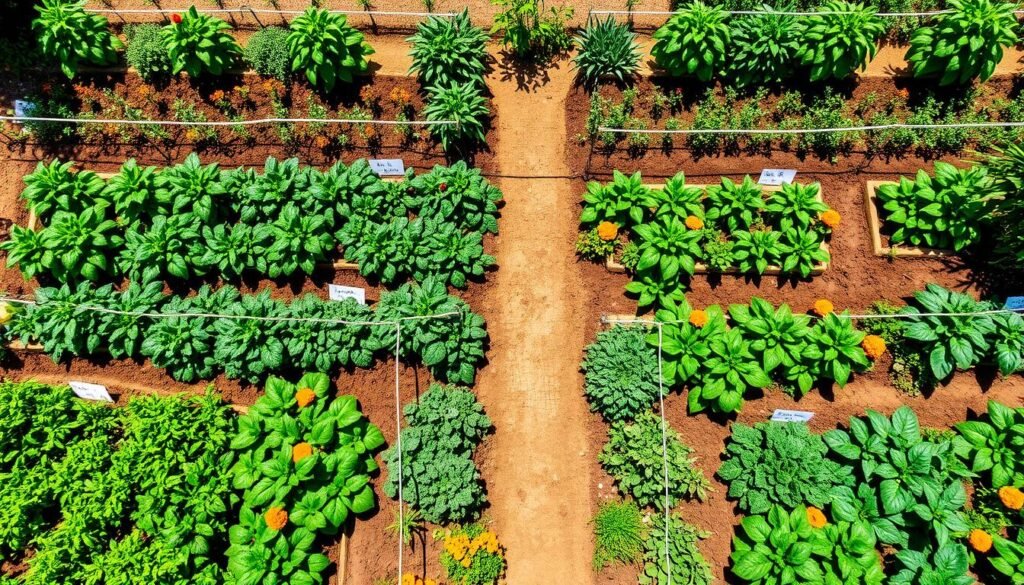
Healthy soil is the base of a fruitful garden. I use cover crops like clover or vetch in fallow areas to feed the soil. These green manures fight erosion, boost organic matter, and keep pests and diseases at bay14.
Rotating crops can make the soil more fertile and improve harvests by keeping the soil healthy15.
| Crop Family | Examples | Rotation Benefits |
|---|---|---|
| Nightshades | Tomatoes, Peppers | Prevents soil-borne diseases |
| Legumes | Beans, Peas | Fixes nitrogen in soil |
| Brassicas | Cabbage, Broccoli | Improves soil structure |
| Cucurbits | Squash, Cucumbers | Disrupts pest cycles |
A 5-10 year rotation cycle is best for reducing pests and diseases15. By alternating heavy and light feeders and keeping records, we can build a sustainable garden. It feeds both our bodies and the earth.
Water Management and Conservation
In Mediterranean climate gardening, saving water is essential. Our Zone 9 gardens face big challenges during hot, dry times. Let’s find smart ways to keep our plants healthy and save water.
Did you know 30% of U.S. water is used outdoors? In summer, this can jump to 70% of a household’s water use16. That’s why water-wise practices in our gardens are key.
Mulching is a big help. I use organic materials like bark or straw. They keep moisture in, cool roots, and stop weeds. It’s like a cozy blanket for your garden!
Drip irrigation is another water-saver. These systems can be up to 90% more efficient than sprinklers16. They water plants right at the roots, saving water on leaves and paths.
Grouping plants by water needs is smart. I call it the “thirsty friends club”. It prevents overwatering some and underwatering others. In tough times, water your veggies and drought-tolerant plants first.
Drought-tolerant plants are great for saving water. Native plants are especially good. They need less water and care, yet they look amazing17.
When to water is important. Water in the early morning or late evening. This reduces evaporation and helps roots absorb more water. Also, deep, infrequent watering promotes strong roots.
Lastly, think about using rainwater. It’s free, pure, and plants love it! Even a small barrel can help a lot with water conservation.
With these tips, you’re ready for water-wise gardening. Your plants will do well, and you’ll help the environment. Happy gardening!
Pest Control and Disease Prevention
Fall gardening comes with its own set of challenges. Pests and diseases can be a big problem. It’s important to stay alert and use effective ways to control pests and prevent diseases. Let’s look at some common issues and how to solve them for your autumn garden.
Common Fall Garden Pests
In Zone 9, fall gardens face threats from aphids, squash bugs, and other pests. These insects can harm your crops if not controlled. Ladybugs are good for your garden as they keep harmful insects away18. It’s also important to regularly treat pests, especially in the spring when bugs start to appear18.
Organic Control Methods
Organic pest control methods are safe and effective for fall gardens. Corn gluten meal stops weeds from growing and lasts for months19. Chamomile tea can fight fungal diseases in plants19. A mix of baking soda, liquid soap, and water can protect roses from diseases for months19.
Disease Prevention Strategies
Keeping diseases away is crucial for a healthy fall garden. Regularly check your plants for signs of disease or pests18. Garlic soup can fight off diseases in plants19. Aspirin in water can prevent diseases like black spot and powdery mildew19. Using these organic methods will help keep your garden healthy and disease-free all fall.
Herbs and Flowers for Fall Planting
Fall in Zone 9 is a great time for gardeners. Winter temperatures range from 20°F to 30°F (-6.6°C to -1.1°C). This zone has a long growing season from February to December20. Let’s look at some exciting options for your autumn garden.
Culinary Herbs Selection
It’s the perfect time to start your herb garden. Cubano Oregano, Garlic Chives, and Fennel “Green” are great for Zone 920. Plant perennial herbs like rosemary, thyme, and sage for a year-round harvest. Sow cilantro, dill, and parsley seeds directly in the garden.
These herbs not only flavor your dishes but also attract beneficial insects.
Companion Flowers Benefits
Flowers are key in fall planting. Cool-season annuals like pansies, violas, and snapdragons make your garden beautiful and help pollinators. Edible flowers like nasturtiums and calendula add color to your garden and food.
For sun-loving perennials, choose roses, irises, and coneflowers. They need 6-8 hours of sunlight daily21.
Gardening is a journey of trial and error22. Try different companion planting combinations and see how they work. Your Zone 9 garden can be a vibrant mix of herbs and flowers, bringing joy into the fall season.
Source Links
- https://sowtrueseed.com/blogs/monthly-garden-schedule-by-zone/zone-9-monthly-garden-calendar-chores-and-planting-guide?srsltid=AfmBOooqde1ZDznRDHnvzDzMjOIeg63C5EihlBAlSA0H03ka7LbHtj9g – Zone 9 – Monthly Garden Calendar: Chores and Planting Guide
- https://audreyslittlefarm.com/zone-9b-vegetable-planting-guide/ – Zone 9 Vegetable Planting Guide for Year-Round Success – Audrey’s Little Farm
- https://sowtrueseed.com/blogs/monthly-garden-schedule-by-zone/zone-9-monthly-garden-calendar-chores-and-planting-guide?srsltid=AfmBOooiCTicmY9qvC6lR-d-ufvxzK6PL3SA4iGzjVioZeViOaek9oXD – Zone 9 – Monthly Garden Calendar: Chores and Planting Guide
- https://www.homesandgardens.com/gardens/us-hardiness-zone-9 – US hardiness zone 9 – and expert advice on what to plant
- https://shiplapandshells.com/transition-garden-from-summer-to-fall/ – Prepare Your Garden for the Fall Season Transition
- https://sowtrueseed.com/blogs/monthly-garden-schedule-by-zone/zone-9-monthly-garden-calendar-chores-and-planting-guide?srsltid=AfmBOoq_eaFcjWu_mdvNwzjE6h5Bke8qFwFczzCw9UmIFeV_cD6T4UfL – Zone 9 – Monthly Garden Calendar: Chores and Planting Guide
- https://sowtrueseed.com/blogs/monthly-garden-schedule-by-zone/zone-9-monthly-garden-calendar-chores-and-planting-guide?srsltid=AfmBOop6lJBNh91XXGMPlDCzBH5gJUSXu7p2pwlp4hWJY4nuRAJ9uPtg – Zone 9 – Monthly Garden Calendar: Chores and Planting Guide
- https://ponicslife.com/zone-9-planting-schedule-and-calendar-a-quick-guide/ – Zone 9 Planting Schedule and Calendar: A Quick Guide
- https://www.cookcraftcultivate.com/garden-timeline-when-to-plant-in-zone-9b/ – Garden Timeline: When to Plant in Zone 9b – Cook, Craft, Cultivate
- https://sowtrueseed.com/blogs/monthly-garden-schedule-by-zone/zone-9-monthly-garden-calendar-chores-and-planting-guide?srsltid=AfmBOoqbp84mYtx076zKB4AavmIHGkwz2nJsaQ8Y1WLY5gT0PLydxmGW – Zone 9 – Monthly Garden Calendar: Chores and Planting Guide
- https://sagesacre.com/2024/10/03/fall-gardening-in-zones-7-9-a-comprehensive-guide/ – Fall Gardening in Zones 7-9: A Guide | Sage’s Acre
- https://www.gardeningknowhow.com/garden-how-to/gardening-by-zone/zone-9-10-11/plants-zones-9-11.htm – Plants For Zones 9-11 – Planting Tips For Zones 9 Through 11
- https://www.almanac.com/crop-rotation-chart-small-vegetable-garden – Crop Rotation Chart for Small Vegetable Garden
- https://www.foxrunenvironmentaleducationcenter.org/organic-gardeningself-sufficiency/2023/12/12/crop-rotation-a-simple-yet-highly-effective-strategy – Crop Rotation – A Simple Yet Highly Effective Strategy — Fox Run Environmental Education Center
- https://zerowastehomestead.com/crop-rotation-101-how-to-rotate-crops-for-garden-pest-control-and-healthier-soil/ – Crop Rotation 101: How to Rotate Crops for Garden Pest Control
- https://earthsally.com/gardening-basics/water-conservation-in-your-garden.html – 32 Ways to Promote Water Conservation in Your Garden – Earth’s Ally
- https://www.udel.edu/academics/colleges/canr/cooperative-extension/fact-sheets/plant-selection-water-conservation/ – Plant Selection for Water Conservation | Cooperative Extension | University of Delaware
- https://www.vulcantermite.com/garden-pest-control/pest-control-other-considerations-for-spring-planting/ – Pest Control & Other Considerations for Spring Planting – Vulcan Termite & Pest Control
- https://www.finegardening.com/article/35-pest-disease-remedies?srsltid=AfmBOorvaVzMx-h17FE1XXmE2PF6P41H_OCYF5HMEkhcdV4_JXh4wcRh – 35 Pest and Disease Remedies – Fine Gardening
- https://thegrowers-exchange.com/collections/herbs-for-zone-9?srsltid=AfmBOoqxWEFHGquDeYpmbP-34EBKGsk8tKXAFMSRiPiDY5wl5UlANwHB – Herb Plants for Zone 9
- https://www.brecks.com/collections/zone9?srsltid=AfmBOooLfJ9nvKHxpL9J8S83gCazXdyA_3K2Fnyp-QIYxjr5uHi7rzuL – Best Plants for Zone 9 – Growing Zone 9 | Breck’s
- https://squarefoot.forumotion.com/t16136-what-s-gonna-be-in-your-zone-9-fall-garden – What’s gonna be in your zone 9 fall garden
What I Reach For for a Zone 9 Fall Garden
Fall is the real growing season down here, and almost none of it is about the calendar. These are the few things I actually use to get a fall bed started in heat.
Buy seed in July, before every rack in town is picked over. Nobody stocks for a Southern fall.
Fall seeding is a soil temperature decision, not a date on a packet. Read it four inches down, mid afternoon.
August transplants need cover for the first few weeks. Forty percent, not seventy, or they stretch reaching for light.
Starting indoors in September beats fighting Gulf heat on a tray outside.
Write your first frost date down once and stop recalculating it every single year.
Two inches over the bed before you plant anything. It is the amendment that fixes the most problems.
Bark holds up longer than straw on paths and around anything perennial.
So you are not planting somebody else seed bank along with your mulch.
Water goes to the roots instead of the leaves, which is most of fall disease prevention right there.
As an Amazon Associate I earn from qualifying purchases, at no extra cost to you. I only point you toward things I would actually use myself.
From my own shop
The Zone 9 Intuitive Garden Calendar
Everything on this page, laid out day by day for all 366 of them. A full year of what to do in a Zone 8–9 garden, tuned to real Southern heat instead of a national planting chart. It is the calendar I built because I could not find one that worked here.
See the calendar on Etsy →Keep Reading
Where to go next with your fall beds.
The whole year at a glance, counted from your real frost dates.
Pulling a spent bed in August is the start of the season, not the end.
Our winter is a growing season. Here is what thrives in it.
Structure that carries a bed through every season.
Free download
Rooted in Grace: the eBook
If gardening has ever felt like more than a hobby to you, this is the book I wrote for that. Free, and yours to keep.
Free eBook
Before you go — the book is yours
Rooted in Grace: A Christian Guide to Intuitive Gardening. No cost, no catch. Read it on any device, at whatever pace the season allows.
Choose your next right thing
Not sure what belongs in your garden this week?
The Southern Garden Compass helps Zone 9 gardeners observe what is happening, choose a practical next step, and find the right guide without more guessing.