
Creating a Sabbath Rhythm in the Garden
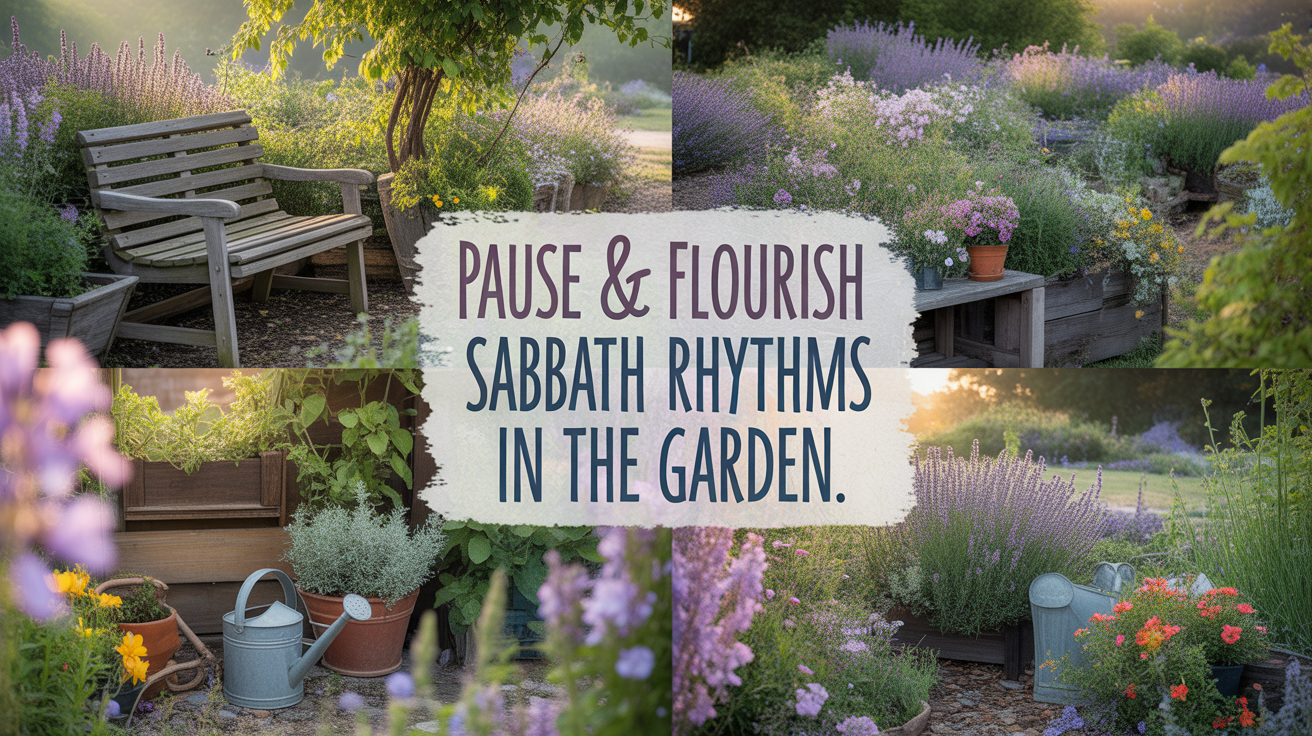
Creating a Sabbath Rhythm in the Garden 🌿
In a culture that praises hustle and constant productivity, the garden quietly reminds us that rest is not wasted time—it’s holy time. Here in Zone 9, where our growing season stretches long and our summers demand respect, the invitation to pause becomes even more precious. The Sabbath, woven into creation itself, is God’s invitation to cease striving and delight in what He has already made.
In the garden, a Sabbath rhythm means intentionally stepping back from endless tending, harvesting, and planning, allowing the soil—and ourselves—to breathe. Just as our tomatoes need dormant hours to set fruit and our okra needs rest between harvests, we need rhythms of rest to be fruitful in the long term. When we honor that sacred pause, something shifts. The garden becomes less a project to conquer and more a place to know.
Free eBook
Rooted in Grace
A Christian guide to intuitive gardening — the whole book, free. Tell me where to send it and it’s yours in a minute.
Why a Sabbath Rhythm Matters in Our Gardens 🌱
Bringing Sabbath principles into your garden practice does more than nourish your soul—it strengthens your garden’s health, your own well-being, and deepens your relationship with the Creator who designed it all. Let me share what I’ve learned through seasons of trying to do too much, and seasons of learning to rest well.
Sanda’s Tip: Think of Sabbath not as laziness, but as partnership with God’s design. When you rest, you’re acknowledging that the garden—and your life—doesn’t depend entirely on your effort. That’s both liberating and true.
Prevents Burnout and Restores Joy
Gardening can become another to-do list if we’re not careful. The weeds never stop, the harvesting season seems endless, and in Houston’s humidity, there’s always something calling for our attention. A scheduled Sabbath gives you permission to step away without guilt. When you return on Monday, you’ll see your garden with fresh eyes and a rested heart.
Honors God’s Design and Biblical Wisdom
Genesis shows us that God Himself rested on the seventh day—not because He was tired, but because rest is part of His design for creation. When we practice Sabbath in our gardens, we’re aligning ourselves with the rhythm He built into the world. Our plants understand this rhythm. Why shouldn’t we?
Supports Soil Health and Microbial Life
Our Houston clay soil needs rest from constant digging and disturbance. When you pause from tilling, replanting, and heavy foot traffic, you’re giving beneficial microorganisms, earthworms, and fungi time to establish and thrive. A rest period—especially between seasons—actually increases your soil’s fertility for the next cycle.
Fosters Deep Observation
Slowing down lets you notice the subtle changes you’d miss while rushing: the exact moment your basil is ready to pinch, the early signs of spider mites on your peppers, how the light shifts in your garden through the afternoon. This attentiveness is the heart of intuitive gardening—we observe, we reflect, we respond faithfully.
Deepens Joy in Small Details 💛
A restful pace brings back delight in the tiny moments: the hum of bees visiting your zinnias, the smell of mint brushing your sleeve as you walk past, the feel of warm soil on your hands, the way your okra glows green in the golden hour before sunset. These are the gifts that drew you to gardening in the first place.
How to Create a Sabbath Rhythm That Fits Your Life
Define Your Garden Sabbath
Sabbath doesn’t have to look the same for everyone. In my garden, I’ve learned that one approach doesn’t fit all seasons. Here are ways to honor rest in your Zone 9 garden:
A full day each week with no active garden labor. This might be a Saturday or Sunday—choose a day and guard it fiercely. No weeding “while you have a minute,” no quick pruning. This is sacred time.
A regular, seasonal rest period. In Houston’s brutal July and August, I essentially pause active planting and let my garden coast. Instead of fighting the heat, I water deeply, mulch well, and spend my garden time observing rather than doing. This seasonal Sabbath acknowledges that sometimes our climate calls us to rest whether we planned to or not.
A daily mini-pause. Perhaps at dawn or in the cool of early evening, you spend fifteen minutes simply being in your garden—no tools, no tasks. Bring your coffee or tea, your Bible or journal. Let this be your daily anchor point.
Prepare in Advance 🛠
Just like preparing your home for Sabbath, garden Sabbath is most restful when you plan for it. Here’s what I do the day before my weekly pause:
I finish urgent tasks—the last of the deadheading, any harvests that won’t keep, weeding around the tomatoes. I set my irrigation timer or water deeply by hand, making sure nothing will stress while I rest. I harvest anything from the kitchen garden that I’ll need for the week. This intentional preparation means I can truly step away.
Sanda’s Zone 9 Note: During Houston’s intense summer, don’t let watering fall behind just because it’s Sabbath. Set timers or water the evening before. Letting plants stress in 95-degree heat isn’t rest—it’s regret. Honor your Sabbath AND your garden’s needs.
Create a Restful Space
Designate a peaceful corner of your garden where you can actually rest. This might be a simple bench under a shade tree, a hammock strung between two crape myrtles, or a shaded spot with a cushion. In our Texas heat, shade is essential—you can’t truly relax if you’re melting.
Include sensory delights that draw you in: a fragrant night-blooming jasmine nearby, a wind chime that reminds you to listen rather than plan, a small birdbath where you can watch cardinals. These details matter. They signal to your mind and body that this is a different kind of time.
Shift from Doing to Being
This is the heart of Sabbath, and it’s harder than you’d think. On Sabbath, resist the urge to “just pull a weed” or “quickly prune that one branch.” Our hands want to work, especially when we see something that needs doing.
Instead, stroll slowly without a tool in hand. Notice things. Take photos of the small details—a ladybug on a leaf, the way morning glory blossoms open in the cool hours, your basil at its most fragrant. Bring a Bible, journal, or sketchbook. Write about what you notice. Draw the shape of a leaf. Invite family or friends to simply enjoy the space with you, without agenda.
Practice Seasonal Sabbaths
Extend rest beyond the weekly rhythm by honoring what each season naturally offers:
| Season | Sabbath Practice | Zone 9 Timing |
| Winter ❄️ | Reduce active work; use time for reflection, learning, and planning for spring | November–February |
| Spring 🌸 | Balance planting energy with observation days; don’t rush everything in at once | March–May |
| Summer ☀️ | Pause during extreme heat (July-August); let established plants coast; focus on maintenance, not expansion | June–September |
| Fall 🍂 | Post-harvest rest; give soil a break before fall planting with cover crops or mulch | October–November |
Let the Garden Teach You
Watch how your plants naturally cycle between active growth and dormancy. Your zucchini doesn’t produce constantly—it surges in spring, slows in summer heat, and revives in fall. Your tulips die back entirely after blooming. Your tomatoes won’t set fruit when temperatures soar past 95 degrees, no matter how much you fuss over them. These aren’t failures; they’re the garden’s built-in Sabbaths.
Let those rhythms inform your own. Trust that fruitfulness follows rest. When you honor the seasons, you’re not being lazy—you’re being wise.
Practical Sabbath Protection 🛡️
Good intentions fade quickly. Here’s how to actually protect your Sabbath time:
Schedule it in your calendar like any other commitment. Treat it as non-negotiable. Write it down. Tell yourself it matters.
Communicate with family so everyone knows garden Sabbath is real time, not something to interrupt with “Mom, can you just…” It helps when others understand this boundary.
Keep a small basket by your resting spot with a Bible, devotional, or nature notebook. Having these things ready removes friction and invites you deeper into rest.
Use garden Sabbath intentionally to invite conversation with God about the coming week or season. What are you grateful for? What feels heavy? What do you need to surrender? The garden is a beautiful place to work through these questions.
Sanda’s Garden Wisdom: Some of my best conversations with God have happened sitting on my bench, watching the bees work the salvia, doing absolutely nothing productive. That “wasted time” often becomes the moment I hear what I needed to hear. Don’t underestimate the spiritual power of simply being present to your garden.
Your Zone 9 Sabbath Garden Quick Reference
| Element | Your Action |
| Choose your Sabbath day | Pick one day each week (or a seasonal rhythm) and mark it |
| Prepare the day before | Water, harvest, finish urgent tasks, set timers |
| late August or early September, when summer’s grip begins to loosen but fall’s planting window hasn’t quite opened. It’s a liminal time—nothing is urgent, nothing demands immediate attention.
This is when I do my deepest garden Sabbath work. Not the kind that involves rest from labor, but the kind that involves a different quality of attention. I walk my beds slowly, noticing soil texture and moisture depth. I observe where water pools after rain, which corners get afternoon shade that I hadn’t fully registered before, where volunteer seedlings are emerging. I sketch plans for fall without the pressure of implementation. I read about varieties I want to try next spring. This is the season for reflection that informs action—the contemplative half of the gardening cycle. In these in-between weeks, consider spending your garden time journaling about the season that just ended. What grew well? What surprised you? Where did you see God’s provision and creativity? What would you do differently next year? This reflective pause isn’t productivity in the traditional sense, but it’s absolutely generative. It prepares your heart and mind for the next season’s work, so when you do push forward again, you’re moving with intention rather than habit. Inviting Others into Your Sabbath GardenOne of the loveliest discoveries I’ve made about garden Sabbath is that it becomes even richer when shared. In a culture that prizes individual accomplishment, there’s something countercultural and beautiful about inviting others to simply be present in your garden without agenda. This might look different for different people, but the principle remains: Sabbath in the garden can become a gift you offer to those you love. Invite a friend or family member to your garden during your rest time. Bring tea or lemonade. Point out the small things you notice: the exact shade of pink on a blooming crepe myrtle, the way bees navigate a zinnias, the smell of crushed basil. You’re not teaching anyone to garden; you’re simply sharing presence. Children especially come alive when there’s no task-oriented pressure. They’ll notice things adults miss—a grasshopper’s color, the way spider webbing catches morning dew, how an ant carries a leaf fragment many times its size. These shared Sabbath moments create memories that gardening alone, no matter how productive, cannot. They also gently teach others that gardens exist for more than production. In a world obsessed with output and efficiency, your simple act of sitting together in a garden, doing nothing but being present, becomes a quiet witness to different values. It says: there is time for this. This matters. You matter, beyond what you produce. That’s a powerful Sabbath message. When we create Sabbath rhythms in our gardens, we’re not just protecting our own rest—though that matters deeply. We’re also inviting the people we love into a slower way of knowing. We’re teaching our hands and hearts that the most important moments in a garden aren’t always the harvest moments; sometimes they’re the pause moments, the noticing moments, the being-present moments. And in that spacious, unhurried attention, we find ourselves not just gardening differently, but living differently. We learn, without anyone teaching us explicitly, that God’s love isn’t transactional. It’s not measured in productivity or output. It’s simply present, like good soil beneath our feet, waiting for us to notice and receive it. 🌿 Understanding Houston’s Unique Sabbath Needs 🌡️Our Zone 9 climate presents a particular gift when it comes to Sabbath rhythms—one that gardeners in cooler zones might not fully appreciate. While a gardener in Ohio might take winter as their natural rest season, we Houstonians experience something different. Our winters are mild enough that we’re often still tending gardens when northern gardeners are fully hibernating. But our summers? They’re brutal invitations to stop. July and August in Houston aren’t just hot—they’re a kind of gardening pause that nature imposes whether we like it or not. The heat stress on plants, the exhaustion that comes from watering in 95-degree humidity, the way our hands blister from soil work in the sun—these are all signals worth honoring. Rather than fighting this seasonal rhythm, what if we embraced it as our region’s built-in Sabbath? Your garden isn’t failing you during peak summer; it’s teaching you that some seasons are for pushing forward and others are for stepping back. This isn’t laziness. It’s attunement. I’ve learned to plan my major garden projects—significant soil amendments, new bed construction, intensive weeding—for the cooler months: March through May and September through November. During those brutal summer weeks, my garden work becomes almost entirely maintenance: deep watering in early morning, checking for pests, harvesting what wants harvesting, and then stepping away. This alignment with our actual climate conditions means your Sabbath feels natural, not forced. You’re not white-knuckling your way through rest; you’re surrendering to what already is. The Sacred Pause Between Growth and HarvestOne of the most underrated Sabbath moments in the garden happens in that space between intense planting seasons. For us in Houston, that often means late August or early September, when summer’s grip begins to loosen but fall’s planting window hasn’t quite opened. It’s a liminal time—nothing is urgent, nothing demands immediate attention. This is when I do my deepest garden Sabbath work. Not the kind that involves rest from labor, but the kind that involves a different quality of attention. I walk my beds slowly, noticing soil texture and moisture depth. I observe where water pools after rain, which corners get afternoon shade that I hadn’t fully registered before, where volunteer seedlings are emerging. I sketch plans for fall without the pressure of implementation. I read about varieties I want to try next spring. This is the season for reflection that informs action—the contemplative half of the gardening cycle. In these in-between weeks, consider spending your garden time journaling about the season that just ended. What grew well? What surprised you? Where did you see God’s provision and creativity? What would you do differently next year? This reflective pause isn’t productivity in the traditional sense, but it’s absolutely generative. It prepares your heart and mind for the next season’s work, so when you do push forward again, you’re moving with intention rather than habit. Inviting Others into Your Sabbath GardenOne of the loveliest discoveries I’ve made about garden Sabbath is that it becomes even richer when shared. In a culture that prizes individual accomplishment, there’s something countercultural and beautiful about inviting others to simply be present in your garden without agenda. This might look different for different people, but the principle remains: Sabbath in the garden can become a gift you offer to those you love. Invite a friend or family member to your garden during your rest time. Bring tea or lemonade. Point out Ready to Go Deeper in the Garden?If this article resonated with you, you might be ready for something more than tips.
“The garden is not just a place to grow plants – it is a place to grow yourself.” Free eBook Before you go — the book is yours Rooted in Grace: A Christian Guide to Intuitive Gardening. No cost, no catch. Read it on any device, at whatever pace the season allows. |





2 Comments