Starting Rosemary and Thyme in Summer: Slow Herbs for the Long Haul
Planting for Years, Not Weeks 🌿
Most of what we plant in the garden is fast and fleeting — a bean vine that gives for a few weeks, a lettuce that comes and goes in a month. But rosemary and thyme belong to a different category altogether. These are slow, woody, perennial Mediterranean herbs that, once established, will grow in your garden for years — even decades — giving fragrant harvests season after season with almost no fuss. Starting them in the heat of late June asks patience, because they are slow to establish and will not reward you quickly. But the gardener who plants them now, tending them gently through their slow beginning, is planting for years of return. These are not the quick blessings of the herb bed; they are the long, faithful investments.
This day’s task is to start slow-growing perennial herbs like rosemary and thyme, and it carries a steadying phrase: invest in what lasts. Let me show you how to establish these long-haul herbs well, and reflect on why investing in what lasts is such grounding wisdom.
Free eBook
Rooted in Grace
A Christian guide to intuitive gardening — the whole book, free. Tell me where to send it and it’s yours in a minute.
Why Rosemary and Thyme Are Worth the Wait
Rosemary and thyme are among the most rewarding plants you can grow in a hot climate, precisely because they are built for it. Native to the dry, sunny Mediterranean, they love heat, tolerate drought once established, thrive in poor lean soil, and ask very little water — the exact opposite of our fussy summer vegetables. Once they take hold, they are nearly indestructible, shrugging off the Zone 9 summer that flattens tender crops, and they grow into woody perennials that return year after year. A single established rosemary becomes a large fragrant shrub; a patch of thyme becomes a permanent, drought-proof ground cover you harvest from endlessly. The catch is only in the beginning: they are slow to establish, especially from seed, and require patience through their first season before they hit their stride. Invest that patience now, and you gain years of nearly effortless harvest.
How to Start Them in Summer
Both herbs can be grown several ways, and the method matters for success in the heat.
| Method | Notes |
|---|---|
| Nursery transplant | Easiest, fastest; recommended |
| Cuttings from a plant | Reliable, free; roots in weeks |
| From seed | Slow & tricky; patience needed |
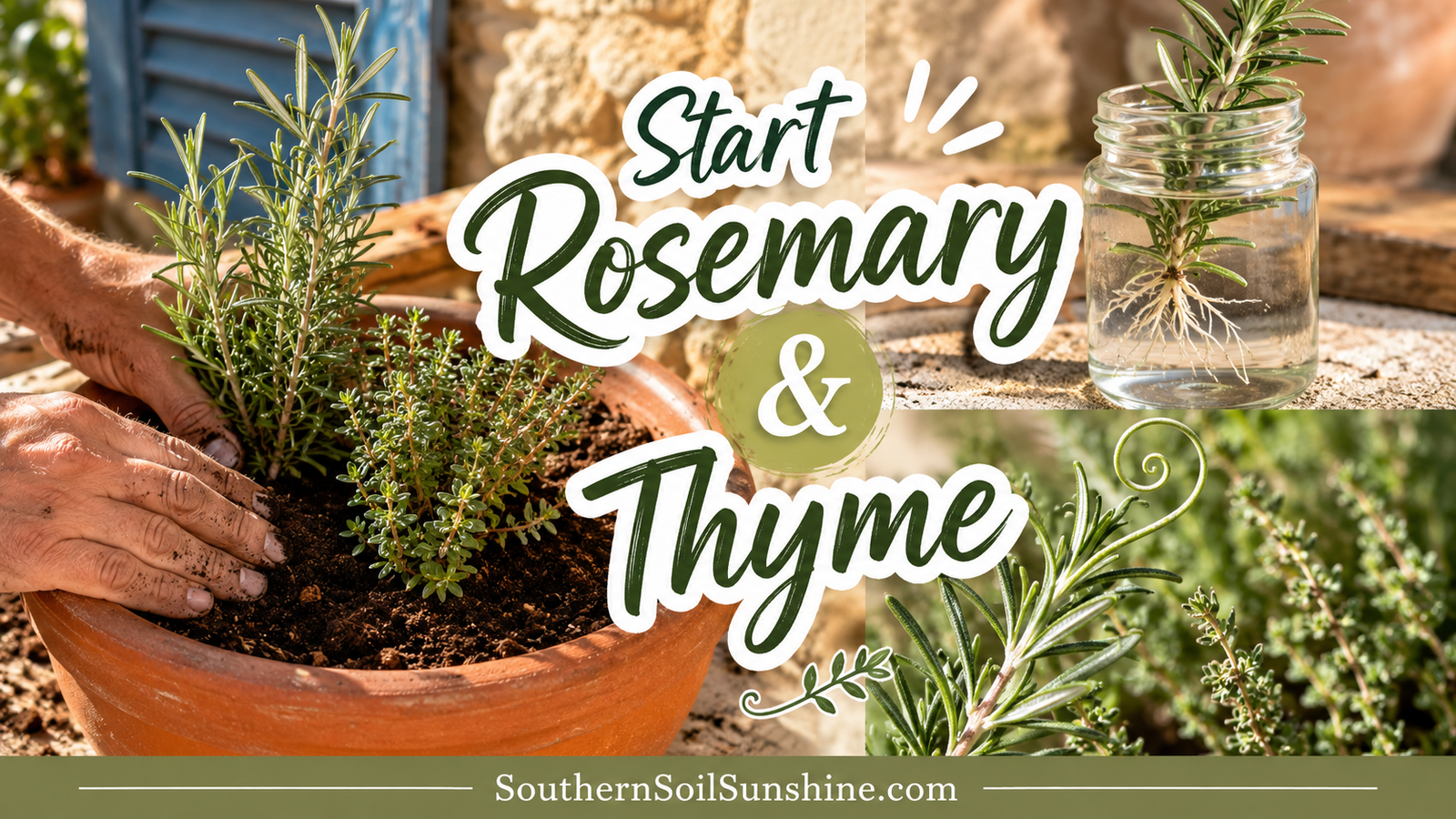
For most gardeners, the easiest path is to start from a nursery transplant or a cutting rather than seed, since both rosemary and thyme are notoriously slow and finicky from seed — rosemary especially can take weeks just to germinate and months to reach any size. A small transplant gives you a real head start, and cuttings from an existing plant root readily and cost nothing. Whichever way you start, plant into well-draining soil — this is non-negotiable, as these herbs rot in wet feet — in the sunniest spot you have, and resist the urge to overwater or overfeed. In summer, give a new transplant enough water to establish, but remember these are drought-lovers; the most common way to kill them is kindness in the form of too much water and rich soil.
The Patience of the First Season
The hardest thing about these herbs is that they ask you to tend something that seems to do nothing for a while. A new rosemary or thyme spends its first season putting down roots and establishing itself, growing slowly above ground while it builds the foundation below that will support years of future growth. It is easy to grow impatient, to think it is failing because it is not visibly thriving. But this slow, hidden establishment is exactly the work that makes these plants so enduring — they are building deep, and deep-built things last. Tend it faithfully through this unglamorous first season — adequate water to establish, full sun, good drainage, no fussing — and trust that the slow beginning is not failure but foundation. By next year, you will have a thriving, permanent, nearly self-sufficient herb that returns your early patience many times over.
Invest in What Lasts
This day’s phrase is a quiet anchor: invest in what lasts. In a garden and a culture both oriented toward the fast and the immediate, there is deep wisdom in deliberately planting something slow — something that will not reward you this week or even this season, but that, tended patiently, will endure and give for years. Rosemary and thyme are exactly this kind of investment: slow to establish, quick to be dismissed as doing nothing, but ultimately among the most enduring and generous plants in the garden. To plant them is to make a small act of faith in the long haul, to invest in what lasts rather than only in what pays off quickly.
And how much our lives need this same wisdom. So much of our energy goes to the fast and the fleeting — the quick win, the immediate result, the thing that shows fruit this week. These have their place, as the fast crops do. But the things that truly last, that give for years and decades, are almost always slow to establish and unglamorous in their beginnings: deep relationships, real character, faith itself, the quiet disciplines that build a foundation invisibly before they ever show above ground. These ask us to invest patiently in what seems to do nothing for a while, trusting that the slow, hidden establishment is exactly the work that makes them endure. The garden invites us to value these long investments as highly as the quick returns — to plant some rosemary in our lives, some slow, deep, lasting thing, and to tend it faithfully through its unrewarding beginning. Invest in what lasts. The slow beginning is not failure; it is foundation — and what is built deep will still be giving long after the fast things have come and gone.
Share your perennial herb plantings with us on Instagram @southernsoils — there is real faith in planting for the long haul.
A Few More Perennial Herbs Worth Planting
Rosemary and thyme lead the list, but they are not the only slow, lasting herbs worth establishing now. If you are already setting in perennials, consider adding a few of their equally enduring companions.
| Herb | Why Plant It |
|---|---|
| Oregano | Tough perennial; spreads & returns yearly |
| Sage | Woody, drought-tough, long-lived |
| Oregano-family marjoram | Fragrant, heat-loving |
| Bay laurel (in a pot) | Slow but decades-long; evergreen |
Oregano and sage share rosemary and thyme’s love of heat, lean soil, and sharp drainage, and both are long-lived perennials that will return for years once established. Bay laurel is the ultimate long-haul investment — painfully slow to grow, but a plant that can live for decades and give you fresh bay leaves for a lifetime. All of these ask the same thing: patience through a slow start, full sun, well-drained soil, and restraint with water and feeding. Plant a small collection of them now and you are building a permanent, drought-proof herb garden that will anchor your beds for years, giving fragrant harvests through every summer while your fast crops come and go around them.
The Quiet Reward of Perennials
There is a particular satisfaction that comes only from perennials — the plants you set in once and then simply have, year after year. Each spring they return without being replanted; each summer they give without being coddled; and with every passing year they grow larger, woodier, more established, and more generous. The rosemary you plant this June, patiently tended through its slow first season, becomes a fragrant shrub you brush past and harvest from for years, a permanent fixture of your garden and your kitchen. That is the deep reward of investing in what lasts: not a quick return, but an enduring one that compounds quietly over time.
So plant your slow herbs this week, and plant them with the long view. Give them sun and sharp drainage and just enough water to establish, and then give them the patience their slow beginning requires. Trust that the season of seeming to do nothing is really the season of building deep. And let the whole quiet act teach its lasting lesson — that the things most worth having, in the garden and in life, are often the slow ones, the ones that ask patient investment through an unrewarding beginning before they endure and give for years. Invest in what lasts. Plant something slow this week, and tend it in faith — the harvest will come, and it will keep coming long after the fast things are gone.
Rooting Cuttings: Free Plants for the Long Haul
If you already have a rosemary or thyme plant — or a generous gardening friend does — cuttings are the thrifty, reliable way to multiply your perennial herbs for free. Snip a few four- to six-inch sprigs of healthy, non-flowering growth, strip the leaves from the lower half, and set the bare stems in moist, well-draining potting mix or even a jar of water in bright indirect light. Keep them lightly moist and out of the punishing direct sun while they root, which usually takes a few weeks. Once you feel resistance when you tug gently — a sign roots have formed — pot them up or move them to their permanent sunny, well-drained spot. It is a small, patient act with an outsized payoff: a single afternoon of taking cuttings can give you a whole row of new perennial herbs at no cost, each one destined to become another long-lived, drought-proof anchor in your garden. Investing in what lasts need not cost much at all — only a little patience and a few sprigs from a plant you already love.
Ready to Go Deeper in the Garden?
If this article resonated with you, you might be ready for something more than tips.
- Download the FREE Rooted in Grace eBook
- Join Rooted Reset
- Follow on Instagram – @southernsoils
“The garden is not just a place to grow plants – it is a place to grow yourself.”
Free eBook
Before you go — the book is yours
Rooted in Grace: A Christian Guide to Intuitive Gardening. No cost, no catch. Read it on any device, at whatever pace the season allows.


