Thinning for Airflow: Opening Up Crowded Summer Plants to Prevent Disease
When Lush Growth Becomes a Problem 🌿
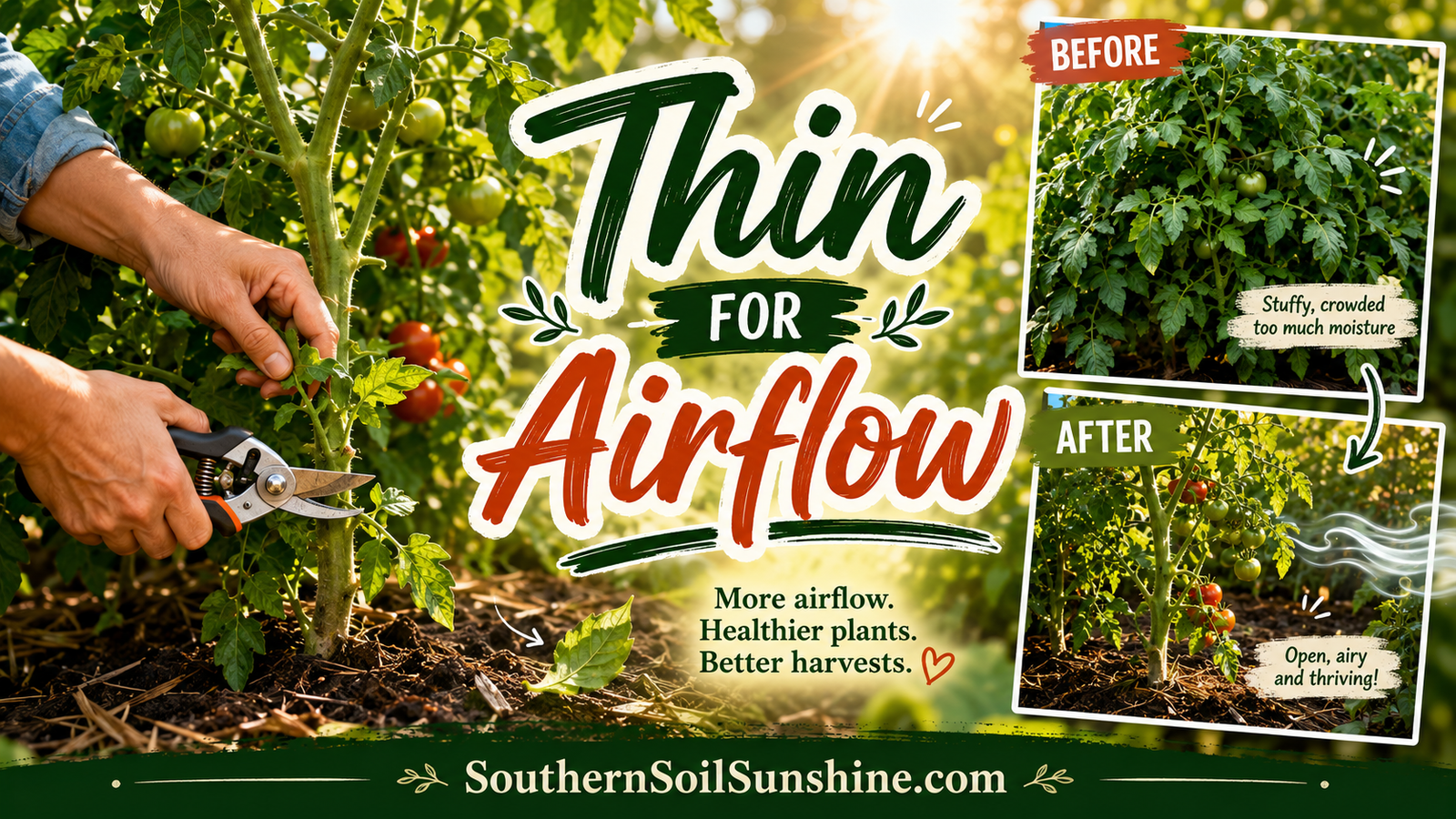
By late June, many summer plants have grown thick and full — tomatoes are a dense jungle of foliage, squash leaves overlap in a solid canopy, and beans and cucumbers have filled every inch of their space. It looks like abundance, and in a way it is. But in our humid Zone 9 summer, that very lushness becomes a liability. Densely packed foliage traps humidity, blocks airflow, and holds moisture on leaves — the exact conditions in which fungal diseases like powdery mildew, blight, and leaf spot take hold and spread. The counterintuitive truth of summer gardening here is that sometimes the most caring thing you can do for a thriving plant is to remove some of its growth, opening it up so air can move through and disease cannot settle in.
This day’s task is to thin crowded plants to improve airflow and prevent disease, and it carries a wise phrase: make room to breathe. Let me show you how to thin your summer plants well, and reflect on why making room to breathe is such necessary wisdom.
Free eBook
Rooted in Grace
A Christian guide to intuitive gardening — the whole book, free. Tell me where to send it and it’s yours in a minute.
Why Airflow Matters So Much in Humidity
Fungal diseases — the main threat to summer plants in a humid climate — need three things to thrive: warmth, moisture, and still air. We cannot do much about the warmth, but airflow is directly in our control, and it is the factor that most determines whether disease takes hold. When air moves freely through a plant, leaves dry quickly after rain, dew, or watering, and fungal spores struggle to establish on dry surfaces. When foliage is so dense that air cannot penetrate, leaves stay damp for hours, humidity pools in the interior, and disease finds a perfect home. Thinning crowded growth opens the plant so breezes can move through and sun can reach the interior, drying the leaves and dramatically reducing disease pressure. In a dry climate this matters less; in humid Zone 9, good airflow is one of the most important disease-prevention tools you have, and thinning is how you create it.
What and How to Thin
Different crops call for different thinning, but the principle is the same: open up the interior and remove what traps moisture.
| Plant | What to Remove |
|---|---|
| Tomatoes | Lower leaves, interior suckers, ground-touching foliage |
| Squash & zucchini | Old lower leaves, damaged foliage |
| Cucumbers & beans | Overcrowded tangled growth, dead leaves |
| Any crop | Yellowing, diseased, or dead leaves first |
Start everywhere by removing anything yellowing, diseased, or dead — these are disease entry points and do the plant no good. For tomatoes, strip the lower leaves (especially any touching the soil, where fungal spores splash up) and remove some interior suckers and crowded growth to open the center. For squash, remove old, large lower leaves that shade the base and trap humidity, and cut away any leaves showing early powdery mildew. For cucumbers and beans, thin the tangled overcrowded growth so air can move through the vines. In every case, use clean, sharp scissors or pruners, cut cleanly at the base of the leaf or stem, and do not overdo it — the goal is to open the plant, not to strip it bare. Removing perhaps a quarter to a third of the densest foliage is usually plenty to transform airflow.
The Balance: Airflow vs. Sun Protection
There is a genuine tension to hold here in our climate: we thin for airflow, but we also need some leaf cover to protect fruit from sunscald in the fierce heat. The answer is balance, not extremes. Open up the interior and remove the growth that traps humidity at the base and center, but do not strip so much that you expose your tomatoes and peppers to the brutal direct sun that will scald them. Remove lower and interior foliage for airflow while leaving enough upper canopy to shade the fruit. It is a thoughtful, moderate thinning — opening the plant to breathe without stripping its protection — and reading each plant to find that balance is part of the art. When in doubt in our heat, thin the dense interior and base for airflow while preserving the upper leaves that shade the fruit.
Make Room to Breathe
This day’s phrase is one we feel in our own bones: make room to breathe. In the summer garden it is a genuine act of care — recognizing that even good, lush, abundant growth, when it becomes too dense and crowded, stops being healthy and starts trapping the very things that cause disease. The most loving thing we can do is thoughtfully remove some of it, opening the plant so air can move through and it can breathe. It is counterintuitive: we cut away growth precisely because we want the plant to be healthy. But the crowded plant that cannot breathe is the plant that gets sick, and making room to breathe is what keeps it well.
How clearly this speaks to our own crowded lives. So often our trouble is not a lack of good things but an overabundance of them — a life so densely packed with commitments, activities, and even genuinely good pursuits that there is no air moving through it, no space, no room to breathe. And just as in the garden, that crowdedness, however lush it looks, becomes the very condition in which trouble festers: the exhaustion, the stress, the quiet sickness of a soul with no space. The wise, loving response is the same as the gardener’s — not to add more, but to thoughtfully remove some, even some good things, to open our lives so air can move through them again. Making room to breathe is not laziness or lack; it is the deliberate creation of the space that keeps living things healthy. So as you thin your crowded plants today, opening them to the breeze, let it ask you gently: where has my own life grown so crowded, even with good things, that there is no room to breathe? And what might I lovingly thin, to let the air move through again? Make room to breathe. It is one of the most caring things you can do — for a plant, and for a soul.
Share your summer thinning and disease-prevention wisdom with us on Instagram @southernsoils — there is real care in making room to breathe.
Spotting the Diseases Airflow Prevents
It helps to know exactly what you are guarding against, so you can catch the earliest signs and thin in response. These are the humid-summer diseases good airflow holds at bay.
| Disease | Early Sign |
|---|---|
| Powdery mildew | White powdery patches on leaves |
| Early blight | Dark spots with rings, lower leaves |
| Leaf spot | Small brown/black spots spreading |
| Downy mildew | Yellow patches, fuzzy leaf undersides |
Powdery mildew is the most common, coating squash and cucumber leaves in white patches that spread across the canopy in still, humid air — airflow is its greatest enemy. Early blight starts on the lowest tomato leaves as dark, ringed spots, which is exactly why stripping those ground-level leaves matters so much. Leaf spot and downy mildew likewise begin where moisture lingers longest and air moves least. The pattern is consistent: these diseases start in the damp, crowded, still interior and lower reaches of a plant, and they are prevented by the very thinning that opens those areas to air and sun. When you catch the first white patch or dark spot, remove that leaf immediately, thin the growth around it, and you often stop the disease before it spreads.
Thinning as Ongoing Care, Not a One-Time Job
Airflow thinning is not a task you do once and finish; it is a rhythm you keep through the humid months. Plants keep growing, keep filling in, and keep re-crowding, so a light thinning pass every week or two through the summer keeps them open and healthy. Fold it into your regular garden walk — as you move through the beds, snip a few crowding leaves, remove anything yellowing or spotted, and keep the interiors open. This steady, light-touch tending is far better than an occasional drastic overhaul, and it keeps disease pressure low all season. Like so much good gardening, it is little and often that wins: a few minutes of thinning here and there, keeping the air always moving through your plants.
So open up your crowded summer plants this week, and keep opening them as they fill back in. Remove the diseased and the crowding, keep the canopy that shades your fruit, clean up what you cut, and let the breezes move through. And let the humble work keep teaching its deeper lesson — that even good and abundant growth, in a life as in a garden, can become so crowded it cannot breathe, and that lovingly making room is one of the truest forms of care. Make room to breathe. Tend the space in your garden and in your life, and watch how much healthier the living things become when the air can finally move through.
What to Do With the Foliage You Remove
Once you have thinned, handle the cut foliage thoughtfully — it matters more than you might think. Healthy, disease-free green leaves you removed simply for crowding can go onto the compost pile, where they break down into next season’s soil. But any leaf showing powdery mildew, blight, leaf spot, or other disease should be bagged and thrown away, never composted, because home compost rarely gets hot enough to kill fungal spores, and you would only spread the disease back through your beds next year. The same goes for the debris that collects at the base of plants — clear it away, since it harbors both moisture and spores. This clean-up step is not an afterthought; it is half of what makes thinning work. Opening the plant improves airflow, and removing the diseased material eliminates the source — together they keep your summer garden genuinely healthier. A few minutes of careful clean-up after each thinning pass protects everything you just worked to open up.
Ready to Go Deeper in the Garden?
If this article resonated with you, you might be ready for something more than tips.
- Download the FREE Rooted in Grace eBook
- Join Rooted Reset
- Follow on Instagram – @southernsoils
“The garden is not just a place to grow plants – it is a place to grow yourself.”
Free eBook
Before you go — the book is yours
Rooted in Grace: A Christian Guide to Intuitive Gardening. No cost, no catch. Read it on any device, at whatever pace the season allows.