Reading the Early Signs of Heat Stress in Your Zone 9 Garden
Learning to Read What Your Plants Are Telling You ☀️
By late June in Zone 9, the heat has fully arrived, and the garden begins to speak a language of stress that a watchful gardener learns to read. Plants cannot tell us they are suffering in words, but they tell us clearly in other ways — in the droop of leaves at midday, in dropped blossoms, in scorched edges and paused growth. The gift of learning to read these early signs is that heat stress caught early is easily addressed, while heat stress ignored until a plant is truly failing may be too late to reverse. This day is about slowing down enough to notice what your plants are showing you, and responding before small stress becomes real damage.
This day’s task is to watch for the early signs of heat stress in your garden, and it carries a tender phrase: notice the strain before it breaks you. Let me teach you to read the signs, respond to them, and reflect on why noticing the strain before it breaks is such life-giving wisdom.
Free eBook
Rooted in Grace
A Christian guide to intuitive gardening — the whole book, free. Tell me where to send it and it’s yours in a minute.
The Early Signs, and What They Mean
Heat stress shows up in a predictable sequence, and knowing the signs lets you act at the earliest, most reversible stage.
| Sign | What It Means |
|---|---|
| Midday wilting, recovers by evening | Normal heat coping; watch it |
| Wilting that does NOT recover | Real water stress; act now |
| Dropped blossoms, no fruit set | Heat above pollination range |
| Scorched, crispy leaf edges | Sunscald / dehydration |
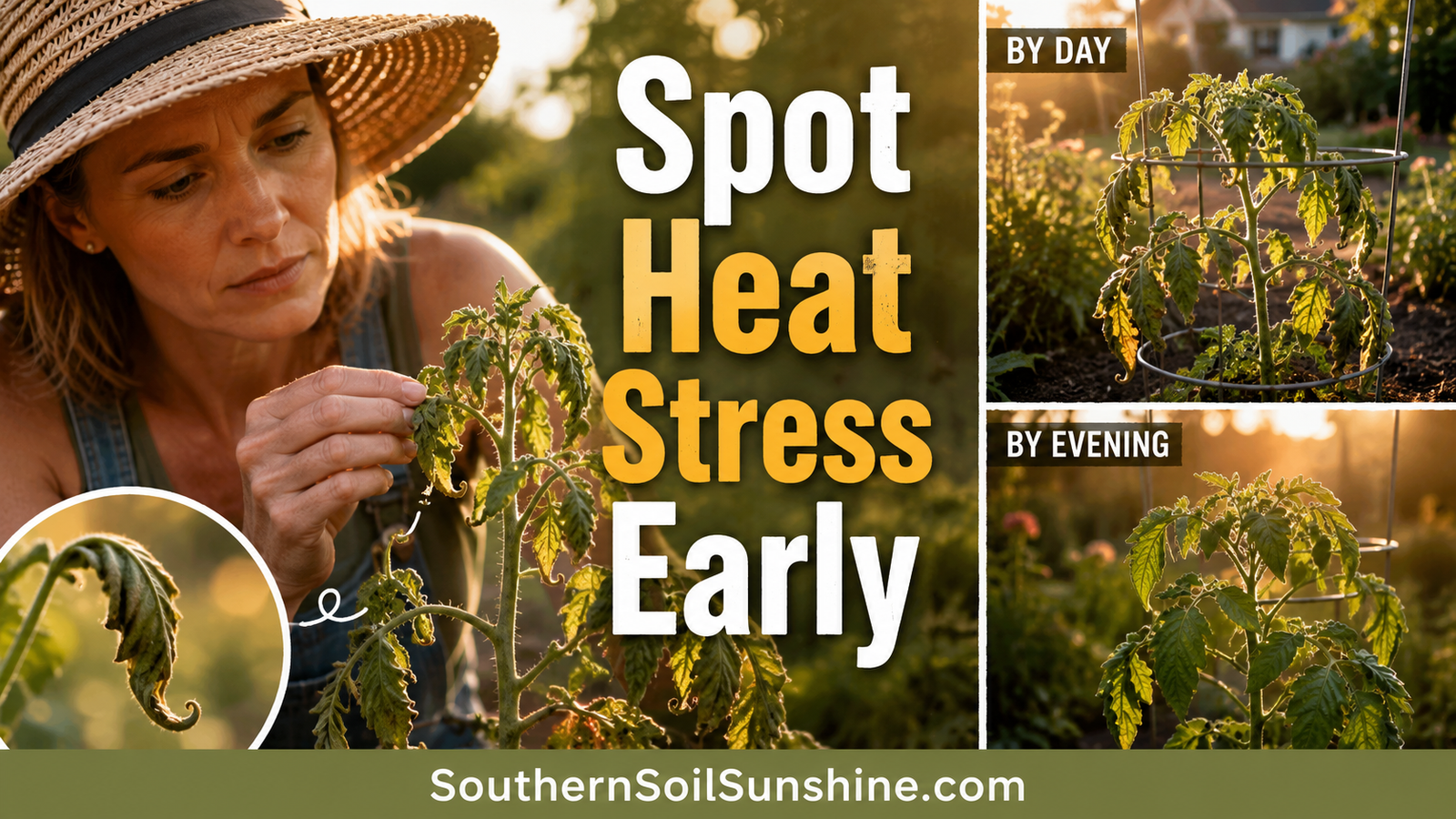
| Curled or cupped leaves | Plant reducing water loss |
| Paused growth, bitter greens | Plant in survival mode |
The most important distinction is between wilting that recovers and wilting that does not. Many plants wilt a little in the fierce afternoon sun as a normal way of reducing water loss, then perk back up in the cool of evening — this is coping, not crisis. But a plant still wilted in the cool of morning or evening is genuinely water-stressed and needs immediate attention. Dropped blossoms tell you the heat has climbed above the range at which your tomatoes and peppers can set fruit. Crispy scorched edges signal sunscald and dehydration. Curled leaves are the plant deliberately reducing its exposed surface. Paused growth and bitter greens mean the plant has shifted from growing to simply surviving. Each sign is a message — and each, caught early, points to a simple response.
Responding to the Signs
The good news is that most early heat stress responds quickly to simple care. For wilting that does not recover, check and deepen your watering — deep morning watering and a thick mulch layer solve most water stress. For blossom drop, understand it is temporary; keep the plants healthy and well-watered, and fruit set resumes once the extreme heat eases, so do not give up on the plant. For scorched leaves and sunscald, add shade cloth over the most exposed crops during the punishing afternoon hours. For plants in survival mode, ease off any demands — do not fertilize a heat-stressed plant, do not transplant, do not prune hard; simply keep it watered, shaded, and mulched until the worst passes. Almost always, the response to early heat stress is the gentle trio of deeper water, more mulch, and afternoon shade, plus the patience to stop demanding growth from a plant that is just trying to survive.
Knowing What’s Normal vs. What’s Not
Part of reading your garden well is not overreacting to normal summer behavior. Some things look alarming but are simply how plants cope with our heat: a bit of afternoon wilting that recovers, slower growth in the hottest weeks, a pause in fruit set during a heat wave. These do not call for panic or drastic intervention — steady care is enough. What does call for action is the strain that does not resolve on its own: persistent wilting, spreading scorch, a plant clearly declining rather than merely coping. Learning the difference keeps you from exhausting yourself fussing over normal coping while also ensuring you catch the real trouble early. Watchfulness is not anxiety; it is calm, informed attention that knows what to let be and what to address.
Notice the Strain Before It Breaks You
This day’s phrase is quietly profound: notice the strain before it breaks you. In the garden it is a practical discipline — learning to read the early, subtle signs of stress in our plants and to respond while the strain is still small and reversible, rather than waiting until a plant is failing and the damage is done. The whole art of it is early attention: the wilting noticed before it becomes death, the scorch caught before it spreads, the survival-mode plant given rest before it collapses. Plants rarely fail all at once; they show strain first, in a hundred small ways, if only we are watching.
And how much this describes the strain in our own lives. We, too, rarely break all at once; we show the signs first — the persistent tiredness that does not lift with rest, the small things that suddenly feel overwhelming, the joy that has quietly drained away, the sense of running on survival rather than growth. These are our wilting leaves, our dropped blossoms, our scorched edges, and they are messages, if only we will read them. Yet how easily we ignore our own early signs of strain, pushing on and demanding growth from ourselves in seasons when we are barely coping, until something finally breaks. The garden teaches a gentler, wiser watchfulness — toward our plants, and toward ourselves. It invites us to notice the strain early, to read our own signs of heat stress with the same calm attention we give the garden, and to respond with the same gentleness: more rest, more shelter, fewer demands, until the hard season passes. Notice the strain before it breaks you. Learn to read the signs — in your garden and in your own soul — and respond while the strain is still small. It is the watchfulness that keeps living things from breaking.
Share what your garden is showing you this summer with us on Instagram @southernsoils — there is real wisdom in learning to read the strain early.
Which Plants to Watch Most Closely
Not every crop feels the heat equally, and knowing which plants are most vulnerable tells you where to focus your watchful eye first.
| Most Vulnerable | More Resilient |
|---|---|
| Lettuce & leafy greens | Okra |
| Newly set transplants | Southern peas |
| Anything in containers | Sweet potatoes |
| Tomatoes & peppers (fruit set) | Established, deep-rooted herbs |
Leafy greens and lettuce are the first to signal distress, bolting and turning bitter as soon as the heat climbs — watch them closely and expect to lose some to the season. Containers dry out and overheat far faster than the ground, so anything in a pot needs the most frequent checking, sometimes twice-daily watering in a heat wave. Newly set transplants have shallow roots and no reserves, so they strain before established plants do. Tomatoes and peppers will keep their leaves but quietly stop setting fruit in the extreme heat — a subtler sign that is easy to miss. Meanwhile, the heat-loving crops like okra, southern peas, and sweet potatoes may barely flinch, which is exactly why they earn their place in a Zone 9 summer garden. Knowing this map tells you where to spend your attention: closest on the vulnerable, lighter on the resilient.
The Gift of the Twice-Daily Walk
If you take only one habit from this into your summer, let it be the short garden walk, morning and evening. It costs a few minutes and returns more than any product or technique, because it is the thing that lets you catch every other problem early — the heat stress, yes, but also the first pests, the dry container, the plant that needs staking, the fruit ready to pick. Walking your garden with an unhurried, watchful eye is the foundational skill of good gardening, and never more valuable than in the demanding heat of a Zone 9 summer, when small problems become large ones fast. It is also, quietly, a form of care for yourself: a slow, attentive pause in the cool bookends of a hot day, moving among growing things, noticing, tending, being present.
So walk your garden this week with new eyes, learning to read the signs of strain before they become damage. Respond gently — water, shade, mulch, rest — and resist the urge to push growth from plants that are only trying to survive. And let the practice deepen into something more: a watchfulness you turn on yourself as well, learning to notice your own early signs of strain and to respond to them with the same gentleness you give your garden. Notice the strain before it breaks you. It is the quiet, faithful attention that keeps every living thing — in the garden and in the home — from breaking under the summer’s heat.
Keep a Simple Heat-Stress Log
One quiet habit that pays off across seasons is jotting a few notes as you walk — which plants strained first, how high the heat climbed that week, what helped and what came too late. It need not be elaborate; a line or two in a garden journal or a note on your phone is enough. Over time these notes become genuinely valuable: you begin to see that a certain bed always struggles first, that a particular variety shrugs off the heat while another collapses, that the shade cloth you put up too late one year should go up earlier the next. The garden repeats its lessons every summer, and the gardener who writes them down learns faster than the one who relies on memory. Reading the signs of strain in the moment keeps this season’s plants alive; recording what you see makes every future summer easier. Watchfulness in the moment and memory across the seasons together turn a hard climate into one you know how to tend with growing confidence and grace.
Ready to Go Deeper in the Garden?
If this article resonated with you, you might be ready for something more than tips.
- Download the FREE Rooted in Grace eBook
- Join Rooted Reset
- Follow on Instagram – @southernsoils
“The garden is not just a place to grow plants – it is a place to grow yourself.”
Free eBook
Before you go — the book is yours
Rooted in Grace: A Christian Guide to Intuitive Gardening. No cost, no catch. Read it on any device, at whatever pace the season allows.