July Pest Patrol: Protecting Your Tomatoes and Peppers Through Peak Summer
The Month Your Fruiting Crops Need You Most 🍅
July is the make-or-break month for tomatoes and peppers in Zone 9. The plants are mature and setting or ripening fruit, but they are also under maximum stress from the heat — and stressed plants are exactly what pests target. Hornworms, stink bugs, aphids, spider mites, and fruit-boring caterpillars all reach their peak now, and they can undo months of patient work in a matter of days if left unchecked. A single tomato hornworm can strip a plant overnight; stink bugs can ruin a whole crop of ripening fruit with their feeding. This is the month when a regular, watchful pest patrol is not optional — it is the difference between harvesting the fruit you have worked all season for and losing it to pests in the final stretch.
This day’s task is to patrol your tomatoes and peppers for pests and protect the ripening harvest, and it carries a faithful phrase: guard what you have grown. Let me walk you through an effective July pest patrol, and reflect on why guarding what you have grown is such steadfast wisdom.
Free eBook
Rooted in Grace
A Christian guide to intuitive gardening — the whole book, free. Tell me where to send it and it’s yours in a minute.
The Peak-Summer Pests to Hunt
Know your enemies and where they hide, and the patrol becomes efficient.
| Pest | Where to Look / What to Do |
|---|---|
| Hornworms | Chewed leaves & dark droppings; handpick |
| Stink bugs | On fruit; handpick; cause dimpled spots |
| Aphids | Leaf undersides & tips; water blast, neem |
| Spider mites | Fine webbing, speckled leaves; neem, humidity |
| Fruitworms/borers | Holes in fruit; remove affected fruit, Bt |
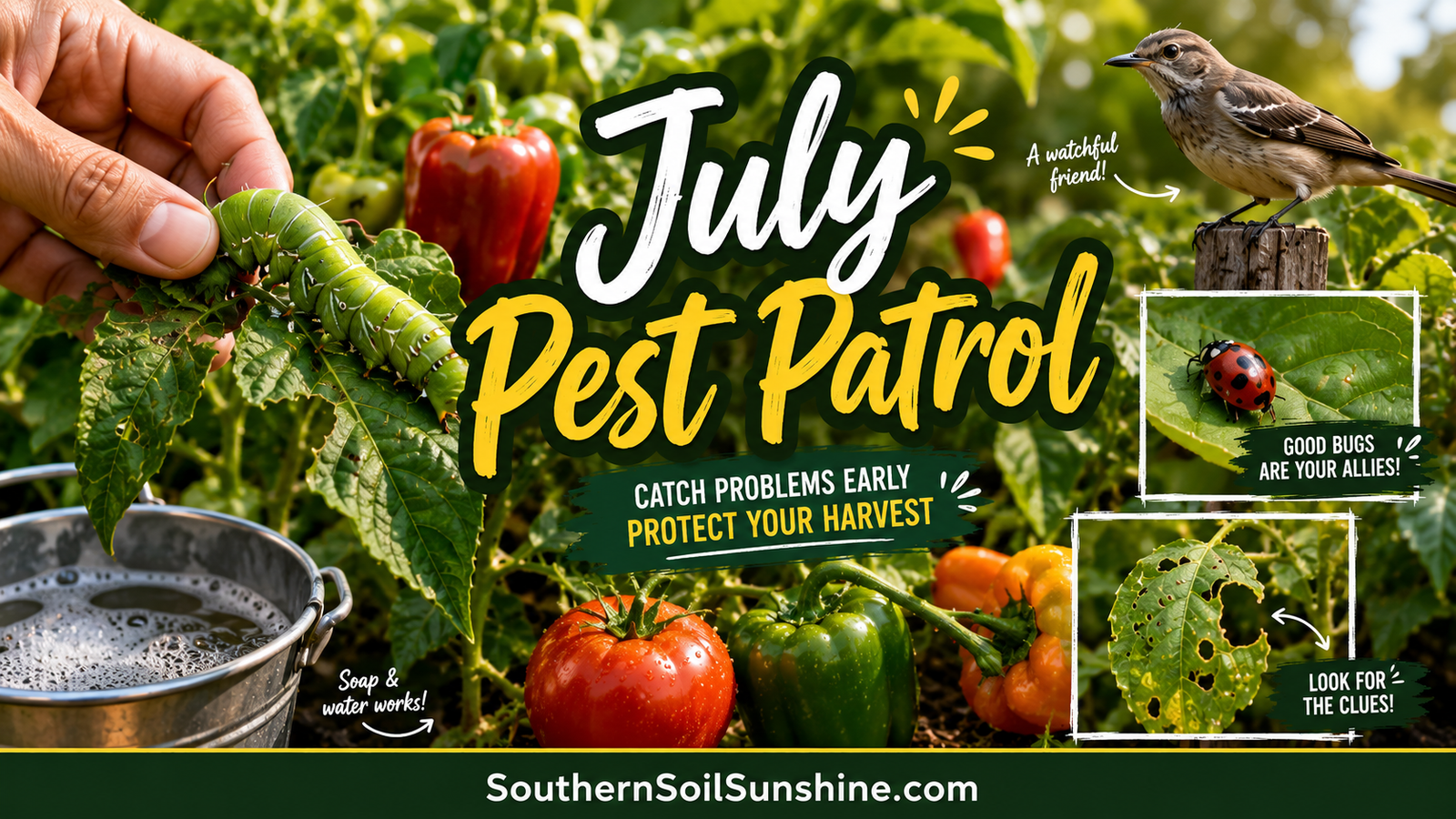
Hornworms are the most dramatic — huge green caterpillars that blend in perfectly but leave telltale chewed leaves and dark droppings below; follow the clues, find them, and handpick them off (they are harmless to you). Stink bugs cluster on the fruit itself, leaving dimpled, discolored spots where they feed; handpick them in the cool morning when they are sluggish. Aphids mass on tender new growth and leaf undersides — blast them off with water and follow with evening neem. Spider mites, which explode in hot dry weather, show as fine webbing and speckled, stippled leaves; treat with neem and raise humidity around the plants. Fruitworms and borers tunnel into the fruit, leaving entry holes; remove and destroy affected fruit and use Bt for heavy caterpillar pressure. Knowing each pest’s signs and hiding spots turns a vague worry into a targeted, effective patrol.
How to Patrol Effectively
The heart of pest patrol is simply regular, close looking. Walk your tomatoes and peppers every day or two in July, in the cool of morning or evening, and look closely — not just a glance, but really examining leaf undersides, the interior of the plant, the fruit, and the ground beneath for droppings. Most July pests are controlled by nothing more than handpicking and a strong blast of water, caught early on this regular walk before they multiply. Keep a small bucket of soapy water to drop caterpillars and bugs into as you find them. Reserve neem (evening only) and Bt for when handpicking cannot keep up. The single most effective thing you can do is simply show up daily and look closely — the pests that get out of hand are almost always the ones on plants no one was watching.
Protecting the Fruit, Not Just the Plant
In July the focus shifts from protecting foliage to protecting the fruit itself, because that is what pests — and we — are after now. Check ripening tomatoes and peppers closely for stink bug damage, borer holes, and rot, and harvest fruit promptly as it ripens rather than leaving it hanging where pests and heat can get to it. Picking tomatoes at the first blush of color and ripening them indoors is often wiser in July than leaving them fully on the vine, where a single day can mean stink bug damage, cracking, or sunscald. Remove any damaged or rotting fruit immediately — it draws more pests and disease. The goal of the July patrol is not just healthy plants but a protected, harvested crop, so keep your eyes and your priority on the fruit you have worked all season to grow.
Guard What You Have Grown
This day’s phrase carries the weight of a whole season: guard what you have grown. By July, your tomatoes and peppers represent months of faithful work — the seeds started in late winter, the transplants tended, the watering and feeding and staking through spring, the whole long patient investment. And now, right at the threshold of harvest, that investment is most vulnerable, most worth protecting, and most under attack. The July patrol is the guarding of it: the vigilant, daily care that protects the fruit of long labor through its most exposed moment. It would be a quiet tragedy to do all the work of growing and then lose the harvest in the final stretch for lack of watchfulness.
And how much this speaks to the things we have grown in our own lives — the relationships, the character, the faith, the good work built over long seasons of patient investment. These, too, are most worth guarding precisely when they are bearing fruit, and often most vulnerable in exactly those seasons. It is a sobering and steadying truth that what we have grown must also be guarded — that the long work of cultivating something good is not complete until we also faithfully protect it through the seasons when it is most exposed. We can pour years into growing something precious and then lose it through inattention at a vulnerable moment, just as a gardener can lose a summer’s crop in a week of not looking. The garden calls us to the vigilance that completes the work: to guard what we have grown, to keep watch over the precious things through their exposed seasons, to not grow careless right at the threshold of harvest. So as you patrol your plants today, protecting the ripening fruit of a long season, let it ask you gently: what have I grown that now needs guarding? And am I keeping faithful watch over it? Guard what you have grown. The growing and the guarding together are what bring the harvest home.
Share your July pest patrol wins with us on Instagram @southernsoils — there is real faithfulness in guarding what you have grown.
Building Your Garden’s Own Defenses
The most sustainable pest patrol is not one you carry out alone — it is one where the garden itself is working alongside you. In July, your beneficial insects are your greatest allies, and a few simple choices multiply their help.
| Ally | What It Does |
|---|---|
| Ladybugs & lacewings | Devour aphids by the hundreds |
| Parasitic wasps | Kill hornworms & caterpillars |
| Birds | Eat caterpillars & beetles |
| Predatory mites | Control spider mites |
Every time you choose handpicking over broad spraying, you protect this free workforce. Ladybugs and lacewings clear aphids faster than you ever could; parasitic wasps quietly destroy hornworms; birds patrol for caterpillars if you let them; predatory mites keep spider mites in check. You encourage them by avoiding harsh chemicals, keeping some flowering plants nearby to feed them, and providing a little water. A garden with a healthy population of beneficial insects does most of its own pest patrol, leaving you to catch only what slips through. This is the deeper strategy behind guarding what you have grown: not just fighting pests yourself, but cultivating a garden ecosystem that guards itself, so your July vigilance is supported by a whole community of allies working in your favor.
The July Rhythm That Saves the Harvest
Pull it all together into a simple daily rhythm and July becomes manageable rather than overwhelming. In the cool of the morning, walk your tomatoes and peppers: look closely at leaves and fruit, handpick what you find into your soapy bucket, blast any aphids, harvest what has ripened, and remove any damaged fruit. Once or twice a week, treat with evening neem where handpicking cannot keep up. Protect your beneficial insects in every choice. That is the whole patrol — a few faithful minutes a day that carry your crop through its most vulnerable month to a full harvest. It is not dramatic work, but it is decisive: the quiet, daily guarding that brings months of labor safely home.
So keep watch over your fruiting plants this month, faithfully and daily. Hunt the hornworms, pick the stink bugs, protect the ripening fruit, and guard your garden’s own defenders. And let the vigilant work carry its deeper meaning — that the good things we grow, in gardens and in lives, are completed not only by cultivating them but by faithfully guarding them through their most exposed seasons. Guard what you have grown. Keep watch through July, and bring the long season’s harvest home.
When to Let a Plant Go
Part of guarding what you have grown is the wisdom to know when a plant is past guarding. By mid-to-late July, some tomato plants — especially spring-planted ones — are simply exhausted: leggy, disease-ridden, barely setting fruit in the heat, and serving mainly as a pest reservoir that threatens your healthier plants. There is no failure in pulling such a plant. Removing a spent, pest-infested tomato actually protects the crop by eliminating a breeding ground and freeing your energy for the plants still worth defending. Guarding well means directing your vigilance where it counts, not pouring endless effort into a plant that has already given what it will. Pull the truly spent ones, clean up their debris, and concentrate your July patrol on the healthy, productive plants and any heat-set fall tomatoes you are starting. Knowing what to guard and what to release is its own kind of faithful stewardship — and it keeps your remaining harvest stronger and your effort focused where it will actually bear fruit.
Ready to Go Deeper in the Garden?
If this article resonated with you, you might be ready for something more than tips.
- Download the FREE Rooted in Grace eBook
- Join Rooted Reset
- Follow on Instagram – @southernsoils
“The garden is not just a place to grow plants – it is a place to grow yourself.”
Free eBook
Before you go — the book is yours
Rooted in Grace: A Christian Guide to Intuitive Gardening. No cost, no catch. Read it on any device, at whatever pace the season allows.