Make Your Own Herbal Holiday Centerpieces for a Festive Table

Make Your Own Herbal Holiday Centerpieces for a Festive Table 🌿
There’s something deeply satisfying about creating beauty with your own two hands—especially when that beauty comes straight from your garden. A few months back, I was sitting at our dining table, looking at the same store-bought centerpiece I’d bought for the third year running, and I felt the Lord nudging my heart toward something more intentional. So I decided: this year, we’d make our own.
Here’s what surprised me most: you can create a stunning herbal holiday centerpiece in just 75 minutes, and chances are you already have most of what you need right here in our Zone 9 gardens. 🕐 That cranberry-studded, rosemary-crowned beauty on your table doesn’t have to come from a store. It can come from your hands, your herbs, and your home.
Free eBook
Rooted in Grace
A Christian guide to intuitive gardening — the whole book, free. Tell me where to send it and it’s yours in a minute.
Why Herbal Centerpieces Speak to Our Hearts
My grandmother’s silver—passed down through three generations—sits in my dining room cabinet. When I started thinking about holiday entertaining, I realized those pieces deserve a table that honors both tradition and the natural world around us. An herbal centerpiece does exactly that. It whispers of slower times, of homegrown abundance, and of gathering people we love around something we’ve created with intention.
When you combine fresh herbs with your table setting—crisp white dishes, soft linens, natural wood or a hemp runner—something magical happens. The bright greens of rosemary and thyme catch the candlelight. The fragrance of lavender and cilantro rises with the warmth. Your guests don’t just see a beautiful table; they *feel* the care you’ve poured into it.
And here’s the practical blessing: you can make these centerpieces days in advance. That means less scrambling on holiday morning and more time actually present with the people you love. That’s what the season should be about, isn’t it?
Sanda’s Tip: Here in the Houston area, November and December are the *perfect* months to harvest fresh herbs. Our frost typically doesn’t arrive until late December, which means your rosemary, thyme, and sage are still producing beautifully. Cut what you need for your centerpiece in the early morning when the oils are strongest—that’s when they’ll smell most fragrant.
What You’ll Need: The Observing Phase 🔍
Before we dive into gathering supplies, let me invite you to do what I call “observing”—the first step of intuitive gardening. Walk through your garden. What’s thriving right now in December? What colors speak to you? What aromas make you pause and breathe deeper? This isn’t about following a checklist; it’s about noticing what your space is already offering.
That said, here are the essential elements that work beautifully together in a Zone 9 herbal centerpiece:
| Category | Recommended for Houston Zone 9 | Why It Works |
| Fresh Herbs | Rosemary, thyme, sage, oregano, lavender | Winter-hardy perennials that stay vibrant through our mild season |
| Greenery | Cedar, holly, magnolia, Italian ruscus, salal | Local options that last longer than tender foliage |
| Base | Cake plate, wood slice, or shallow wooden box | Holds moisture and gives structure |
| Accents | Cranberries, pinecones, candles, dried citrus | Adds color, texture, and festive warmth |
| Tools | Hand pruners, scissors, twine, hot glue gun | Makes assembly clean and secure |
Your Zone 9 Garden Right Now
December is a gift in Houston. While northern gardeners are digging through frozen ground, we’re harvesting. Your rosemary should be full and fragrant. Your thyme is probably at its peak. If you planted lavender, it’s still offering those purple spires. Cedar branches are ready for cutting, and any holly shrubs on your property are loaded with berries.
This is what I mean by observing faithfully. God provides for the season we’re actually in, not the season we wish we were in. Work with what December offers you in Zone 9, and you’ll have the most authentic, gorgeous centerpiece possible.
Sanda’s Zone 9 Note: If we do get an unexpected freeze before you gather your herbs, don’t harvest right away. Wait a day or two for the plant to warm back up. Frozen herb stems can break easily and may not display as beautifully. But honestly? In most years, we dodge the deep cold through the holidays.
Gathering Your Materials: The Reflecting Phase
Now comes the reflecting part—deciding what actually fits your table and your style. Not every centerpiece needs to be Pinterest-perfect. Some of the most beautiful ones are the simplest.
Fresh Herbs and Greenery
Head to your garden with pruners and a basket. For your herbal centerpiece, gather:
Herbs: Cut rosemary sprigs (they last the longest), thyme in multiple varieties if you have them, sage, oregano, and any lavender still looking fresh. These are the aromatics that make a centerpiece truly special. They’re not just decorative; they’re the soul of the piece.
Greenery: Cedar branches are our MVP in Houston. They’re hardy, fragrant, and say “holiday” without trying. Holly, if you have it, brings red berries. Magnolia leaves offer that deep green, almost architectural quality. If you don’t have these in your own yard, one quick trip to a local nursery will give you everything you need—and you’ll support a local business while you’re at it.
Pro tip: Cut herbs and greenery early in the morning when the moisture is still in the stems. This extends how long they stay fresh and keeps those oils potent.
Base and Structure
Choose your base. A wooden cake plate is beautiful and easy to work with. So is a round wood slice if you have someone with a saw. A shallow wooden box works wonderfully too. Your base should be about 10-14 inches in diameter—large enough to feel generous, but not so large that it overwhelms a standard dining table.
If you want to keep your herbs and greenery fresher longer, line your base with a piece of floral foam (the green kind) or even a bed of damp moss. This gives the stems something to drink from and extends your centerpiece’s lifespan significantly.
Festive Accents
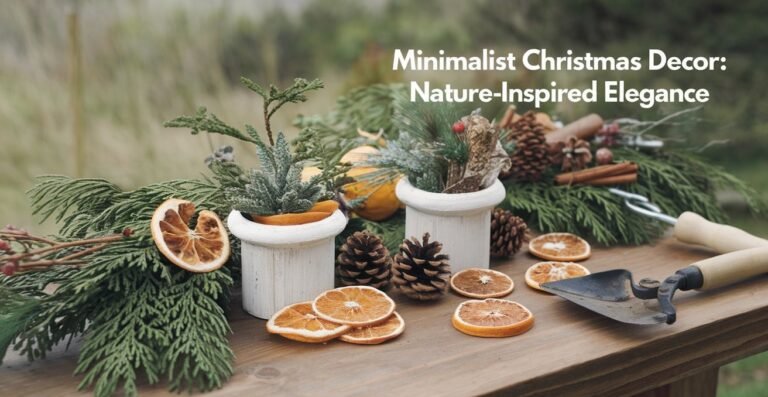
Fresh cranberries are classic for good reason. They add bright pops of red that photograph beautifully and last for weeks. Pinecones bring texture. A 4-inch pillar candle in the center creates both light and focal point. Some gardeners like to add dried citrus slices (lemon or orange), small ornaments in silver or gold, or even sprigs of dried eucalyptus for a softer, more muted palette.
This is where your personal style comes in. Reflect on what makes you feel at home. What colors calm you? What scents transport you? Build your centerpiece around those feelings, not around what’s trendy.
Bringing It Together: The Responding Phase 🌱
Now we get to the creative work—the responding phase of intuitive gardening, where we actually shape what we’ve observed and reflected on into something real.
Assembly Steps
Start by creating a base layer of greenery. Take your cedar branches or Italian ruscus and create a circular bed, leaving space in the center for your candle. This green foundation becomes the canvas for everything else.
Next, add height and dimension. Stand some rosemary sprigs upright; tuck thyme around them. Don’t arrange everything in perfect symmetry—nature isn’t symmetrical, and that’s what makes it beautiful. Leave gaps. Let some stems point outward. Use your hand pruners to cut stems to different heights so the eye travels across the whole piece.
Now scatter your cranberries. I like to nestle them among the stems rather than clustering them all in one area. Add your pinecones. Place your candle in the center, making sure it’s stable. If you’re using a hot glue gun to secure anything, do it gently—you’re not building a fortress; you’re arranging a garden.
Step back. Look at it from across the room. Does it feel balanced? Does it draw you in? Does the scent make you want to breathe deeply? That’s when you know it’s right.
Sanda’s Garden Wisdom: The most stunning centerpieces I’ve made have always been the ones where I stopped arranging and just let my hands work intuitively. Trust yourself. You have an eye for beauty—you’ve been looking at gardens your whole life. That same eye will guide you here.
Extending the Life of Your Creation
To keep your centerpiece fresh through the holidays, mist it lightly with water every day or two. Keep it away from direct heat sources like vents or fireplaces. If the candle burns down, replace it rather than letting it sit empty—the flame brings warmth and light that make the piece feel alive.
Even though we’re in Zone 9 and our holidays are mild, remember that cut plants are still using their moisture reserves. A light daily misting keeps everything looking fresh for 7-10 days easily.
Quick Reference: Your Herbal Centerpiece Checklist
| Task | Timing | Notes |
| Gather herbs and greenery | Early morning, 1-2 days before | Oils are strongest in cool morning air |