
Preparing in Faith: Stewardship for a New Season

Preparing in Faith: Stewardship for a New Season 🌸
There’s a sacred kind of stillness that comes before the growing season begins—those quiet weeks in January and February when the Houston garden waits, and the gardener listens. The frost may linger, the soil feels cool beneath your hands, and the pace slows just enough to hear what matters most.
It’s in this quiet that faith and stewardship meet.
Preparing a new garden season isn’t about rushing toward results. It’s about aligning your hands with God’s rhythm and your heart with His timing. True preparation—the faithful kind—begins not with a to-do list, but with trust. When we observe our gardens with spiritual awareness, reflect on what we’ve learned, and respond faithfully to what we find, we’re participating in something sacred.
When we steward the soil, we’re doing more than gardening; we’re participating in creation’s renewal. Each act of care becomes a prayer: Lord, make ready what You’ve entrusted to me.
“Moreover, it is required in stewards that a man be found faithful.” — 1 Corinthians 4:2
Faithful stewardship starts here—one shovel of soil, one moment of prayer, one act of care at a time. In our Zone 9 gardens, where the seasons shift more subtly than in colder regions, this preparation season is our opportunity to reset, restore, and recommit.
Free eBook
Rooted in Grace
A Christian guide to intuitive gardening — the whole book, free. Tell me where to send it and it’s yours in a minute.
The Heart of Stewardship 💚
Stewardship begins with gratitude, not guilt. Before we add anything new—new seeds, new beds, new projects—we first give thanks for what remains. For the tools that still serve us, the plants that survived our unpredictable Houston freeze patterns, the lessons that softened our striving.
The garden is never truly empty; it always holds the residue of God’s faithfulness. That frost-blackened esperanza will leaf out again. Those dormant roses are gathering strength. Even the tangled mess of last season’s growth holds nutrients ready to nourish what comes next.
Stewardship means honoring that faithfulness by tending what we’ve already been given. It means we don’t rush to replace or reinvent—we restore, we renew, we remember. This is especially true in a climate like ours, where many plants are semi-evergreen and may surprise us with new growth even in what looks like dormancy.
Sanda’s Tip: Walk your garden in late January with gratitude, not evaluation. Notice what made it through winter. Touch the stems of your rosemary, check under the leaf litter for hidden growth, and give thanks before you plan what’s next. This spiritual pause reframes the entire season.
Observing, Reflecting, and Responding Faithfully
First: Observe What You Have 👀
Gather your tools, seeds, and supplies with intention. Walk through your shed or garage slowly. Clean what’s rusted, sharpen what’s dull, and mend what’s broken. In Zone 9’s humid climate, rust happens faster than we’d like—our coastal air doesn’t show mercy to metal. This isn’t just maintenance; it’s honoring the tools that serve you.
While you’re observing, notice your garden beds. Clear last year’s debris not as waste, but as offering—returning life to the soil. In Houston’s subtropical climate, this cleanup happens best in late January through February, before the spring heat surge hits in March. Look for those hidden treasures: volunteer plants, root systems that might come back, seeds that self-sowed.
Second: Reflect on Your Soil’s Health 🔍
Stewardship starts below the surface. This is the perfect time to check your soil’s health before the active growing season begins. Zone 9 gardeners often inherit challenging clay soil, especially in the Houston suburbs. Testing your soil in late winter gives you time to amend before spring planting.
| Soil Test Focus | Why It Matters in Zone 9 | Best Time to Test |
| pH Level | Houston soil tends toward neutral to slightly alkaline; affects nutrient availability | January–February |
| Organic Matter % | Clay-heavy soil needs 5–10% organic matter; most Zone 9 gardens start at 2–3% | January–February |
| Nitrogen, Phosphorus, Potassium | Spring bloom and heat demand balanced nutrition | January–February |
| Texture (Sand/Silt/Clay) | Clay dominance in Houston requires specific amendment strategy | January–February |
Sanda’s Zone 9 Note: Don’t amend your soil indiscriminately. Heavy compost added to clay soil can sometimes create a “hardpan layer” that makes drainage worse, not better. Test first. Know your starting point before you respond. This is wisdom, not just gardening technique.
Third: Respond Faithfully with Amendments 🌱
Once you know what your soil needs, respond with intention. For most Houston-area gardens, this means adding quality compost (aged 6–12 months), not fresh materials. Work amendments in gently; clay doesn’t respond well to aggressive tilling. Let winter and spring rains help integrate your additions gradually.
If your soil test shows low organic matter—which is common in newly developed suburban areas—plan to add 1–2 inches of aged compost over three seasons rather than all at once. This patience-based approach prevents the compaction and structural damage that rushed heavy amendments can cause.
Faith in the Preparation 🌾
Preparation is a declaration of faith. Every gardener knows the feeling of planting something unseen, trusting that warmth and water will do their quiet work. We prepare because we believe in promise. We ready the soil not because we can guarantee blooms, but because we trust the One who provides them.
One winter, I cleared a bed I’d nearly abandoned during a difficult season. The plants had looked dead, the space felt wasted, and I almost wanted to move on. Beneath the matted leaves and debris, I found roots from last year’s herbs still alive, still holding life. They’d been waiting. They’d been growing in ways I couldn’t see.
That moment became a picture of what faithful preparation looks like—believing life still hides beneath layers we’d forgotten. It reminded me that God’s work often happens in the hidden places, in the seasons we can’t track, in the growth we don’t witness until suddenly we see new green shoots breaking through.
In Houston’s climate, where dormancy isn’t dramatic (our plants don’t die back completely like they do up north), this lesson hits even deeper. The hidden work is continuous. Preparation is about trusting what we can’t see and showing up to tend what we can.
Practices of Faithful Preparation ✝️
Clean and Sharpen Your Tools
It’s a humble ritual of readiness. Wipe rust off your pruners, oil the joints, sharpen your hori hori knife or spade. In our humid climate, tools need this attention twice yearly. As you clean each tool, you’re essentially saying yes—yes, I’m ready. Yes, I believe growth is coming. Yes, I will be here to tend it.
Sanda’s Garden Wisdom: Use a simple vinegar-and-steel-wool method for rust: soak rusty tools in white vinegar overnight, scrub gently, dry completely, and coat lightly with food-grade mineral oil. It works, it’s gentle, and it’s a meditative way to spend an evening while thinking about the season ahead.
Organize Seeds and Supplies
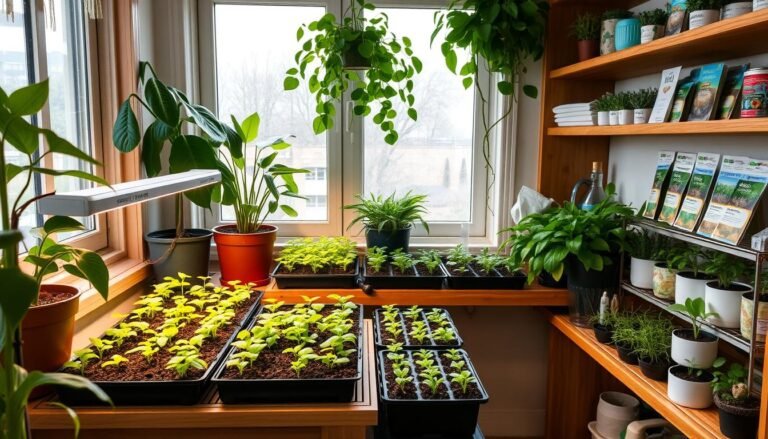
Gather your seed collection. Toss what won’t germinate (seeds older than 3–5 years, unless properly stored). Organize what remains by planting zone and timing. In Zone 9, we have long planting windows compared to northern gardeners. Knowing what you have prevents impulse purchases and duplication—both forms of stewardship.
For Zone 9 Houston specifically, organize seeds by these windows:
| Season Window | Timing | Key Crops |
| Early Spring | January–February (direct); February–March (transplants) | Cool-season: lettuce, kale, peas, broccoli, cabbage |
| Warm Season | March–April (starts); April–May (transplant/direct) | Warm: tomatoes, peppers, basil, okra, squash, beans |
| Summer Transition | June–July (heat-tolerant direct sow) | Heat lovers: southern peas, eggplant, Armenian cucumber |
| Fall Reset | August–September (seeds started indoors or direct) | Cool crops: lettuce, spinach, Swiss chard, kohlrabi, beets |
Plan with Prayer
Invite God into your designs and timing. This isn’t about magical thinking; it’s about alignment. Before you order new seeds or plan which beds get what, sit quietly. Ask: What does this space need? What am I capable of tending well? Where am I trying to control outcomes rather than trust the process?
Faithful planning
The Hidden Work of Winter Dormancy 🌿
In Zone 9, winter doesn’t look like winter everywhere else. Our freeze periods come and go unpredictably—one week it’s 70°F, the next it’s 28°F. This creates a unique preparation challenge that northern gardeners don’t face. Our plants rarely go truly dormant; instead, they enter a kind of restful watchfulness, still metabolically active, still responding to light and temperature shifts.
Understanding this changes how we prepare. When a gardener from Ohio tells you to “let everything rest,” that advice doesn’t quite fit our rhythm. Our esperanza may lose leaves in January but keep its woody structure. Our lantana might get zapped by an unexpected freeze in February yet regrow from the roots. Our roses often never fully stop growing—they just slow way down.
This means your preparation work in January and February isn’t about waiting for spring to “wake up” a dormant garden. It’s about supporting plants that are already quietly working, even when we can’t see much happening above ground. When you amend soil, you’re feeding root systems that never completely stopped. When you prune, you’re guiding growth that’s happening, just slowly. When you clear debris, you’re making space for the green shoots that are already gathering strength beneath last year’s mulch.
The spiritual parallel here is profound: faithful preparation often happens for growth we can’t yet perceive. We show up. We tend. We trust. The visible transformation comes later, but the real work—the underground collaboration between roots and soil, between season and plant—that’s happening all along.
Mapping Your Microclimate: A Zone 9 Necessity
Here’s something Houston gardeners learn the hard way: Zone 9 is enormous, and even within our suburban ring, microclimates vary wildly. The reason many of us fail with plants that “should” work in Zone 9 isn’t that the zone rating is wrong—it’s that we haven’t mapped our specific microclimates.
Your preparation season is the perfect time to create a simple microclimate map. Notice which areas of your property stay warmest during unpredictable freezes. Is it near the south-facing wall of your house? Along a fence that holds heat? In the low spot where cold air settles? Which areas get afternoon shade in summer, and which get blasted by 4 p.m. west-facing intensity?
In February, when you’re not yet busy with planting, walk your property at different times of day and in different weather patterns. Early morning fog might linger in one corner. Afternoon sun intensity might be fierce in another. An area that looks fine now might be the first place to suffer in our unexpected late freezes (which hit as late as mid-March). Another spot might stay 5–10 degrees warmer because it’s sheltered by trees or structures.
This observation becomes your preparation. Once you know your microclimates, you can position tender plants in warm-pocket zones and resilient plants in exposed areas. You can plant that bouganvillea where it catches every ray of heat, knowing it’ll get the full benefit. You can tuck your young esperanza where it’s protected from northern winds. You’re not fighting your property’s nature; you’re cooperating with it.
Stewardship of the land means reading the land first. In our subtropical climate, this reading is more complex than in zones with dramatic seasonal changes. It requires patient attention and willingness to adjust your assumptions. A spot that looked perfect in summer sun might be problematic in a winter freeze year. What works one year might need tweaking the next.
The Spiritual Practice of “Enough”: Resisting the February Impulse 💚
February is when the seed catalogs arrive thick in the mail, and the big-box garden centers start their early spring displays. The visual abundance is gorgeous and tempting. It’s easy to feel like preparation means accumulation—more seeds, more plants, more projects, more square footage transformed.
But faithful stewardship sometimes means saying no. It means looking honestly at what you can actually tend well, given your season of life right now. Are you working long hours? Do you have young children? Are you managing health challenges? Are you grieving? Is your energy limited?
Preparing in faith means preparing for what you can actually show up for, not what you wish you could do. An overcrowded garden neglected by an overwhelmed gardener isn’t stewardship—it’s presumption. A smaller, well-tended garden is more faithful than an ambitious garden that becomes a source of guilt and frustration.
In February, the honest preparation looks like this: sketch out your beds on paper. Be realistic about how much you can plant, tend, harvest, and care for given your actual life. Choose varieties and quantities that match your energy and capacity. This is wisdom, not laziness. This is stewardship.
Sanda’s Garden Wisdom: If you have time and energy to tend only a 4×8 bed well this spring, that’s your calling. Plant it with intention, tend it with presence, and harvest it with gratitude. A well-loved small space glorifies God more than an ambitious project abandoned by summer heat.
Preparation, then, becomes an act of honesty before God. You’re not preparing a garden; you’re preparing a life aligned with your actual capacity to steward it. You’re not preparing a season of abundance; you’re preparing a season of faithfulness. There’s something deeply peaceful about that distinction.
Ready to Go Deeper in the Garden?
If this article resonated with you, you might be ready for something more than tips.
- Download the FREE Rooted in Grace eBook
- Get the Rooted in Grace Print Book on Amazon
- Join Rooted Reset
- Follow on Instagram – @southernsoils
- Save on Pinterest – @southernsoilsunshine
- Join on Facebook – Southern Soil Sunshine
“The garden is not just a place to grow plants – it is a place to grow yourself.”
More like this: Authentic Brazilian Feijoada
Free eBook
Before you go — the book is yours
Rooted in Grace: A Christian Guide to Intuitive Gardening. No cost, no catch. Read it on any device, at whatever pace the season allows.



2 Comments