Doubling Down on Mulch: Extra Cover for Zone 9 Summer Heat
When Ordinary Mulch Isn’t Enough ☀️
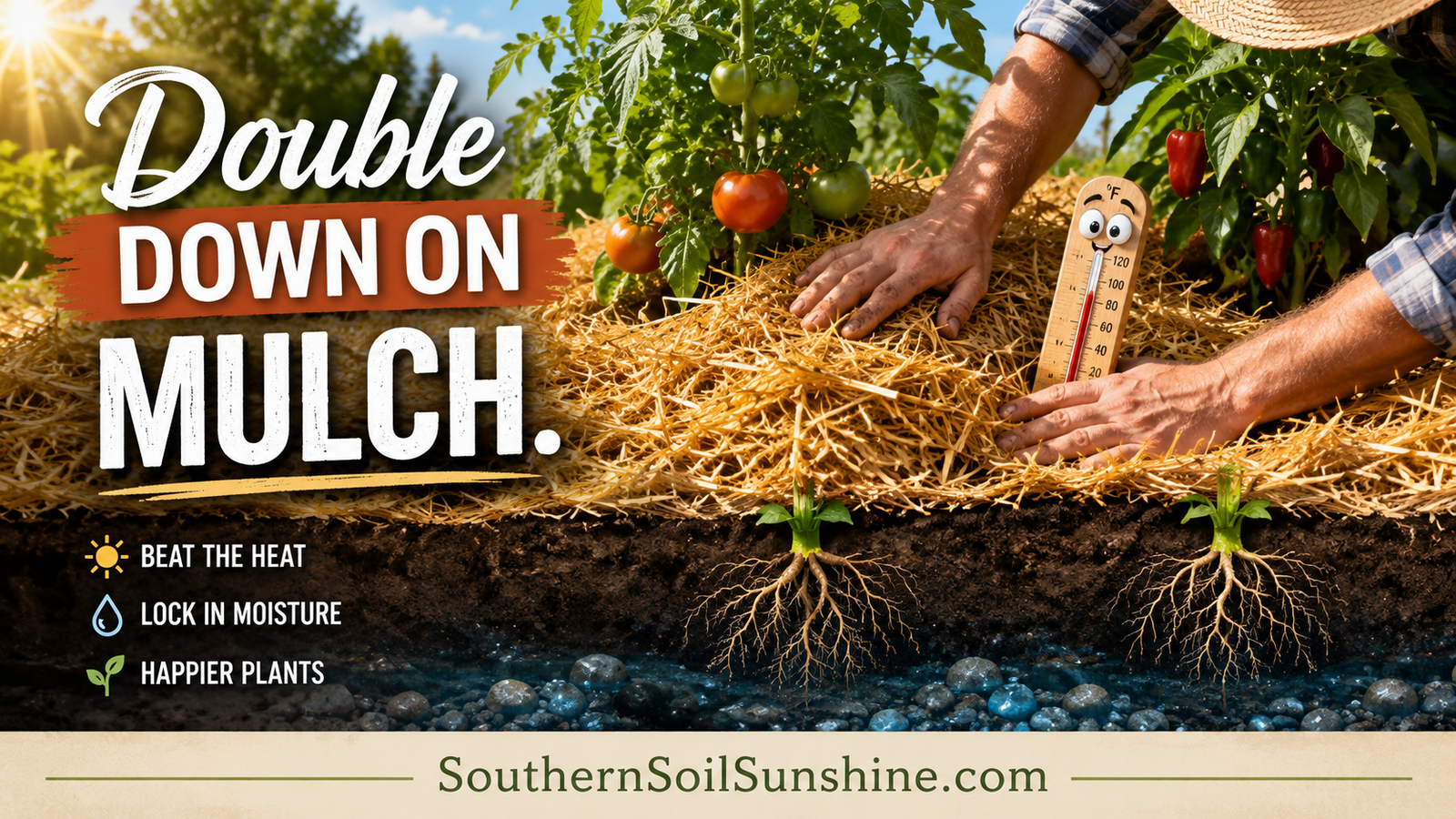
By early June in Zone 9, we are no longer preparing for the heat — we are in it, and it is only going to intensify. This is the season when a standard layer of mulch, adequate in spring, may no longer be enough. The sun is relentless, the soil bakes and dries with astonishing speed, and your plants’ roots are working hard in ground that can grow punishingly hot. This is the moment to double down — to apply extra mulch, going deeper and more generously than you would in a milder season, giving your soil and roots the abundant protection they need to make it through the harshest stretch of the year.
Where refreshing mulch keeps the layer maintained, doubling down goes further: it recognizes that extreme conditions call for extra protection, not merely the usual amount. This day’s task is to apply extra mulch to keep the soil cool, and it carries a phrase worth holding: add protection where life is heating up. Let me show you when and how to go extra-generous with mulch for peak summer, and why abundant protection in the hardest season is such wise care.
Free eBook
Rooted in Grace
A Christian guide to intuitive gardening — the whole book, free. Tell me where to send it and it’s yours in a minute.
Why Peak Summer Demands Extra
Mulch protects by insulating the soil, and the more extreme the conditions, the more insulation you need. In the peak of a Zone 9 summer, bare or thinly-mulched soil can reach temperatures that genuinely damage roots and kill the beneficial soil life, while evaporation strips moisture away almost as fast as you can add it. A standard two-inch layer that served your garden in spring may simply be overmatched by June and July’s intensity. Going deeper — three, even four inches over the open soil — keeps the ground dramatically cooler, holds moisture far longer between waterings, and shields the soil life that keeps your garden healthy.
Think of it the way you would dress for the conditions: a light jacket suits a mild day, but a bitter cold snap calls for a heavier coat. Our summer heat is the equivalent of that cold snap in reverse — an extreme condition that calls for extra protection. Doubling down on mulch now is simply matching the protection to the severity of the season.
How to Double Down Well
Applying extra mulch is straightforward, but a few points keep it helpful rather than harmful.
| Do This | Why |
|---|---|
| Go 3–4 inches deep | Extra insulation for peak heat |
| Weed & water first | Never trap weeds or seal in dry soil |
| Keep it breathable | Light materials, not a dense mat |
| Stay off the stems | Buried stems rot in summer humidity |
| Focus on the vulnerable | Containers & shallow-rooted crops most |
Clear any weeds and water the soil first, then lay your mulch generously — up to three or four inches deep over the open ground of your beds. Use light, breathable materials like straw and shredded leaves rather than a dense mat that could hold too much moisture in our humidity. As always, keep the mulch pulled back from plant stems. Pay special attention to the plants that suffer most in extreme heat: shallow-rooted crops, newer plantings, and above all containers, whose exposed sides let the soil heat up fastest of all.
The Payoff of a Heavy Layer
A deep summer mulch layer pays you back all season in ways you can measure. Your soil stays cool enough to keep roots healthy and soil life thriving. Your waterings last dramatically longer, so you water less often and lose less to evaporation — a well-mulched bed can need noticeably less water than a bare one in the same heat. Weeds, which compete for that precious summer water, are smothered. And the surface never crusts and cracks the way baked bare soil does. For the price of a bit of extra straw and an afternoon’s work, you buy your garden a far gentler summer — and buy yourself far less watering and worry.
Add Protection Where Life Is Heating Up
This day’s phrase returns, and in the peak of summer it takes on a deeper meaning: add protection where life is heating up. Doubling down on mulch is a picture not just of maintaining protection but of increasing it — of recognizing that when conditions become genuinely extreme, the ordinary measures are no longer enough, and more shelter is needed. You do not respond to the hottest season with the same thin layer that served a mild one. You go generous. You pile on the protection precisely because the heat has intensified.
How often we get this backwards in our own lives. When a season truly heats up — when the stress, the demands, the difficulty reach their peak — we tend to strip away our protections rather than deepen them, cutting the rest and the margins and the shelter in a desperate effort to just push through the extreme. But the garden teaches the opposite and wiser response: the hotter it gets, the more protection you add, not less. Extreme seasons call for extra shelter, abundant care, a heavier layer of the things that keep us cool and hydrated and whole. So as you pile the mulch on generously today, matching the protection to the severity of the heat, let it ask you honestly about your own hardest seasons. When life heats up to its most extreme, do you double down on protection — more rest, more prayer, more support, more shelter — or do you strip it away and try to bake through? Add extra protection where life is heating up. The most severe seasons are precisely the ones that call for the most generous care.
Share your heavy summer mulch layers with us on Instagram @southernsoils — there is real wisdom in a garden generously protected against the peak of the heat.
Which Plants Need the Extra Most
Not every plant needs a heavy layer equally — aiming your extra mulch where it matters most makes the effort count. Prioritize the plants that suffer soonest and worst in extreme heat.
| Prioritize | Why They Need Extra |
|---|---|
| Containers & pots | Sides bake in the sun; dry out fastest |
| Shallow-rooted crops | Roots sit in the hottest top layer |
| New plantings | Roots not yet deep; heat-vulnerable |
| Moisture-loving crops | Cucumbers, greens — stress fast when dry |
| Fruiting tomatoes & peppers | Even moisture prevents blossom-end rot |
Containers deserve special mention because they are the most vulnerable of all — a pot in full sun can have soil far hotter than the ground, cooking roots and drying out in a single day. Mulch the tops of your containers generously, group pots together so they shade one another, and move the most sensitive ones into afternoon shade if you can. Your fruiting tomatoes and peppers also benefit enormously from a heavy, even layer, because the steady soil moisture it maintains is one of the best defenses against the blossom-end rot that erratic watering causes. Aim your extra protection at these vulnerable plants first, and you protect the parts of your garden most likely to fail in the heat.
Pairing Mulch With the Rest of Your Summer Defenses
Extra mulch is powerful, but it works best as part of a whole summer strategy. Pair it with deep watering at the cool ends of the day, and the heavy layer makes each soak last far longer. Combine it with a little afternoon shade for your most heat-sensitive crops, and you create genuinely cool microclimates in the hottest weeks. Add attentive daily observation to catch heat stress early, and you have a garden equipped to come through the summer thriving. Mulch is perhaps the single most powerful of these tools — free or cheap, requiring no ongoing effort once applied — but it multiplies the others. A well-watered, well-shaded, heavily-mulched garden is a fundamentally different, gentler place in July than a bare and exposed one.
This is worth remembering when the heat feels overwhelming and gardening in it feels like a losing battle. You are not powerless against our summer — you have real tools, and a generous layer of mulch is one of the most effective. Deploy it fully. Pile it on. Protect the soil and the roots abundantly, and watch how much better your garden weathers the season than you might have feared.
Generous Protection for a Severe Season
So take the time today to go generous with your mulch — deeper than usual, aimed at your most vulnerable plants, breathable and pulled back from the stems. It is humble work, spreading straw and leaves in the heat, but it is exactly the kind of abundant, well-matched protection that carries a garden through its most severe season intact. And carry the lesson beyond the beds: that the most extreme seasons of life call not for stripped-down endurance but for generous, deepened protection — more shelter, more care, more of what keeps us whole, layered on precisely because the heat has reached its peak. Add protection abundantly where life is heating up. It is one of the wisest and most sustaining things you can do, for your garden and for yourself, in the hardest stretch of the year.
Pile it on today, aim it where the heat bites hardest, and let your generously mulched garden — and your own generously protected life — come through the peak of summer cool, rooted, and whole.
Ready to Go Deeper in the Garden?
If this article resonated with you, you might be ready for something more than tips.
- Download the FREE Rooted in Grace eBook
- Join Rooted Reset
- Follow on Instagram – @southernsoils
“The garden is not just a place to grow plants – it is a place to grow yourself.”
Free eBook
Before you go — the book is yours
Rooted in Grace: A Christian Guide to Intuitive Gardening. No cost, no catch. Read it on any device, at whatever pace the season allows.