
Weeding to Remove Pest Hiding Places in Summer Beds
Weeds Are More Than Competition in Summer 🌿
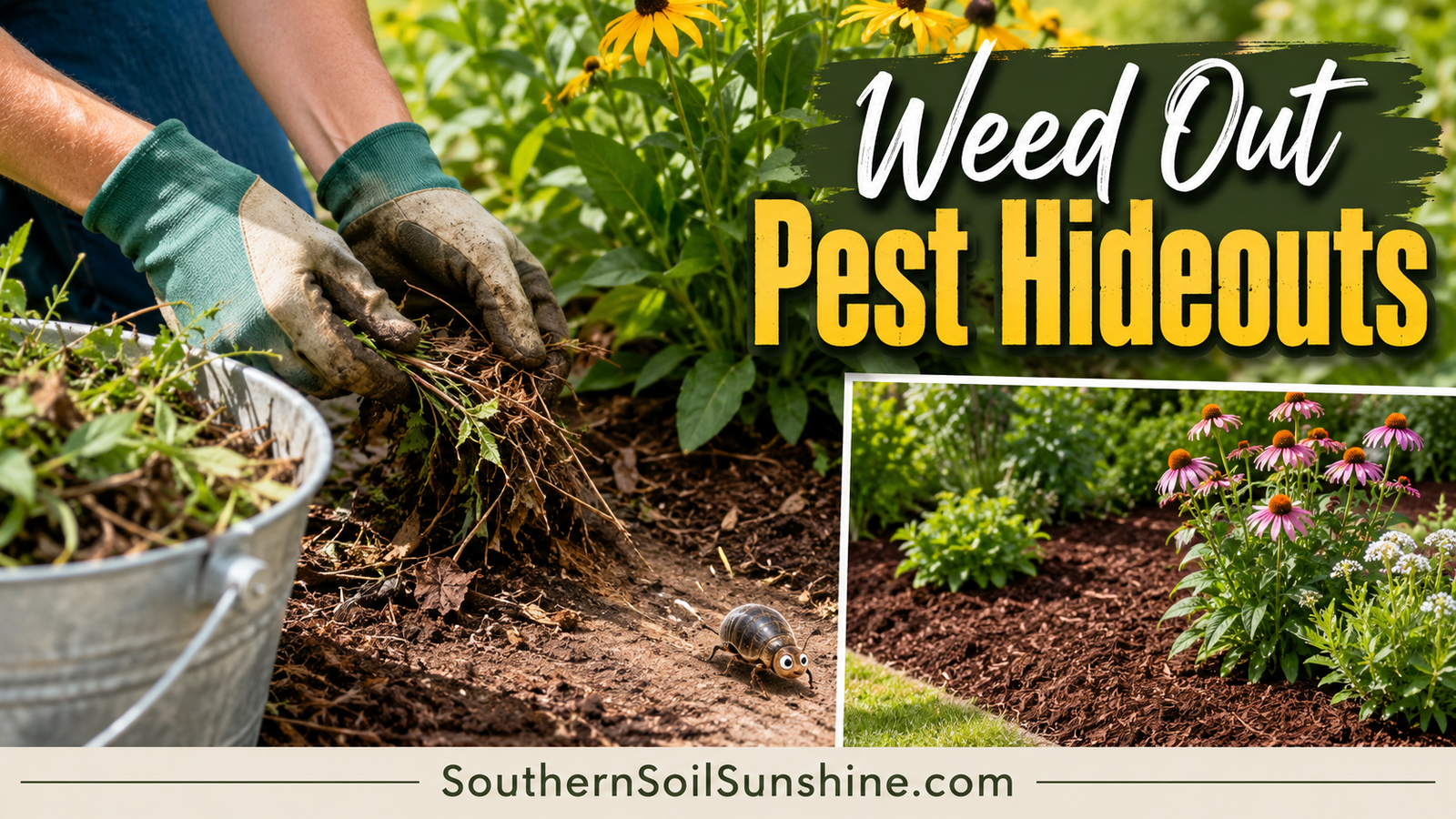
By mid-June, weeds in a Zone 9 garden are not just growing — they are thriving in the heat, often faster than our crops. We usually think of weeds as competitors, stealing water and nutrients from the plants we want, and in summer that competition is fiercer than ever as every drop of water matters. But there is a second, less obvious reason to stay on top of summer weeds: they are prime hiding and breeding ground for pests. Dense weedy growth shelters squash bugs, gives aphids and beetles somewhere to multiply, harbors the eggs and nymphs of the very insects attacking our vegetables, and creates the humid, hidden pockets pests love. Clearing weeds in summer is not just tidying — it is removing the shelter that lets pest populations explode.
This day’s task is to weed your beds specifically to remove pest hiding places, and it carries a pointed phrase: clear what invites stress. Let me walk you through summer weeding with pests in mind, and reflect on why clearing what invites stress is such freeing wisdom.
Free eBook
Rooted in Grace
A Christian guide to intuitive gardening — the whole book, free. Tell me where to send it and it’s yours in a minute.
The Weed-Pest Connection
Weeds and pests are partners in the summer garden. A thick stand of weeds gives pests exactly what they need: shelter from the sun and from predators, cool humid hiding spots at soil level, and often an alternate food source that lets their numbers build before they move onto your crops. Squash bugs shelter under weedy debris; aphids colonize weeds and spread to vegetables; many caterpillars and beetles lay eggs in the protected tangle. Clear the weeds and you strip away that shelter — exposing pests to the sun, to birds and beneficial insects, and to your own eye, so they cannot build up unseen. A clean, open bed is a far less hospitable place for a pest population to explode. So summer weeding does double duty: it ends the competition for water and it dismantles the pests’ hideout in one pass.
This is why weeding matters more in the pest-heavy heat of summer than almost any other time. The same warmth that breeds pests breeds weeds, and the two reinforce each other. Break the partnership by keeping beds clear, and you make your whole garden more pest-resistant with nothing but a hoe and a little attention.
Where Pests Hide — Weed These First
Not all weedy spots are equal; some are pest magnets. Prioritize these.
| Priority Spot | Why It Matters |
|---|---|
| Weeds against plant stems | Direct pest bridge onto crops |
| Weedy bed edges & corners | Sheltered breeding pockets |
| Under squash & sprawling crops | Squash bug & slug havens |
| Old debris & dropped fruit | Egg-laying & rot sites |
Start with weeds crowding right against your plant stems — these form a direct bridge for pests to climb onto your crops and should go first. Clear the sheltered corners and edges of beds, where humidity collects and pests breed unseen. Pay special attention beneath squash and sprawling plants, where weeds and shade together create perfect squash-bug and slug habitat. And while you weed, clear away old plant debris and any dropped, rotting fruit — these are egg-laying and breeding sites just as surely as weeds are. Clean under and around the plants most prone to pests, and you remove the hideouts where the worst infestations start.
Weeding Without Stressing Your Crops
Summer weeding calls for a gentle hand, because your crops are already heat-stressed and their roots are shallow and vulnerable. Pull large weeds carefully so you do not tear your vegetables’ roots along with them, and for weeds growing right against a stem, snip them at the soil line rather than yanking and disturbing the crop’s roots. Use a hoe for the open spaces between plants, slicing weeds off just below the surface, but hand-weed close to your vegetables. Weed when the soil is slightly moist, not bone dry, so weeds release more easily. And always follow with mulch to protect the cleared, now-exposed soil. Done gently and finished with mulch, summer weeding clears the pests’ shelter without adding stress to the crops you are protecting.
Clear What Invites Stress
This day’s phrase cuts straight to the heart: clear what invites stress. In the summer bed it is vividly literal — the weeds are not merely competing with our plants; they are actively inviting the pests, the pressure, the stress that will harm the garden. They are the shelter, the breeding ground, the open door through which trouble comes in and multiplies. And so the wise summer task is not just to react to pests once they have exploded, but to go upstream and clear the very things that invite them: to remove the hiding places, the debris, the sheltered tangle where stress breeds unseen. Clear what invites the trouble, and much of the trouble never arrives.
How much of the stress in our own lives, too, comes in through things we could clear — the clutter, the tangle, the debris we let accumulate, the sheltered pockets where worry and pressure quietly breed. So often we battle the stress itself, reacting to it once it has multiplied and overwhelmed us, without ever asking what is inviting it in the first place. The garden offers a wiser, more upstream approach: to look honestly at what in our lives is functioning like those summer weeds — the hiding places, the accumulated debris, the tangles that shelter and breed stress — and to clear them, gently and deliberately, before the trouble they invite has a chance to explode. It is not the reactive work of fighting stress once it arrives; it is the wiser work of removing what invites it. So as you clear the pests’ hideouts from your beds today, let it ask you gently: what in my own life is inviting stress in and giving it a place to breed — and could I clear it, before the trouble multiplies? Clear what invites stress. It is upstream, preventive, freeing work, in the garden and in the soul alike.
Share your summer weeding and pest-prevention wins with us on Instagram @southernsoils — there is real wisdom in clearing what invites the trouble.
A Simple Summer Weed-and-Watch Routine
The best defense against both weeds and pests is a light, regular rhythm rather than an occasional overwhelming battle. Fold weeding into a short weekly pass through the garden, and you keep both problems small.
| Step | What to Do |
|---|---|
| 1. Walk & scan | Look for new weeds & pest signs together |
| 2. Clear the hideouts | Weeds at stems, edges, under sprawlers |
| 3. Bag & remove | Weeds & debris off-site, not beside bed |
| 4. Re-mulch bare spots | Suppress regrowth, cool the soil |
Because weeding and pest-scouting happen in the same spots — against the stems, in the corners, under the sprawling crops — combine them. As you clear weeds, you are already looking exactly where pests hide, so you catch the first squash-bug eggs and aphid clusters in the same pass. This is the great efficiency of summer weeding: it is simultaneously weed control, pest prevention, and pest scouting, all in one short weekly walk. A garden tended this way rarely faces a full-blown infestation, because the shelter never accumulates and nothing builds up unseen. Little and often, weed-and-watch, keeps both the weeds and the pests from ever getting the upper hand.
The Freedom of a Cleared Bed
There is a particular satisfaction to standing back and looking at a bed you have just cleared — the soil open and mulched, the plants standing free with air and light around them, the tangled shelter gone. It is not only that the bed looks cared for; it is that you have genuinely made it a healthier, more pest-resistant place. The pests have lost their hideouts, the crops have regained their water and nutrients, and you have removed, in advance, much of the trouble that would otherwise have arrived. That is the quiet reward of upstream, preventive work: not a dramatic rescue, but a problem that simply never grows.
So weed your beds with pests in mind this week — gently, in the cool of the morning, clearing the hideouts, bagging the debris, and closing the cleared ground with mulch. Fold it into a light weekly rhythm so it never becomes overwhelming. And let the humble work carry its deeper invitation: to look, in your own life as in your garden, at what is quietly inviting stress in and giving it a place to breed, and to clear it before the trouble multiplies. Clear what invites stress. It is some of the wisest, most freeing work there is — and in the summer garden, it is as simple as a hoe, a bucket, and a little faithful attention.
What to Do With What You Clear
A quick word on the weeds themselves once they are out. Clean, seed-free, pest-free weeds — young growth pulled before it flowered — can go straight onto the compost pile, where they break down into next season’s soil. But be discerning: weeds that have gone to seed will spread those seeds through your finished compost and reseed your beds, so bag those instead. And any weeds that were clearly sheltering pests or eggs should be removed from the property entirely, not composted, so you are not simply relocating the infestation to your pile. When in doubt, bag it — the small effort of removing questionable weeds off-site is far less than the effort of battling the pests or seeds they carry back into your garden. Clear it, judge it, and dispose of it wisely, and the good work of weeding truly lasts.
Ready to Go Deeper in the Garden?
If this article resonated with you, you might be ready for something more than tips.
- Download the FREE Rooted in Grace eBook
- Join Rooted Reset
- Follow on Instagram – @southernsoils
“The garden is not just a place to grow plants – it is a place to grow yourself.”
Free eBook
Before you go — the book is yours
Rooted in Grace: A Christian Guide to Intuitive Gardening. No cost, no catch. Read it on any device, at whatever pace the season allows.