
Putting Up Shade Cloth: Protecting Heat-Sensitive Crops in Peak Sun
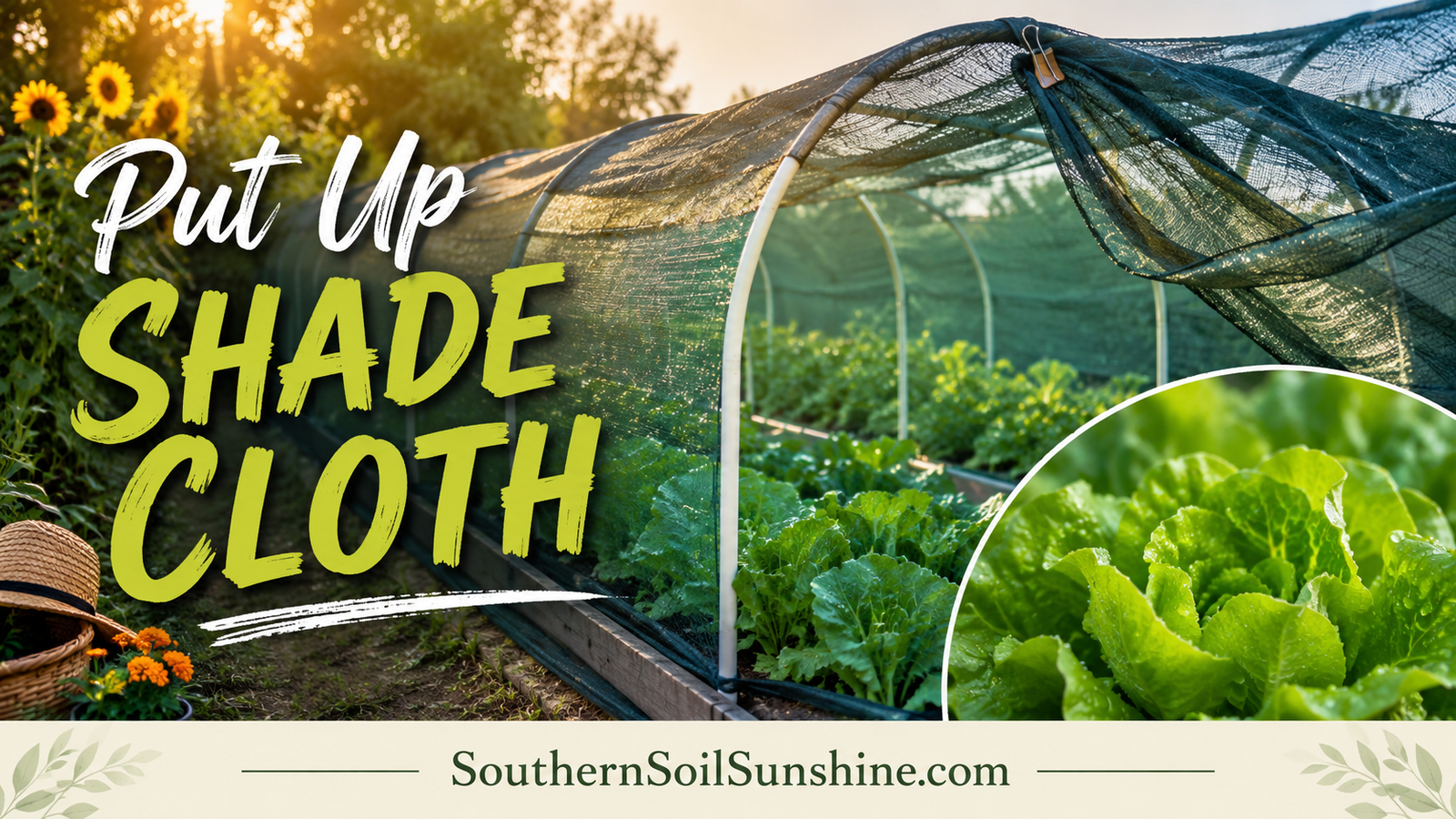
A Little Shade Changes Everything 🌤️
There comes a point in a Zone 9 summer when even sun-loving crops have had enough. The light is so intense and the heat so relentless that tomatoes stop setting fruit, peppers get sunscald, greens bolt or scorch, and tender plants simply struggle to survive from one afternoon to the next. This is when shade cloth becomes one of the most valuable tools in a Southern gardener’s kit. A simple panel of shade fabric stretched over your most heat-sensitive crops takes the killing edge off the afternoon sun — dropping temperatures beneath it, reducing stress, and keeping plants productive through weeks they would otherwise merely endure. Early June is the time to get it up, before the worst of the heat descends.
This day’s task is to install shade cloth over your heat-sensitive plants, and it carries a tender phrase: offer yourself shade when intensity rises. Let me walk you through choosing and putting up shade cloth well, and share why offering shade — to our plants and to ourselves — when intensity rises is such gentle wisdom.
Free eBook
Rooted in Grace
A Christian guide to intuitive gardening — the whole book, free. Tell me where to send it and it’s yours in a minute.
Why Shade Cloth Helps So Much
Shade cloth is a loosely woven fabric that blocks a percentage of sunlight while still letting air, light, and water through. Stretched above your plants, it can lower the temperature underneath by ten degrees or more on a blazing afternoon, and it dramatically reduces the intensity of the light hitting leaves and fruit. For heat-stressed crops, that reduction is the difference between struggling and thriving: tomatoes resume setting fruit once the extreme heat is buffered, peppers avoid the sunscald that ruins their fruit, greens hold off bolting a little longer, and every plant beneath it transpires less and stays better hydrated. It does not turn summer into spring, but it takes the brutal edge off — and often that edge is exactly what was pushing your plants past their limit.
Crucially, shade cloth lets you keep growing crops that would otherwise fail entirely in our peak heat. It extends the productive life of spring crops, protects the fruit set of summer ones, and makes tender plants possible in a season that would otherwise scorch them. For the cost of a panel of fabric, you buy your most vulnerable plants a far gentler summer.
Choosing the Right Shade Cloth
Shade cloth comes in different densities, rated by the percentage of light they block, and choosing the right one matters.
| Shade % | Best For |
|---|---|
| 30–40% | Fruiting crops: tomatoes, peppers, eggplant |
| 40–50% | Greens, cool-season holdovers, tender crops |
| 50–60% | Extreme heat protection; seedlings, containers |
For fruiting crops like tomatoes and peppers, a lighter 30–40% shade cloth is ideal — it buffers the heat without depriving the plants of the light they need to fruit. For greens and tender crops you are trying to hold through the heat, 40–50% works well. Reserve the heaviest 50–60% cloth for extreme situations, seedlings, and containers, since too much shade on fruiting plants reduces their harvest. When in doubt, err toward lighter shade for anything you want fruit from, and heavier for anything you are simply trying to keep alive and cool.
How to Put It Up
The goal is to suspend the cloth above the plants with air space between, not to drape it directly on the foliage, so heat does not transfer through and air can still circulate. Support it on hoops, stakes, a simple frame of PVC or wood, or stretch it between fence posts and stakes — whatever gives you a structure a foot or two above the plants. Orient it to block the intense afternoon sun in particular, since morning sun is gentle and beneficial; shading only the west and south sides, or removing the cloth in the mild mornings, gives plants good light while protecting them from the worst. Secure it well against our summer storm winds, which can turn a loose panel into a sail.
When to Use It and When to Skip It
Shade cloth is a tool for the extremes, not a permanent fixture. Put it up as the peak heat arrives and your plants show signs of stress, and take it down or open it up during milder stretches or in the gentler mornings, so plants get the light they need when the sun is not punishing. Watch your plants: if fruiting crops beneath the cloth seem to be producing less, your shade may be too heavy or too constant, and you should lighten it. The goal is to buffer the extreme, not to plunge your garden into permanent shade. Used thoughtfully — on the right crops, at the right density, during the hottest part of the day and the hottest weeks of the year — shade cloth is a season-saver.
Offer Yourself Shade When Intensity Rises
This day’s phrase is one of the most tender the calendar offers: offer yourself shade when intensity rises. Shade cloth is such a gentle picture of it. We do not leave our most sensitive plants fully exposed to punishing intensity and simply demand they endure — we offer them shelter, a buffer, a way to keep growing without being scorched by an intensity that has become too much. We recognize that even sun-loving things have limits, and that offering shade when the sun turns brutal is not coddling but wise, life-preserving care.
And we are meant to offer ourselves the same mercy. How often, when the intensity of our lives rises — the pressure, the demands, the relentless heat of a hard stretch — do we simply expose ourselves fully and grind on, as though needing shelter were weakness? But even the most resilient, sun-loving among us have limits, points past which unbuffered intensity does real damage. The garden teaches a gentler wisdom: when the intensity rises to a scorching level, offer shelter. Buffer the extreme. Create a little shade — a pause, a boundary, a softening of the demands, a place to keep growing without being burned — not because you are weak, but because that is exactly how living things are kept alive and fruitful through their most intense seasons. So as you rig shade for your tender plants today, let it ask you gently: where has the intensity in my own life risen past what I can bear unbuffered? And am I offering myself any shade — or standing fully exposed, demanding I simply endure? Offer yourself shade when intensity rises. It is not softness; it is the wisdom that keeps sensitive, valuable things growing through the hottest sun.
Share your shade cloth setups with us on Instagram @southernsoils — there is real care in sheltering the tender things through the fiercest heat.
Simple DIY Shade Structures
You do not need to buy an elaborate system to shade your crops well. Some of the most effective setups are simple and inexpensive, built from materials you may already have.
| Setup | Good For |
|---|---|
| PVC or wire hoops + cloth | Beds and rows; easy to build |
| Stakes at the corners | Stretch cloth flat above a bed |
| Cloth between fence & posts | Beds along a fence line |
| Old sheet or umbrella | Emergency afternoon shade |
A row of hoops made from PVC or heavy wire, with shade cloth clipped over the top, is one of the most versatile setups — easy to build, easy to remove, and adaptable to most beds. Even simpler, four tall stakes at the corners of a bed with cloth stretched between them creates a flat canopy above the plants. Along a fence, you can stretch cloth from the fence top out to a row of stakes, angling it to block the afternoon sun. And in a true emergency — a sudden brutal heat wave with no cloth on hand — an old sheet, a beach umbrella, or a length of row cover thrown over your most stressed plants for the worst afternoon hours can carry them through until you rig something proper. Whatever you build, keep the cloth suspended above the plants, secure it against the wind, and make it easy to remove for the mild mornings.
The Whole Summer Shelter Strategy
Shade cloth works best alongside the rest of your summer defenses, and together they transform a brutal season into a manageable one. Deep watering at the cool bookends of the day keeps plants hydrated; a generous mulch layer keeps roots cool and moisture held; and shade cloth buffers the killing intensity of the afternoon sun. Layer these three and you create genuinely gentler conditions in the hottest weeks — cooler soil, cooler air beneath the cloth, steadier moisture — the kind of sheltered microclimate where sensitive crops keep producing when they would otherwise fail. No single tool conquers a Zone 9 summer, but used together, they let your garden not merely survive the heat but stay genuinely productive through it.
So put your shade up today over the crops that need it most, before the fiercest heat descends. It is a small project with an outsized payoff — the difference, for your tender and fruiting plants, between weeks of struggle and weeks of continued harvest. And let the gentle work remind you of the deeper wisdom it carries: that offering shelter when intensity rises is not weakness but care, the very thing that keeps sensitive, valuable, sun-loving things — plants and people alike — growing and fruitful through the fiercest sun. Shelter the tender things today, in your garden and in your life, and watch how much they can bear when the intensity is buffered by a little well-offered shade.
Ready to Go Deeper in the Garden?
If this article resonated with you, you might be ready for something more than tips.
- Download the FREE Rooted in Grace eBook
- Join Rooted Reset
- Follow on Instagram – @southernsoils
“The garden is not just a place to grow plants – it is a place to grow yourself.”
Free eBook
Before you go — the book is yours
Rooted in Grace: A Christian Guide to Intuitive Gardening. No cost, no catch. Read it on any device, at whatever pace the season allows.