🥕 When and How to Start Carrots in Warm Climates
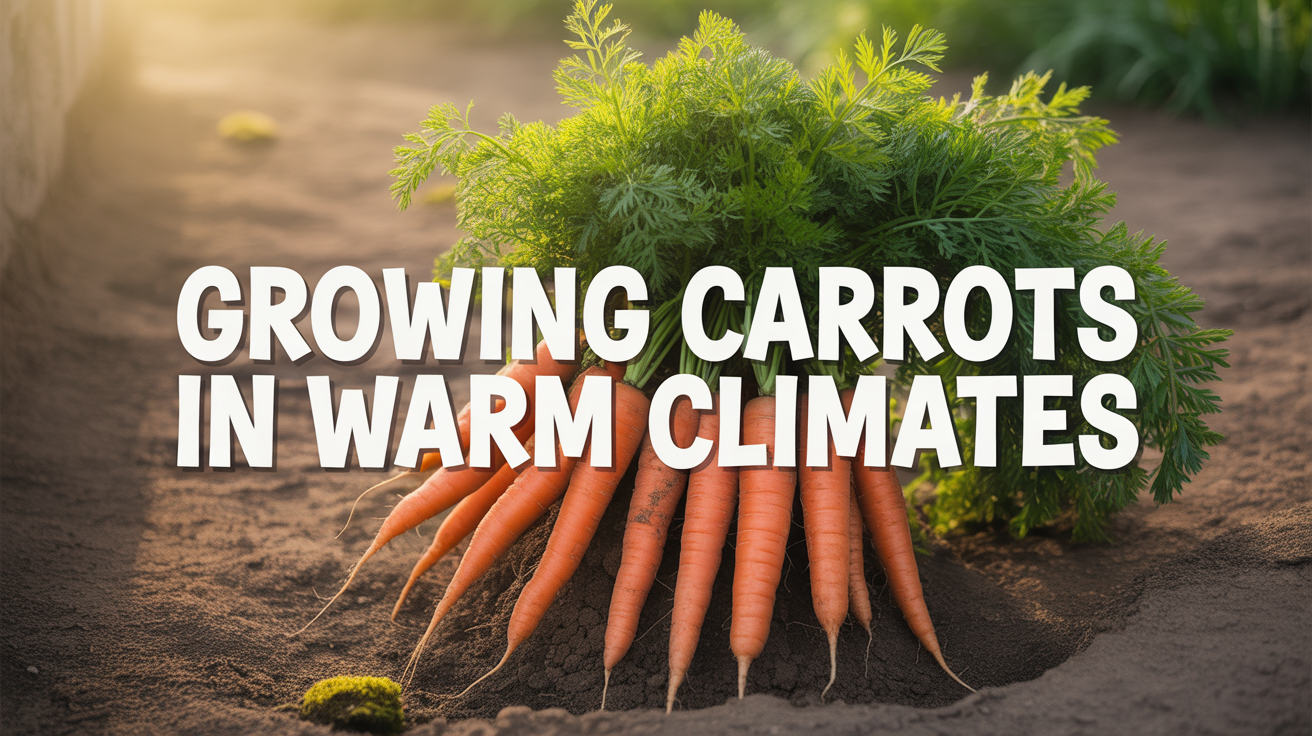
🥕 When and How to Start Carrots in Warm Climates: A Late-Summer Guide to Sweet Roots
If you’ve hesitated to grow carrots in our Houston heat, you’re not alone. They seem finicky. Slow. Stubborn. And summer doesn’t exactly scream “root veggie season.” But here’s what I’ve learned through seasons of trying, failing, and finally succeeding: with a little timing and intention, carrots can absolutely thrive—even in Zone 9. It starts with knowing when to sow, how to help them germinate, and why it’s worth the wait. And I promise you, it is.
Free eBook
Rooted in Grace
A Christian guide to intuitive gardening — the whole book, free. Tell me where to send it and it’s yours in a minute.
🌡️ Can You Really Grow Carrots in the Heat?
Let me be honest with you: we’re not growing carrots through July and August. That would be fighting the season rather than working with it. In Zones 8–10, carrots are beautifully suited to a late summer to fall crop—when the intensity of our Texas sun begins to ease and cooler nights start creeping in. You’re not aiming for peak summer sun; you’re planning ahead with intention for those mellow autumn days when everything grows better.
Here’s what carrots genuinely need from us to thrive:
Sanda’s Zone 9 Note: Carrots in our region need loose, deeply worked soil, consistent moisture (especially during germination), and moderate temperatures for strong root formation. The ideal soil temperature for germination is 55°F–75°F. They’ll still sprout up to 85°F, but they’ll be slower and fussier about it—and in Houston summer heat, that’s a losing battle.
📆 Best Timing for Planting Carrots in Warm Climates
Timing is everything in the garden—it’s really about observing the season and responding faithfully to what the weather offers us. For those of us in Zones 8–10, here’s a practical regional guideline that takes the guesswork out of when to get those seeds in the ground:
| Zone | Best Sowing Window | Ideal Harvest Window | Days to Harvest |
| Zone 8 | Mid to Late August | October–November | 70–90 |
| Zone 9 (Houston) | Late August to Early September | November–December | 75–90 |
| Zone 10 | September to Early October | December–January | 80–90 |
For those of us here in the Houston area, that sweet spot is late August through early September. You’re looking for a 75–90 day window of mild temperatures before our rare cold snaps or heat returns. That’s the runway we need.
🛠️ How to Prep Your Soil for Carrot Success
Carrots are honest vegetables—they tell you exactly what they need. And what they need is a clear runway. Any obstacle in the soil—rocks, clumps, compacted clay—and they’ll fork, split, or just give up trying altogether. I’ve learned this the hard way.
To prepare your soil properly, loosen it at least 8–12 inches deep. This is non-negotiable. Remove all the debris—rocks, pebbles, old roots—everything that would get in a root’s way. Mix in finished compost generously, but here’s the key: avoid fresh manure. Fresh manure promotes leafy top growth over root development, and we want those beautiful orange roots, not bushy tops.
Also avoid over-feeding with nitrogen-rich amendments. When carrots get too much nitrogen, they fork and split. We’re gardening with intention here, not just throwing nutrients at the problem.
Sanda’s Garden Wisdom: If your soil is heavy clay—and let’s face it, much of the Houston area is—don’t try to fight it. Instead, work with your soil’s nature. Use raised beds or deep containers filled with a mixture of compost, sand, and sifted garden soil. Rice hulls also work beautifully to lighten clay. This is presence-based gardening: accepting what you have and responding creatively rather than resisting.
🌱 How to Sow Carrot Seeds (So They Actually Germinate)
Carrot seeds are tiny—almost impossibly so—and they’re notoriously slow to sprout. Ten to twenty-one days is typical, and in that waiting period, many of us lose faith or lose patience. But this is where the practice of presence comes in. We observe what’s happening, we reflect on what the seeds need, and we respond faithfully.
The Basics of Sowing:
Sow carrots directly where you want them to grow—they don’t transplant well at all. Plant the seeds just ¼ inch deep in evenly moist soil. Space them lightly, about ½–1 inch apart, in rows or scattered bands, whichever feels right for your garden layout. Once you’ve placed them, firm the soil gently with a board or the back of your hand. That gentle pressure helps seeds make contact with moisture.
Here’s something many gardeners miss: keep that soil moist. A dry crust on top will stop germination before it even starts. This is the critical period. Water daily with a gentle mist—not a heavy spray that displaces seeds, but a soft, consistent moisture. I like to water in the early morning and again in late afternoon during this germination window.
Sanda’s Tip: Cover freshly sown carrot beds with a light layer of burlap, shade cloth, or even cardboard to keep the soil from crusting over and to maintain moisture. Remove these covers the moment you see green—usually around day 10–14. This one practice will increase your germination success dramatically.
🌞 Special Tricks for Starting Carrots in Houston Heat
High summer heat—which we know well in Zone 9—can bake the topsoil and dry out seeds faster than you can refill your watering can. Here are some warm-climate wisdom techniques that have worked beautifully in my garden and in gardens throughout the Houston area:
Plant in the evening. This gives seeds a cooler start and a full night of moisture absorption before the sun returns. It’s a small practice that honors the season.
Mulch lightly with sifted straw or vermiculite. This insulates the seed bed and helps retain moisture without smothering delicate seedlings.
Water twice daily during sprouting—early morning and late afternoon. In our Texas heat, once-a-day watering won’t cut it during germination.
Interplant with fast-germinating radishes. Radishes sprout in 5–7 days and will help break up the soil crust, making it easier for those slower carrot seeds to push through. By the time you harvest the radishes (3–4 weeks), the carrots will be established.
Shade lightly with row cover or a low arch for the first 10 days. This moderates temperature swings and reduces moisture loss. It’s not about blocking all light—it’s about creating a gentler microclimate.
✂️ Thinning and Growing On
Once your seedlings are 2–3 inches tall—and this is patience being rewarded—it’s time to thin. I know, it feels wasteful to pull out perfectly good seedlings. But thinning is an act of faith. You’re saying no to more so that fewer can truly thrive.
Thin to 2 inches apart for full-size roots, 1 inch apart if you’re going for smaller, tender carrots (which, honestly, is what we do best in containers in Zone 9).
From this point on, water deeply and regularly. Carrots love consistency—they like to know where they stand. Irregular watering leads to split and woody roots. Feed lightly with a balanced organic fertilizer every few weeks. We’re not trying to force growth; we’re supporting steady, faithful growth.
🥕 Harvesting and Storing Your Houston Carrots
Carrots are remarkably forgiving about harvest timing. They’re ready when they reach the size you want—there’s no rigid deadline. Most reach full size around 70–90 days, but smaller carrots are often sweeter, especially if you harvest them during cooler weather in November or December.
To harvest, loosen the soil around the base and gently pull. They should come free without too much resistance. If they’re stubborn, water first to soften the soil.
Store unwashed carrots in the crisper drawer of your refrigerator, or in a cool garage in a container with slightly damp sand. They’ll keep for weeks—sometimes months—which is one of the joys of root crops.
Quick Reference: Carrot Growing Timeline for Zone 9
| Task | When | Key Point |
| Soil Prep | Late July–Early August | Loosen 8–12 inches, remove debris |
| Sow Seeds | Late August–Early September | Plant ¼ inch deep, keep moist |
| Cover & Protect | Days 1–10 post-sowing | Burlap or shade cloth until sprouts appear |
| Thin Seedlings | Once tops are 2–3 inches tall | Thin to 2 inches apart for full-size roots |
| Harvest | 70–90 days after sowing | October–November in Zone 9 |
Understanding Why Carrots Split and Fork in Warm Climates
One of the most heartbreaking moments in warm-climate gardening is pulling up a carrot you’ve tended faithfully for three months, only to find it forked, split, or twisted into an unusual shape. It feels like a failure, but it’s really just the plant responding to its environment—and there’s wisdom in understanding why.
In Zone 9, the main culprits behind carrot deformation are inconsistent watering, overly rich soil (especially nitrogen), and temperature fluctuations. Here’s what happens: when carrots experience uneven moisture—wet then dry then wet again—they split as the outer flesh expands and contracts. When soil is too nitrogen-rich, the plant puts energy into leafy growth rather than root development, creating forked or twisted roots as they compete for space underground. And temperature swings in late fall can actually cause the carrot to grow in unexpected directions as it adjusts to changing conditions.
The beautiful part? Once you understand these patterns, you can work with them rather than against them. Consistent, deep watering is non-negotiable—aim for about 1 inch per week, delivered steadily rather than in one heavy soak. This teaches us something about formation too: steady presence matters more than occasional intensity. A light feeding with a balanced fertilizer (something like 5-5-5 or 10-10-10) supports growth without creating the nitrogen overload that causes forking. And if you’re experiencing wild temperature swings in your Houston fall, mulching your carrot bed with 2-3 inches of straw helps buffer those swings, keeping soil temperature more stable.
The varieties you choose also matter. In our region, shorter varieties like ‘Thumbelina’ (2-3 inches) and ‘Nantes’ types are far more reliable than long storage varieties like ‘Imperator,’ which need perfect conditions to develop straight, uniform roots. When you match the variety to the climate, you’re already halfway to success.
Container Gardening for Carrots: A Zone 9 Game-Changer
If you’ve struggled with carrot success in traditional garden beds—and many Houston gardeners have—containers might be your answer. I’ve found that growing carrots in well-prepared containers gives you control over soil quality, drainage, and temperature that’s nearly impossible to achieve in our heavy clay beds.
Here’s what works beautifully in our climate: use containers at least 12 inches deep for full-size carrots, or 8-10 inches for smaller varieties. Fill them with a mixture of two parts finished compost to one part coconut coir to one part coarse sand or perlite. This creates the loose, well-draining environment carrots adore. The beauty of containers is that you can position them strategically—perhaps in a spot that gets morning sun but afternoon shade during those hot late-August weeks when you’re trying to get seeds to germinate.
Container carrots also dry out faster than in-ground carrots, which means you have to stay more attentive to watering. But that attentiveness can actually be a gift. You’re checking your plants regularly, observing their needs, responding thoughtfully. It’s presence-based gardening in its truest form. Plus, containers make harvesting easier—no digging through clay, just tip the pot and gently work the carrots free.
One more advantage: you can move containers to protect them from our occasional late-fall hard freezes. A Zone 9 carrot crop can be damaged if exposed to temperatures below 28°F for extended periods, especially if they’re tender young roots. A quick move to a protected spot or under a frost blanket can save your whole crop.
Extending Your Harvest: Succession Planting and Storage
Many gardeners think of carrots as a one-time sowing, one-time harvest crop. But in Zone 9, we have a luxury: we can succession plant for an extended harvest that stretches from November clear through January or even into early February.
Here’s how it works: instead of sowing all your carrots on the same day in late August, divide your seed packet into three sowings. Plant the first batch in late August, the second around mid-September, and the third in early October. Each planting will mature about two weeks after the previous one, giving you a rolling harvest rather than a glut of carrots all at once. This is practical wisdom—it matches what your kitchen actually needs.
The later sowings have an additional advantage: they mature during the coolest part of our fall and winter, which actually makes for sweeter carrots. Cool temperatures convert starches to sugars in root vegetables, so a carrot harvested in December will taste noticeably sweeter than one harvested in November.
Sanda’s Zone 9 Note: Store harvested carrots in the refrigerator’s crisper drawer (they’ll keep 3-4 weeks) or in a cool garage (50-55°F is ideal) layered in slightly damp sand or peat moss. They’ll keep for 2-3 months this way. Some gardeners even leave carrots in the ground through winter and harvest as needed—our Zone 9 winters are rarely cold enough to damage them if they’re mulched well. This is living storage, and it stretches your harvest season beautifully.
Growing carrots through the fall and winter teaches us something tender about patience and trust. We plant in late summer knowing harvest is still months away. We tend them faithfully through seasons of waiting. And then, when the weather finally turns cool and crisp, we’re rewarded with roots that taste like the season itself—sweet, grounded, nourishing. There’s something deeply formative about that rhythm. We learn that good things take time, that consistency matters more than intensity, and that when we align ourselves with the seasons rather than fighting them, we end up with far more than just vegetables. We end up with presence, with attentiveness, with a kind of faith in the patient unfolding of growth.
🛒 Shop This Post
Carrots ask for very little, but the few things they do ask for matter. Here is what I actually reach for when I am starting a late-summer bed in Zone 9.
- Scarlet Nantes carrot seeds A short, sweet, coreless variety that actually finishes in our clay instead of stalling out like the long storage types.
- Bagged finished compost The two-parts base of the container mix, and what loosens a heavy bed so roots get the clear runway they need.
- Coco coir brick Lightens the mix and holds moisture through the germination window without turning to mud.
- Organic perlite The drainage third of the container recipe, and an easy way to open up soil that packs down after every rain.
- Horticultural vermiculite Sifted over the seed bed it keeps the surface from crusting and holds just enough water for slow carrot seed.
- 30 percent shade cloth Light cover for freshly sown beds while late-summer sun is still strong, then off it comes once seedlings are up.
- Lightweight floating row cover Moderates temperature swings and moisture loss over the first ten days without shutting out light.
- Down To Earth balanced vegetable fertilizer A gentle 4-4-4 for light feeding, so you are supporting steady growth rather than pushing nitrogen that makes roots fork.
These are Amazon affiliate links. If you buy through them I earn a small commission at no extra cost to you — and I only link gear I actually use in my own Zone 9 garden.
Ready to Go Deeper in the Garden?
If this article resonated with you, you might be ready for something more than tips.
- Download the FREE Rooted in Grace eBook
- Get the Rooted in Grace Print Book on Amazon
- Join Rooted Reset
- Follow on Instagram – @southernsoils
- Save on Pinterest – @southernsoilsunshine
- Join on Facebook – Southern Soil Sunshine
“The garden is not just a place to grow plants – it is a place to grow yourself.”
Free eBook
Before you go — the book is yours
Rooted in Grace: A Christian Guide to Intuitive Gardening. No cost, no catch. Read it on any device, at whatever pace the season allows.