
Indoor Seed Starting for Cool-Season Vegetables: How to Get a Head Start with Root Crops
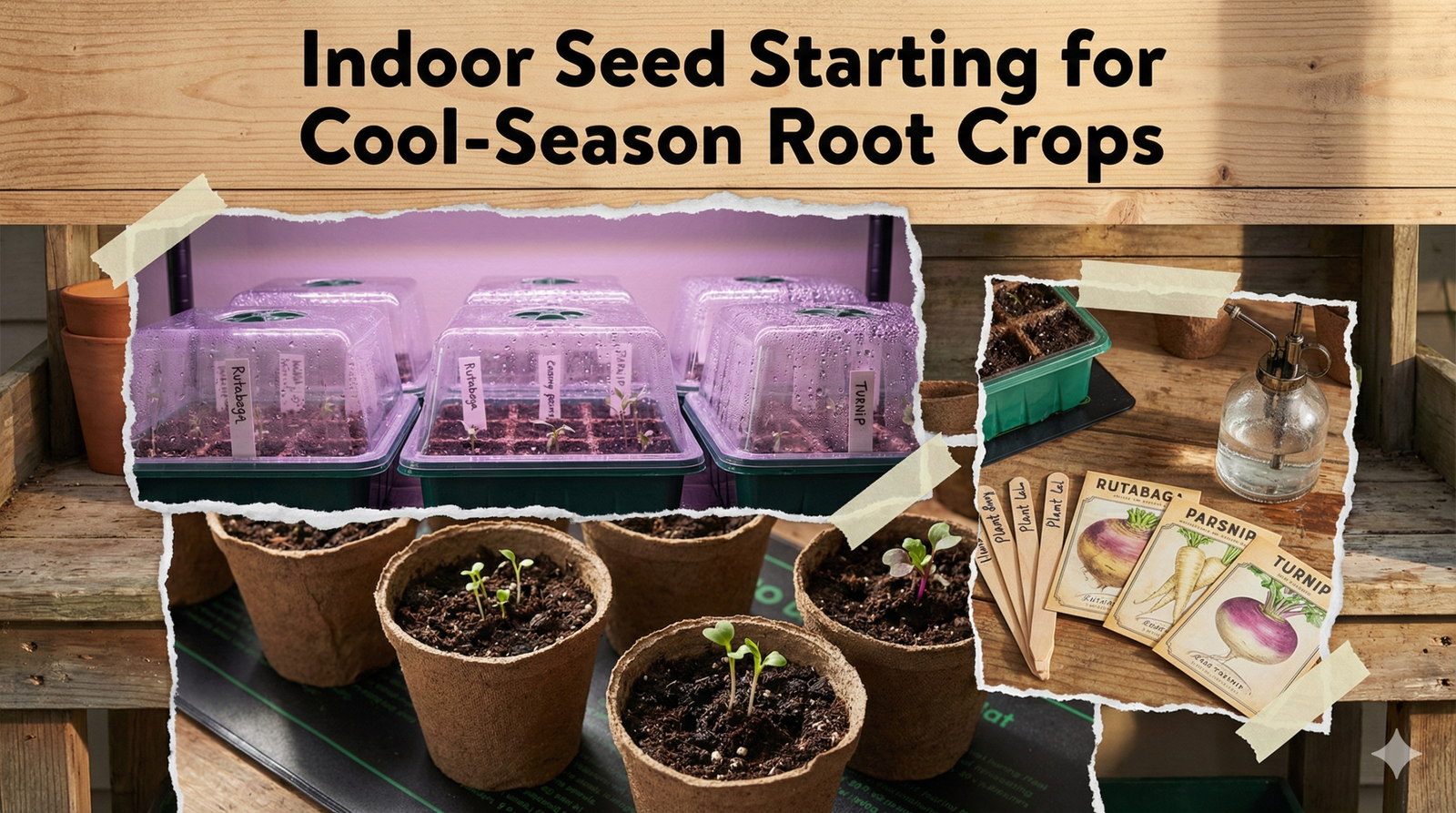
Indoor Seed Starting for Cool-Season Vegetables: Getting a Head Start with Root Crops 🌱
There’s something almost sacred about those first weeks of February when I’m bent over seed trays in my little potting shed, coaxing tiny root crop seeds to life. Starting seeds indoors for cool-season vegetables isn’t just a gardening technique—it’s an act of faith and patience, a quiet way of working with the rhythms God built into creation. For those of us in Zone 9 Houston suburbs, this practice is essential, and today I want to walk you through exactly how to do it well.
Cool-season root crops like rutabaga, parsnips, and turnips have taught me more about timing than almost anything else in my garden. These beauties require 90–120 days to mature, and our Houston springs move fast. By starting seeds indoors, we’re not fighting nature—we’re working with it, giving these crops the controlled beginning they need so they can thrive when transplanted into your beds.
Free eBook
Rooted in Grace
A Christian guide to intuitive gardening — the whole book, free. Tell me where to send it and it’s yours in a minute.
Why Indoor Seed Starting Changes Everything for Root Crops 🌿
I’ve learned through years of gardening that cool-season root vegetables are different creatures than the tomatoes and peppers we coddle indoors. They need patience, consistency, and a gentle hand. When you start them indoors, something shifts. You’re not just planting seeds; you’re observing them, reflecting on their needs, and responding faithfully to what they’re telling you. This is the intuitive gardening approach that transforms both garden and gardener.
Here’s what happens when you give these crops an indoor head start in our Zone 9 climate:
Sanda’s Zone 9 Note: In Houston, our natural cool season is brutally short—typically November through early March. By starting root crops indoors in mid-January, we can transplant healthy seedlings by late February, giving them 8–10 weeks of prime growing weather before our spring heat arrives. This timing difference is literally the difference between a full harvest and disappointment.
You extend the growing timeline. Those 90–120 days these crops need? They need them during our precious cool months. Starting indoors means your seedlings are already weeks old when they hit the garden soil, ready to develop those sweet, tender roots before April arrives.
You create a controlled sanctuary. Indoors, you’re the steward of temperature, humidity, and light. No unexpected cold snaps, no sudden dry spells, no pests discovering your tender seedlings at 2 a.m. It’s a protected space where germination rates climb and seedlings grow sturdy rather than weak and stretched.
You reduce the pest pressure. Cutworms, slugs, and flea beetles won’t find your vulnerable babies indoors. By the time your transplants meet the garden, they’re strong enough to handle whatever challenges come their way.
Gathering Your Indoor Seed Starting Supplies 🛠️
Before we get our hands in the soil, let’s talk about what you’ll actually need. I’ve learned that having the right materials isn’t luxurious—it’s foundational. When your supplies support the process, everything flows better.
| Supply Item | Why It Matters for Root Crops | Sanda’s Houston Pick |
| Seed Trays or Biodegradable Pots | Root crops dislike transplant shock; biodegradable pots go straight in the ground without disturbing roots | Coconut coir pots (better moisture retention in our dry indoor air) |
| Seed-Starting Mix | Light, sterile, and drains well—prevents damping off and promotes strong root development | Burpee or Johnny’s Selected Seeds premium blend |
| Heat Mats | Maintains 65–75°F soil temperature; critical for consistent germination | Thermostat-controlled mat (prevents overheating in February’s warmer days) |
| Grow Lights | Cool-season crops need 14–16 hours daily; prevents leggy, weak growth | T5 fluorescent or LED panels positioned 3–4 inches above seedlings |
| Spray Bottle | Gentle misting keeps soil moist without displacing tiny seeds | Fine-mist spray (not a coarse stream) |
| Plant Labels & Marker | Easy to confuse seedlings; labeling saves confusion and heartache | Wooden labels with waterproof marker or plastic tags |
| Humidity Dome | Keeps soil consistently moist during germination; removes once sprouts appear | Clear plastic dome (check for condensation buildup daily in Houston humidity) |
⚠️ Sanda’s Warning: Don’t use garden soil or potting soil for seed starting—I learned this the hard way. Garden soil compacts, potting soil holds too much moisture, and both can harbor pathogens. Invest in a true seed-starting mix. Your success rate will jump noticeably, and the small cost difference is worth every penny.
The Step-by-Step Process: Observing, Reflecting, Responding 🌱
Step One: Prepare Your Containers and Soil
This is where observation begins. Fill your seed trays or biodegradable pots with your seed-starting mix, and here’s the key: premoisten it before you plant. I learned this because I used to plant in dry mix and then water—it never worked as well. The dry mix repels water, creating uneven moisture.
Wet your mix with room-temperature water (about 70°F is perfect) until it feels like a wrung-out sponge. It should hold together when you squeeze it but release a drop or two of water. Fill your containers leaving about half an inch at the top. This gives seedlings room to grow without spilling soil.
Sanda’s Tip: In Houston’s drier winter months, premoisten your mix the evening before planting and let it sit in a covered bin overnight. This ensures even moisture distribution throughout.
Step Two: Plant Your Seeds at the Correct Depth
Depth matters more than you’d think. Root crop seeds are small, and they need to be positioned just right—deep enough to stay moist, shallow enough to push through. This is where I reflect: What does each seed need? Here’s the breakdown for our three cool-season champions:
Rutabaga seeds go 1/4 inch deep. These little pellets are surprisingly hardy once they germinate, and they like to stay close to moisture at the surface.
Parsnip seeds need 1/2 inch deep. They’re slower to germinate (sometimes 14–21 days), so they need to be settled in where moisture is consistent but they won’t dry out.
Turnip seeds go 1/4 inch deep, similar to rutabaga. They’re some of the most reliable germinators I work with, bless them.
After placing seeds, lightly cover them with more moist seed-starting mix and gently press down. The goal is good seed-to-soil contact—not compression, just gentle connection. Think of it like tucking them in rather than pressing them down hard.
Step Three: Create the Right Growing Conditions
Now we respond. We set up the environment these seeds need to thrive. Place your seed trays on heat mats set to maintain soil temperatures between 65–75°F. The thermostat feature is important in Houston—our February afternoons can surprise you with warmth, and you don’t want your soil temperature creeping above 75°F, which can inhibit germination.
Cover your trays with a humidity dome or clear plastic wrap. This keeps moisture consistent and helps seeds germinate. Check daily for condensation—if it’s dripping heavily, vent the dome slightly. In our humid Houston environment, you might need more ventilation than gardeners in drier climates.
⚠️ Zone 9 Houston Alert: Our February humidity can be deceptive. That dome might look perfect, but condensation buildup combined with warmth can encourage damping-off disease. Check your seedlings daily. At the first sign of fuzzy growth or seedlings collapsing at the soil line, improve air circulation immediately by propping the dome slightly open.
Step Four: Watch for Germination—The Waiting Game
Here’s where patience and faith come together. Germination times vary:
Turnips typically sprout in 5–10 days. They’re the eager ones, often surprising you with their speed.
Rutabaga seeds usually germinate in 7–12 days. Steady and reliable.
Parsnips are the patient teachers, often taking 14–21 days. Don’t assume they’ve failed—they’re just taking their time, and that’s okay.
Check the soil moisture daily by touching it lightly. It should stay moist but never waterlogged. This is the reflecting part—you’re learning your specific environment. Does your heat mat dry things out faster? Does your humidity dome trap too much moisture? These observations guide you toward the right rhythm.
Step Five: Light Matters Once They Sprout
The moment you see those first green shoots, remove the humidity dome and move your grow lights into position. Cool-season crops need 14–16 hours of light daily. Position your lights about 3–4 inches above the seedlings—close enough to prevent legginess but not so close they scorch the tender leaves.
Adjust the light height as seedlings grow, maintaining that 3–4 inch gap. If your seedlings start stretching toward the lights, they’re telling you the lights are too far away. Listen to what they’re saying.
Sanda’s Zone 9 Note: Here’s a Houston secret: if you miss the January window, don’t despair. You can still direct-seed in late February to early March and catch a partial harvest before heat arrives. The seedlings won’t be as established, but with consistent watering and mulching, you’ll still get results. Sometimes in gardening, a partial success is still a blessing.
Troubleshooting Common Issues in Our Climate 🔍
I’ve faced every indoor seed-starting challenge you can imagine, and most of them have taught me something valuable. The most common issue I see, especially for gardeners new to Houston’s specific conditions, is overwatering. Our winters are relatively humid, and many of us coming from other climates underestimate how much moisture stays in that seed-starting mix without evaporating. Overwatered seedlings develop damping-off disease, where they collapse at the soil line seemingly overnight. The prevention is simple: water only when the top of the soil feels slightly dry to your touch. This usually means watering every two to three days, sometimes less.
Leggy, stretched seedlings tell you the lights are too far away or not on long enough. If your seedlings look like they’re reaching for something they can’t quite grasp, adjust your lights closer and consider extending your daily light period to 16 hours. Some gardeners use simple timers to automate this—it removes the guesswork and creates consistency.
Slow germination or no germination often points to soil temperature. If your heat mat isn’t maintaining that 65–75°F range consistently, germination will stall or fail. Check your thermostat setting and consider moving the mat away from cold walls or drafty windows. In older Houston homes with inadequate insulation, this can make a real difference.
Pest issues indoors are rare but possible. Fungus gnats sometimes appear in overly moist conditions. If you see tiny flying insects around your seedlings, reduce watering frequency and improve air circulation with a small fan. The combination usually resolves it quickly.
There’s something deeply grounding about working through these challenges with patience and observation. Each problem is really just the seedlings telling you what they need, and the act of listening and responding—rather than fighting or ignoring—connects you to something much older than any gardening technique. It is the same posture Scripture keeps asking of us — pay attention, respond in proportion, and trust a timing you did not set.
Trusting the Work You Cannot See 🌿
Here is the part of indoor seed starting that nobody warns you about: most of the work happens where you cannot watch it. A carrot seed sitting under a quarter inch of premoistened mix is doing something real on day three, but you will not see a single green thing until day ten or twelve. Those in-between days are where most Houston gardeners quit. They poke at the soil to check, water again out of nervousness, or decide the seed was bad and start the tray over. Almost always the seed was fine. It was the waiting that failed.
So build your February routine around restraint rather than effort. Check the heat mat temperature in the morning. Mist only when the surface has gone pale and dry to the touch. Lift the dome when condensation runs down the plastic in streaks instead of beading on it. Write the sowing date on the label, because in three weeks you will not remember it, and that date is the only thing that tells you whether slow germination is a problem or simply normal. Then leave the tray alone. In our climate, where one warm week in February can convince you that spring has already arrived, the discipline of not rushing is the entire skill.
Keep your expectations honest about the numbers too. If you sow twenty beet seeds and fourteen come up strong, that is a good tray, not a failure. Root crops germinate unevenly by nature, and the seedlings that emerge first are not always the ones that will size up best in the bed. I have thinned out the tallest seedlings in a tray more than once because their roots had already curled at the bottom of the cell. Vigor above the soil is not always vigor below it, which is a lesson the garden keeps teaching me in more places than the seed shelf.
By the time these seedlings go into the bed in mid to late March, you will have spent six or seven weeks tending something that mostly looked like a tray of damp dirt. That is not wasted time. It is the same work God does in us during the long stretches when nothing appears to be happening — steady warmth, consistent moisture, light held at the right distance, and a great deal of patience with growth that has not shown itself yet.
So start your trays this week. Label them. Water them gently. And then let February do what February does, quietly and beneath the surface, the way most real growth happens.
🛒 Shop This Post
Everything below is what actually sits on my potting shelf in February when I am starting root crops indoors — nothing fancy, nothing I do not reach for every single season.
- PlantBest Coconut Coir Biodegradable Pots, 3 in Root crops hate being disturbed, so the whole pot goes into the bed with the seedling.
- Organic Pro Seed Starting Mix, 16 qt Light, sterile and fast-draining, which is what keeps damping off from taking hold.
- MIXC Seedling Trays with Humidity Domes Holds moisture steady through germination and lifts off the moment sprouts appear.
- VIVOSUN Seedling Heat Mat Keeps soil in the 65 to 75 degree window our cool February rooms will not hold on their own.
- Clip-On LED Grow Light, Full Spectrum Fourteen to sixteen hours a day is the difference between stocky seedlings and leggy ones.
- Continuous Fine-Mist Spray Bottle A true mist waters the surface without washing tiny seeds out of place.
- KINGLAKE Plant Labels, 100 pc Write the variety and the sowing date. In three weeks you will need both.
- Small Clip-On Fan Gentle air movement strengthens stems and shuts down fungus gnats and damping off.
These are Amazon affiliate links. If you buy through them I earn a small commission at no extra cost to you, and I only link gear I actually use in my own Zone 9 garden.
Ready to Go Deeper in the Garden?
If this article resonated with you, you might be ready for something more than tips.
- Download the FREE Rooted in Grace eBook
- Get the Rooted in Grace Print Book on Amazon
- Join Rooted Reset
- Follow on Instagram – @southernsoils
- Save on Pinterest – @southernsoilsunshine
- Join on Facebook – Southern Soil Sunshine
“The garden is not just a place to grow plants – it is a place to grow yourself.”
Free eBook
Before you go — the book is yours
Rooted in Grace: A Christian Guide to Intuitive Gardening. No cost, no catch. Read it on any device, at whatever pace the season allows.




One Comment