8 Essential Tips For Watering Your Garden During the Hot Summers of Zone 9

Some of the links in this post are affiliate links, which means I may earn a small commission at no additional cost to you. As an Amazon Associate, I earn from qualifying purchases. I only recommend products I genuinely trust. Some content is created with strategic use of AI tools. For more information, please visit the Privacy Policy page.
☀️ 8 Essential Tips for Watering Your Garden During Hot Zone 9 Summers
If you’ve ever stood in your backyard at 2 PM, watching your tomatoes droop despite your best efforts, you know the particular challenge of gardening in Zone 9. Our Houston-area summers are relentless — with temperatures regularly climbing into the high 90s and occasionally breaking 100°F, combined with our unpredictable humidity and sudden dry spells, keeping your garden hydrated becomes less about following a formula and more about learning to listen to your soil. 🌱 The good news? With thoughtful observation, a few strategic adjustments, and some time-tested techniques, you can keep your plants thriving without wasting water or burning yourself out trying to save every struggling leaf. Let’s walk through the wisdom of deep watering, smart irrigation, and choosing plants that actually want to grow here.Free eBook
Rooted in Grace
A Christian guide to intuitive gardening — the whole book, free. Tell me where to send it and it’s yours in a minute.
🌊 Understanding Your Zone 9 Summer Challenge
Before we dive into the tips, let’s pause and reflect on what we’re actually dealing with in our gardens. Zone 9 (especially the Houston area) presents a unique combination of stressors: intense afternoon sun, low humidity, occasional hard freezes in winter, and summer heat that can feel absolutely punishing. Our soil — often heavy clay with poor drainage — adds another layer of complexity. Water either pools on the surface or drains too quickly, depending on what we’ve done to amend it. The intuitive gardening approach here is simple: observe what your soil is actually doing, reflect on what that means for your specific plants, and respond faithfully with consistent care. That’s the framework that works, season after season. 💧1. 💧 Water Deeply, Not Frequently — This Changes Everything
One of the biggest mistakes we see gardeners make — and honestly, one many of us have made ourselves — is shallow, frequent watering. It feels right because you’re “doing something,” but shallow watering actually encourages weak, shallow root systems that can’t handle our summer stress. Here’s what works instead: when you water, water thoroughly. Aim to soak the soil to a depth of at least 6 to 8 inches. This encourages roots to grow deeper, where they’ll find more stable moisture and can better access nutrients. In our heavy clay soil, this might mean letting water sit and slowly percolate, rather than turning up the hose and flooding the area. For most established gardens in Zone 9, two to three deep waterings per week during peak summer is more effective than daily light sprinkling. Container plants and raised beds are different — they dry out much faster and often need more frequent checks — but in-ground gardens with good soil amendment can handle this less-frequent rhythm.
🌿 Best Time to Water: Early morning (before 9 AM) is ideal. Watering in the cool hours means less water lost to evaporation, and your plants have all day to absorb what they need. Late evening (after 6 PM) works too, though it can encourage fungal issues in our humid climate. Avoid midday watering — you’ll lose 30–40% to the heat before it even soaks in.
The beauty of deep, infrequent watering? It teaches your plants resilience while reducing your water bill and the time you spend dragging the hose around. 🌱
2. 🌿 Use Drip Irrigation or Soaker Hoses — Your Water’s Best Friend
Overhead sprinklers are beautiful to watch, but they’re also wasteful in our climate. Between evaporation, wind drift, and water that never reaches the root zone, you’re losing 30–50% of what you’re applying. That’s not just inefficient; it’s expensive and environmentally irresponsible. Drip irrigation and soaker hoses deliver water where it actually needs to go — right at soil level, directly to plant roots. Water seeps slowly into the soil rather than running off, which is especially valuable in our clay-heavy yards. If you’re setting up a vegetable garden or expanding your beds, drip irrigation is one of the best investments you can make. It’s not complicated to install, and it pays for itself in water savings within the first season. If drip irrigation feels like too much right now, soaker hoses are a wonderful middle ground. They’re inexpensive, easy to snake around your beds, and surprisingly effective. You can even get them on timers, which is a game-changer for consistency. For those still using a traditional hose (and let’s be honest, many of us do for smaller spaces), attach a watering wand with a rose head. It gives you control and directs water to the base of plants rather than splashing it everywhere. 💡
⚠️ A Word About Ollas: We love talking about ollas (those beautiful buried clay pots that seep water slowly), and they absolutely work in drier climates. But in Houston’s humidity and occasional heavy rains, ollas can sometimes trap water and encourage root rot. If you try them, monitor carefully and ensure excellent drainage around them.
3. 🛠️ Mulch Is Your Secret Weapon
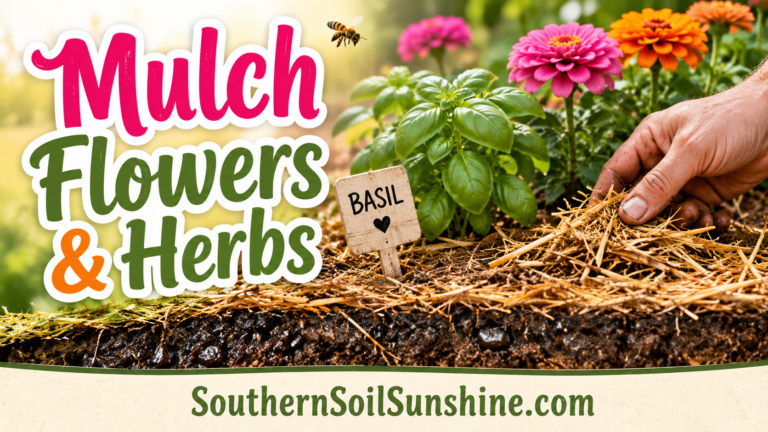
If watering is the heartbeat of summer gardening, mulch is the protective layer that keeps everything stable. Mulch does so many things at once: it reduces soil temperature, slows evaporation, prevents soil compaction from heavy rain, feeds beneficial microorganisms, and gradually breaks down into rich organic matter. In Zone 9, where our summers feel like standing in an oven, mulch is non-negotiable. Apply a 2 to 4 inch layer around your plants — but here’s the key detail many people miss: leave space around the stems and trunks. Mulch piled against plant stems can trap moisture and invite disease. Think of it as a protective ring, not a blanket. Different mulches serve different purposes in our region:| Mulch Type | Best For | Notes for Zone 9 |
|---|---|---|
| 🌾 Straw or hay | Vegetable beds, tomatoes, peppers | Great moisture retention; breaks down quickly (reapply mid-season) |
| 🌲 Shredded bark | Perennials, shrubs, trees | Longer-lasting; helps with our acidic soil preferences |
| 🍂 Leaf mulch | All gardens (best homemade option) | Free, excellent structure; shred leaves first for faster breakdown |
| 🌱 Grass clippings | Around nitrogen-hungry plants | Apply thinly (1-2 inches max) or they’ll mat down and smell; use only if grass isn’t herbicide-treated |
4. 🌵 Group Plants by Water Needs — Smart Garden Design
Not all plants need the same amount of water, and trying to keep everything uniformly moist is exhausting (and often ineffective). The intuitive approach here is to honor each plant’s actual needs rather than forcing them into a one-size-fits-all watering schedule. High-water plants — tomatoes, cucumbers, melons, squash, peppers, basil — need consistent moisture during their growing season. They suffer quickly from stress, and inconsistent watering leads to problems like blossom-end rot and cracked fruit. Moderate-water plants — lettuce, herbs like parsley and cilantro, beans — like regular moisture but can handle brief drying spells. Drought-tolerant plants — rosemary, lavender, sage, thyme, Mexican bush sage, lantana, succulents — actually prefer drier conditions once established. Overwatering them is one of the quickest ways to kill them. When you’re planning your garden layout, group these by category. Put your tomatoes and peppers together in one zone with your drip irrigation. Plant your herbs in another area. Place your xeriscaping plants — the ones that thrive on neglect — where they’ll get morning sun but afternoon shade, and where you can let them mostly fend for themselves. This approach saves water, reduces plant stress, and makes your watering routine actually manageable. 💧5. ☀️ Shade and Windbreaks — Strategic Protection
Our summer sun is intense. Between 2 and 5 PM, that afternoon heat can stress even heat-tolerant plants. While we want sun, we don’t necessarily want relentless sun, especially for delicate transplants and plants like lettuce, spinach, and peppers that can struggle with excessive heat stress. 30–50% shade cloth (the kind with small squares, so you can still see through it) is a game-changer for extending your growing season and reducing water stress. You can drape it over a simple frame above beds or attach it to an existing trellis. In July and August, even heat-loving plants appreciate an afternoon break. Strong winds also increase water loss from soil and leaves. If your garden is in a windier area, plant taller crops like corn or sunflowers as natural windbreaks, or use a simple fence or row of shrubs to slow the wind. This helps your soil retain moisture and reduces the overall stress on your plants. 🌬️6. 🌧️ Harvest Rainwater — Work With Nature
This one feels almost obvious in a gardening context, but it’s so easy to overlook: rainwater is free, it’s already the right temperature, and it has nutrients your plants love. In Houston, we get decent rainfall, though it’s increasingly unpredictable. Capturing what does fall is smart stewardship. A simple rain barrel (or two, or three) catches water from your roof gutters. You can use this stored water during dry spells, and you’ll reduce your dependence on municipal water. If you have the space and the drainage, a shallow swale or berm in your yard can direct rainfall toward your garden beds, keeping water where you need it rather than letting it run off into the storm drain. 🌱 Even a rain chain — that beautiful waterfall-like chain that hangs from a gutter — can direct water into a basin or directly onto garden beds. It’s functional and lovely.7. 🌿 Choose Heat-Tolerant Plants — Let Your
🌡️ Reading the Signs: When and How Much to Water
After all the tips about deep watering and drip systems, there’s still an art to knowing when your specific garden actually needs water. In our Zone 9 clay soil, visual cues can be deceiving — the surface might look dry while moisture sits deeper down. The most reliable method is the finger test: push your finger into the soil about 2 inches. If it feels dry at that depth, it’s time to water. If it’s still moist, wait another day or two.
For container plants, this test becomes even more important. A pot might look fine from above but be bone-dry at the sides and bottom — the water just runs down the edges without fully moistening the soil. Pick up the pot (if it’s portable) and feel its weight. A freshly watered container is noticeably heavier. This intuitive feedback becomes your best guide far more than any calendar schedule could be.
Houston’s humidity also plays a role that many gardeners underestimate. On a 95°F day with 75% humidity, plants actually lose water more slowly than on a 92°F day with 35% humidity. The drier air pulls moisture from leaves through transpiration. So those hot, breezy afternoons in May or early June can be more stressful than the swampy August days, even though August feels worse. Pay attention to what your plants are telling you — slight wilting in afternoon heat might recover by evening, which is normal stress, not a signal to panic-water.
Seasonal Rhythm: When to Ease Up and When to Push Through
Deep summer in Houston (late July through September) is when watering becomes most critical and most challenging. But the rhythm of watering actually shifts throughout the growing season. Spring planting requires frequent, gentle moisture as roots establish — think lighter, more frequent watering than you’d do in July. Early summer (May-June), as plants size up, gradually increases the depth and perhaps reduces frequency. Peak summer demands consistency, and then fall brings relief.
Many Zone 9 gardeners make the mistake of abandoning their spring gardens too early. Tomatoes and peppers planted in March can actually produce well into October if you keep them going through July’s heat stress with consistent water and afternoon shade. The second half of the summer season is when your investment in deep roots really pays off — those plants that were stressed but survived are now tougher and more self-sufficient.
Understanding this rhythm helps you garden with intention rather than panic. You’re not just surviving summer; you’re working with the season’s natural patterns to help your plants thrive through their most demanding time.
The Spiritual Practice of Faithful Tending
Sanda’s Garden Wisdom: There’s something deeply formative about showing up for your garden consistently, especially when conditions are hard. You can’t shortcut the slow soak of deep watering or skip the mulching just because you’re tired. The garden teaches us about faithfulness in the small, unglamorous acts that matter most — the early morning watering before anyone else is awake, the careful observation of soil moisture, the patience of letting water percolate slowly into clay.
In many ways, a well-watered summer garden becomes a practice of attentiveness and trust. You observe carefully, you respond to what you see, and then you let go of the outcome. You’ve done your part — the deep watering, the mulch, the shade cloth. Now the plant’s health depends on so many things beyond your control: the weather, the soil microbes, the mysterious chemistry of growth. That surrender, that willingness to tend faithfully without demanding results, shapes us in ways that go far beyond our vegetable beds. It’s the same posture we’re invited into spiritually — present, careful, responsive, and ultimately trusting in rhythms larger than ourselves. 🌱
Shop This Post
The watering tools I actually reach for through a Zone 9 summer.
- Drip Irrigation Kit
Delivers water straight to the root zone with almost no evaporation loss.
- Heavy-Duty Rubber Soaker Hose
The easiest starting point if a full drip system feels like too much right now.
- Orbit Hose Timer
Keeps your deep-soak rhythm consistent even on the mornings you oversleep.
- Melnor Watering Wand
Directs water to the base of plants instead of splashing the leaves.
- 40% Shade Cloth
Takes the edge off that brutal 2 to 5 PM sun and cuts water stress.
- FCMP Flat-Back Rain Barrel
Catches free, already-perfect-temperature rainwater off your gutters.
- Garden Straw Mulch
Holds moisture in vegetable beds and keeps the soil cooler.
As an Amazon Associate I earn from qualifying purchases, at no extra cost to you.
Ready to Go Deeper in the Garden?
If this article resonated with you, you might be ready for something more than tips.
- Download the FREE Rooted in Grace eBook
- Get the Rooted in Grace Print Book on Amazon
- Join Rooted Reset
- Follow on Instagram – @southernsoils
- Save on Pinterest – @southernsoilsunshine
- Join on Facebook – Southern Soil Sunshine
“The garden is not just a place to grow plants – it is a place to grow yourself.”
Free eBook
Before you go — the book is yours
Rooted in Grace: A Christian Guide to Intuitive Gardening. No cost, no catch. Read it on any device, at whatever pace the season allows.
Shop This Post
The watering tools I actually reach for through a Zone 9 summer.
- Drip Irrigation Kit Delivers water straight to the root zone with almost no evaporation loss.
- Heavy-Duty Rubber Soaker Hose The easiest starting point if a full drip system feels like too much right now.
- Orbit Hose Timer Keeps your deep-soak rhythm consistent even on the mornings you oversleep.
- Melnor Watering Wand Directs water to the base of plants instead of splashing the leaves.
- 40% Shade Cloth Takes the edge off that brutal 2 to 5 PM sun and cuts water stress.
- FCMP Flat-Back Rain Barrel Catches free, already-perfect-temperature rainwater off your gutters.
- Garden Straw Mulch Holds moisture in vegetable beds and keeps the soil cooler.
As an Amazon Associate I earn from qualifying purchases, at no extra cost to you.
Ready to Go Deeper in the Garden?
If this article resonated with you, you might be ready for something more than tips.
- Download the FREE Rooted in Grace eBook
- Get the Rooted in Grace Print Book on Amazon
- Join Rooted Reset
- Follow on Instagram – @southernsoils
- Save on Pinterest – @southernsoilsunshine
- Join on Facebook – Southern Soil Sunshine
“The garden is not just a place to grow plants – it is a place to grow yourself.”
Free eBook
Before you go — the book is yours
Rooted in Grace: A Christian Guide to Intuitive Gardening. No cost, no catch. Read it on any device, at whatever pace the season allows.



One Comment