How to Use a Soil Thermometer
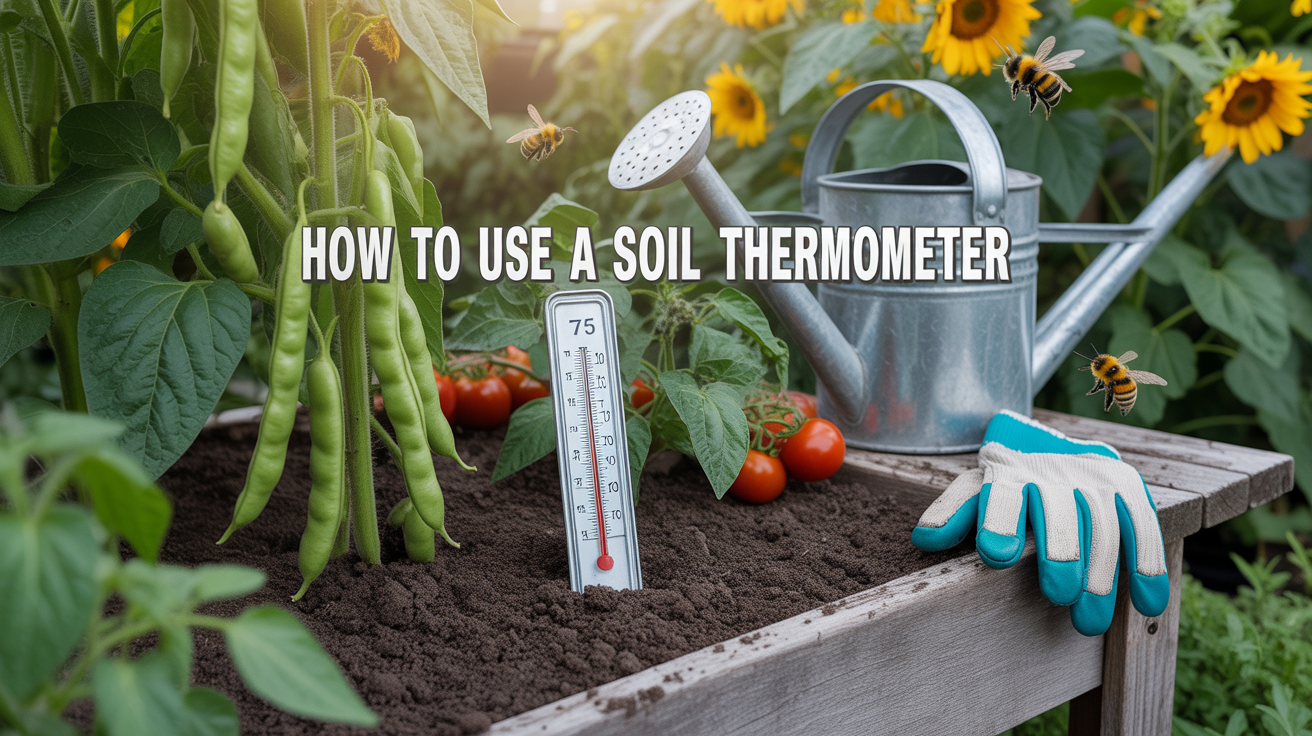
How to Use a Soil Thermometer: Your Guide to Planting Wisdom in Zone 9 🌡️
I remember the first time I tried to plant green beans in early spring. The seed packet said, “Plant after danger of frost,” so I tucked them in the soil as soon as February warmed up. But nothing came up. A week later, I replanted. Still nothing. Only when I stumbled across the idea of a soil thermometer did I realize: the soil was still too cold. Air temperatures can be deceptive—warm sunny days don’t always mean the soil is ready.
Seeds respond to soil warmth, not the calendar. Learning to use a soil thermometer taught me to plant with wisdom, not impatience. Now, checking soil temperature has become part of my seasonal rhythm. It’s a small tool, inexpensive and simple, but it makes all the difference in knowing when to sow, transplant, or protect. And it’s a spiritual lesson, too: just as seeds wait for the right warmth, so we wait for God’s timing in our lives.
Free eBook
Rooted in Grace
A Christian guide to intuitive gardening — the whole book, free. Tell me where to send it and it’s yours in a minute.
What a Soil Thermometer Is (and Why It Really Matters) 🌱
A soil thermometer is a simple probe—usually just 4–6 inches long—that measures the temperature of the soil a few inches below the surface. You’ve probably seen them at garden centers: some have analog dials, others digital screens. They’re affordable (usually $5–$20) and they’re one of the most honest tools you can own as a gardener.
Here’s why soil thermometers matter so much, especially for those of us in Zone 9:
Seed germination: Every crop has an ideal soil temperature for sprouting. A tomato seed simply won’t germinate in 50-degree soil, no matter how much you coax it. But put that same seed in 70-degree soil, and magic happens within days.
Transplant success: Warm soil reduces transplant shock. When you move a seedling from your cozy indoor seed-starting setup into cold soil, the roots go into survival mode. They stop growing. Warm soil says, “Welcome home, little one,” and the plant keeps thriving.
Disease prevention: Many soil-borne issues—damping off, root rot, fungal diseases—thrive in cold, wet soil. By planting when soil is truly warm, you’re working with nature’s defenses, not against them.
Seasonal timing: A soil thermometer helps you know the true difference between cool-season and warm-season crops. In our Houston area, this is crucial. We can fool ourselves with a warm February day.
Sanda’s Zone 9 Note: In our region, where seasons blend and air temps fluctuate wildly, soil thermometers give you truth instead of guesswork. I’ve learned that our February warmth is often an illusion. A soil thermometer is the difference between heartbreak and harvest.
How to Use a Soil Thermometer: The Simple Steps 🪴
Step 1: Insert the Probe in the Right Place
Push the thermometer 2–4 inches into the soil. For seeds, check at the depth you’ll actually be planting—a bean seed is deeper than lettuce, so know your target. For transplants, check at the root zone depth where the roots will settle. The key is checking the soil where your plants will live, not just the surface.
Step 2: Wait Patiently and Read
Leave the probe in for 1–2 minutes. I know it feels silly to stand there waiting, but soil takes time to register on the thermometer. This is good—it teaches us patience before we even plant. Read the temperature on the dial or digital screen, and don’t second-guess what you see.
Step 3: Take Multiple Readings in Different Spots
Check in several spots, especially in raised beds or areas with different sun exposure. A bed on the south side of your fence will warm faster than one on the north side. Morning readings are most accurate since soil hasn’t warmed from the sun’s heat yet. If you’re checking at 9 a.m., you’re seeing the true soil temperature. By 2 p.m., it may be artificially warm.
Sanda’s Tip: Don’t just check once and assume you know. I check my garden thermometer at least three different spots before I commit to planting day. In Houston, our soil variation from one bed to another can be 5–10 degrees different. That matters.
Ideal Soil Temperatures for Common Zone 9 Crops 🌞
Here’s a helpful reference table for the crops we love to grow in our Zone 9 gardens:
| Crop | Minimum Temp (°F) | Best Range (°F) | Zone 9 Notes |
| Lettuce, Spinach | 35°F | 45–65°F | Fall/winter crop; plant Sept–Nov |
| Peas | 40°F | 45–75°F | Oct–Dec planting; plant early |
| Carrots, Beets | 40°F | 50–75°F | Flexible; can direct sow Feb or Oct |
| Beans | 60°F | 65–85°F | Wait until April for spring planting |
| Corn | 55°F | 60–95°F | Plant mid-April; can get too hot by July |
| Tomatoes, Peppers | 60°F | 65–85°F | Wait until May; transplant seedlings |
| Cucumbers, Squash | 60°F | 65–95°F | Direct sow mid-April; thrives in heat |
The truth is, in Zone 9, we can often plant cool-season crops in late fall and winter because our soil stays milder than northern regions. But warm-season crops like beans, corn, and peppers still need truly warm soil in spring—there’s no getting around the soil thermometer’s wisdom.
Using Your Soil Thermometer Seasonally in Zone 9 🌿
Each season brings different soil temperatures, and your thermometer is the honest witness to those changes. Let me walk you through what I check each season.
Late Winter (February–March): This is when I’m itching to plant. I test the soil before sowing peas, carrots, or lettuce. If the soil is hitting 45°F consistently, I know I can direct sow cool-season crops. If it’s still hovering at 40°F or below, I wait. Those two weeks of waiting feel long, but they save me from disappointment.
Spring (March–April): I check soil constantly as March turns to April. Beans, corn, and squash are whispering their names to me, but I resist until soil hits 60–65°F. In Houston, this usually happens by mid-to-late April. I’ve learned the hard way: planting too early means rotted seeds.
Summer (May–August): By May, our soil is often hot—very hot. I use my thermometer to know when to mulch more heavily to protect roots. When soil hits 75°F or higher, I add an extra inch of mulch to moderate the temperature. Heat-loving crops like okra and sweet potato thrive, but tender plants need shade cloth.
Fall (September–October): As summer fades, I use the thermometer to decide when to transition back to cool-season planting. When soil cools to 70°F or below, I know it’s time to plant brassicas, lettuce, and peas for fall harvest. This is my favorite gardening season, and the thermometer tells me when to begin.
Winter (November–January): In our mild Zone 9 winters, I use the thermometer to decide whether to sow cool-season greens or pause for true rest. Some years our soil stays warm enough to keep planting; other years, I listen to what the soil tells me and take a break.
Sanda’s Garden Wisdom: Record your readings in a garden journal—I use a simple spiral notebook with dates and temperatures. Over a few years, you’ll see patterns in your garden. You’ll know that your bed reaches 65°F by April 15th most years, or that it gets too hot by July 20th. Your soil has its own rhythm, and the thermometer helps you learn its language.
Troubleshooting with Your Soil Thermometer: What the Soil Is Trying to Tell You 🌡️
Sometimes plants don’t do what we expect. Instead of guessing, let your soil thermometer help you diagnose the problem.
Seeds not sprouting: Soil is either too cold or too hot. Check your thermometer against the crop’s ideal range. If beans are sitting in 50°F soil, they’ll rot before they germinate. Move them to a warmer bed or wait. If lettuce seeds aren’t sprouting in 75°F summer soil, they’re stressed. Wait until fall when soil cools, or shade the bed.
Seedlings wilting after transplant
There’s something sacred about slowing down to check soil temperature. It’s not fast. It’s not convenient. You can’t do it while scrolling your phone or rushing between tasks. That’s precisely why I love this practice so much. When you press the thermometer into the earth and wait those two minutes for a reading, you’re doing something countercultural: you’re paying attention. You’re asking the soil what it needs instead of imposing your calendar on it. In our Houston gardens, where February can feel like April and April can turn summer-hot overnight, this intentional observation keeps us honest. I’ve noticed that my best planting decisions come not just from reading the number on the thermometer, but from the whole experience: kneeling in the bed, feeling the soil’s texture, noticing if it’s still wet from rain or drying out, observing how the light hits different areas. The thermometer is one tool in a larger conversation with your garden. It teaches you to listen instead of demand, to work with your soil’s rhythms rather than against them. Over time, you develop intuition. You’ll stand in your garden in early April, feel the soil with your hand, and have a sense of whether it’s ready before you even pull out the thermometer. The instrument becomes a confirmation of what you’re beginning to understand through years of patient observation. This kind of learning—gradual, soil-deep, earned through attention—shapes us as gardeners and as people. One of the most valuable lessons a soil thermometer teaches is that your garden isn’t one uniform temperature. Even in a small suburban yard, soil temperatures can vary dramatically from spot to spot. The raised bed on the south side of your garage catches morning sun differently than the one tucked along the north fence. That patch near the street where your neighbor’s black driveway radiates heat will warm weeks earlier than the shaded corner by your oak tree. I’ve learned to think of my Zone 9 garden as a collection of microclimates, each with its own personality. My thermometer has become the map-maker. When I’m planning spring planting, I take readings in at least four different spots: the sunniest bed, the shadiest corner, a raised bed in the middle, and the in-ground bed near the fence. This takes maybe ten minutes, but it saves me from planting beans in a spot that won’t warm up until May 1st when I’m expecting harvest in June. Houston’s summer microclimates matter just as much. I’ve noticed that my vegetable beds in the open get scorched by 2 p.m., reaching 85°F or higher in the soil, while a bed tucked under the dappled shade of my crape myrtle stays a cool 75°F. That five-to-ten-degree difference changes everything. Heat-sensitive crops like lettuce and arugula that I thought couldn’t survive our summer can actually thrive in that shaded microclimate when I use the thermometer to guide them. You can’t know these secrets without investigating with intention. Most gardeners think of soil temperature only in terms of planting readiness, but there’s a deeper wisdom here. Soil temperature is a tool for prevention and healing throughout the growing season. Once your plants are in the ground, the thermometer continues to tell an important story. Fungal diseases—damping off in seedlings, root rot in established plants, powdery mildew on leaves—often thrive when soil stays cold and wet. I’ve learned to use my thermometer as a diagnostic tool. If my tomato seedlings are looking weak and the soil reads 55°F, I know it’s not because I’m underwatering or they need more light. They’re stressed by cold roots. The solution isn’t fertilizer; it’s warmth. Sometimes that means covering the bed with row cloth for a few more weeks. Sometimes it means moving the plants to a sunnier spot. Conversely, in our brutal Houston summers, I watch my soil temperature like a hawk. When it creeps toward 80°F, I know disease pressure increases and plants struggle. That’s when I add extra mulch, ensuring the soil temperature stays moderated. I’ve seen plants recover from transplant shock or heat stress simply because I caught the soil temperature getting too extreme and adjusted with mulch, shade cloth, or strategic watering timing. The thermometer becomes an early warning system, helping you intervene before crisis. This kind of responsive gardening—reading signs, adjusting care, working with what the soil is telling you—builds a relationship with your garden that goes beyond technique. You stop seeing yourself as the boss imposing your will on reluctant plants. Instead, you become a listener, a responder, a partner in the garden’s health. Here’s something I didn’t understand until a few years into serious gardening: soil temperature doesn’t just tell you when to plant. It also tells you when to rest. In Zone 9, where our seasons blur together and we can garden nearly year-round, a soil thermometer helps you recognize when your garden needs a genuine break. During the peak of summer—typically July and August when soil temperatures soar past 80°F consistently—many gardeners push harder, watering more, fertilizing more, fighting the heat. But a soil thermometer helped me see the truth: my garden was exhausted. The soil itself was stressed. Most annual vegetables aren’t meant to produce in that kind of heat. Rather than battling it, I’ve learned to honor it. July becomes a month of minimal planting, extra mulching, shade cloth for heat-sensitive perennials, and strategic rest. I plant heat-lovers like okra and sweet potato, but I stop trying to coax cool-season crops into existence. Similarly, in winter, a cold soil thermometer reading gives me permission to rest without guilt. When soil consistently reads below 45°F in December and January, even in our mild Houston winters, I take it as an invitation to slow down. I plant what the soil can handle—hardy greens, root crops, garlic—and I leave other beds undisturbed. I spend more time planning, journaling, dreaming about next season. This rhythm of work and rest, driven by what the soil reveals through the thermometer, has made me a calmer, more patient gardener.
If this article resonated with you, you might be ready for something more than tips. “The garden is not just a place to grow plants – it is a place to grow yourself.”Reading Soil Temperature with Intention: A Practice of Observation
Microclimate Mapping: Your Garden’s Hidden Temperature Zones
When Cold Soil Protects and When Warm Soil Heals: Reading Soil Temperature as Prevention
Soil Temperature and Seasonal Rest: Honoring Your Garden’s Natural Rhythms
Ready to Go Deeper in the Garden?
Free eBook
Before you go — the book is yours
Rooted in Grace: A Christian Guide to Intuitive Gardening. No cost, no catch. Read it on any device, at whatever pace the season allows.


2 Comments