Keep the Salad Coming: Succession Greens in the Warming Spring
Racing the Heat for a Few More Weeks of Salad 🥬
By early April in Zone 9, our cool-season greens can feel the change coming. The lettuce and spinach that thrived through our mild winter are now growing in lengthening days and warming afternoons, and they know what that means: bolt, before the heat ends everything. This is the season when many gardeners simply give up on greens. But with a little strategy — the right varieties, a bit of shade, and a steady rhythm of small sowings — you can keep the salad coming for weeks longer than you might expect. Succession sowing in the warming spring is a gentle race against the heat, and it is one you can win for a good while yet.
This day’s task is to sow another small planting of lettuce and spinach, and it carries a lovely phrase: keep sowing small seeds of faith and rhythm. Let me show you how to extend your greens deep into the warming spring, and why steady sowing in the face of the coming heat is such a quiet act of faith.
Free eBook
Rooted in Grace
A Christian guide to intuitive gardening — the whole book, free. Tell me where to send it and it’s yours in a minute.
Why Greens Bolt as It Warms
Understanding the enemy helps you outmaneuver it. Lettuce and spinach are cool-season crops, and as days lengthen and temperatures climb, they shift from growing leaves to producing a flower stalk — bolting — in a rush to make seed before conditions turn hostile. Once a plant bolts, its leaves turn bitter and tough, and the harvest is essentially over. Heat and long days are the triggers, and in our climate both arrive early. Spinach is the first to give up, bolting at the merest hint of warmth. Lettuce follows, though some varieties hold out far longer than others.
The goal, then, is to slow the bolting and keep sowing fresh plants that have not yet reached that tipping point. You cannot stop the season from warming, but you can choose varieties that resist bolting, create cooler microclimates, and keep a steady supply of young plants coming so there is always something tender to harvest before the heat claims it.
Choose Heat-Tolerant Varieties Now
As spring warms, variety selection becomes your most powerful tool. Some greens are bred to resist bolting and tolerate heat far better than others, and switching to these now buys you weeks.
| Green | Heat-Tolerant Choices |
|---|---|
| Lettuce | Jericho, Nevada, Sierra, oakleaf types |
| Spinach alternatives | Malabar spinach, New Zealand spinach |
| Other greens | Swiss chard, Molokhia, amaranth (heat lovers) |
Choose slow-bolt, heat-tolerant lettuce varieties for your April sowings rather than the delicate winter types. And as true spinach becomes impossible in the heat, transition to its warm-season stand-ins: Malabar spinach and New Zealand spinach are not true spinach at all, but they give you similar tender greens and positively love the heat that kills the real thing. Swiss chard, too, bridges the seasons beautifully, tolerating both cool and warm weather. Sowing these now keeps a supply of greens flowing right through the transition.
Keep the Rhythm of Small Sowings
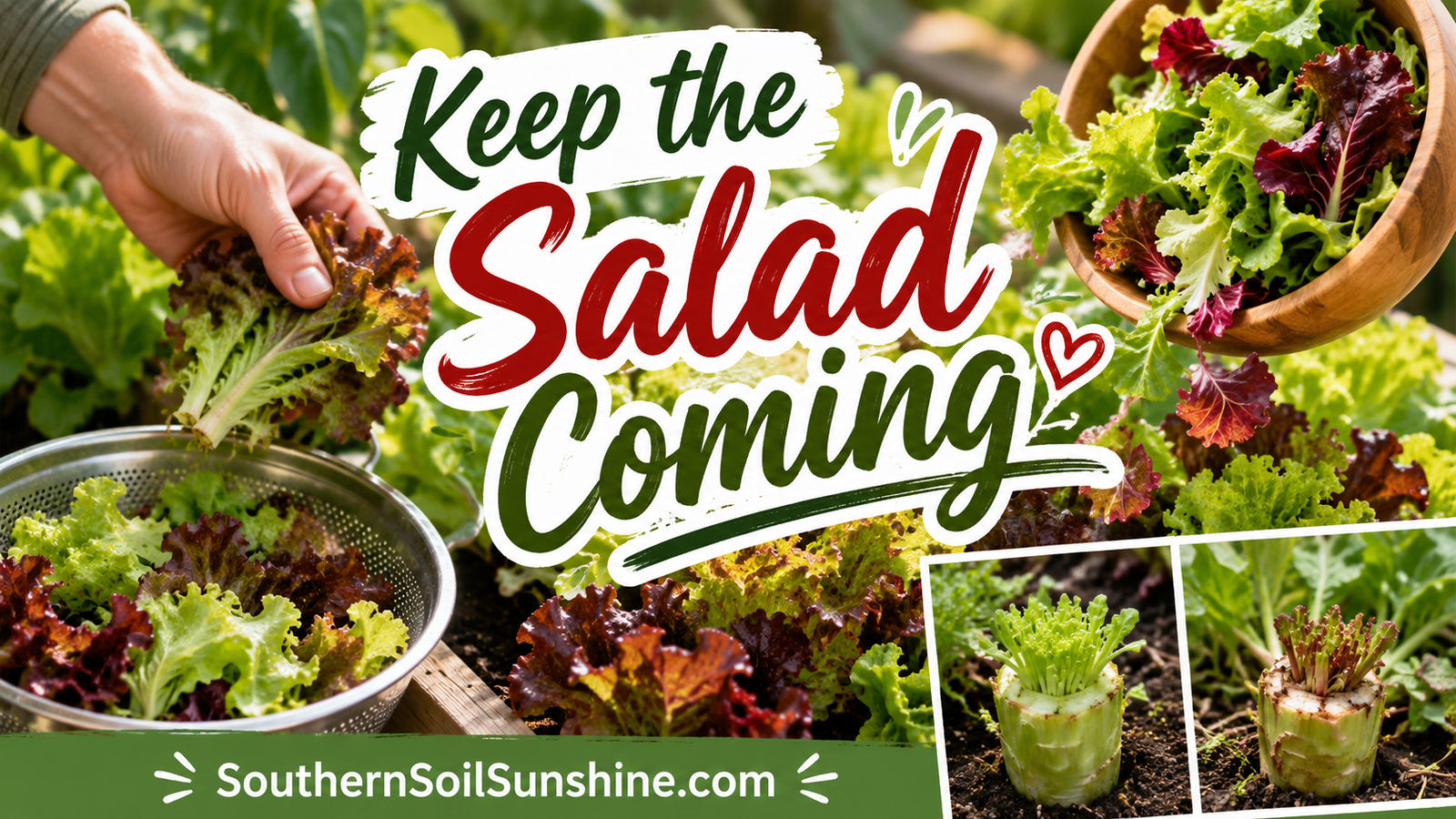
The heart of the strategy is steady succession — sowing a small new planting every week or two, so there is always a fresh, young, un-bolted crop coming along behind the maturing one. As the weather warms, lean toward shorter intervals and smaller sowings, harvesting greens young as baby leaves rather than waiting for full maturity, since young greens are less likely to have bolted and are tender and sweet. Cut-and-come-again harvesting — taking outer leaves and letting the center grow — stretches each planting further. The combination of frequent small sowings, young harvests, and heat-tolerant varieties is what keeps the salad bowl full as the season turns.
Keep Sowing Small Seeds of Faith and Rhythm
This day’s phrase is one I have come to treasure: keep sowing small seeds of faith and rhythm. There is genuine faith in sowing greens as the heat approaches. You are planting into a season you know is turning against these crops, betting on a few more weeks of harvest, trusting the small, steady rhythm of sowing even as the odds shift. It would be easier to simply stop — to declare the greens season over and wait for summer. But the gardener who keeps sowing small seeds, faithfully, in rhythm, harvests long after the one who gave up early.
And is this not how faithfulness works in every season that is turning hard? The temptation, when conditions grow difficult, is to stop sowing altogether — to conclude that the effort is no longer worth it, that the season for good things has passed. But faith keeps sowing small seeds anyway, in steady rhythm, trusting that there is still harvest to be had even as the heat rises. It does not require dramatic gestures, only the quiet discipline of continuing to plant the small thing, again and again, when giving up would be easier. So keep sowing your greens this week, small seed by small seed, in faithful rhythm. Choose the varieties that endure, make what shade you can, and trust the steady practice to carry you further than you expected. The small seeds of faith and rhythm, sown even against a warming season, are exactly what keep the harvest coming.
Share your warming-spring greens with us on Instagram @southernsoils — there is quiet triumph in a salad bowl still full as the heat comes on.
Meet the Greens That Love the Heat
Part of keeping the salad coming is widening your idea of what a “green” can be. As the true cool-season crops fade, a whole cast of heat-loving greens is waiting to take their place — plants that positively thrive in the weather that ends lettuce and spinach. Getting to know them turns the dreaded summer greens gap into a season of new flavors.
Malabar spinach is a beautiful climbing vine with thick, succulent leaves that taste much like spinach and grow with abandon in our heat and humidity — train it up a trellis and it will feed you all summer. New Zealand spinach is a sprawling, tender green that shrugs off heat. Molokhia, sometimes called Egyptian spinach, is a prolific hot-weather green cherished across warm climates. Amaranth greens, Swiss chard, and even sweet potato leaves all give you cooked or salad greens through the heat. Sowing or planting some of these now means that when your lettuce finally bolts, you are not left without — you simply shift to the greens built for the season you are entering. In our climate, the secret to year-round greens is not fighting the heat but working with it, choosing the right plant for each stretch of the calendar.
Little Tricks That Buy You Time
Beyond varieties and shade, a handful of small techniques stretch the greens season further. Keep the soil consistently moist — drought stress is a powerful bolting trigger, so a well-watered, mulched bed of greens holds out longer than a dry one. Harvest often and young, which keeps plants in a leafy, productive state rather than letting them mature toward flowering. Sow into the cooler pockets of your garden, wherever a taller crop or a fence throws afternoon shade. And do not be afraid to sacrifice a planting early — if a row is clearly about to bolt, harvest it all at once for a big salad or to wilt and freeze, rather than watching it turn bitter. Each of these small moves buys a little more time, and together they can extend your tender greens well past the point most gardeners expect.
The Grace of a Turning Season
There is a bittersweet beauty to gardening through a turning season, and the spring greens teach it gently. You cannot hold the cool weather forever; the heat is coming, and with it the end of these tender crops. But instead of grasping at what is passing or giving up in defeat, the wise gardener does something better — she keeps sowing faithfully to enjoy every last week of the season she is in, while also planting the crops of the season that is coming. She holds the present harvest and the future one together, neither clinging to what is ending nor rushing past it. That is a graceful way to move through any turning season, in the garden and in a life: to receive fully what this moment still offers, to sow in faith toward what is next, and to trust that there is a harvest appropriate to every season, if we will keep planting through the change. Keep sowing your small seeds this week — of greens, and of faith — and let the turning season find you steady, hopeful, and still planting.
Sow your small planting today, tuck it into a little shade, choose the varieties that endure, and keep the gentle rhythm going — and your table will stay green well past the point most gardens give up.
Ready to Go Deeper in the Garden?
If this article resonated with you, you might be ready for something more than tips.
- Download the FREE Rooted in Grace eBook
- Join Rooted Reset
- Follow on Instagram – @southernsoils
“The garden is not just a place to grow plants – it is a place to grow yourself.”
Free eBook
Before you go — the book is yours
Rooted in Grace: A Christian Guide to Intuitive Gardening. No cost, no catch. Read it on any device, at whatever pace the season allows.