Aftercare for New Transplants: Deep Water, Good Mulch, and a Gentle Start
Kindness in the First Days 🌱
April is transplant season in the Zone 9 garden. Peppers and eggplant, herbs and flowers, that second wave of tomatoes — all of them are going into the ground now, moving from the shelter of their pots into the wide open garden. And whatever the crop, the first days after transplanting follow the same simple rule: give the roots what they need, then cover them with kindness. Two humble practices, deep watering and good mulching, carry a new transplant through the tender establishment period and set it up to thrive. They are not complicated. But done faithfully, they are the difference between a plant that sulks and one that takes off.
A freshly transplanted seedling is in a vulnerable, in-between state — uprooted from the only home it knew, its small root system not yet spread into the new soil, suddenly exposed to April’s strengthening sun and warmth. It cannot yet fend for itself. What it needs from you now is exactly what this day’s task describes: the essentials given, and then a covering of care. Let me show you how to give your new transplants a gentle, kind start.
Free eBook
Rooted in Grace
A Christian guide to intuitive gardening — the whole book, free. Tell me where to send it and it’s yours in a minute.
First: Give the Roots What They Need
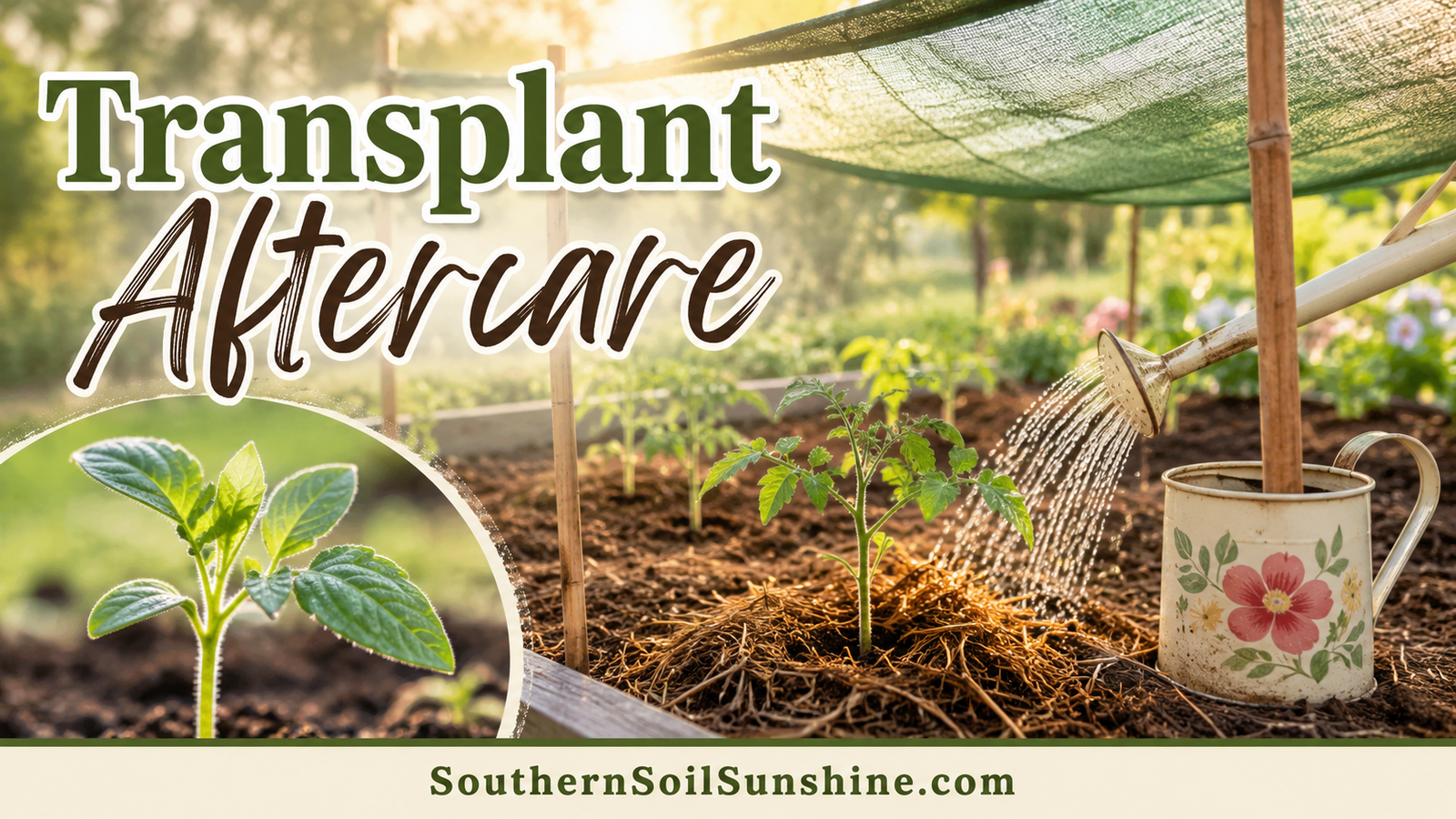
The single most important need of a new transplant is water delivered deep to its roots. When you settle a plant into the ground, water it in slowly and thoroughly, soaking the soil so it collapses gently around the roots and eliminates any air pockets. This first deep drink is not optional — it is what unites the transplant with its new home, bringing soil and roots into close contact so the plant can begin drawing moisture right away.
In the following days, keep the root zone consistently moist while the plant establishes. A new transplant has only a small root system and cannot yet reach far or deep for water, so it needs more frequent attention than a settled plant — but always water deeply when you do, encouraging the roots to grow downward in search of moisture rather than lingering shallow at the surface. Deep and caring beats frequent and shallow. You are training the roots, from the very first day, to reach down into resilience.
Then: Cover Them With Kindness
Once the roots are watered in, mulch is the covering of kindness that does the rest. A two-to-three-inch layer of straw, shredded leaves, or compost spread around each new transplant is one of the gentlest, most protective things you can offer a young plant. It holds the moisture you just gave, keeping the soil from drying out under April’s sun. It moderates soil temperature, sheltering tender roots from both lingering cool nights and warming afternoons. It suppresses the weeds that would otherwise compete with your seedling for water and nutrients. And as it breaks down, it slowly feeds the very soil the plant is rooting into.
Spread the mulch generously around the plant — but always keep it pulled back a couple of inches from the stem, leaving a small collar of bare soil. Mulch piled against a tender stem traps moisture where it can cause rot. Ring the plant with kindness; do not bury it. This one small detail is the difference between mulch that protects and mulch that harms.
A Simple Transplant-Care Checklist
| Care | Do This |
|---|---|
| Water in | Deep, slow soak at planting to settle roots |
| Keep moist | Evenly damp root zone for the first week or two |
| Mulch | 2–3 inches, pulled back from the stem |
| Shade if needed | Protect from harsh sun for a day or two |
| Watch & wait | Look for new growth — the sign it has taken |
Give What Is Needed, Then Cover With Kindness
This day’s phrase has stayed with me well beyond the garden: give the roots what they need, then cover them with kindness. It is such a complete picture of how to care for anything tender and newly transplanted — a seedling, yes, but also a person in a new season, a fresh start, a fragile beginning. First you meet the real, essential needs: the deep water, the true nourishment, the substance that keeps a living thing alive. And then, having provided what is needed, you add the covering of kindness — the mulch, the shade, the gentle protection that shelters the tender thing while it settles and takes hold.
How often we get the order or the balance wrong with the tender things in our care — and in our care of ourselves. Sometimes we offer kindness while neglecting the real needs, all comfort and no substance. Sometimes we meet the needs harshly, providing what is required but with no gentleness, no covering, no mercy for how hard the adjusting is. The garden models something wiser and more whole: both. The essential thing given deeply, and then covered over with kindness. Give what is truly needed, and then be gentle. So as you water and mulch your new transplants today, let it teach you how to tend every tender, adjusting thing entrusted to you — roots watered deep, and then covered, generously, with kindness.
Share your newly transplanted beds with us on Instagram @southernsoils — there is quiet hope in a young plant given a gentle, kind start.
Choosing the Right Mulch for New Transplants
Any good organic mulch protects a transplant, but a few suit young plants especially well. The gentlest, most breathable materials are best around tender new seedlings, where you want protection without smothering.
| Mulch | Why It Works for Transplants |
|---|---|
| Shredded leaves | Light, breathable, breaks down into rich soil |
| Straw | Easy to place gently around small plants |
| Compost | Feeds while it protects |
| Grass clippings (thin) | Free; apply in thin layers so they don’t mat |
Save coarse wood chips for permanent paths and established perennials rather than tender young vegetables — they are slow to break down and can tie up nitrogen at the soil surface right where a new transplant is feeding. For the young plants going in this April, a light, breathable material laid gently around them is exactly the covering of kindness they need.
How to Know a Transplant Has “Taken”
After the careful first days, you will be watching for one hopeful sign: fresh new growth from the top of the plant. That new growth is the plant’s way of telling you its roots have caught hold below and it feels at home. Until you see it, the plant is quietly working underground, building the root system that will carry it, and it may look tentative or still for a week or so — that is normal and not cause for alarm. Once you spot that first flush of new leaves reaching upward, you can breathe easy: the transplant has taken, and your intensive early care can ease.
From that point, you gradually shift into the long-season rhythm — deep, less-frequent watering that keeps coaxing roots downward, and a mulch layer you simply refresh as it thins. The tender, watchful establishment period is over, and the plant is ready to grow into the summer ahead. That transition — from anxious daily attention to relaxed, confident tending — is one of the small joys of transplant season, and it comes precisely because you gave the plant a gentle, kind start.
The First Days Set the Whole Season
It is worth remembering, as you do this humble work, just how much rests on it. A transplant given a kind, careful start — watered deep, mulched well, sheltered from shock — establishes quickly and grows into a strong, productive plant. One thrown into harsh conditions and neglected in its first vulnerable days may survive, but it often struggles all season, stunted by an establishment it never fully made. The few minutes of kindness you offer now echo through every week that follows. This is true of nearly every tender beginning: the care given at the start, when a thing is most fragile and least able to fend for itself, shapes everything that comes after. So give your transplants their gentle start today — the deep water, the good mulch, the small mercy of shade — and trust that this quiet kindness at the beginning is laying the foundation for a whole season of growth.
Slow Down for the Tender Things
If April’s long list of planting has you hurrying, let transplant aftercare be the task where you deliberately slow down. There is a temptation, when the beds are filling and the season is rushing, to plant quickly and move on — to set the seedlings in the ground and trust them to sort themselves out. But the tender things do not thrive on haste. They thrive on a few unhurried minutes of real attention: the slow, deep watering-in; the careful ring of mulch; the gentle look to see how they are settling. That small slowing is not lost time. It is the very thing that turns a rushed planting into a thriving one. The garden rewards the gardener who is willing to be gentle and unhurried with what is newly planted — and so, nearly always, does life. Give your transplants the gift of your slowed-down care today, and watch how a gentle start becomes a strong season.
Water them deep, cover them with kindness, and give them a day or two of gentle watching — and these young transplants will reward your care by rooting in strong and reaching, before long, for the summer sun.
Ready to Go Deeper in the Garden?
If this article resonated with you, you might be ready for something more than tips.
- Download the FREE Rooted in Grace eBook
- Join Rooted Reset
- Follow on Instagram – @southernsoils
“The garden is not just a place to grow plants – it is a place to grow yourself.”
Free eBook
Before you go — the book is yours
Rooted in Grace: A Christian Guide to Intuitive Gardening. No cost, no catch. Read it on any device, at whatever pace the season allows.