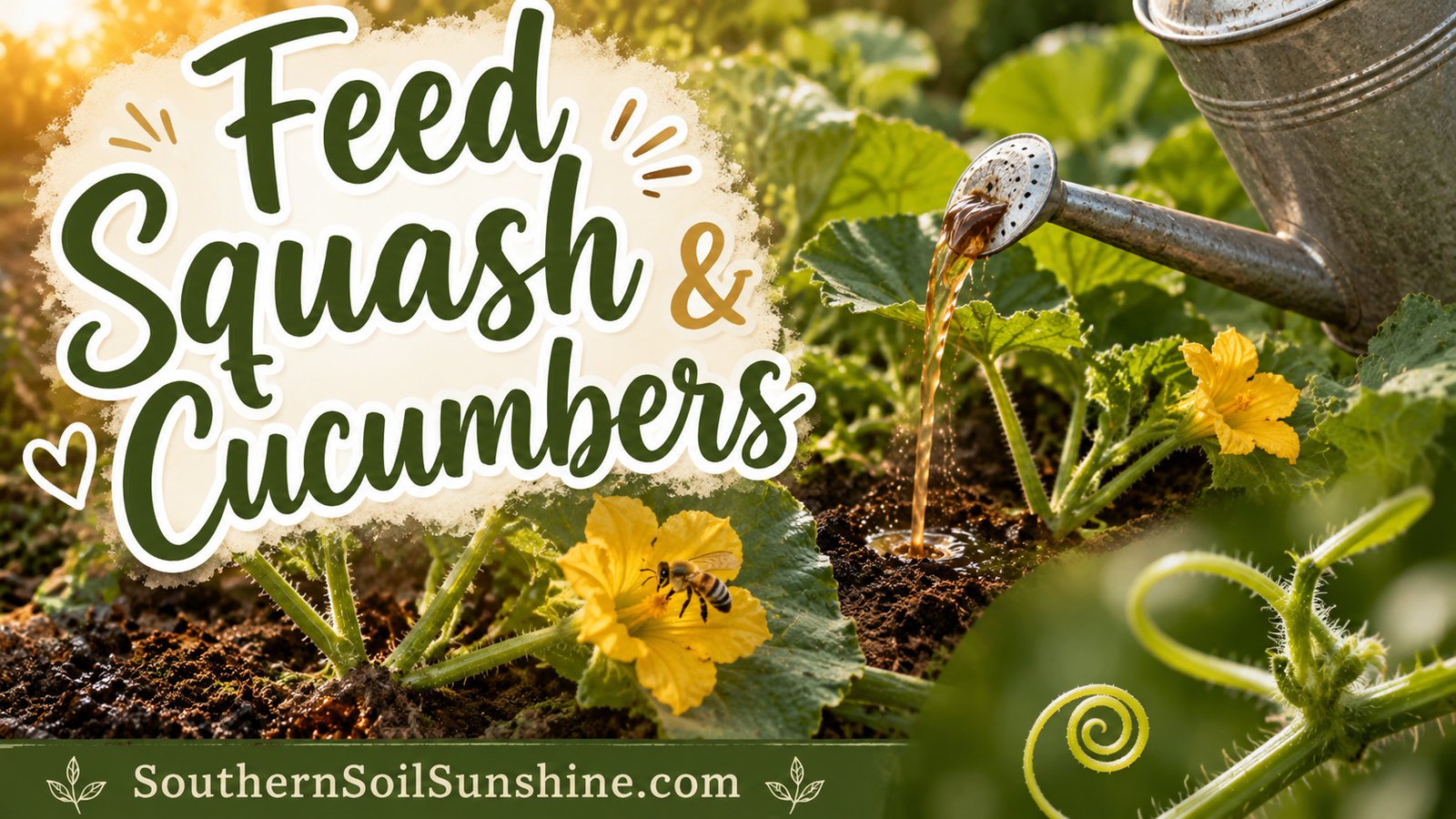
Feeding Squash and Cucumbers: Steady Nutrition for Hungry Vines
The Fast, Hungry Vines of Spring 🥒
Squash and cucumbers are some of the most rewarding crops in the Zone 9 garden, and some of the hungriest. Once they get going in our warming March soil, they grow with astonishing speed — sprawling vines, broad leaves, and, if you feed them well, a steady stream of fruit that can leave you happily giving zucchini to the neighbors. But that fast growth comes at a cost: these are heavy feeders, plants that draw hard and continuously on the soil. Feed them steadily and they overflow with fruit. Let them run out of nutrition and they stall, yellow, and produce poorly. The good news is that feeding them well is genuinely simple — a matter of steady, moderate, kind nutrition rather than anything fussy or complicated.
Let me walk you through feeding your squash and cucumbers so those hungry vines keep producing all season, and why “simple, steady, and kind” is exactly the right rhythm.
Free eBook
Rooted in Grace
A Christian guide to intuitive gardening — the whole book, free. Tell me where to send it and it’s yours in a minute.
Why These Vines Are So Hungry
It helps to understand what you are feeding. Squash and cucumbers are cucurbits — fast-growing, large-leaved, prolific vines that put on enormous growth in a short time and then set fruit continuously over many weeks. All of that rapid leaf growth and steady fruiting takes real fuel. A cucumber vine climbing a trellis and setting a cucumber every few days is working hard, and it pulls nutrients from the soil the whole time. Unlike a slow, once-and-done crop, these vines need nutrition available continuously, because they are producing continuously. Starve them mid-season and production simply stops.
The other thing to know is that their appetite shifts as they grow. Early on, a young vine wants a balanced diet to build strong leaves and roots. Once it begins to flower and fruit, it leans toward phosphorus and potassium — the nutrients that support blossoms and fruit — and away from heavy nitrogen, which at that stage would push more leaves at the expense of the squash and cucumbers you actually want.
A Simple Feeding Plan
Feeding cucurbits well does not require a chemistry degree — just a steady, moderate rhythm. Here is a straightforward plan.
| Stage | Feed | How Often |
|---|---|---|
| At planting | Compost worked into the bed | Once, before sowing |
| Young vines | Balanced organic fertilizer | Every 3–4 weeks |
| Flowering & fruiting | Lower nitrogen; compost tea | Every 2–3 weeks |
Start with a bed enriched with plenty of compost, which gives your vines a strong foundation. As the young plants grow, feed them every few weeks with a balanced organic fertilizer to fuel that rapid growth. Once they begin to flower and set fruit, shift toward gentler, more frequent feeding — a diluted compost tea every couple of weeks keeps steady nutrition flowing without overloading them, and eases back on the nitrogen right when the plants should be focusing on fruit. Simple, steady, kind: that is the whole rhythm.
Feeding Steadily, Not Heavily
The most important principle with these hungry vines is a bit of a paradox: they need a lot of nutrition over time, but they should never be fed heavily all at once. A big blast of strong fertilizer can burn their roots and pushes soft, disease-prone growth. What they want instead is a steady, moderate supply — the pantry kept stocked, the meals regular and reasonable. Think of it as feeding a growing family: not one enormous feast followed by empty cupboards, but consistent, dependable nourishment day after day. That steadiness is what keeps a squash plant producing for weeks instead of burning out.
Water and Food Work Together
One quiet truth about feeding cucurbits: nutrition and water are partners, and neither works well without the other. These big-leaved vines transpire enormous amounts of water in our heat, and a plant that is drought-stressed cannot take up the nutrients you give it no matter how well you feed. So pair your steady feeding with steady, deep watering at the base of the plants, keeping the soil evenly moist. Mulch helps enormously here, holding that moisture and keeping the feeding you provide from washing away. Fed and watered together, steadily and kindly, squash and cucumbers become some of the most generous plants in the whole garden.
Let Feeding Be Simple, Steady, and Kind
This day’s task carries an instruction I have taken to heart well beyond the garden: let feeding be simple, steady, and kind. There is real wisdom in it. We can make nourishment — of plants, of people, of ourselves — far more complicated and anxious than it needs to be, fretting over the perfect formula, swinging between neglect and overcorrection, feast and famine. But the healthiest growth almost never comes from intensity. It comes from steadiness — regular, moderate, dependable care, given faithfully over time.
The squash vine does not need a dramatic gesture; it needs a gardener who shows up every couple of weeks with a gentle feeding and a deep drink. And so it is with the people we love, and with our own tired hearts. Simple beats elaborate. Steady beats sporadic. Kind beats forceful. The nourishment that actually grows strong, fruitful things is the humble, regular, unglamorous kind — a little, often, given with care. So feed your vines this week, simply and steadily and kindly, and let them remind you to nourish everything in your care the same way. That quiet consistency is not a lesser love. It is the truest one, and it is what makes things flourish.
Share your squash and cucumber vines with us on Instagram @southernsoils — there are few joys like a well-fed vine overflowing with more than you can eat.
Good Organic Feeds for Squash and Cucumbers
You have gentle, effective options for feeding cucurbits, and it is worth knowing what each brings to the table so you can match the feed to the moment.
| Feed | Strengths | Best Stage |
|---|---|---|
| Compost / worm castings | Gentle, all-around, soil-building | At planting and throughout |
| Balanced organic granular | Steady slow release | Young, growing vines |
| Compost / worm tea | Mild liquid boost, microbes | Fruiting stretch, every 2 weeks |
| Kelp / seaweed | Trace minerals, stress resilience | Anytime as a supplement |
For most home gardeners, a compost-rich bed plus a balanced granular fertilizer for young plants and regular compost tea through fruiting covers everything these vines need. Kelp or seaweed makes a lovely occasional supplement, adding trace minerals and helping the plants shrug off heat stress. You do not need all of them — pick the two or three that fit your garden and keep the rhythm simple. Consistency with a few good feeds beats a shelf full of products used haphazardly.
Common Feeding Questions
How do I know if I am feeding enough? Watch the vines. Steady growth, deep-green leaves, and continuous fruiting mean you have the balance right. Pale leaves and slowing production mean feed a bit more; huge leafy plants with little fruit mean ease off the nitrogen.
Can I just rely on rich soil and skip feeding? If your soil is deeply enriched with compost, young plants may cruise for a while — but these heavy feeders producing over many weeks will almost always want supplemental feeding to keep fruiting strongly, especially in our leaching soils. A little regular feeding through the fruiting stretch is what keeps the harvest coming.
My plant looked great, then suddenly declined — was it feeding? Maybe, but a sudden collapse in squash often points to squash vine borers or bacterial wilt rather than hunger. Feeding keeps a plant strong and more resilient, but check the stem base for borer damage if a well-fed vine wilts and fails quickly. A healthy, well-nourished plant resists these troubles better, though no amount of feeding cures an active infestation.
Should I foliar feed? A diluted compost tea or seaweed spray on an overcast morning can give a gentle boost, and cucurbit leaves take up a surprising amount. Keep it mild and infrequent, and always aim to keep foliage dry overnight to avoid our humidity-loving fungal diseases.
The Generosity of a Well-Fed Vine
There is a particular joy that comes with squash and cucumbers, and it is the joy of abundance. A vine fed simply and steadily does not just feed you — it feeds your neighbors, your friends, the folks at church, anyone who will take a zucchini off your hands in July. These are the crops that teach a garden to overflow. And that overflow is the natural fruit of the humble, consistent care described here: not a heroic effort, but a faithful rhythm of feeding and watering kept up over weeks. Tend the vines simply and steadily, and they will hand you far more than you can keep for yourself — which is, perhaps, the whole point of a garden. Grow enough to share, and let the steady kindness you pour into the soil come back multiplied, in fruit enough for your table and everyone else’s too.
Keep It Easy on Yourself, Too
One last kindness — extend the “simple, steady, and kind” principle to your own gardening as well as to your vines. You do not need to hover, measure obsessively, or feel guilty for missing a feeding by a few days. Set an easy rhythm you can actually keep — a feeding every couple of weeks tied to a day you will remember — and let that be enough. A relaxed gardener who feeds consistently grows better squash than an anxious one chasing perfection. The vines are forgiving; they want steadiness, not fuss. So keep it light, keep it regular, and let this be one of the easy, generous joys of your spring garden rather than one more thing to worry over. Feed the vines, water them deep, and then step back and let them do what hungry, well-tended vines love to do — grow, and grow, and give.
Ready to Go Deeper in the Garden?
If this article resonated with you, you might be ready for something more than tips.
- Download the FREE Rooted in Grace eBook
- Join Rooted Reset
- Follow on Instagram – @southernsoils
“The garden is not just a place to grow plants – it is a place to grow yourself.”
Free eBook
Before you go — the book is yours
Rooted in Grace: A Christian Guide to Intuitive Gardening. No cost, no catch. Read it on any device, at whatever pace the season allows.