
Feeding Tomatoes at Transplant: Compost Tea or Organic Fertilizer?
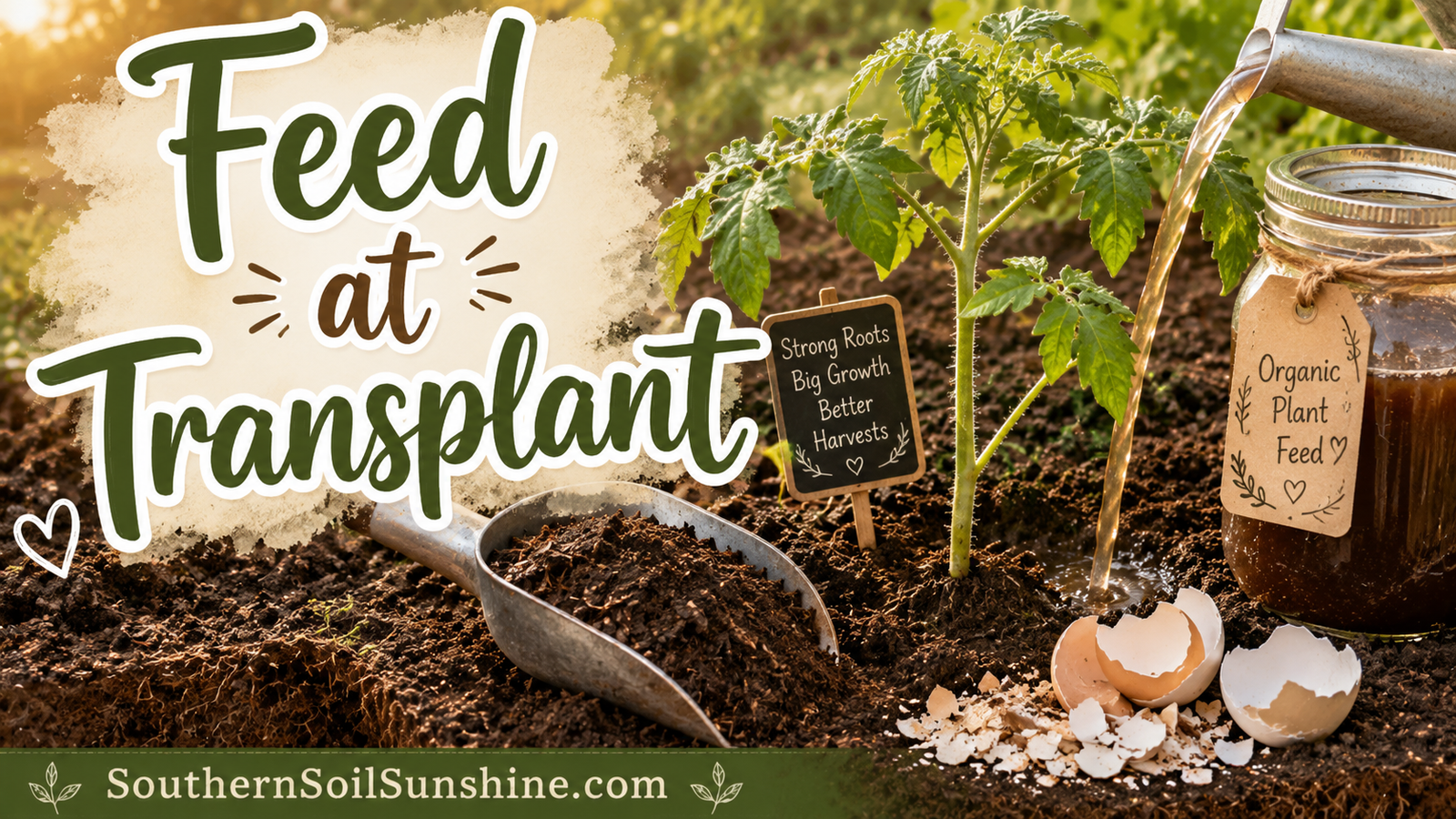
The Right Meal at a Tender Moment 🍅
Your tomatoes are in the ground and beginning to root down. Soon they will want feeding — tomatoes are hungry plants that will draw on the soil for months — but a freshly transplanted tomato is at its most tender and vulnerable, and how you feed it in these first weeks matters as much as what you feed it. Do it gently and wisely, and you support the plant exactly when it needs support. Do it heavily or carelessly, and you can burn tender new roots or push soft, weak growth right when the plant should be building strength. The most common question at this stage is simple: compost tea, or organic fertilizer? The happy answer is that both are wonderful — and they do slightly different jobs.
Let me walk you through the two, when to reach for each, and how to feed a new tomato in a way that protects it while it adjusts to its new home.
Free eBook
Rooted in Grace
A Christian guide to intuitive gardening — the whole book, free. Tell me where to send it and it’s yours in a minute.
What Each Feed Actually Does
Compost tea and granular organic fertilizer are not really competitors; they are partners with different strengths. Compost tea is a gentle liquid feed teeming with beneficial soil microbes. Its great gift at transplant time is not raw nutrition so much as life — it inoculates the root zone with the microorganisms that help a young plant take up nutrients and settle into the soil, all while feeding lightly enough that it is nearly impossible to overdo. Granular organic fertilizer, worked into the bed, is your slow-release bank of nutrition; it breaks down gradually over weeks, providing the steady, longer-term feeding a months-long crop like a tomato depends on.
Think of it this way: the granular fertilizer stocks the pantry for the whole season, while the compost tea is a gentle welcome meal that helps the plant settle in and start eating. Used together, they give a new tomato both an easy first drink and a full larder to grow into.
Compost Tea vs. Organic Fertilizer at a Glance
| Feature | Compost Tea | Granular Organic Fertilizer |
|---|---|---|
| Speed | Gentle, immediate, mild | Slow release over weeks |
| Main gift | Soil microbes & light feeding | Steady, longer-term nutrition |
| Best applied | As a drink after planting | Worked into the bed at planting |
| Risk of burning | Very low | Low if measured; avoid excess |
How to Feed a New Tomato Gently
Here is a simple, safe approach that uses the best of both. When you prepare the planting hole, mix a measured dose of balanced granular organic fertilizer into the surrounding soil according to the package rate — this stocks the bed for the weeks ahead. Then, after planting and watering in, give the transplant a drink of diluted compost tea to welcome it and jump-start the soil life around its roots. In the following weeks, as the plant establishes and begins to grow, you can offer compost tea every couple of weeks as a gentle ongoing feed, saving heavier fertilizing for later, once the plant is strong and beginning to flower.
The guiding principle at transplant time is restraint. A new tomato does not need to be pushed; it needs to be supported while it roots. Gentle and steady wins here every time. You are not trying to force fast growth — you are creating rich, living conditions and letting the plant grow into them at its own pace.
The Nitrogen Trap to Avoid
There is one feeding mistake that catches many tomato growers, and it is worth naming clearly.
Protect What Is Tender As It Adjusts
This day’s task holds a gentle instruction that reaches well beyond the tomato bed: protect what is tender as it adjusts. A freshly transplanted tomato is in a fragile, in-between state — uprooted from the only home it knew, not yet anchored in the new one, adjusting to sun and soil and space all at once. The wise gardener does not respond to that tenderness with force. She responds with gentleness — a soft feeding, a deep drink, a little shade on a hot afternoon, patience while the roots take hold. She protects what is tender precisely because it is adjusting.
How often we forget to extend that same wisdom to the tender, adjusting things in our own lives — the new beginning, the fresh start, the person or the part of ourselves that has just been uprooted and set down somewhere unfamiliar. Our instinct is often to push, to demand quick results, to expect a thing that is still finding its roots to perform as if it were already established. But tender, adjusting things need protection, not pressure. They need gentle nourishment and time. So as you feed your new tomatoes with a careful, generous hand, let it remind you to be gentle with whatever is tender and adjusting in your own life right now. Feed it softly. Give it time to root. Protect it while it settles — and trust that gentleness now grows into strength later.
Feed your transplants kindly today. Share your tomato beds with us on Instagram @southernsoils — a well-fed, well-settled young plant is a promise of the summer to come.
A Season-Long Feeding Timeline for Tomatoes
It helps to see where this tender first feeding fits in the whole arc of a tomato’s season, because the plant’s appetite changes dramatically as it grows. Feeding it the right thing at the right stage is most of the art.
| Stage | What to Feed | Goal |
|---|---|---|
| At transplant | Compost in the hole + compost tea drink | Welcome roots, settle the plant |
| First few weeks | Light compost tea every 2 weeks | Gentle, steady establishment |
| Vigorous growth | Balanced organic fertilizer | Build a strong, healthy plant |
| Flowering & fruiting | Lower nitrogen, more phosphorus/potassium | Encourage blooms and fruit set |
Notice how the feeding shifts from gentle and welcoming at transplant to balanced and building during growth to bloom-focused at fruiting. Early on, you are protecting and settling. Later, once the plant is strong and established, you can feed more generously to fuel all that fruit. Matching the meal to the moment is how you grow a tomato that is both vigorous and productive — leafy enough to power itself, but never so nitrogen-drunk that it forgets to fruit.
Making a Quick Compost Tea for Transplants
If you want to brew a gentle tea for your new tomatoes, you do not need anything fancy. Drop a couple of shovelfuls of finished compost — or a few cups of worm castings for an even milder, odor-free version — into a five-gallon bucket of water. Let it steep for a day, stirring now and then, then strain off the liquid and dilute it to the color of weak tea. Water it in at the base of each transplant. That is the whole recipe, and it is forgiving enough that exact measurements hardly matter. Use it fresh, within a day or two of straining, while the microbes are alive and active.
Worm-casting tea is my favorite for this tender stage precisely because it is so mild — you truly cannot burn a plant with it, which makes it perfect for pouring over a freshly-planted tomato still finding its footing. Keep a little going through the spring and you will always have a gentle welcome drink ready for whatever you plant next.
Gentleness Is Not Weakness
It can feel almost counterintuitive to feed a hungry crop so lightly at the start. We tend to think more food means faster, better growth. But the tomato teaches otherwise: the plant fed gently at transplant, then increasingly as it strengthens, outgrows and outproduces the one force-fed from day one. Gentleness at the tender stage is not a lesser form of care — it is the wiser one, the kind that reads what a young thing actually needs and gives exactly that, no more. A little compost, a mild drink, patience while the roots take hold: this quiet, restrained beginning is precisely what grows a tomato strong enough to carry a summer’s worth of fruit. Feed softly now, feed generously later, and you will have done right by your plants at every stage of their growing.
Let the Plant Tell You What It Needs
The best feeding guide is not a schedule at all — it is the plant itself, once you learn to read it. A tomato that is growing steadily, with deep-green leaves and a sturdy, thickening stem, is well fed and content; leave it alone and keep to your gentle rhythm. Pale, yellowing lower leaves and slow, stalled growth are a quiet request for a little more nutrition, easily answered with a drink of compost tea or a measured feeding as the plant matures. On the other end, dark, overly-lush foliage with thick, curling leaves and few or no flowers is the classic sign of too much nitrogen — the plant is drunk on green and forgetting to fruit, and your answer is to ease off and let it balance out.
This attentive, responsive feeding — watching the plant and giving it what it actually asks for rather than what a rigid calendar dictates — is the mark of a gardener who has moved from following rules to reading relationships. It is slower and more attentive than dumping fertilizer on a schedule, and it grows healthier, more productive plants. Feed the tomato in front of you, not the tomato in the book, and it will show you, in its color and its growth and eventually its fruit, that you read it well.
Ready to Go Deeper in the Garden?
If this article resonated with you, you might be ready for something more than tips.
- Download the FREE Rooted in Grace eBook
- Join Rooted Reset
- Follow on Instagram – @southernsoils
“The garden is not just a place to grow plants – it is a place to grow yourself.”
Free eBook
Before you go — the book is yours
Rooted in Grace: A Christian Guide to Intuitive Gardening. No cost, no catch. Read it on any device, at whatever pace the season allows.