
Picking Tomatoes at Peak Ripeness: Reading the Fruit and Honoring the Harvest
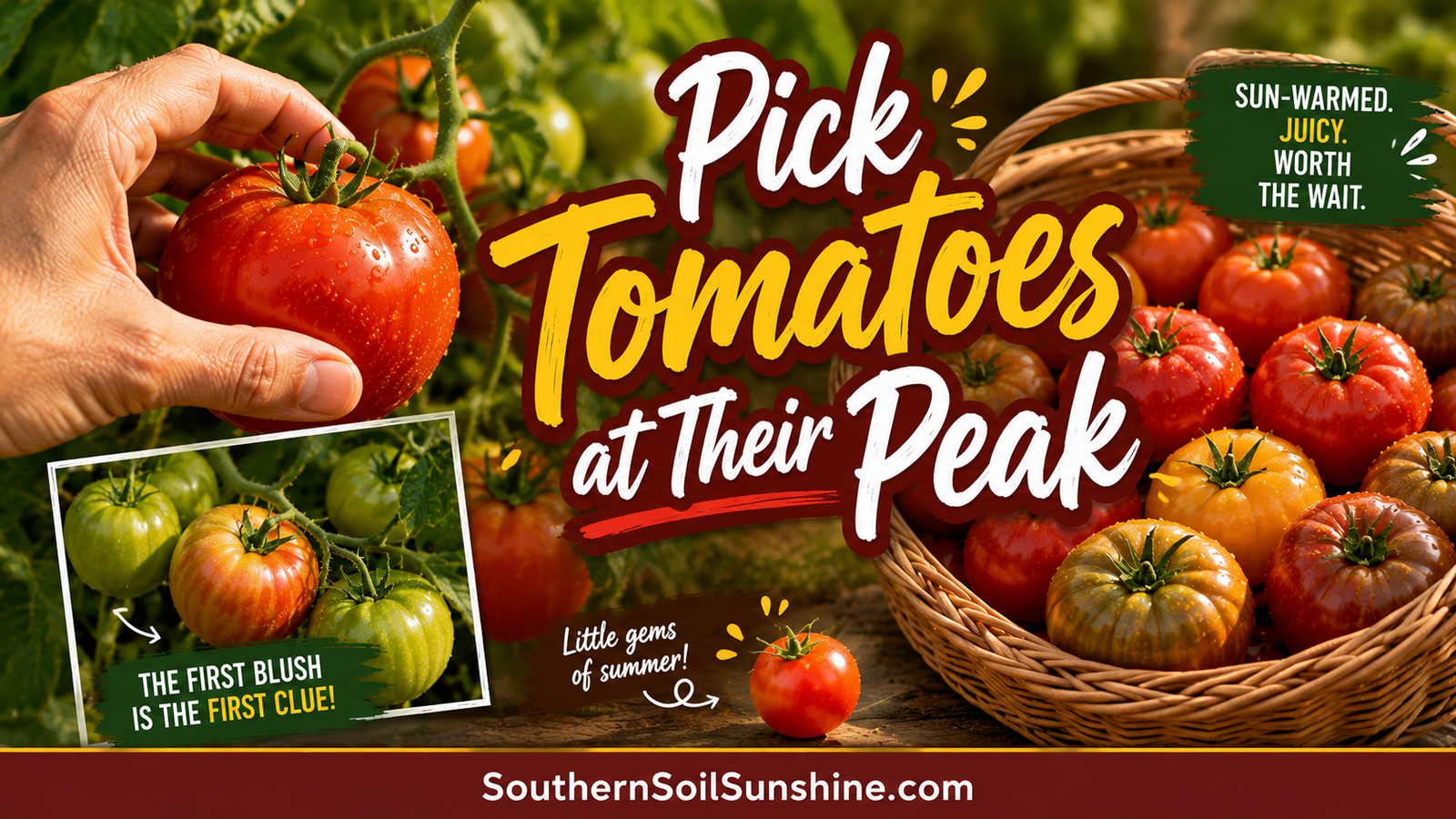
The Moment It All Comes Together 🍅
After months of work — the seeds started in winter, the transplants tended through spring, the watering and staking and pest patrol through the brutal early summer — late July brings the payoff: ripe tomatoes, warm from the sun, ready to pick. But there is a real art to knowing exactly when to pick, and it matters more than most gardeners realize. Pick too early and you sacrifice flavor; leave a tomato too long on the vine in our heat and you risk losing it to cracking, sunscald, stink bugs, or over-ripening in a single hot day. Learning to read the fruit — to recognize that precise moment of peak ripeness — is how you honor all the work that came before and bring the very best of the harvest to your table.
This day’s task is to harvest your tomatoes at their peak of ripeness, and it carries a grateful phrase: receive the gift fully. Let me teach you to read the fruit and time the harvest, and reflect on why receiving the gift fully is such joyful wisdom.
Free eBook
Rooted in Grace
A Christian guide to intuitive gardening — the whole book, free. Tell me where to send it and it’s yours in a minute.
Reading the Signs of Ripeness
A perfectly ripe tomato tells you it is ready in several ways, and learning to read them together makes you a confident harvester.
| Sign | What to Look For |
|---|---|
| Color | Full, even color for the variety |
| Feel | Slight give when gently squeezed, not hard or mushy |
| Release | Comes off with a gentle twist, little resistance |
| Sheen | Glossy, taut skin |
| Aroma | Sweet, earthy tomato scent at the stem |
Color is the first sign, but know your variety — a fully ripe tomato reaches its full, even color, whether that is deep red, golden, orange, or the rich shoulders of a heirloom. Feel is the truest test: a ripe tomato yields slightly to gentle pressure, neither rock-hard (underripe) nor soft and mushy (overripe). A ripe fruit releases easily from the vine with a gentle twist or a slight lift, barely resisting, while an underripe one clings stubbornly. The skin turns glossy and taut, and a truly ripe tomato gives off that unmistakable sweet, earthy tomato fragrance right at the stem. Read these signs together and you will pick with confidence, catching each fruit at its flavorful peak.
The Zone 9 Timing Question: Vine vs. Counter
Here is where our hot climate changes the classic advice. In a mild climate, letting tomatoes fully ripen on the vine gives the best flavor. But in the punishing Zone 9 heat, the vine becomes a risky place to leave a ripening tomato — extreme heat can actually halt ripening, and fully ripe fruit left on the plant is vulnerable to cracking, sunscald, splitting after a storm, stink bug feeding, and birds. So the wiser summer strategy is often to pick tomatoes at the “breaker” stage — the moment they first blush from green to color — and let them finish ripening indoors on the counter, out of the brutal sun. A tomato picked at first blush and ripened at room temperature develops virtually the same flavor as a vine-ripened one, without the risk of losing it in a single hot day. In our heat, the counter is often the safest place for that final ripening.
Harvesting Well and Often
Once your tomatoes begin coming in, harvest frequently — every day or two — because in the heat, fruit ripens fast and waiting even a day can mean a lost tomato. Frequent picking also signals the plant to keep producing, so regular harvest keeps the crop coming. Pick gently, supporting the fruit and twisting or snipping cleanly at the stem so you do not tear the plant or bruise the tomato. Harvest in the cooler morning when the fruit is not sun-hot. And do not overlook the split-second window on cherry tomatoes especially, which ripen and then split with astonishing speed in summer — check them daily. Faithful, frequent harvesting is how you catch each fruit at its peak and keep the whole plant producing through its season.
Receive the Gift Fully
This day’s phrase is pure invitation: receive the gift fully. A vine-ripe tomato in late July is one of the garden’s truest gifts — the concentrated reward of a whole season of faithful work, warm from the sun, bursting with a flavor no store-bought tomato can match. And the whole art of harvesting well is really the art of receiving this gift fully: catching the fruit at its precise peak, not too early or too late, so that nothing of its goodness is wasted; honoring the harvest by picking it, using it, savoring it while it is at its best. There is a way of gardening that does all the work of growing but then, distracted or careless, fails to fully receive what it has grown — letting fruit over-ripen and drop, or picking it but never quite pausing to taste and be glad. The harvest asks more of us than that. It asks to be received.
And how gently this speaks to the way we receive the gifts in our own lives. So often we are so oriented toward the work, the striving, the next thing to grow, that when the gift finally comes — the fruit of our labor, the answered prayer, the season of blessing — we hardly pause to receive it fully. We pick it, in a sense, but we do not taste it; we achieve the good thing but rush past the joy of it, already onto the next task. The garden, with its sun-warm tomato in our hand, invites something better: to stop and fully receive the gift, to let ourselves taste the goodness and be genuinely glad, to honor what we have been given by savoring it rather than hurrying past. Receiving well is its own discipline and its own kind of gratitude — a refusal to let the gifts of our lives ripen and fall unnoticed. So as you pick your tomatoes at their peak today, warm and fragrant and perfect, let the simple act teach you: pause, savor, be thankful, receive it fully. Receive the gift fully. The growing is only half the harvest; the glad receiving completes it.
Share your peak-ripe tomato harvests with us on Instagram @southernsoils — there is real joy in receiving the garden’s gifts fully.
Using and Preserving the Peak Harvest
When the tomatoes come in at their peak — and in late July they often come all at once — receiving the gift fully also means not letting the abundance go to waste. A peak-ripe tomato is at its best for only a few days, so have a plan for the glut.
| Method | Best For |
|---|---|
| Eat fresh | The best of the best — sliced, salted, savored |
| Freeze whole | Easiest; skins slip off, use in cooking |
| Sauce & can | Large batches; winter pantry |
| Roast & freeze | Concentrated flavor for later |
The very best tomatoes deserve to be eaten fresh at their peak — sliced thick, sprinkled with salt, layered with basil from the herb bed, or simply eaten warm off the counter like an apple. But when there are more than you can eat, preserve them and you carry summer’s gift into winter. Freezing whole tomatoes could not be simpler: just bag them, and the skins slip right off when thawed for use in any cooked dish. Larger batches become sauce for canning or roasting for the freezer, concentrating that peak-summer flavor into jars and containers you will open gratefully in January. And share the abundance — a bag of sun-warm tomatoes given to a neighbor or friend is one of summer’s sweetest gifts to pass on. However you do it, honoring the peak harvest means letting none of its goodness be lost.
The Gladness of the Harvest
There is a particular joy reserved for this moment in the gardening year — standing among your plants in the late-July morning, basket filling with warm, fragrant, perfectly ripe tomatoes, months of work made tangible in your hands. Do not rush past it. This is the moment the whole season pointed toward, and it deserves to be savored, not just harvested. Let yourself feel the genuine gladness of it: the smell of the vines on your hands, the weight of the fruit, the taste of the first ripe tomato eaten right there in the garden. This is what you worked for, and receiving it with real joy is not indulgence but the proper completion of the work.
So harvest your tomatoes at their peak this week, reading each fruit and catching it at its best. Pick often, handle gently, finish the ripening safely on your counter in the heat, and use or preserve the abundance while it is at its finest. And through the whole glad task, let the sun-warm fruit teach its quiet lesson — that the good gifts of our lives, so long worked for, ask not only to be grown but to be fully received, savored, and honored with genuine gratitude. Receive the gift fully. The harvest is here; taste it, share it, and be glad.
Ripening Green Tomatoes Indoors
By late July you will inevitably have green and partly colored tomatoes you need to bring in — whether picked at first blush to beat the heat, gathered ahead of a storm, or rescued from a plant you are pulling. Ripening them indoors is easy once you know how. Set them stem-side down on the counter, out of direct sun, in a single layer where air can circulate; they will color up over several days at room temperature. To speed things along, tuck them in a paper bag or a bowl with a ripe banana or apple, whose natural ethylene gas nudges tomatoes to ripen faster. Check daily and pull each one as it reaches peak color and gentle give. Tomatoes with even a faint blush of color when picked will ripen to nearly full flavor this way, so you rarely need to leave fruit on the vine to the point of risk. Knowing you can finish the ripening safely indoors frees you to harvest at exactly the right moment for the plant and the heat — and to receive every last tomato of the season, none lost to the summer’s hazards.
Ready to Go Deeper in the Garden?
If this article resonated with you, you might be ready for something more than tips.
- Download the FREE Rooted in Grace eBook
- Join Rooted Reset
- Follow on Instagram – @southernsoils
“The garden is not just a place to grow plants – it is a place to grow yourself.”
Free eBook
Before you go — the book is yours
Rooted in Grace: A Christian Guide to Intuitive Gardening. No cost, no catch. Read it on any device, at whatever pace the season allows.