Catching Aphids Early: The Daily Handpick Habit
The Tiny Pest That Rewards Early Attention 🐞
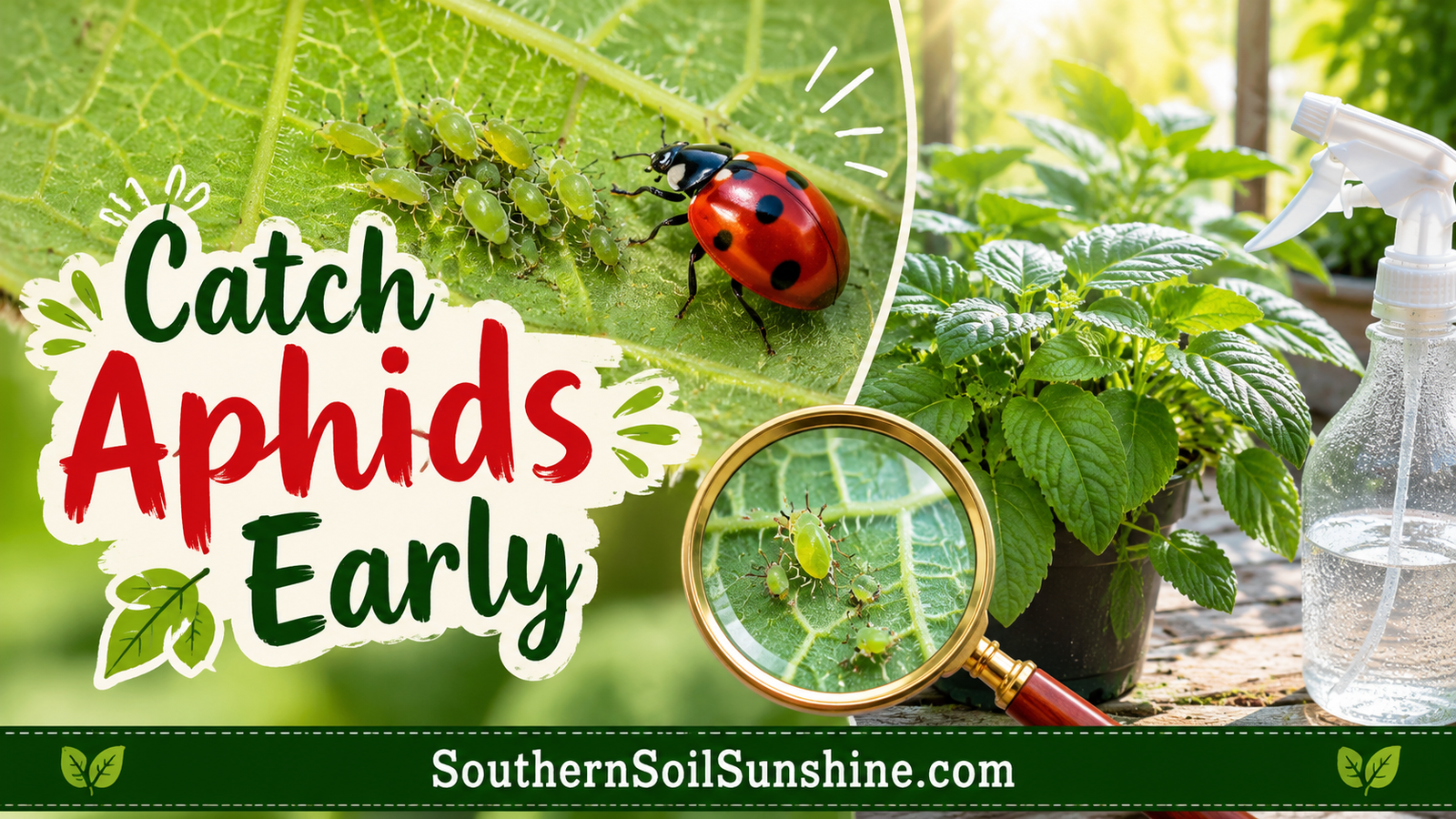
Of all the pests that visit a Zone 9 spring garden, aphids are among the most common — and among the most manageable, if you catch them early. These tiny, soft-bodied insects cluster on the tender new growth of your plants, especially in the flush of spring when everything is putting out fresh, succulent shoots. Left alone, a few aphids become a colony, and a colony can weaken plants, spread disease, and coat everything in sticky residue. But caught early, when they are still just a small cluster on a single shoot, aphids are almost trivially easy to deal with. The whole battle comes down to one simple habit: looking closely, often, and dealing with what you find while it is small.
This day’s task is to check for aphids and handpick as needed, and it carries a quietly searching phrase: notice what’s clinging that doesn’t belong. Let me show you how to catch aphids early and keep them from ever becoming a problem, and why this small habit of noticing is worth cultivating in more than just the garden.
Free eBook
Rooted in Grace
A Christian guide to intuitive gardening — the whole book, free. Tell me where to send it and it’s yours in a minute.
Know What You Are Looking For
Aphids are small — about the size of a pinhead — and come in green, black, gray, pink, or white, often blending in with the plant they are on. You will most often find them clustered on the undersides of leaves and on the tender tips of new growth, where the plant tissue is softest and easiest for them to pierce. Look also for the signs they leave behind: curled or distorted new leaves, a sticky shiny residue called honeydew coating leaves below them, sometimes a black sooty mold growing on that residue, and ants marching up and down the stems — ants farm aphids for their honeydew, so a trail of ants is often your first clue that aphids are present.
The key is to look at the right places regularly. Turn over leaves. Peer into the growing tips. Check the plants aphids love most — tender greens, beans, and the new growth of almost anything. A quick, close look every day or two catches an infestation while it is still a handful of insects rather than a thriving colony.
The Daily Handpick Habit
Here is the beautiful simplicity of early aphid control: when you find just a few, you often need nothing more than your hands and a little water. Here is your escalating toolkit, gentlest first.
| If You Find… | Do This |
|---|---|
| A few aphids | Squish by hand or wipe off with a damp cloth |
| A small cluster | Blast off with a strong spray of water |
| A heavier patch | Prune off the affected shoot entirely |
| A spreading problem | Insecticidal soap or neem, undersides too |
For a light infestation, simply run your fingers over the cluster to squish them, or wipe them off with a damp cloth. A sharp spray of water from the hose knocks aphids off and they mostly cannot climb back on. If a shoot is heavily colonized, just prune it off and drop it in a bucket of soapy water. Only when aphids are widespread do you need to reach for insecticidal soap or neem oil, sprayed thoroughly including the leaf undersides. Nine times out of ten, the daily handpick and a blast of water are all it takes — because you caught them early.
Prevention and Staying Ahead
The best aphid control is simply steady attention, but a few habits help. Avoid over-fertilizing with nitrogen, which pushes the soft, lush new growth aphids adore. Keep plants healthy and unstressed, since aphids target weak plants. Encourage beneficial insects with a diversity of flowers. And most of all, keep up the daily look — a quick check as you move through the garden means you will always catch aphids while they are few.
Notice What Is Clinging That Doesn’t Belong
This day’s phrase is one that has quietly convicted me more than once: notice what’s clinging that doesn’t belong. Aphids are such a fitting picture of it. They are small, easy to overlook, and they gather precisely on the newest, most tender growth — clinging to the very places where the plant is trying to grow. And they do their damage not through any single dramatic act, but by quietly multiplying, unnoticed, until they have drained the vitality from the thing they cling to. The remedy is not force but attention: the simple, regular practice of looking closely and removing what does not belong while it is still small.
Our own lives collect these clinging things too — the small habits, resentments, worries, and influences that attach themselves quietly to our tender new growth and slowly drain our vitality if left unnoticed. Rarely do they announce themselves. They simply gather, in the soft and unguarded places, multiplying in the dark until we wonder why we feel so depleted. And the remedy is the same as it is for aphids: not some dramatic overhaul, but the steady, humble habit of looking closely and gently removing what clings but does not belong, while it is still small and easily dealt with. So as you check your plants today, running your eyes over the tender new growth and clearing away what has gathered there, let it prompt the quiet question: what is clinging to me that doesn’t belong? What small thing, noticed and removed now, would keep my own new growth healthy and free? Tend the garden with attentive eyes — and tend your own tender places with the same faithful, early care.
Share your aphid-fighting tips and beneficial-insect sightings with us on Instagram @southernsoils — there is real satisfaction in a garden kept healthy by simple, steady attention.
Where Aphids Show Up First
Knowing the plants aphids love lets you check the likeliest spots first and catch them fastest. In a spring Zone 9 garden, a few crops act as early-warning stations — if aphids are around, these are where you will spot them soonest.
| Aphid Favorites | Check Here |
|---|---|
| Tender greens, lettuce, kale | Undersides of leaves, centers |
| Beans & peas | Growing tips and new shoots |
| Broccoli & brassicas | Deep in the heads and crowns |
| Any soft new growth | The freshest tips of everything |
Make these spots your first stops on a quick check. If your lettuce undersides and bean tips are clear, you are likely in good shape everywhere. Aphids also love the tender flower buds of many plants, so glance there too. A minute spent looking in the right places catches problems that a casual, surface-level glance would miss entirely.
Make It a Daily Walk, Not a Chore
The real secret to aphid control — and to catching nearly every garden problem early — is not any product or technique. It is the simple habit of walking your garden regularly with attentive eyes. A slow daily or every-other-day stroll, coffee in hand, turning a few leaves and peering into the growing tips, is worth more than any spray in the shed. It means you catch aphids while they are a cluster of five, not a colony of five hundred; you notice the curling leaf, the trail of ants, the first sticky sheen, all while they are still tiny signals rather than full-blown problems.
This walk is not a chore to dread; it is one of the great pleasures of gardening. It slows you down, keeps you in relationship with your plants, and lets you truly see your garden rather than just work in it. The attentive gardener rarely faces a pest catastrophe, not because she has better sprays, but because nothing gets very far before she notices. Cultivate the daily walk, and aphids — along with most other troubles — simply never get the chance to become disasters. It is the gentlest, most effective pest control there is: the practice of paying loving attention.
Small, Steady, and Kind
What I love about the handpick approach is how gentle it is — on the garden, on the beneficial insects, on the soil, on you. There is no harsh chemistry, no collateral damage, no dramatic intervention. Just a person paying close attention and dealing quietly with small things while they are small. It is pest control at the scale of care rather than warfare. And it works precisely because it is steady and early, not because it is forceful. Keep up the daily look, deal gently with what you find, invite the beneficial insects to help, and you will keep your spring garden healthy through the whole aphid-prone season with barely any struggle at all. The garden, tended with such faithful, gentle attention, stays well — and so, in the end, do we, when we learn to notice and clear what clings before it ever grows large.
Start the Habit Today
If you take one thing from this, let it be the walk. Beginning today, make a slow, attentive pass through your garden part of your daily rhythm — turning a few leaves, checking the tender tips, noticing what has gathered where. It costs only a few minutes, and it is the single most effective thing you can do to keep aphids, and most other troubles, from ever getting a foothold. The garden you watch closely is the garden that stays healthy, because you are always dealing with small things while they are small. So take the walk today, and again tomorrow, and let attentive noticing become one of your steadiest gardening habits — the quiet practice that keeps everything, in the beds and in yourself, tended and well.
Ready to Go Deeper in the Garden?
If this article resonated with you, you might be ready for something more than tips.
- Download the FREE Rooted in Grace eBook
- Join Rooted Reset
- Follow on Instagram – @southernsoils
“The garden is not just a place to grow plants – it is a place to grow yourself.”
Free eBook
Before you go — the book is yours
Rooted in Grace: A Christian Guide to Intuitive Gardening. No cost, no catch. Read it on any device, at whatever pace the season allows.