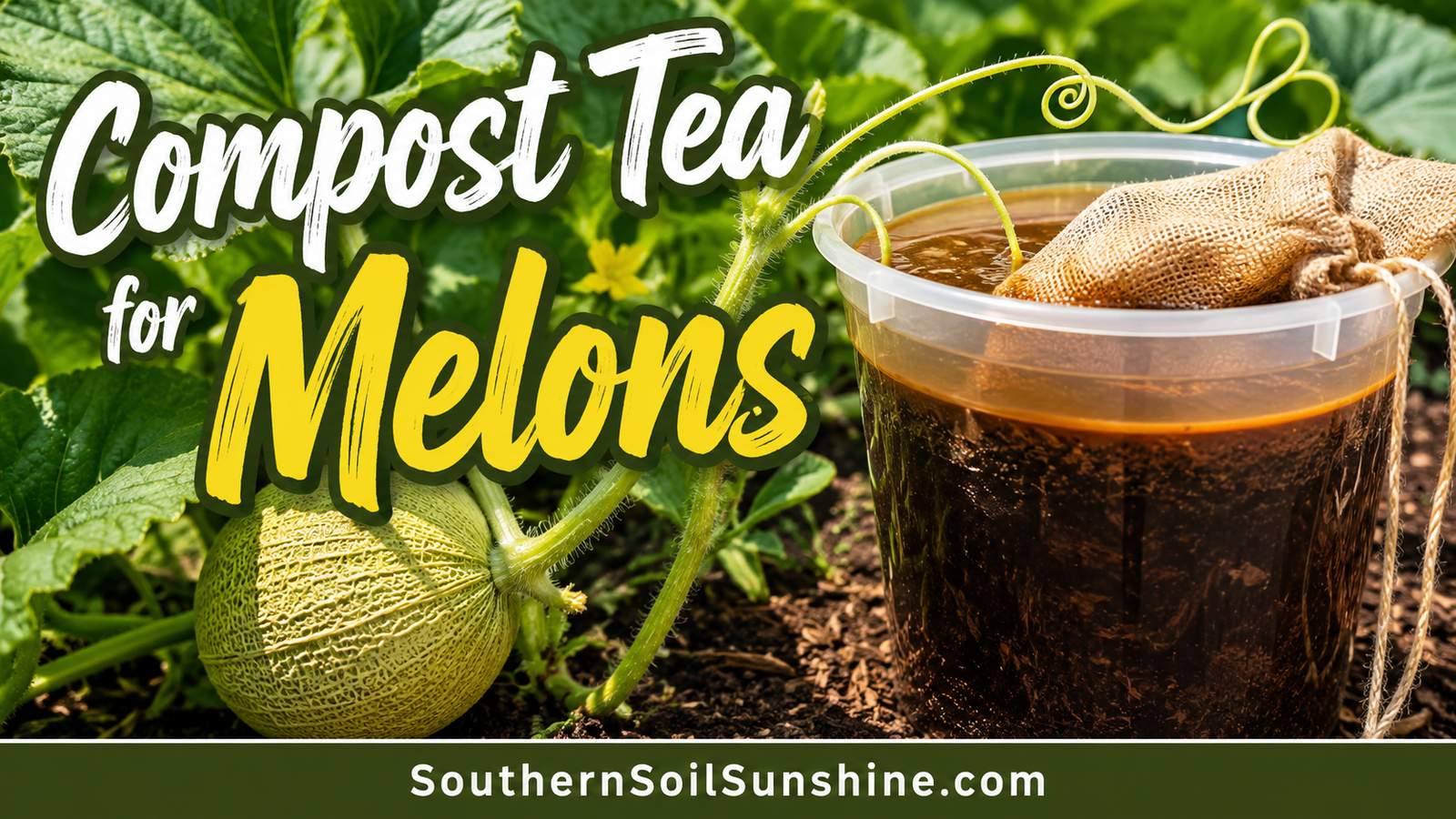
Compost Tea for Melons and Squash: Fueling the Vines Before They Sprawl
Feeding for the Sprawl to Come 🍈
Melons and squash are among the most ambitious plants in the spring garden. Right now, in late March, they may look modest — a few broad leaves, a young vine just beginning to reach. But give them a few weeks of Zone 9 warmth and they will sprawl across the bed, sending out yards of vine and setting fruit that can grow astonishingly fast. All of that future abundance has to be fueled, and the fueling begins now, before the big growth, while the plant is establishing. A gentle drink of compost tea at this stage feeds not just the plant in front of you but the sprawling, fruit-heavy vine it is about to become.
This day’s task — fertilize melons and squash with compost tea — comes with a lovely reminder: feed what you hope will flourish. Let me show you how to nourish these hungry vines with compost tea at exactly the right moment, and why feeding in hope is such a fitting picture of faith.
Free eBook
Rooted in Grace
A Christian guide to intuitive gardening — the whole book, free. Tell me where to send it and it’s yours in a minute.
Why Compost Tea Suits Young Cucurbit Vines
Melons and squash are heavy feeders that will draw hard on the soil once they hit their stride, but young vines want that nutrition delivered gently. This is where compost tea shines. It is a mild, balanced liquid feed alive with beneficial soil microbes, and it does two things at once for a young cucurbit: it provides a light, immediately available meal to support steady growth, and it inoculates the root zone with the microbial life that helps the plant take up nutrients and establish strongly. Because it is so gentle, there is virtually no risk of burning tender young roots the way a strong fertilizer might.
Feeding now, before the sprawl, sets the vines up to grow vigorously into that explosive phase with a strong, well-established root system already in place. You are not force-feeding — you are laying a foundation of steady nourishment the plant will build on as it reaches out across the bed and begins to flower and fruit. Feed the young vine well, and the sprawling summer vine feeds itself.
How to Feed With Compost Tea
The application could not be simpler, and the rhythm is easy to keep.
| Step | What to Do |
|---|---|
| 1. Brew | Steep compost or worm castings in water 24–48 hours |
| 2. Strain & dilute | Pour off liquid; thin to weak-tea color |
| 3. Water first | Moisten dry soil with plain water |
| 4. Feed | Pour tea at the base, into the root zone |
| 5. Repeat | Every 2–3 weeks as the vines grow |
Feed your young melons and squash with diluted compost tea every couple of weeks as they grow toward their sprawling stage. Pour it gently at the base of each plant in the morning, letting it soak into the root zone, and always onto already-damp soil so it spreads evenly. As the vines begin to flower and set fruit, keep the gentle feeding going — steady nourishment through the fruiting stretch is what keeps melons sizing up sweet and squash coming steadily.
Feed Steadily, and Watch for Fruit
A gentle word of guidance as your vines grow: with melons and squash, the goal shifts as the plant matures. Early on, you want steady, balanced feeding to build strong, healthy vines. But once the plant begins to flower, ease away from anything high in nitrogen, which pushes leafy growth at the expense of fruit. Compost tea’s gentle balance makes this easy — it feeds without over-pushing greenery, so your vines stay productive rather than turning into all-leaf, no-fruit jungles.
Feed What You Hope Will Flourish
This day’s task carries a phrase worth sitting with: feed what you hope will flourish. There is real faith in it. When you pour compost tea around a young melon vine in March, you are feeding something that has not yet flourished — a modest plant with no fruit on it, only the promise of what it might become. You feed it not because of what it is today, but because of what you hope it will grow into. Every gentle feeding is an act of hope, an investment in a flourishing you cannot yet see.
That is how flourishing works, in gardens and in lives. The things that grow into abundance are the things we feed steadily, in hope, long before there is any fruit to show for it. The dream, the relationship, the calling, the young faith — all of them require nourishment poured in during the modest, unflourished, early stage, given not as a reward for what has already grown but as an act of trust in what is coming. We feed what we hope will flourish, and the feeding itself is a kind of believing. So as you nourish these young vines toward their sprawling, fruitful future, let it ask you gently: what in your life are you hoping will flourish? And are you feeding it — steadily, in hope, before the fruit appears? Pour the nourishment in now. The flourishing follows the faithful feeding, in the garden and everywhere else.
Share your young melon and squash vines with us on Instagram @southernsoils — there is such hope in feeding a plant toward the abundance it is about to become.
Feeding Through the Season: A Simple Timeline
Compost tea at the young-vine stage is the beginning, not the whole story. Here is how gentle feeding carries melons and squash from planting to harvest.
| Stage | Feeding Focus | Goal |
|---|---|---|
| Young vines (now) | Gentle compost tea + rich soil | Strong roots and healthy vines |
| Vining & spreading | Compost tea every 2–3 weeks | Steady, vigorous growth |
| Flowering | Ease off nitrogen | Encourage blooms and fruit set |
| Fruiting & ripening | Continue gentle feeding + steady water | Size and sweeten the fruit |
Notice that the feeding never becomes heavy or dramatic — it stays gentle and steady from start to finish, simply shifting emphasis as the plant’s needs change. This is the beauty of compost tea for cucurbits: one mild feed, applied on a regular rhythm, carries the plant through every stage without the burning, the leaf-heavy overgrowth, or the boom-and-bust that stronger fertilizers can cause. Keep it simple and keep it regular, and the vines reward you.
Feeding and Watering Go Together
A vine cannot use the food you give it without water to carry those nutrients to its roots, and melons and squash are thirsty plants with huge leaves that lose enormous moisture in our heat. So pair every feeding with steady, deep watering at the base of the plants, keeping the soil evenly moist. This is especially crucial as fruit forms and swells — melons in particular need consistent moisture to size up, though a slight easing of water as they approach ripeness concentrates their sugars and makes them sweeter. Mulch beneath the sprawling vines holds that moisture, keeps the developing fruit off bare soil, and stops your gentle feeding from washing away. Fed and watered together, on a steady rhythm, these vines become some of the most generous plants in the whole garden.
The Faith of the Long-Season Grower
Melons especially ask for patience — from feeding a modest vine in March to slicing a sweet, ripe melon in the heat of summer is a long journey of steady, hopeful care. There is no shortcut, no single feeding that gets you there, only the faithful rhythm of gentle nourishment and deep water kept up week after week while the vine sprawls and flowers and slowly swells its fruit. It is the long-season grower’s particular kind of faith: to keep feeding what has not yet flourished, trusting that the abundance is forming even when the vine looks like all leaf and promise. Pour the compost tea in today, keep the rhythm through the spring and into summer, and one warm afternoon you will taste exactly what all that hopeful feeding was for. Feed what you hope will flourish — and then tend it, patiently, all the way to the harvest.
Keep a Brew Going All Spring
Because you will be feeding not just your melons and squash but many of your spring crops on a similar gentle rhythm, it is worth keeping a compost tea brew going as a regular habit. A five-gallon bucket steeping in a shady corner, refreshed every week or two, gives you a ready supply of mild feed for everything that wants it — the young cucurbits, the tomatoes, the greens, the herbs. Once brewing becomes routine, feeding stops being a chore you have to plan and becomes something you simply do as you move through the garden, dipping a watering can and passing down the rows. That easy rhythm is exactly how the healthiest gardens are fed: not with occasional heavy doses, but with a little gentle nourishment, offered often, to everything you hope will flourish. Keep the brew going, keep the feeding light and regular, and let generosity become your garden’s steady habit through the whole growing season.
Feed your young vines today, and start that steady spring rhythm of hopeful, gentle nourishment — it is the surest path to the sprawling, fruit-heavy abundance still to come.
Ready to Go Deeper in the Garden?
If this article resonated with you, you might be ready for something more than tips.
- Download the FREE Rooted in Grace eBook
- Join Rooted Reset
- Follow on Instagram – @southernsoils
“The garden is not just a place to grow plants – it is a place to grow yourself.”
Free eBook
Before you go — the book is yours
Rooted in Grace: A Christian Guide to Intuitive Gardening. No cost, no catch. Read it on any device, at whatever pace the season allows.