Making Space: Thinning Direct-Sown Seedlings So the Strong Ones Thrive
The Generous Mistake We All Make 🌱
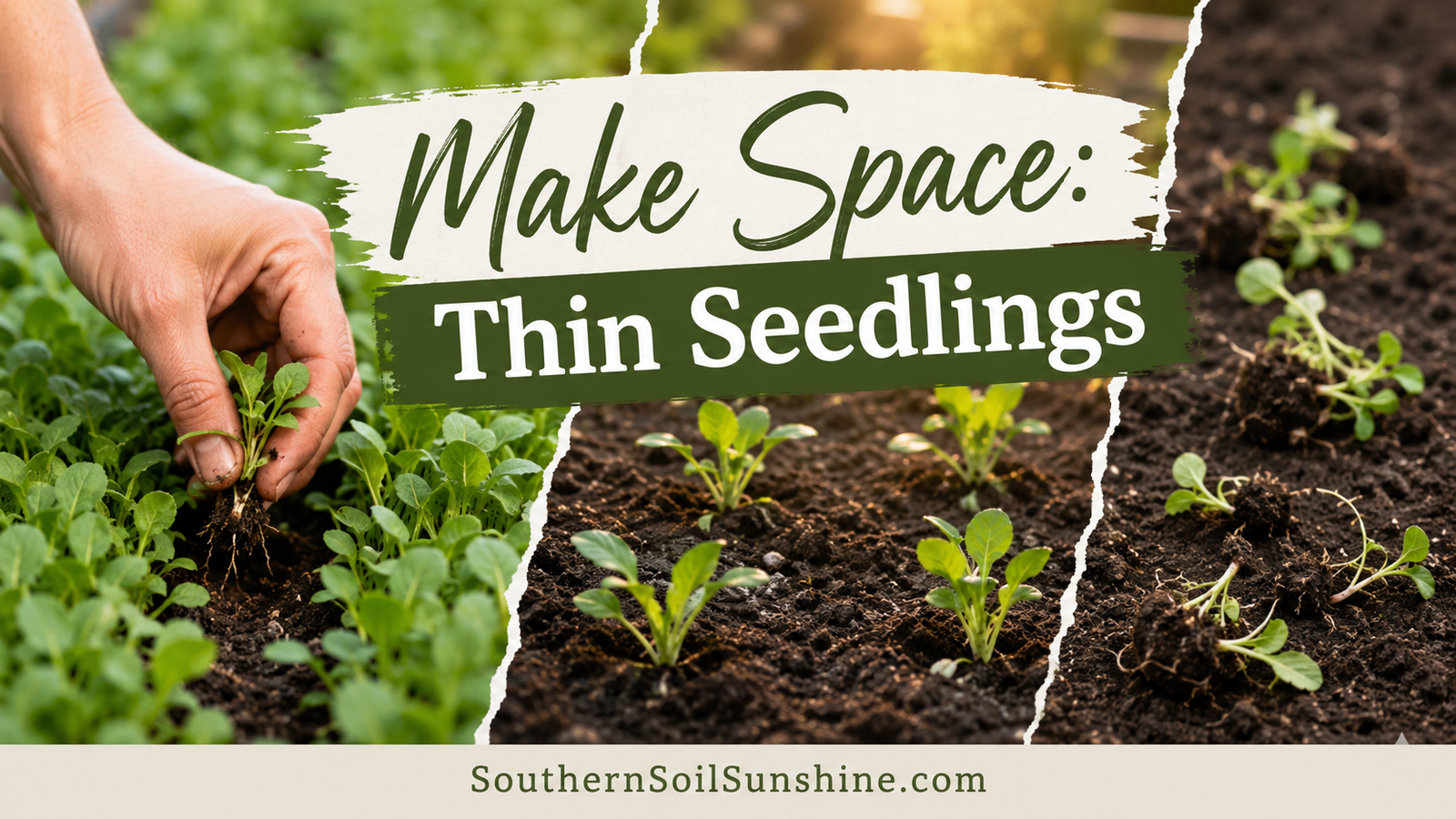
Nearly every gardener sows too thickly. We scatter more seed than we need — partly to insure against poor germination, partly out of pure hopefulness — and when the seeds come up beautifully, we are left with a dilemma. All those healthy little seedlings are crowded shoulder to shoulder, far too close together to grow into full-size plants. And so, a couple of weeks after sowing, comes the task that feels wrong but is essential: thinning. Pulling out most of those thriving seedlings so the ones that remain have room to become everything they can be. With April’s direct-sown crops now up and growing, it is time to make space.
This day’s task — thin the seedlings of your direct-sown crops — comes with a phrase that says it perfectly: make space so what remains can truly thrive. Let me walk you through thinning your seedlings well across the garden, and why making space is one of the most important and quietly profound acts of care a gardener performs.
Free eBook
Rooted in Grace
A Christian guide to intuitive gardening — the whole book, free. Tell me where to send it and it’s yours in a minute.
Why Crowded Seedlings Cannot Thrive
A seed contains everything a plant needs to begin, but not the space it needs to finish. When seedlings grow too close together, they compete for the same limited resources: light, water, nutrients, and root room. None of them gets enough. Crowded plants grow tall and spindly reaching for light, develop weak stems, and stay stunted because their roots are fighting one another underground. In our humid Zone 9 air, dense plantings also trap moisture and invite fungal disease. The plants are not failing — they are simply doing what any living thing does in a crowd: surviving, not thriving.
Thinning breaks the competition. By removing the excess, you give each remaining plant the light, water, root space, and airflow it needs to grow strong and full. It seems almost too simple, but the difference between a thinned and unthinned planting is dramatic — the thinned row grows into robust, productive plants, while the crowded one yields a tangle of weak, disappointing ones. Making space is not subtraction from your harvest. It is what makes a real harvest possible.
How Much Space Each Crop Needs
Different crops need different spacing, and knowing the targets helps you thin with confidence. Here is a guide for common April direct-sown crops.
| Crop | Thin To | Notes |
|---|---|---|
| Bush beans | 3–4 inches apart | Thin gently; shallow roots |
| Cucumbers | 12 inches apart | Keep the strongest per spot |
| Squash | 18–24 inches apart | One strong plant per hill |
| Beets | 3–4 inches apart | Greens are edible |
| Lettuce / greens | 6–8 inches apart | Eat the thinnings |
When you thin, keep the strongest, sturdiest, best-spaced seedlings and remove the weak, the leggy, and the crowded doubles. For most crops you can either gently pull the extras or snip them off at the soil line with scissors — snipping is kinder to the roots of the keeper right beside them. Work down the row leaving your target spacing, and resist the urge to leave “just one more” in each gap; that reluctance is exactly what leaves a planting overcrowded.
Thin on Time
Timing matters as much as spacing. Thin when seedlings are young — usually when they have their first one or two sets of true leaves, a couple of weeks after sowing. At that stage they are big enough to handle but small enough that removing neighbors barely disturbs the keepers. Wait too long, and the seedlings’ roots grow tangled together, so that pulling one disturbs another, and the crowding has already stunted their early growth. On-time thinning is gentle and effective; late thinning is a struggle that comes after some damage is already done.
Make Space So What Remains Can Truly Thrive
This day’s phrase is one of the most quietly important things the garden ever taught me: make space so what remains can truly thrive. Thinning is such a clear picture of a truth we resist everywhere. Every seedling in that crowded row is alive and healthy and doing nothing wrong — and yet if all of them stay, none of them can flourish. Growth requires space. Thriving requires room. And making that room always means letting some good things go, not because they are bad, but because keeping everything guarantees that nothing reaches its fullness.
Our lives crowd exactly the same way. Good things — genuinely worthy, healthy, valuable things — can pack in so tightly that none of them has room to mature. Too many commitments, too many pursuits, too many good yeses growing shoulder to shoulder, all competing for the same finite light and time and energy, until everything stays stunted and nothing thrives. And the hard, freeing truth is the same as it is in the seedling row: making space is not loss but love. It is the very thing that lets what remains grow strong and full. So as you thin your seedlings today — bravely, on time, to proper spacing — let it ask a gentle question of your own crowded rows. What good things are competing so tightly that none can flourish? What might you release, not because it lacks worth, but so that what remains can finally thrive? Make the space. It is one of the most hopeful, generous, and courageous things a gardener — or a soul — can do.
Share your thinned rows and the salad you made from the thinnings with us on Instagram @southernsoils — there is real hope in the room you make for good things to grow.
A No-Waste Approach to Thinning
One of the loveliest things about thinning is how much of it need not be waste at all. Many thinnings are edible, and a few can even be replanted, turning the task from a guilty removal into a small bonus harvest.
| Thinnings | What to Do With Them |
|---|---|
| Beet & chard greens | Rinse and eat — tender and delicious |
| Lettuce & salad greens | Baby greens, straight into a salad |
| Head lettuce extras | Transplant to a new row if you like |
| Bean, squash, cucumber | Compost these (roots resent transplanting) |
Tender greens are the great gift here — beet, chard, and lettuce thinnings are some of the sweetest eating of the season, and dropping them into a bowl as you work turns thinning into supper. A few crops, like head lettuce, can even be gently lifted and transplanted into gaps elsewhere, stretching one packet of seed into two rows. Others, especially the sensitive-rooted beans, squash, and cucumbers, do not transplant well and are best composted — where they still give back, breaking down into the soil that grows next season’s crop. However you use them, let the thinnings remind you that in a well-tended garden, even what we remove has a purpose.
Thinning Is a Skill You Grow Into
If thinning feels hard at first, you are in good company — nearly every gardener struggles with it early on, and the struggle is not really about technique. It is about the tenderheartedness that makes it painful to remove a healthy living thing. But over seasons, something shifts. You watch enough crowded, unthinned rows disappoint, and enough properly thinned ones flourish, and gradually you come to trust the wisdom of making space. The reluctance eases. You learn to see, in a crowded row, not the seedlings you must sacrifice but the strong, full plants you are making room for. Thinning becomes less an act of loss and more an act of vision — choosing, on purpose, where the garden’s energy will go.
That shift is worth naming, because it mirrors a maturing that happens in a whole life. We begin clutching everything, afraid to let any good thing go, and our lives stay as crowded and stunted as an unthinned row. And slowly, if we are willing to learn, we come to trust that making space is love — that choosing where our finite energy goes is not a failure to keep everything, but the very wisdom that lets anything flourish. The gardener who has learned to thin without anguish has learned something the whole world struggles with: that abundance is not about how much you keep, but about how well you make room for what remains.
The Courage to Make Room
So do this small, brave work today with an open heart. Thin your seedlings on time, to honest spacing, keeping the strongest and releasing the rest into that evening’s salad or the compost that feeds tomorrow’s soil. Trust the space you make, even when the row looks suddenly sparse and a small voice wonders whether you took too many. You did not. By harvest, standing over robust, productive plants that had all the room they needed, you will be grateful you were brave enough this morning to make space. And you will carry that same courage into the crowded rows of your own life — where making room for what matters most, and releasing what merely competes, is one of the most faithful and freeing things you will ever do.
Kneel down in the cool of the morning today, make your brave, generous cuts, and gather the tender thinnings for supper. The row you leave — open, orderly, each plant standing in its own pocket of room — is a small picture of what thriving needs everywhere: not more crowding, but more space; not clinging to everything, but making room for what remains to grow into its fullness. Thin with courage, and trust the abundance that follows.
Ready to Go Deeper in the Garden?
If this article resonated with you, you might be ready for something more than tips.
- Download the FREE Rooted in Grace eBook
- Join Rooted Reset
- Follow on Instagram – @southernsoils
“The garden is not just a place to grow plants – it is a place to grow yourself.”
Free eBook
Before you go — the book is yours
Rooted in Grace: A Christian Guide to Intuitive Gardening. No cost, no catch. Read it on any device, at whatever pace the season allows.