Minimalist Outside Christmas Lights: Simple Elegance
Minimalist Outdoor Christmas Lights: Simple Elegance for Zone 9 Gardens 🎄
You know, I’ve been thinking about how we celebrate the holidays in our Southern gardens lately. There’s something deeply peaceful about stepping outside on a December evening in Houston and seeing a handful of carefully placed lights—warm, inviting, and utterly beautiful. It’s not about dazzling the whole neighborhood; it’s about creating a space that feels intentional, restful, and genuinely festive.
More and more of us are choosing the “less is more” approach to outdoor Christmas lighting. And I think that says something important about where our hearts are these days. We’re learning that elegance doesn’t require excess, and that a few well-chosen lights can be far more powerful than hundreds of them scattered haphazardly across our homes.
In this piece, we’re going to explore minimalist outdoor Christmas lighting together—specifically for those of us gardening and living in Zone 9 and the Houston area. I’ll show you how to make your home’s exterior shine with understated brilliance, focusing on strategic placement and energy-efficient options that honor both your landscape and our warm climate. Let’s discover why simple outdoor Christmas decor is winning hearts this season. ✨
Free eBook
Rooted in Grace
A Christian guide to intuitive gardening — the whole book, free. Tell me where to send it and it’s yours in a minute.
Understanding the Minimalist Holiday Aesthetic 🌿
What Makes Minimalist Holiday Lighting Different?
When I think about minimalist holiday lighting, I’m drawn to a few core principles: intention, quality over quantity, and restraint. This approach works beautifully in our Zone 9 gardens because it honors the natural landscape we’ve spent all year cultivating. Instead of fighting against our lush, subtropical environment, minimalist lighting celebrates it.
The charm of minimalist holiday lights lies in their focus on simplicity and clean lines. We’re not trying to recreate a winter wonderland in Houston—frankly, that would feel forced. Instead, we’re creating a welcoming ambiance that highlights what we already have: beautiful architecture, mature trees, and garden beds we’re genuinely proud of.
I’ve noticed that warm white and soft gold tones work particularly well in our Texas gardens. These colors complement our live oaks, the bronze tones in our brick homes, and the deep greens of our winter foliage. They create a cozy glow that feels authentic to who we are as Southern gardeners.
The Spiritual Practice of “Less Is More”
There’s something deeply grounding about this approach, if I’m honest. When we step back from the tendency to have more, do more, and display more, we create space for what actually matters. In our gardens and on our porches, that restraint becomes its own kind of prayer—a quiet statement that we’re content with what we have, and grateful for it.
Sanda’s Garden Wisdom: Before you hang a single light, spend an evening observing your outdoor space. Where do shadows fall? What architectural features do you actually want to highlight? This observation phase is crucial. It’s the “observe” part of our intuitive gardening practice—notice what’s already beautiful before you add anything to it.
Strategic Placement for Maximum Impact 🏡
Where to Focus Your Minimalist Lighting
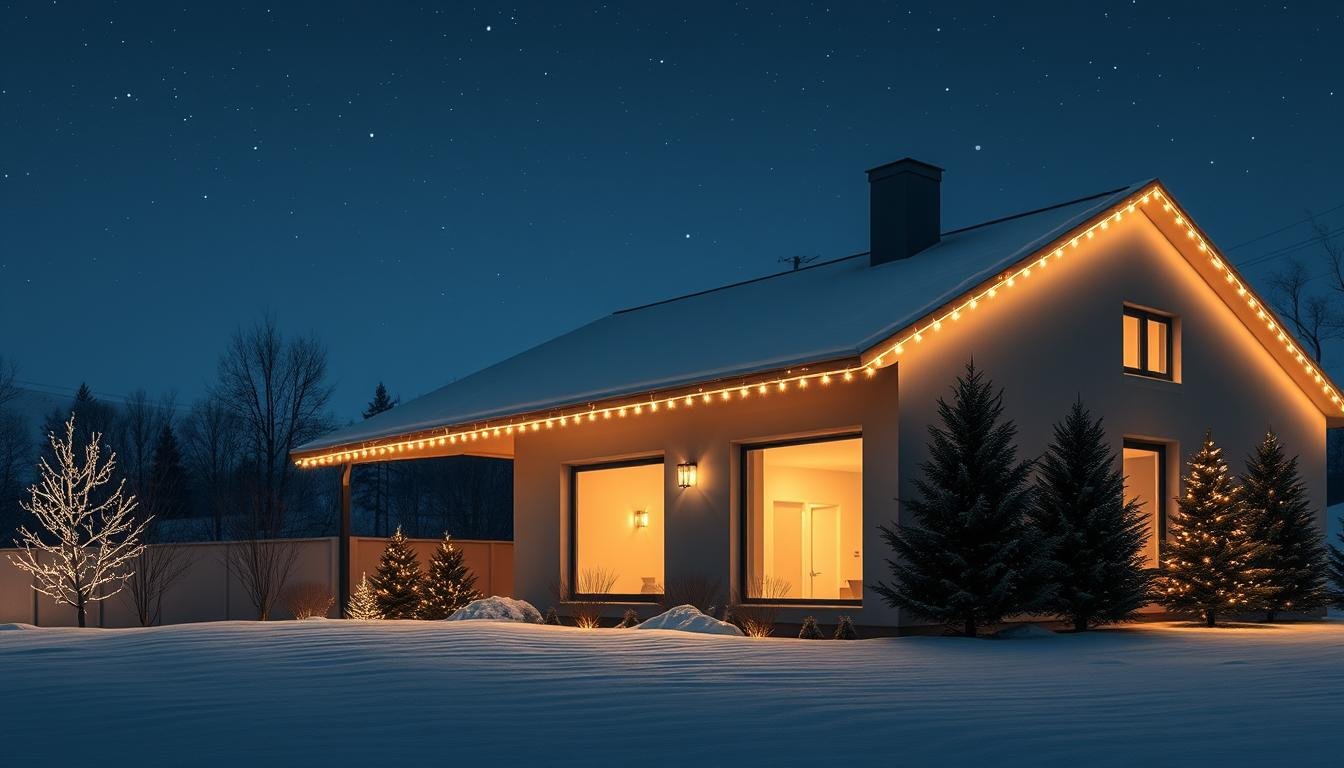
In our Houston-area homes, there are several natural focal points that deserve thoughtful lighting. Your roofline is probably the most impactful—especially if you have interesting angles or architectural details. But instead of lining the entire roofline with lights, consider highlighting just the peaks or a specific architectural feature.
Porches and entryways are another beautiful option. A few warm white lights framing your front door create an immediate sense of welcome. If you have pillars, arches, or interesting porch railings, these are perfect for minimalist treatment. A symmetrical, balanced approach here feels both elegant and intentional.
Walkways and pathways deserve special attention in our Zone 9 gardens. We spend much of the year enjoying outdoor living spaces, and continuing that thoughtful lighting into the holiday season makes sense. A line of larger, warm bulbs spaced generously apart along a path feels both minimalist and functional.
Consider highlighting mature trees or specimen plants. If you’ve got a beautiful live oak or a Japanese maple you’ve been nurturing, subtle uplighting or a few strategically placed lights can be absolutely stunning without feeling overdone.
| Location | Best Light Type | Recommended Quantity | Effect |
| Roofline | Larger warm white bulbs, spaced far apart | 25-40 lights for average home | Architectural emphasis |
| Porch/Entry | Warm white or soft gold LED strings | 15-25 lights | Welcoming entrance |
| Walkways | Evenly spaced larger bulbs | 10-15 lights per pathway | Safe, elegant guidance |
| Trees/Plants | Soft white or uplighting | 10-20 lights per specimen | Natural drama |
Energy-Efficient Options Perfect for Zone 9 💡
Why LED Lights Make Sense in Houston
Living in the Houston area, we’re already thinking about energy efficiency most of the year. Our cooling bills are no joke, and we’re naturally drawn to solutions that don’t waste electricity. LED Christmas lights are simply the right choice for us—both practically and philosophically.
LED lights use about 80% less energy than traditional incandescent bulbs. That means you can display your lights throughout the entire holiday season without guilt or a noticeable bump in your electric bill. For those of us with larger properties or multiple outdoor spaces, that’s genuinely meaningful.
Beyond the energy savings, LED lights last far longer. You’re not replacing burnt-out bulbs mid-December, and you’re not hauling damaged strings to the recycling bin come January. A quality LED string light set can last for many years, which actually makes it more economical and more sustainable.
Sanda’s Zone 9 Note: Here’s something important for our Houston climate: when you’re choosing LED lights, look for weather-resistant ratings. Our humidity is intense, and our occasional ice storms can be hard on outdoor decor. “Waterproof” and “outdoor-rated” aren’t just marketing terms—they’re necessary for lights that will actually survive a full season in our subtropical environment.
Color Temperature Matters in Our Southern Landscape
Not all warm white lights are created equal. In our Zone 9 gardens, I’ve found that lights in the 2700K-3000K color temperature range (that’s the Kelvin measurement) create the most beautiful, authentic look against our architecture and landscape.
Avoid anything cooler than 4000K—that bluish-white light can feel harsh against red brick, weathered wood, and the deep greens of our winter foliage. We want our lights to feel like an extension of the warmth we’re creating in our homes, not a clinical display.
Designing Your Display With Intention 🎨
Symmetry and Balance as Design Principles
When I’m planning a minimalist light display, I think about symmetry and proportion. This is where the design becomes really intentional. If you’ve got matching windows, mirror your light placement. If your porch has pillars, match them with lights. This creates a sense of visual harmony that feels restful and elegant.
I often use matching wreaths with subtle lighting on front windows, or align garlands with architectural features. The key is that everything feels like it belongs, not like it was randomly tossed together. Our gardens teach us this—everything in nature has a kind of inherent order. We’re just highlighting it.
Incorporating Natural Elements
This is where minimalist holiday lighting intersects beautifully with our gardening practice. Adding natural elements like greenery, pinecones, dried botanicals, and branches creates visual interest without requiring more lights.
In Zone 9, we have the luxury of working with year-round greenery. Magnolia leaves, preserved oak branches, native grasses, and evergreen cuttings all photograph beautifully when paired with warm white lights. A single strand of lights woven through a garland of natural elements creates far more impact than scattered lights ever could.
Think about incorporating plants you’ve grown or foraged locally. This creates a deeply personal connection to your holiday display and honors the work you’ve put into your garden year-round.
Sanda’s Tip: Try this simple practice: walk your property after dark with just your porch light on. Observe which areas feel welcoming and which feel dark. Now, imagine adding just 15-20 well-placed lights to the welcoming areas. That’s your starting point. This is the “respond faithfully” part of intuitive gardening—let your observations guide your actions.
The Benefits of This Approach 🌟
Visual Elegance Without Overwhelm
There’s something genuinely restorative about a minimalist holiday display. When you step outside at dusk and see a thoughtfully lit home and garden, you feel something different than when you see an exhaustive light show. It’s peaceful. It’s sophisticated. It says, “We have our priorities straight.”
Practical Advantages
Minimalist lighting is also wonderfully practical. Installation takes less time—no scrambling up ladders for hours, no untangling hundreds of feet of cords. Maintenance is minimal. If a bulb goes out, it doesn’t derail your whole aesthetic. And come January, taking down minimal decor is a breeze.
Sustainability and Stewardship
For those of us who care about our environmental footprint—and I think most gardeners do—minimalist lighting is the obvious choice. Less energy consumption, less waste, fewer replacements, and less impact on our local ecosystem. We’re not bathing wildlife habitats in artificial light. We’re creating something beautiful that’s also respectful of the natural world we’re part of.
Quick Reference: Your Minimalist Lighting Plan 📋
| Planning Step |
Timing Your Installation for Houston’s December Weather
One thing we Zone 9 gardeners need to consider is our unpredictable December weather. Unlike folks further north, we might experience a warm spell in early December, then a cold snap mid-month. This affects when and how we install our minimalist lighting.
I typically wait until after December 1st to install lights, when our weather has settled into more consistent patterns. Before that, we might still see afternoon temperatures in the 70s, which can make outdoor work uncomfortable and potentially damage delicate light strings if you’re working in heat. By early December, we’re usually in that sweet spot—cool enough to work comfortably, but not yet facing our occasional ice events.
Here’s something specific to our Houston area: our occasional ice storms and freezing rain can be tough on outdoor decor. Make sure all your connections are weatherproof, your cords are rated for outdoor use, and you’ve secured everything firmly so wind gusts won’t tear anything loose. Texas weather can be dramatic, and we need our displays to be resilient. Test all your lights before installation—nothing’s worse than discovering a broken connection three weeks in.
Creating Focal Points Through Negative Space
This is one of my favorite principles from minimalist design, and it translates beautifully to holiday lighting. Negative space—the areas you deliberately leave unlit—is just as important as the areas you illuminate. It’s what makes the lit areas feel intentional rather than accidental.
Think of your property as a canvas. Instead of filling every inch with light, you’re creating focal points by contrast. An unlit section of fence makes your lit entryway stand out more. A dark corner of your yard makes your pathway lights feel like a deliberate guide rather than random placement. This principle actually makes your display feel more sophisticated and more restful to the eye.
In our Houston neighborhoods, where homes are often fairly close together, this approach also respects your neighbors’ experience. You’re not flooding their windows with light; you’re creating a beautiful, contained display on your own property. There’s something gracious about that restraint.
The Rhythm of Light and Shadow Through January
One advantage of minimalist outdoor lighting that often gets overlooked is how beautiful it can remain through the entire season. Many people take down their displays by New Year’s, but there’s something lovely about extended, subtle holiday lighting into mid-January in our Zone 9 climate.
With fewer lights consuming less energy, you might find it worthwhile to keep a minimal display up a bit longer. The winter landscape in Houston is subtle—our deciduous trees are bare, our evergreens stand out, and the quality of afternoon light shifts almost daily. A few well-placed warm lights can extend that holiday feeling through those quiet early-January weeks when the rest of the world has moved on.
I’ve noticed that visitors appreciate this extended, gentle display. It signals that we’re still in a season of reflection and rest, even after the busiest holiday days have passed. There’s no pressure to take everything down immediately; you simply have less to manage, so the transition back to “normal” happens naturally and without exhaustion.
Sanda’s Zone 9 Note: Watch your live oaks and other large trees throughout December. If branches start to hang low from ice accumulation or debris, you may need to remove lights temporarily for safety. This is another reason minimalist displays are practical in our unpredictable climate—less light coverage means fewer safety concerns if weather forces you to take things down suddenly.
When we choose minimalist outdoor lighting, we’re making a deeper decision about how we want to move through the holiday season. We’re saying that beauty doesn’t require excess, that intention matters more than impression, and that in our gardens and our lives, there’s profound wisdom in restraint. This practice of choosing less mirrors so much of what draws us to gardening in the first place—the patience to observe, the humility to work with what we have rather than against it, and the faith that what we tend with care will become far more beautiful than anything we could force. Our Zone 9 gardens know this truth already. Now our holiday lights can reflect it too. ✨
Ready to Go Deeper in the Garden?
If this article resonated with you, you might be ready for something more than tips.
- Download the FREE Rooted in Grace eBook
- Get the Rooted in Grace Print Book on Amazon
- Join Rooted Reset
- Follow on Instagram – @southernsoils
- Save on Pinterest – @southernsoilsunshine
- Join on Facebook – Southern Soil Sunshine
“The garden is not just a place to grow plants – it is a place to grow yourself.”
Free eBook
Before you go — the book is yours
Rooted in Grace: A Christian Guide to Intuitive Gardening. No cost, no catch. Read it on any device, at whatever pace the season allows.