
End-of-Season Fall Garden Bed Cleanup
Some of the links on this website are affiliate links, which means that if you make a purchase through these links, I may earn a small commission at no additional cost to you. As an Amazon Associate, I earn from qualifying purchases. I only recommend products I genuinely trust and believe will bring value to my readers. Also, some of the content was created with strategic use of AI tools. For more information, please visit the Privacy Policy page. Thank you for supporting my blog and helping me continue to provide valuable content. Gardening is more than growing food—it's where God grows us. If you're hungry for a faith that feels grounded again, I wrote a book for you. Download my free eBook: Rooted in Grace: A Christian Guide to Intuitive Gardening
🍂 Every season has its rhythm. Spring is for planting, summer for tending, autumn for harvesting—and then comes the quiet work of clearing. End-of-season cleanup is one of those garden chores that feels both bittersweet and hopeful. On one hand, you’re pulling up what has finished, sometimes with sadness at plants that didn’t thrive. On the other, you’re making way for rest, renewal, and the next season’s growth.
In Zone 9, our seasons are long and often blur together, but even here, the soil benefits from intentional pauses. Cleaning up garden beds doesn’t mean stripping them bare—it means stewarding what remains, protecting soil health, and preparing for future abundance.
I’ve come to see end-of-season cleanup as a spiritual rhythm, too. Just as I clear away weeds and spent vines, I ask God to help me clear away the clutter in my own soul—the distractions, regrets, and unfinished tasks—so I can step into a new season with space to breathe.
🌱 1. Why Bed Cleanup Matters
- Soil health: Removes diseased or pest-ridden plants that could overwinter.
- Weed control: Prevents weeds from dropping seed for spring.
- Space for cover crops or mulch: Beds left unmanaged often degrade.
- Mental reset: A tidy garden helps you rest, reflect, and plan forward.
👉 Think of cleanup as stewardship: giving back to the soil what it needs to thrive again.
🌿 2. What to Remove (and What to Leave)
Remove:
- Spent annuals (tomatoes, beans, squash).
- Diseased or insect-damaged plants—dispose, don’t compost.
- Weeds going to seed.
- Stakes, cages, and supports for cleaning and storage.
Leave or Reuse:
- Healthy roots that can decompose in place.
- Perennials like rosemary, oregano, thyme, kale.
- Volunteer plants you’d like to keep.
- Organic mulch layers for protection.
👉 Not every bed needs to be stripped. Sometimes leaving residues adds organic matter and protects the soil.
🪴 3. Step-by-Step Cleanup
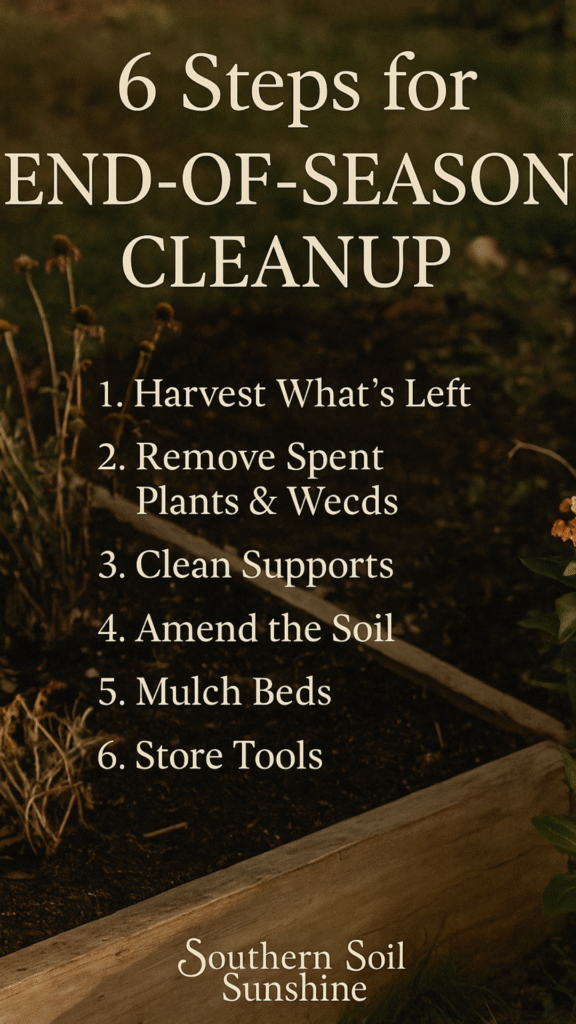
- Harvest what’s left. Pick any last green tomatoes, peppers, or herbs.
- Pull annuals. Remove plants by roots if diseased; cut at soil line if healthy.
- Weed thoroughly. Especially perennial weeds like Bermuda grass.
- Clean supports. Wash cages and stakes to prevent disease carryover.
- Amend soil. Add compost or manure to replenish nutrients.
- Cover beds. Use mulch, leaves, or plant cover crops.
This process doesn’t have to be done in one day—spread it over a week if needed.
🌞 4. Soil Renewal After Cleanup
Your soil just carried a whole season of crops. Now it’s time to feed it back.
- Compost: Spread 1–2 inches over the bed.
- Manure: Add aged manure for nitrogen.
- Minerals: A light dusting of bone meal or rock phosphate restores balance.
- Cover crops: Sow clover, rye, or vetch to add green manure.
Zone 9 tip: Our mild winters mean cover crops thrive beautifully, adding richness by spring.
🌼 5. Mulching for Rest
If you don’t plant a cover crop, mulch is your next best friend.
- Leaves: Free and abundant in fall.
- Straw: Light and easy to spread.
- Wood chips: Great for paths and perennials.
- Compost + mulch combo: Adds fertility and protection.
Mulch keeps weeds down, insulates soil, and prevents erosion.
🛠️ 6. Storing and Cleaning Tools
Don’t forget your tools—they need care too.
- Wash and sanitize stakes, cages, and trellises.
- Coil hoses, empty drip lines to prevent cracks.
- Oil wooden handles with linseed oil.
- Store everything in a dry, sheltered place.
Clean tools mean healthier gardens next season.
🍂 7. End-of-Season Reflection
Cleanup isn’t only physical—it’s reflective. As you clear beds, take note:
- Which crops thrived?
- Which struggled?
- What pests or diseases showed up?
- How did spacing, watering, or timing work?
A few notes in your journal now will guide you powerfully next year.
🙏 8. Faith Reflection: Clearing the Old
End-of-season cleanup reminds me of 2 Corinthians 5:17: “The old has gone, the new is here!” Pulling out tired plants may feel like loss, but it’s really preparation. God often clears space in our lives—not to leave us empty, but to make room for something new.
📝 Journal Prompt ✍️
What “weeds” or spent plants in your own life is God inviting you to clear away this season, so He can prepare you for new growth?
🌿 Grace Note
Friend, end-of-season cleanup doesn’t have to be overwhelming. Take it bed by bed, moment by moment. Let the act of clearing and covering become a rhythm of trust: God is making room for rest and renewal.
✨ Free Printable
👉 Download your End-of-Season Bed Cleanup Checklist, including:
- Step-by-step cleanup guide
- Soil renewal and mulching tips
- Tool care reminders
- Reflection prompt + grace note
🌻 Related Garden Wisdom
- Related: Why Leaves Make the Best Mulch
- Related: Frost Protection Basics for Beginners
- Related: Planting Garlic in Zone 9: A Simple Guide
- Related: Creating a Summer Garden Observation Habit
🎧 Podcast & 📖 eBook Mentions
For more encouragement, listen to The Rooted in Grace Podcast, where I share rhythms of soil and soul. And if you’d like to root your life in intuitive, grace-filled gardening, explore my eBook Rooted in Grace: Intuitive Gardening for the Soul.
🍁 Final Thoughts
End-of-season cleanup is both an ending and a beginning. By clearing, composting, and covering, you’re investing in next year’s abundance. And as you work, remember: what feels like loss is actually preparation for life.
So gather your tools, pull what’s done, and bless your soil with rest. Both you and your garden need it.


4 Comments