
Frost Protection Basics for Beginners
Some of the links on this website are affiliate links, which means that if you make a purchase through these links, I may earn a small commission at no additional cost to you. As an Amazon Associate, I earn from qualifying purchases. I only recommend products I genuinely trust and believe will bring value to my readers. Also, some of the content was created with strategic use of AI tools. For more information, please visit the Privacy Policy page. Thank you for supporting my blog and helping me continue to provide valuable content.
❄️ I’ll never forget the first winter I underestimated frost. The forecast called it “light,” and I thought my garden would be fine. The next morning, I walked outside to find wilted basil, scorched bean leaves, and tender zinnias blackened overnight. Frost can look gentle—a shimmer of ice on the grass—but it can devastate tender crops in a single night.
In Zone 9, we don’t face long, harsh winters, but frost still visits a few nights each season. The good news? With a little preparation, protecting your plants is simple. Frost protection is less about perfection and more about awareness—knowing your microclimate, watching the weather, and using coverings or techniques that buy your plants just a few degrees of warmth.
And spiritually, frost reminds me of the seasons in life when things suddenly grow cold—unexpected setbacks, disappointments, or pauses. Just as we cover tender plants to help them endure, God covers us with His grace, keeping us through the chill until warmth returns.
This guide will walk you through frost basics—what it is, how to prepare, and how to protect your plants—so you can garden with confidence this winter.
🌱 1. What Frost Is (and Why It Matters)
Frost forms when temperatures drop near or below freezing and water vapor condenses on surfaces, forming ice crystals. Even if air temps hover in the mid-30s, plants can still frost because leaf surfaces radiate heat and cool quickly overnight.
Why it matters:
- Tender crops: Tomatoes, peppers, basil, beans, and squash are highly frost-sensitive.
- Moderately hardy crops: Lettuce, peas, and carrots can take light frost but may still show damage.
- Hardy crops: Kale, broccoli, collards, and onions can survive repeated frosts.
👉 Zone 9 gardeners often grow year-round, which means protecting crops during those rare frosts is crucial to keeping harvests going.
🌿 2. Knowing Your Frost Dates and Microclimate
Frost Dates
- First frost: Usually late November to mid-December in Zone 9.
- Last frost: Often mid-February to early March.
- Frosts are brief but unpredictable—watch the forecast closely.
Microclimates
- Low spots: Frost settles here first—cold air sinks.
- Near walls or buildings: Radiated heat often protects plants.
- Under tree canopies: Trees act as natural frost blankets.
👉 Walk your yard on a frosty morning. Notice where the grass sparkles and where it doesn’t. That tells you where your garden is most vulnerable.
🧤 3. Simple Frost Protection Materials
You don’t need expensive gear—many frost solutions are already in your home.
- Sheets, blankets, or quilts: Great for covering large beds overnight.
- Frost cloth (row cover): Lightweight, reusable, lets in light and water.
- Plastic sheeting: Works in a pinch but must not touch leaves (conducts cold).
- Buckets or pots: Invert over small plants for the night.
- Mulch: Insulates soil and protects roots.
- Water jugs: Filled with water and placed near plants, they absorb heat by day and release it at night.
👉 Always remove covers in the morning once temps rise—plants need sunlight and airflow.
🌼 4. How to Cover Plants Correctly
Step-by-Step:
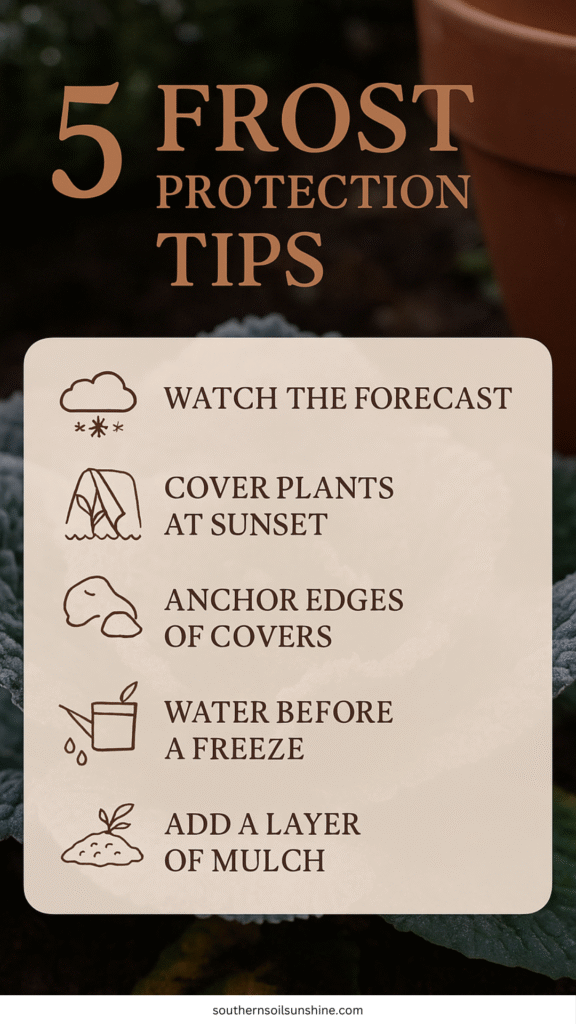
- Place coverings before sunset to trap daytime heat.
- Use stakes if needed—covers should not weigh down or touch leaves.
- Anchor edges to the ground—don’t leave gaps where frost can creep in.
- For added warmth, double-layer with fabric or frost cloth.
Pro tip: Even a few degrees of protection can make the difference between survival and loss.
🌞 5. Protecting Different Plant Types
- Vegetable beds: Use row covers or old sheets secured with rocks.
- Containers: Move pots near walls or indoors.
- Young fruit trees: Wrap trunks with tree wrap or burlap.
- Flowering plants: Cover tender ornamentals like hibiscus or bougainvillea.
- Herbs: Basil and dill are fragile—harvest some leaves ahead of frost as insurance.
Zone 9 gardeners often lose basil first—it’s a heat-lover with zero frost tolerance. Don’t wait until too late—cover or harvest early.
🍂 6. Preventing Frost Damage Before It Happens
- Water soil the day before frost: Moist soil holds heat better than dry soil.
- Mulch heavily: Insulates roots and keeps soil temps steadier.
- Plant hardy crops for winter: Focus on kale, collards, peas, carrots, and onions.
- Avoid late-night fertilizing: Tender new growth is more frost-sensitive.
Prevention is as much about wise planting as it is about quick fixes.
🐛 7. What to Do After a Frost
Even with protection, some plants may show damage.
- Don’t rush to prune: Wait a few days—plants often recover.
- Check soil moisture: Frost and wind can dry plants out.
- Harvest damaged leaves: Remove mushy foliage to prevent disease.
- Encourage regrowth: Compost tea or kelp extract helps stressed plants recover.
👉 Sometimes frost takes what it takes—but often, resilient plants bounce back.
🙏 8. Faith Reflection: Covered in Grace
Frost is quiet and sudden. It arrives overnight, often when we’re not watching. But coverings—whether cloth, mulch, or God’s own hand—make the difference between ruin and renewal.
When life brings its frosts, unexpected and sharp, may we remember that God’s grace covers us. Like tender plants under blankets, we are kept until warmth returns.
📝 Journal Prompt ✍️
Where in your life do you sense a “frost”—a season of sudden cold or stillness? How has God covered and kept you in those times?
🌿 Grace Note
Dear friend, frost protection is less about control and more about care. A simple sheet, a little mulch, a bit of awareness—it’s enough. And so it is with life. May you find peace in the truth that even in cold seasons, you are covered by grace.
✨ Free Printable
👉 Download your Frost Protection Checklist for Beginners, including:
- Materials list (what to use and avoid)
- Step-by-step covering guide
- Pre-frost prevention tips
- Reflection prompt + grace note
🌻 Related Garden Wisdom
- Related: Why Leaves Make the Best Mulch
- Related: Daily Irrigation Checks: What to Look For
- Related: Creating a Summer Garden Observation Habit
- Related: Planting Garlic in Zone 9: A Simple Guide
🎧 Podcast & 📖 eBook Mentions
For more encouragement, listen to The Rooted in Grace Podcast, where I share rhythms of soil and soul. And if you’d like to root your life in intuitive, grace-filled gardening, explore my eBook Rooted in Grace: Intuitive Gardening for the Soul.
🍁 Final Thoughts
Frost protection is about stewardship—caring for what’s been entrusted to you. With simple tools and timely action, you can safeguard your garden through winter’s cold nights.
So check the forecast, gather your coverings, and remember: a few degrees of protection can mean the difference between loss and abundance. And in your life, as in your soil, trust that even when the air grows cold, grace is your covering.



3 Comments