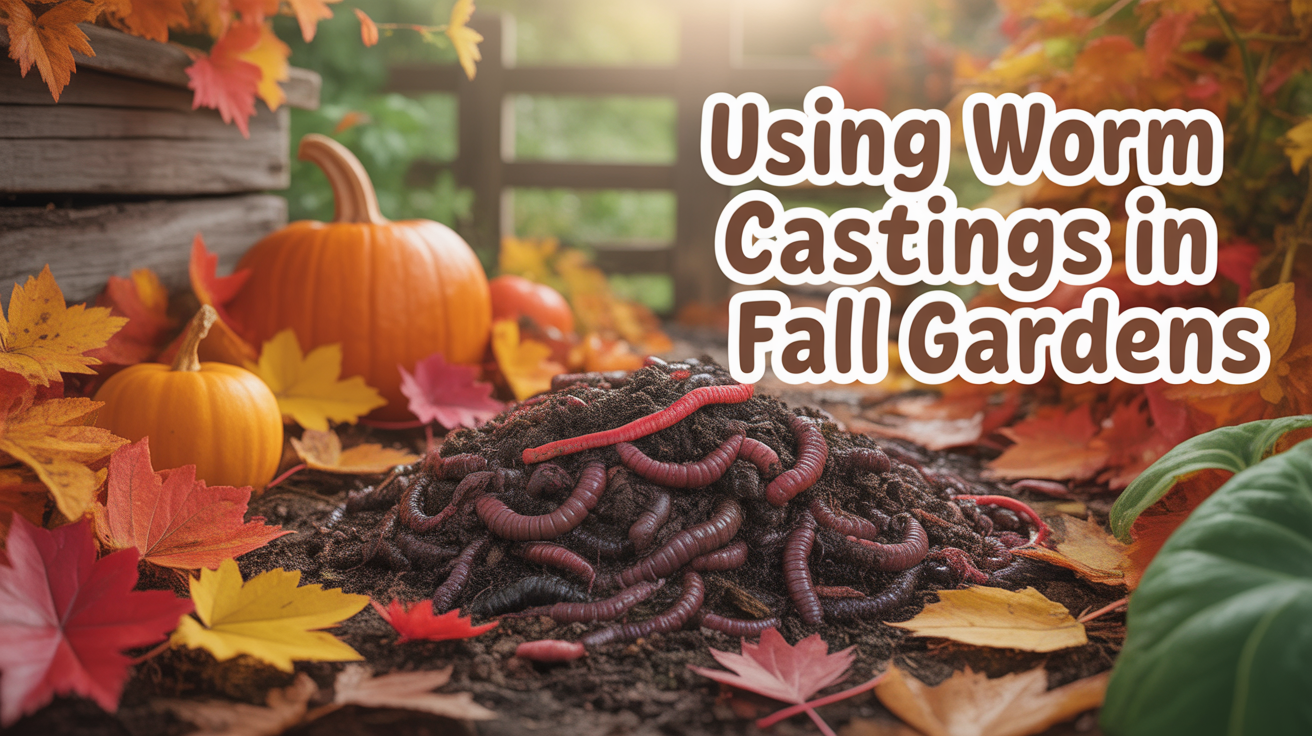
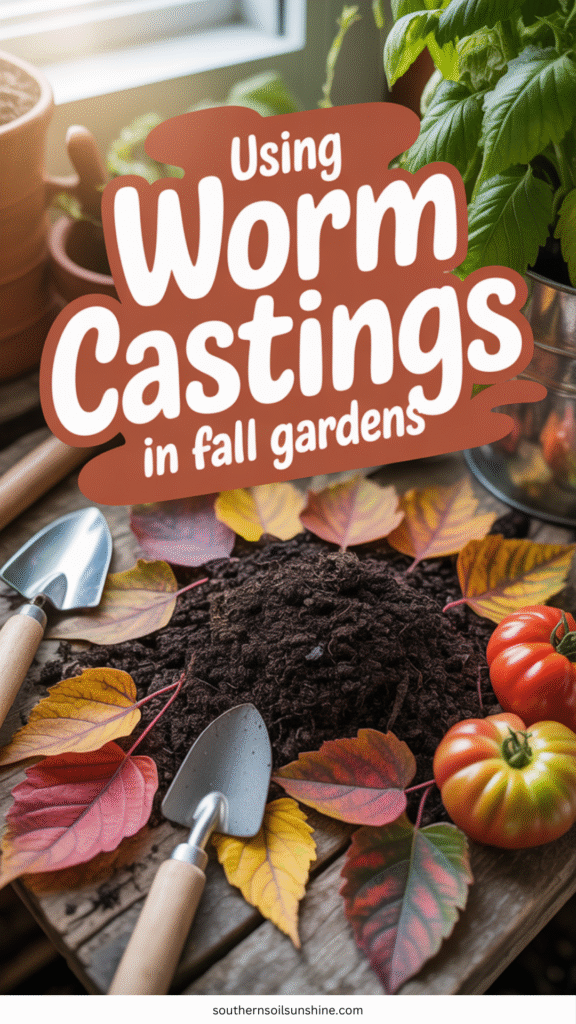
Using Worm Castings in Fall Gardens
Some of the links on this website are affiliate links, which means that if you make a purchase through these links, I may earn a small commission at no additional cost to you. As an Amazon Associate, I earn from qualifying purchases. I only recommend products I genuinely trust and believe will bring value to my readers. Also, some of the content was created with strategic use of AI tools. For more information, please visit the Privacy Policy page. Thank you for supporting my blog and helping me continue to provide valuable content.
🪱A Gentle Start: Feeding the Soil, Feeding the Soul
Fall gardening invites us to slow down, take stock, and prepare for the season ahead. Worm castings—nature’s slow, steady gift—remind us that transformation often happens quietly. Kitchen scraps and garden debris pass through the humble worm, becoming black, crumbly castings that feed the soil in ways we can’t always see right away.
In life and in gardening, small, unseen processes can yield the richest results. As we prepare our fall beds, using worm castings is a way of honoring both the soil’s need for nourishment and the Creator’s design for renewal.
🌱 Why Worm Castings Are Ideal for Fall
Worm castings (vermicast) are packed with plant-available nutrients, beneficial microbes, and organic matter. Fall is an especially strategic time to use them because:
- Boosts Fall Crops 🥬 – Provides gentle, non-burning nutrition for greens, brassicas, and root vegetables.
- Enriches Soil for Spring 🌿 – Builds fertility and microbial life over the winter months.
- Improves Soil Structure 🪨 – Helps sandy soil retain moisture and loosens clay soil for better drainage.
- Suppresses Plant Diseases 🦠 – Beneficial microbes in castings help outcompete pathogens.
- Works in Cooler Soil ❄️ – Nutrients remain available even as temperatures drop.
📋 Step-by-Step: Using Worm Castings in Your Fall Garden
1. Clear and Prepare Beds
Remove spent summer crops and weeds. Loosen the soil with a garden fork to improve aeration before adding castings.
2. Decide How to Apply
You can use worm castings in three main ways:
- Top Dressing: Sprinkle a ¼–½ inch layer over the soil around plants.
- Soil Incorporation: Mix 1 part castings to 3 parts soil in planting areas.
- Compost Tea: Brew a liquid extract to drench roots or spray leaves.
3. Feed Fall Crops
- Leafy Greens: Apply a thin layer around spinach, kale, lettuce, and chard.
- Brassicas: Work castings into the top few inches near broccoli, cabbage, and cauliflower.
- Root Crops: Mix castings into the planting row for carrots, beets, and radishes to promote steady, balanced growth.
4. Boost Perennial Beds
Spread castings around herbs, berry bushes, and ornamental perennials before mulching. The nutrients will filter into the root zone over the winter.
5. Prepare Spring Beds Now
If you have empty beds, add a ½ inch layer of worm castings, cover with mulch, and let microbial life work over the winter. By spring, the soil will be ready for planting.
🧪 Making Worm Casting Tea for Fall
A liquid drench delivers nutrients quickly and can be sprayed directly on leaves for disease suppression.
Basic Recipe:
- 1 cup worm castings
- 1 gallon non-chlorinated water
- Optional: 1 tablespoon unsulfured molasses (feeds microbes)
Instructions:
- Place castings in a mesh bag or old stocking.
- Submerge in water; aerate with an aquarium pump or stir frequently for 12–24 hours.
- Use immediately to water plants or as a foliar spray.
🛠 Tips for Getting the Most Out of Worm Castings
- Store castings in a cool, dark place—never let them dry out completely.
- Use fresh castings within 6 months for best microbial activity.
- Avoid overapplying; worm castings are concentrated—more isn’t always better.
- Combine with compost for a balanced soil amendment.
📝 Journal Prompt
What small, unseen work is God doing in my life right now—like the quiet transformation of organic matter into worm castings—that will nourish future growth?
✨ Grace Note
Worm castings are a lesson in patience and faithfulness: tiny, steady efforts producing something rich and life-giving.
“The kingdom of heaven is like a mustard seed… though it is the smallest of all seeds, yet when it grows, it is the largest of garden plants.” – Matthew 13:31–32
🌿 Related Garden Wisdom
- How to Know if Your Soil Needs a Boost
- Best Mulching Practices for Cooler Weather
- Clearing Summer Beds for Fall Planting
📄 Printable Resource
Download the Fall Worm Casting Application Guide — includes application rates, crop-specific tips, and a simple compost tea recipe.
🎙️Listen to the Podcast!
Tune into The Rooted In Grace Podcast for faith-filled garden encouragement.
📚Rooted in Grace: The eBook
Feeling scattered or unsure about what to plant, when, or how to keep it all alive?
Grab Rooted in Grace—your soulful companion for gardening through every season.
This eBook will walk you through the rhythms of intuitive gardening, spiritual reflection, and simple seasonal wins.
💌Want More Grace in Your Inbox?
Sign up here to start growing with grace! Next?
- Weekly encouragement
- Exclusive download Monthly garden to-do lists
- Early access to podcast episodes & products


6 Comments