
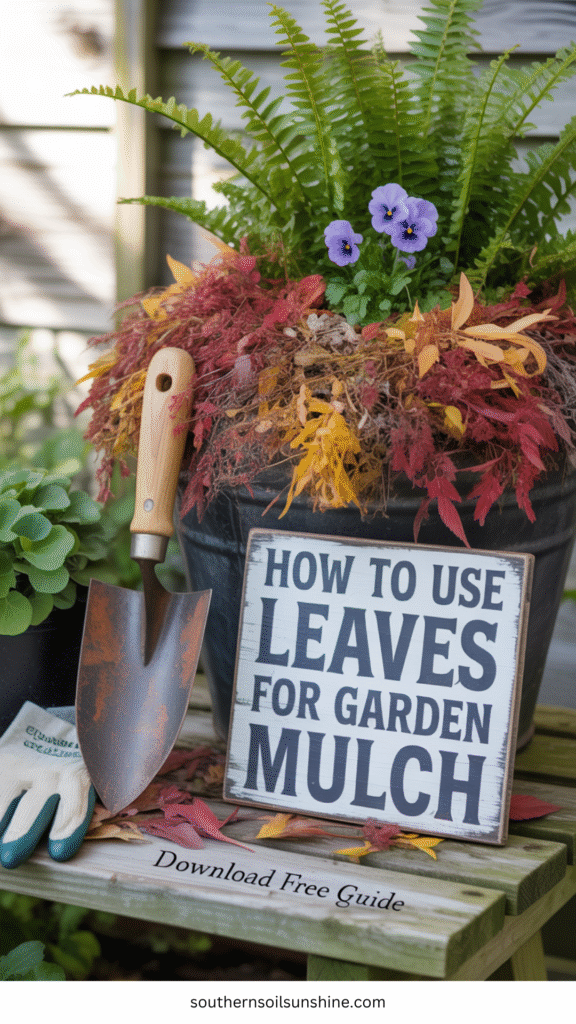
How to Use Leaves for Garden Mulch

Some of the links on this website are affiliate links, which means that if you make a purchase through these links, I may earn a small commission at no additional cost to you. As an Amazon Associate, I earn from qualifying purchases. I only recommend products I genuinely trust and believe will bring value to my readers. Also, some of the content was created with strategic use of AI tools. For more information, please visit the Privacy Policy page. Thank you for supporting my blog and helping me continue to provide valuable content. Gardening is more than growing food—it's where God grows us. If you're hungry for a faith that feels grounded again, I wrote a book for you. Download my free eBook: Rooted in Grace: A Christian Guide to Intuitive Gardening
🌿 Introduction: A Gift Already Falling at Your Feet
Every autumn, trees release one of the greatest garden resources we could ask for: leaves.
For many homeowners, they’re just a mess to be raked, bagged, and hauled away. But in the hands of a gardener, they are nutrient-rich mulch, soil builders, and protectors of the root zone.
Using leaves as mulch is an ancient practice, and in Zone 9, where the heat lingers longer and water is precious, they are especially valuable. By layering, shredding, and applying them well, you can transform a seasonal “waste product” into a powerhouse of soil health.
And as intuitive gardeners, leaves invite us to consider something deeper: what is falling away in our lives that might become nourishment for what’s next?
🌱 Related Garden Wisdom:
Mulching Tips for Retaining Moisture in Early Fall
Clearing Out Summer Beds Without Losing Your Soil
Best Soil Amendments for Fall Planting Success
🍁 Why Use Leaves as Mulch?
Unlike bark chips or straw bales, leaves are free, abundant, and hyper-local. They drop right where you are—and carry the exact minerals your ecosystem needs.
Benefits include:
- Moisture Retention: A 2–3 inch layer reduces evaporation, meaning less frequent watering.
- Soil Insulation: Protects roots from temperature swings in fall and early winter.
- Weed Suppression: Blocks light to slow weed germination.
- Soil Fertility: As they break down, leaves release carbon and trace minerals.
- Habitat Creation: Worms, fungi, and beneficial microbes thrive beneath leaf mulch.
- Carbon Banking: Leaves capture and return carbon to the soil, helping balance your garden’s ecosystem.

🍂 Think of leaf mulch as forest floor mimicry. In a woodland, nothing is wasted—each leaf becomes part of the living carpet that sustains the whole.
🧺 Collecting and Prepping Leaves
Which Leaves to Use
- Best choices: Oak, maple, ash, elm, sycamore, pecan.
- Neutral to good: Fruit tree leaves (apple, pear, citrus) if disease-free.
- Avoid or limit: Black walnut (toxic juglone), eucalyptus, camphor, magnolia (slow to decompose), or any leaves sprayed with herbicides/pesticides.
How to Collect
- Use a mulching mower to chop leaves directly on the lawn.
- Rake and bag dry leaves—store extras in breathable bags for year-round use.
- Ask neighbors for their bagged leaves (they’ll often be glad to give them away).
Why Shred Leaves?
Whole leaves can mat down and repel water. Shredding speeds decomposition and creates a fluffier, breathable mulch. A simple mower pass can do the trick.
🌱 How to Apply Leaf Mulch
In Vegetable Beds
- Apply 2–3 inches of shredded leaves after sowing or transplanting.
- Keep mulch a couple of inches away from plant stems to prevent rot.
- Mix with a layer of compost for added fertility.
In Perennial Beds
- Add a thicker layer (4–6 inches) around trees, shrubs, and berry canes.
- Great for strawberries, asparagus, and perennial herbs.
- Check periodically to avoid burying crowns or stems.
In Pathways
- Lay 3–4 inches of whole leaves on garden paths.
- Expect compaction—top up mid-season.
- As paths break down, scoop decomposed material into beds.
🍂 Leaf Mulch and Soil Health
Leaves aren’t just a surface treatment—they’re long-term soil builders.
Leaf Mold: Nature’s Black Gold
Leaf mold is decomposed leaves turned into rich, crumbly humus.
- Pile leaves in a bin or cage.
- Keep moist and aerated.
- In 6–12 months, you’ll have a soil conditioner that rivals compost.
Compost Booster
Leaves are a “brown” material rich in carbon. Combine with “green” nitrogen materials like grass clippings or kitchen scraps for balanced compost.
☀️ Special Considerations for Zone 9
- Heat Retention: Leaf mulch insulates soil but also holds warmth—perfect for fall crops but remove or thin in spring to avoid overheating roots.
- Moisture Balance: Fall rains + mulch = soggy soil risk. Always check moisture before adding more.
- Pest Shelter: Slugs and pill bugs may shelter under mulch. Monitor seedlings carefully.
💡 Troubleshooting Common Issues
- Matting: Whole leaves sticking together → shred or mix with straw.
- Slow Breakdown: Add a handful of compost or garden soil to inoculate with microbes.
- Wind Scatter: Water leaves after applying, or layer a bit of soil or compost on top.
- Too Acidic? Shredded oak or pine leaves may slightly lower pH but rarely harm balanced soil. Rotate with other mulches if concerned.
🧘♀️ Intuitive Gardening Insight
When we spread leaves over the soil, we’re not just covering—we’re protecting. The garden is entering a quieter season, where growth slows and roots deepen.
Leaves teach us the grace of release: trees don’t cling to what’s outlived its purpose. They let go, trusting those fallen parts will serve another role.
Ask yourself:
“What am I holding onto that needs to fall away so new life can root in me?”
✍️ Journal Prompt
What feels like “waste” in my life right now that may actually hold hidden value? How can I let it break down into wisdom that nourishes future growth?
🌼 Grace Note
The falling of leaves is not an ending.
It’s a beginning—hidden, silent, slow.
What seems like loss becomes soil.
What looks like decay becomes life again.
So it is with us.
📘 Grow Rooted with Grace
Rooted in Grace is your companion for soul-centered gardening in every season.
Inside you’ll find:
- Seasonal planting rhythms
- Devotional reflections
- Journaling prompts to align your soil and your spirit
🎧 Listen While You Mulch
🎙 Rooted in Grace Podcast
Garden reflections for your raking, layering, and resting season:
📨 Stay Rooted
Join the Southern Soil Sunshine community for:
- Weekly garden devotionals
- Free seasonal printables
- Soulful encouragement
🌟 Final Thoughts: Leaves as a Legacy
The leaves that drift to your garden beds this fall were nourished by sunlight, soil, and seasons long before you noticed them. Now, they return to the earth, continuing the cycle of giving.
When you mulch with leaves, you’re participating in a legacy of abundance—where nothing is wasted, and everything serves.
So gather them up, spread them wide, and trust the unseen work they’ll do beneath the surface. Your soil—and your soul—will be richer for it.


One Comment