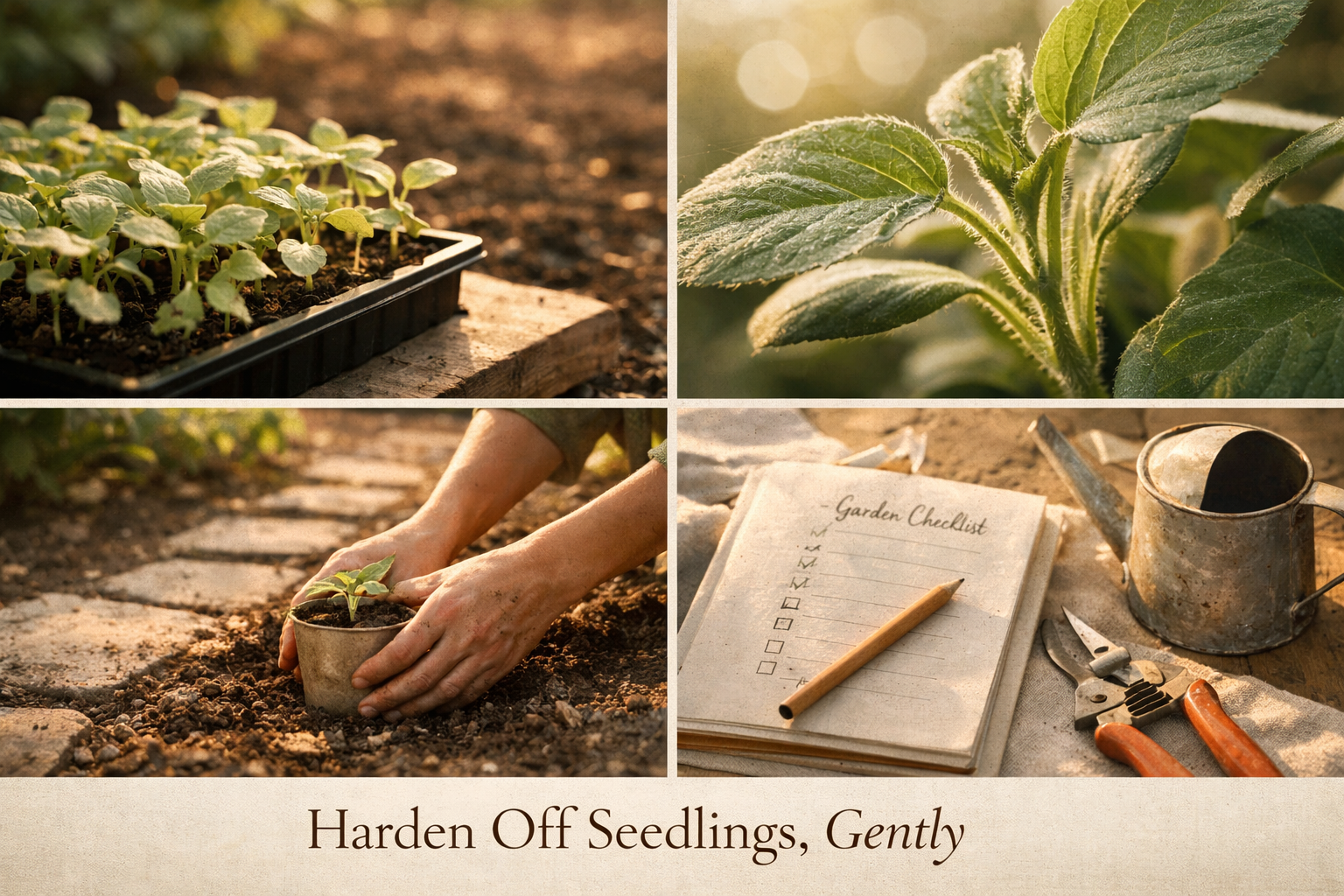
How to Harden Off Seedlings (Without Shock)
Some of the links on this website are affiliate links, which means that if you make a purchase through these links, I may earn a small commission at no additional cost to you. As an Amazon Associate, I earn from qualifying purchases. I only recommend products I genuinely trust and believe will bring value to my readers. Also, some of the content was created with strategic use of AI tools. For more information, please visit the Privacy Policy page. Thank you for supporting my blog and helping me continue to provide valuable content. Gardening is more than growing food—it's where God grows us. If you're hungry for a faith that feels grounded again, I wrote a book for you. Download my free eBook: Rooted in Grace: A Christian Guide to Intuitive Gardening
If you’ve ever lovingly started seeds indoors, watched them sprout under grow lights, rotated trays like a careful steward… and then planted them outside only to see them wilt within 24 hours — you’ve felt that quiet heartbreak of transplant shock.
It’s one of the most common beginner gardening mistakes.
And sweet friend, it’s completely avoidable.
The missing step is called hardening off — the slow, intentional process of preparing seedlings for real outdoor conditions.
Once you understand what’s happening beneath those tender leaves, you’ll never rush this step again. Not because you’re afraid — but because you’ve learned the rhythm of strengthening before exposure.
📌 Save This Guide for Later
🌿 Why Hardening Off Matters in Zone 9
If you garden in Zone 9 like I do, you already know our seasons don’t whisper — they announce themselves boldly.
Spring sunlight intensifies quickly. Afternoon heat can spike. Winds sweep through unexpectedly. Even in early planting windows, our conditions are rarely gentle for long.
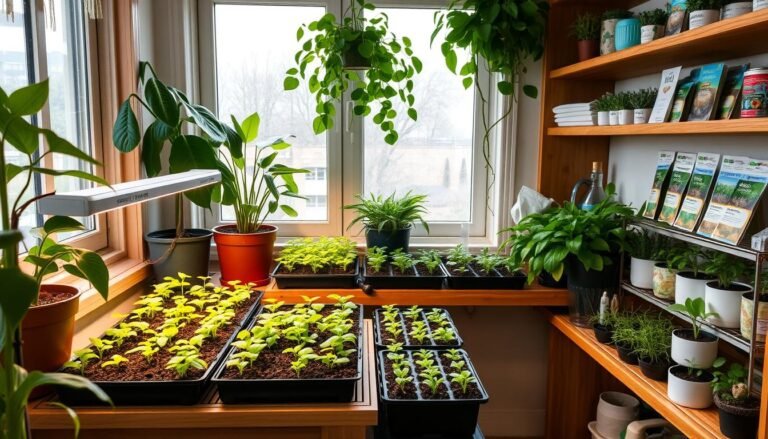
When we start seeds indoors — whether under lights or near a bright window — we’re giving them protection:
- Stable temperatures
- No wind stress
- Filtered or artificial light
- Consistent watering
- Controlled humidity
Then one bright afternoon, we carry them outside into full sun and open air.
It’s like sending a sheltered child into a desert without a hat.
Hardening off matters because it builds resilience before the stress comes.
If you’re new to starting seeds indoors, I walk through the basics in my guide on how to start seeds in Southern climates. Hardening off is simply the next faithful step.
And in a long growing season like ours, strong starts mean stronger harvests.
🌞 What Is Hardening Off?
Hardening off is the gradual transition of indoor-grown seedlings to outdoor light, wind, and fluctuating temperatures.
Seedlings grown inside are tender for good reason. They’ve never had to brace against a breeze. They’ve never felt direct UV intensity. Their stems are soft. Their leaf cells are delicate.
When you suddenly expose them to full outdoor conditions, several things can happen:
- Leaves scorch
- Stems collapse
- Growth stalls
- Roots struggle to keep up
- Plants enter shock
Not because they’re weak.
Because they weren’t prepared.
Hardening off strengthens the plant’s cell walls, thickens stems, and increases tolerance to sunlight and wind. It builds internal systems gradually.
This isn’t about tough love.
It’s about wise stewardship.
🌱 Why Seedlings Wilt After Transplanting
If your seedlings look healthy inside but struggle once planted outdoors, here are the most common reasons — especially in warm climates.
1. Sun Scorch
Indoor grow lights are gentle compared to direct sun. Even a few hours of midday Zone 9 sunlight can burn tender leaves.
Signs:
- White or brown patches
- Crispy edges
- Curling leaves
Gentle correction: “Your plant might simply be asking for a softer introduction to the sun.”
2. Wind Stress
Outdoor wind strengthens plants — but only gradually.
Sudden gusts bend soft stems and dry out leaf tissue faster than roots can compensate.
Tone to remember: This isn’t failure; it’s feedback.
3. Temperature Fluctuations
Indoors is stable.
Outdoors shifts constantly — especially in spring when cool mornings give way to hot afternoons.
Even a 20-degree swing in one day can slow a young plant’s growth.
For timing support, be sure you understand your local planting windows using this guide to frost dates in Zone 9.
4. Root Shock
Transplanting disturbs roots — even gently.
If roots are already stressed from sun or wind exposure at the same time, recovery slows.
Hardening off reduces that stacked stress.
It’s not about perfection.
It’s about pacing.
🌿 How to Harden Off Seedlings (Step-by-Step)
This process typically takes 7–10 days.
In hotter areas of Zone 9, lean closer to 10 days — especially for tomatoes, peppers, basil, and tender herbs.
Days 1–2: Shade Only
- Place seedlings outdoors in full shade
- 1–2 hours only
- No direct sun
- Protected from wind
Bring them back inside afterward.
Observe leaves closely.
Days 3–4: Gentle Morning Sun
- 3–4 hours outdoors
- Early morning sun only
- Still shield from strong wind
This is where stems begin strengthening.
Days 5–6: Partial Sun + Light Breeze
- 4–6 hours outside
- Introduce mild wind exposure
- Allow dappled or partial sun
You may notice leaves slightly thickening.
Days 7–10: Increasing Full Exposure
- Extend to most of the day
- Gradually allow full sun
- Monitor afternoon heat carefully
By day 10, seedlings should tolerate outdoor conditions without drooping.
Remember:
This is not a rigid formula.
It’s a rhythm.
You are training the plant to live where it’s called to grow.
🪴 A Simple Hardening Off Checklist
- [ ] Check 10-day weather forecast
- [ ] Avoid starting during extreme heat waves
- [ ] Begin in shade
- [ ] Increase exposure gradually
- [ ] Watch for leaf burn or stress
- [ ] Water before outdoor exposure
- [ ] Transplant on a calm, mild day
If you need help organizing your seasonal timing, my full year-long gardening calendar breaks this down month by month for Zone 9 rhythms.
🌼 When Can You Skip Hardening Off?
Almost never.
The only real exception is if seedlings were grown in a greenhouse that already mimics outdoor light, wind, and temperature conditions.
Otherwise, skipping this step often costs you weeks of recovery — or the entire plant.
It feels small.
But it determines survival.
🌿 Troubleshooting Common Hardening Off Problems
Let’s look for the quiet clues.
Problem: Leaves Turn White After Sun Exposure
Why it happens: Sudden UV intensity.
Simple fix: Return to shade for 2–3 days. Reintroduce sunlight more slowly.
Problem: Seedlings Wilt Quickly Outdoors
Why it happens: Wind + dehydration.
Simple fix: Offer deeper watering before exposure. Reduce wind duration.
Problem: Stems Flop
Why it happens: Wind stress too early.
Simple fix: Shorter outdoor sessions. Provide gentle support.
Problem: Growth Stalls After Transplant
Why it happens: Combined root + sun shock.
Simple fix: Shade cloth for 3–5 days. Light feeding once new growth appears.
“It’s okay — every gardener has days like this.”
Grace grows here too.
☀️ Seasonal Notes for Zone 9
Because our growing season is long, hardening off can happen multiple times per year.
Late Winter / Early Spring:
Start tomatoes and peppers indoors late winter. Harden off carefully before early spring planting.
Late Summer for Fall Gardens:
When starting broccoli, greens, and brassicas indoors in late summer, harden off gradually before fall transplanting.
Winter Herbs:
Cilantro and parsley started indoors still benefit from brief hardening — even in mild winters.
Your timing shifts with the season. Our sun strengthens quickly, even in early months.
Use your observation skills.
Intuitive gardening always begins with attention.
🌸 The Formation Lesson Hidden in This Process
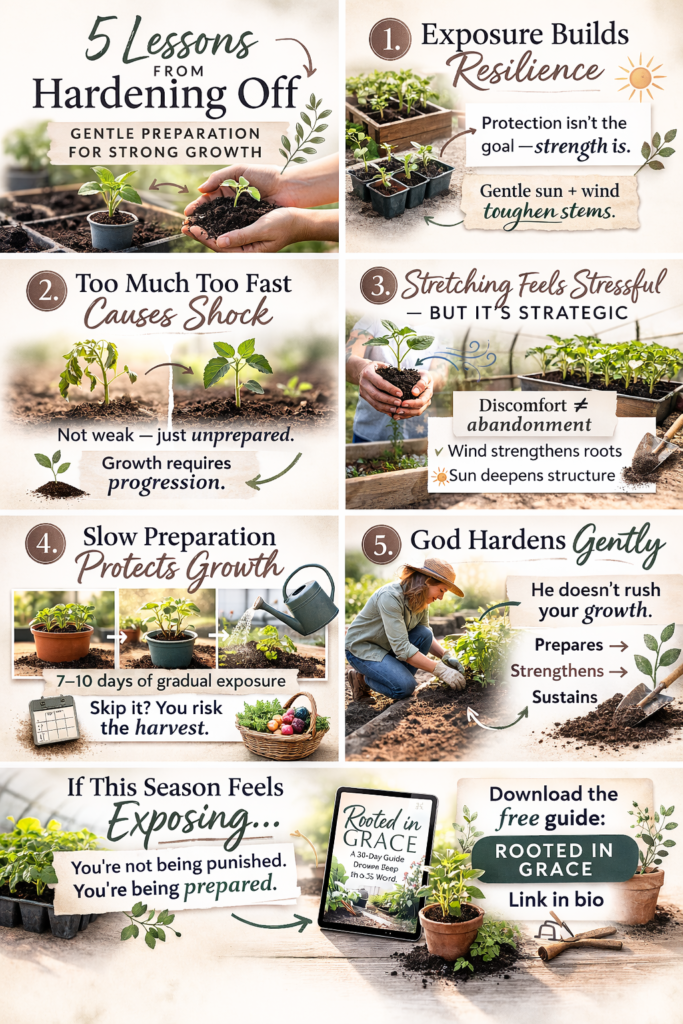
Hardening off isn’t punishment.
It’s preparation.
Seedlings are not thrown into full sun on day one.
They are strengthened gradually.
And if I’m honest, I’ve needed that reminder more than once.
There have been seasons — moving four times in three years, rebuilding beds from scratch, starting over in new soil — when I felt exposed before I felt ready.
But growth rarely comes from comfort alone.
Wind thickens stems.
Sun deepens roots.
Stretching increases capacity.
The garden is not just a metaphor.
It’s a classroom.
“Be still, and know that I am God.” — Psalm 46:10 (NIV)
Stillness teaches observation.
Observation teaches wisdom.
Wisdom teaches timing.
God does not harden cruelly.
He hardens gently.
A little more responsibility.
A little more visibility.
A little more stretch.
Not to break you.
To strengthen you.
📓 Journal Prompts
- Where in my life do I feel suddenly exposed?
- Is this harm — or is this strengthening?
- What small, gradual steps would help me build resilience instead of forcing growth?
Write it down. Sit with it. Let the soil speak.
🌱 Free Printable: Hardening Off Tracker + Grace Notes
To make this process easier (and more peaceful), I created an editable printable you can use this season.
Inside you’ll find:
- A daily exposure tracker
- Space to record sun, wind, and stress signs
- A transplant checklist
- Encouragement reminders rooted in grace
- A journal page to reflect on what this season is forming in you
Print it. Keep it in your garden notebook. Use it every time you start seeds indoors.
Let’s tend this season gently.
🌿 Related Garden Reading
- How to Start Seeds in Southern Climates
- Frost Dates and Gardening in Zone 9
- Grow Your Dream Garden in Just 15 Minutes a Day
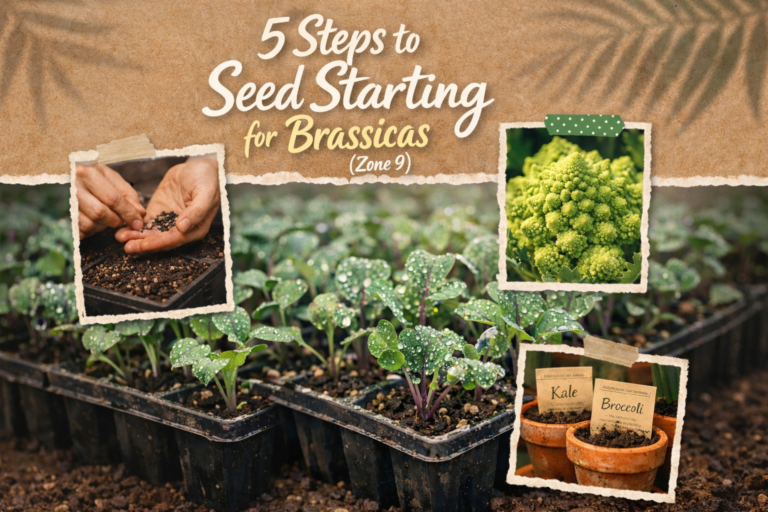
- 5 Steps to Seed Starting for Brassicas
🎙 Grow Deeper with Me
If this stirred something in you — the gardening and the soul work — the Rooted in Grace podcast is waiting.
You can listen on:
If you’d like a deeper devotional companion, my book Rooted in Grace is available here:
👉 Rooted in Grace Ebook
And if you’re longing for personal guidance — in your garden or your spiritual season — I’d be honored to walk with you at:
👉 https://rootedingrace.me/start
You can also join our community:
Let’s root deeper together — your garden (and heart) will thank you.
🌼 Final Thoughts
Before you transplant this season:
Check the forecast.
Avoid windy days.
Water before and after planting.
Be patient with recovery.
Hardening off may feel slow.
But slow preparation protects long-term growth.
As you tend your seedlings this week, may you feel God tending you.
May your stems strengthen quietly.
May your roots deepen unseen.
And may your garden — and your heart — find rest in the slow places.