
How to Harden Off Seedlings (Without Shock)
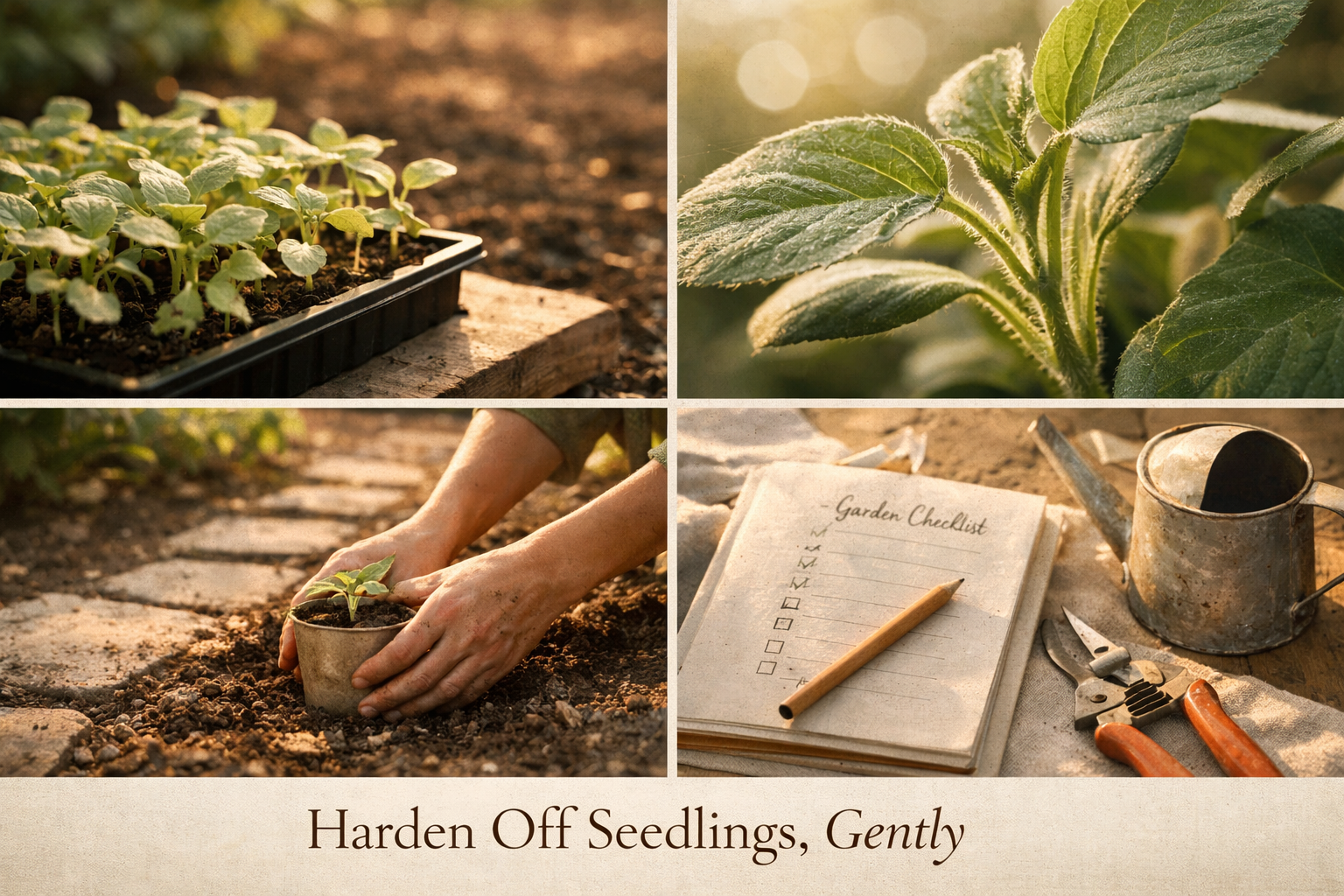
How to Harden Off Seedlings (Without Shock) 🌱
If you’ve ever lovingly started seeds indoors, watched them sprout under grow lights, rotated trays like a careful steward of small green lives… and then planted them outside only to see them wilt within 24 hours — you’ve felt that quiet heartbreak of transplant shock.
Sweet friend, I’ve been there too. It’s one of the most common gardening sorrows, especially when we pour so much intention into those first weeks of growth.
But here’s what I’ve learned through seasons of trial and grace: that wilting is completely avoidable.
The missing step is called hardening off — the slow, intentional process of preparing seedlings for real outdoor conditions. It’s not a rushed phase or an optional nicety. It’s a faithful rhythm that transforms fragile indoor seedlings into sturdy transplants ready to thrive in our intense Zone 9 heat and sunshine.
Once you understand what’s happening beneath those tender leaves, you’ll never rush this step again. Not because you’re afraid of failure, but because you’ve learned something deeper: strengthening before exposure. It’s a principle that serves us well in gardening and in life.
Free eBook
Rooted in Grace
A Christian guide to intuitive gardening — the whole book, free. Tell me where to send it and it’s yours in a minute.
Why Hardening Off Matters in Zone 9 💚
If you garden in the Houston suburbs or anywhere in Zone 9 like I do, you already know our seasons don’t whisper — they announce themselves boldly and enthusiastically.
Spring sunlight intensifies quickly here. Our afternoon heat can spike from mild to scorching in what feels like a heartbeat. Winds sweep through unexpectedly during transition weeks. Even in those early March and April planting windows, our conditions are rarely gentle for long.
When we start seeds indoors — whether under lights in a dark corner or near a bright south-facing window — we’re giving them a protected environment:
Sanda’s Zone 9 Note: Indoor seedlings experience stable temperatures (usually 65-75°F), protection from wind stress, filtered or artificial light, consistent watering without dry-down stress, and controlled humidity. It’s essentially a nursery, and a tender one at that.
Then one bright afternoon in late March or early April, we carry our seedling trays outside into full Zone 9 sun and open air, ready to transition them to the garden beds. The shock is real — it’s like sending a sheltered child into our Texas heat without preparation.
Hardening off matters profoundly because it builds resilience before the stress comes. If you’re new to starting seeds indoors, there’s so much joy in that process. But hardening off is simply the next faithful step — the bridge between protection and freedom.
And in a long growing season like ours, strong starts mean stronger harvests, more abundant blooms, and deeper satisfaction in late summer when your tomatoes are thriving and your neighbors’ are struggling.
What Is Hardening Off? 🌞
Hardening off is the gradual transition of indoor-grown seedlings to outdoor light, wind, and fluctuating temperatures. It’s a process that typically takes 7-10 days here in Houston, depending on your specific conditions and seedling vigor.
Seedlings grown inside are tender for good biological reason. They’ve never had to brace against a breeze. They’ve never felt direct UV intensity from our intense Texas sun. Their stems are soft and somewhat fragile. Their leaf cells are delicate, designed for the consistent conditions of indoor life.
When you suddenly expose them to full outdoor conditions, several things can happen:
| What Happens | Why It Occurs |
| Leaves scorch or turn white | Direct UV exposure overwhelms tender leaf tissue |
| Stems collapse or weaken | Wind stress and temperature fluctuation exceed plant capacity |
| Growth stalls | Plant redirects energy to survival rather than development |
| Roots struggle to keep up | Water loss through leaves exceeds root water uptake capacity |
| Plants enter shock | Multiple stressors overwhelm plant systems simultaneously |
Not because your seedlings are weak. Not because you failed as a gardener. But because they simply weren’t prepared for such a dramatic environmental shift.
Hardening off strengthens the plant’s cell walls, thickens stems, increases chlorophyll production, and builds tolerance to sunlight and wind. It’s an internal transformation that happens gradually, methodically, faithfully.
This isn’t about tough love or “strengthening through adversity” in a harsh way. It’s about wise stewardship — the same gentle intentionality you brought to starting those seeds in the first place.
Why Seedlings Wilt After Transplanting 🌿
If your seedlings look vibrant and healthy inside your home but struggle the moment they’re planted outdoors, here are the most common reasons — especially in our warm, intense Zone 9 climate.
Sun Scorch and Light Intensity
Indoor grow lights are wonderfully gentle compared to direct Texas sun. Even a few hours of midday Zone 9 sunlight — particularly in April and May — can burn tender leaves that have never experienced direct UV rays.
Watch for these signs: white or brown patches on leaf surfaces, crispy or papery edges, leaves that curl inward as if shrinking away from the light. Your plant might simply be asking for a softer, more gradual introduction to the sun’s intensity.
Wind Stress and Physical Damage
Outdoor wind strengthens plants — but only gradually. Sudden gusts bend soft stems and dry out leaf tissue faster than roots can compensate. Our spring winds in Houston can be surprisingly vigorous, especially in March and April when we’re most eager to get seedlings outside.
Sanda’s Garden Wisdom: If you notice your seedlings drooping severely after just a day or two outside, you may have exposed them to too much wind or direct sun too quickly. This isn’t failure — it’s feedback that helps you adjust your hardening-off timeline.
Temperature Fluctuation
Our spring nights in Houston can still dip into the 50s while days soar into the 80s. This temperature swing is shocking to seedlings accustomed to steady indoor warmth. Cold soil and cool nights stress root systems just as much as hot afternoons stress leaves.
Inconsistent Watering and Humidity
Indoors, you’ve likely maintained consistent moisture. Outside, plants dry out faster due to wind, sun, and evaporation. Even one missed watering during those sensitive transition days can cause wilting that takes days to recover from.
The Hardening Off Timeline: A 7-10 Day Journey 📅
Here’s exactly how I approach hardening off my seedlings each spring. This timeline is designed specifically for Zone 9 gardens and assumes you’re beginning in late March or early April when outdoor temperatures are still mild.
Days 1-2: Dappled Shade and Still Air
Choose a sheltered location — perhaps near your garage, under a tree canopy, or on a porch with eastern exposure. These days, seedlings get outdoor air, natural light (but filtered through shade), and protection from wind. Leave them outside for 2-3 hours maximum.
This is the moment when seedlings first taste fresh outdoor air. Watch them. Notice how they respond. Water gently after bringing them back inside if the soil feels light.
Days 3-4: Increasing Sun Exposure
Move seedlings to a location with morning sun only — east or northeast-facing if possible. This is still gentle compared to midday sun. Extend outdoor time to 4-5 hours. Continue bringing them inside for afternoon and evening.
You’re building their capacity gradually. Their leaves are beginning to thicken. Their stems are responding to subtle wind by strengthening.
Days 5-6: Morning Sun Becomes Mixed Light
Seedlings now experience morning sun and early afternoon dappled light. Extend outdoor time to 6-8 hours. They might still come inside, but they’re spending more hours acclimating to outdoor conditions. Water more frequently than you did indoors — the evaporation is real.
Days 7-8: Longer Outdoor Days, Overnight Decision
If nighttime temperatures are consistently above 55°F (check your local forecast), seedlings can stay outside overnight in a sheltered location. If temperatures still dip below 55°F, bring them inside. They’re experiencing longer sun exposure now, but probably not full midday intensity yet.
Sanda’s Tip: Keep a simple watering can near your hardening-off location. Seedlings outside are drying faster than you expect. Check soil moisture every morning and evening. Dry soil + wind + sun = immediate stress.
Days 9-10: Full Outdoor Transition
Seedlings are now outside day and night (assuming nighttime temperatures stay above 55°F). They’re experiencing increasingly direct sun throughout the day. By day 10, they’re ready for garden planting. Their leaves have thickened. Their stems have strengthened. Their roots are prepared for the transition to garden soil.
Your Hardening Off Setup 🏡
Creating the right space for hardening off makes this process so much easier and more successful. You need a location that offers:
Flexibility with light: A spot where you can start seedlings in shade and gradually move them into more sun. A north-facing porch works beautifully for day 1-2. An east or west-facing location works better for days 3-6. South-facing spots are reserved for day 8 onward.
Wind protection initially: A garage corner, sheltered porch, or area near your home breaks harsh winds for the first few days. Don’t skip this. By day 5-6, gentle wind exposure is actually helpful for strengthening stems.
Easy watering access: You’ll need to water more frequently than you expect. Soil that felt adequately moist at 10 AM might be dry by 2 PM when you move seedlings to sunnier spots. Place hardening-off trays near a hose or water source.
Protection from pests: Outside, seedlings are vulnerable to slugs, grasshoppers, and other curious creatures. Consider placing seedlings on a table rather than directly on soil, which makes them slightly less accessible to ground-dwelling pests.
Common Hardening Off Mistakes (and How to Avoid Them) ⚠️
The All-at-Once Approach
The biggest mistake is assuming seedlings can handle full outdoor conditions immediately. I’ve seen gardeners move entire trays to full sun for a full day and watch them wilt by sunset. Resist the urge to rush. Seven to ten days feels long when you’re
Watering During Hardening Off: The Often-Overlooked Detail
Here’s something I wish someone had emphasized to me in those early seasons: your hardening-off watering schedule needs to change dramatically. Indoor seedlings in stable humidity might need water every 2-3 days. Outside, even in early spring, that timeline collapses.
When seedlings are outside in wind and increasing sunlight, they’re losing water through their leaves far faster than their tender root systems can replace it. You’ll need to check soil moisture twice daily — morning and late afternoon. If the surface feels dry to your touch, water gently but thoroughly.
Here’s a rhythm that works beautifully in our Houston spring: water seedlings the morning you move them outside, then check again around 4 PM. On days 3-4, you might water both morning and afternoon. By days 7-8, if seedlings are staying outside overnight, a thorough watering in early morning becomes essential — it needs to sustain them through the entire day and cooler evening.
This isn’t overwatering; it’s responsive stewardship. You’re observing what the plant actually needs rather than following a preset schedule. The soil should stay consistently moist but never waterlogged. Soggy soil while roots are stressed creates an entirely different problem.
One gentle practice: when you water hardening seedlings, water the soil at the base rather than overhead. This reduces leaf wetness (which can invite fungal issues) and ensures water reaches roots where it’s needed most.
Temperature Sensitivity in Zone 9’s Unpredictable Springs
One reason I recommend checking your local forecast obsessively during hardening-off season is that Houston springs are genuinely unpredictable. We might have mild 70-degree days followed by a surprise freeze or cold snap. Seedlings hardened to 75-degree days can suffer real damage if temperatures suddenly drop to 45 degrees overnight.
If you’re hardening off in early April and a cold front moves through, bring seedlings back inside or cover them with frost cloth. This isn’t a setback; it’s part of gardening in our variable climate. A single night of unexpected cold can set back hardening progress, but your seedlings will recover if you bring them inside quickly.
Watch nighttime temperatures especially. Once they’re consistently above 55°F for 5-7 consecutive nights, you can feel more confident about leaving seedlings outside overnight. But below 55°F, bring them in. Tender seedling roots and stems simply aren’t ready for sustained cold stress.
This is also why the “Days 7-8: Overnight Decision” point in the timeline matters so much in our Zone 9 context. Our last frost date is typically mid-April, but that doesn’t mean we won’t see cold nights in late March. Trust the forecast more than the calendar.
Recognizing the Signs of Successful Hardening Off
By day 8 or 9, you should notice visible changes in your seedlings — evidence that the hardening process is actually working. Leaves often take on a slightly deeper green color and a waxy appearance. Stems thicken noticeably; they’ll feel sturdier when you gently pinch them. You might see slower but stronger growth — less height, more substance.
Some seedlings might show subtle purple or reddish tinges on stems or leaf undersides. This isn’t stress; it’s often a sign of cold hardiness developing. Anthocyanin (the pigment responsible) increases when plants perceive changing conditions, and it actually helps them tolerate temperature swings better.
The most reliable sign? Seedlings that stand upright without drooping by late afternoon, even on hot days. Indoor seedlings often show afternoon wilting from the sheer effort of maintaining turgor in new conditions. Hardened seedlings maintain that firm, healthy posture throughout the day. When you see that shift, you know the work is paying off.
There’s something deeply satisfying about watching this transformation happen over those 7-10 days. You’re not just preparing plants for the garden
🛒 Shop This Post
The setup that makes a ten-day hardening off actually happen, instead of getting skipped because it was too much trouble on day three.
- MIXC Seedling Trays with Domes Sturdy enough to carry in and out twice a day for ten days without buckling.
- Mklsit 40% Shade Cloth Days one and two need dappled light. This is easier than chasing shade around the yard.
- XLUX Soil Moisture Meter Outdoor trays dry out far faster than indoor ones. One missed watering sets you back days.
- Small Watering Can Gentle flow that will not wash seedlings sideways during the transition days.
- BESKAR Clip-On Fan Run it indoors the week before. Stems thickened by air move outside far better.
- Digital Max-Min Thermometer Tells you what the porch actually did overnight, not what the forecast promised.
- 4-Tier Wire Shelving Keeps trays off the ground and lets you move a whole shelf of seedlings at once.
These are Amazon affiliate links. If you buy through them I earn a small commission at no extra cost to you — and I only link gear I actually use in my own Zone 9 garden.
Ready to Go Deeper in the Garden?
If this article resonated with you, you might be ready for something more than tips.
- Download the FREE Rooted in Grace eBook
- Get the Rooted in Grace Print Book on Amazon
- Join Rooted Reset
- Follow on Instagram – @southernsoils
- Save on Pinterest – @southernsoilsunshine
- Join on Facebook – Southern Soil Sunshine
“The garden is not just a place to grow plants – it is a place to grow yourself.”
Free eBook
Before you go — the book is yours
Rooted in Grace: A Christian Guide to Intuitive Gardening. No cost, no catch. Read it on any device, at whatever pace the season allows.





Операторы ставок являются сертифицированные платформы, что предлагают интерактивные пари на спортивные события.
Ключевая цель букмекера — сформировать кэфы на каждое варианты встречи, учитывающие возможность определённого варианта.
При выборе платформы рекомендуется учитывать на наличие лицензии, отзывы и комфорт интерфейса.
Стабильный оператор обеспечивает честные условия, обширную выборку и быструю помощь клиентов.
https://rpgmaker.net/users/bookmaker-bonuses/
mostbet accessbank mostbet accessbank