
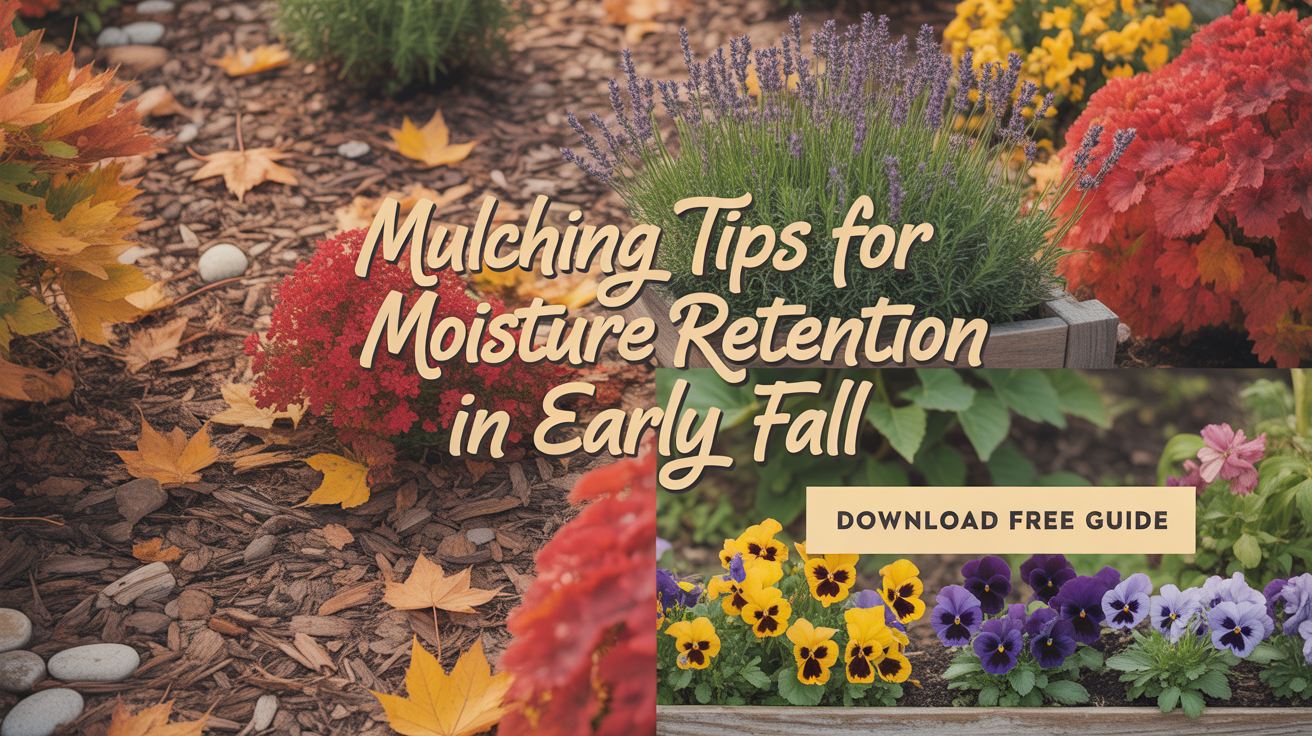
Mulching Tips for Retaining Moisture in Early Fall
Some of the links on this website are affiliate links, which means that if you make a purchase through these links, I may earn a small commission at no additional cost to you. As an Amazon Associate, I earn from qualifying purchases. I only recommend products I genuinely trust and believe will bring value to my readers. Also, some of the content was created with strategic use of AI tools. For more information, please visit the Privacy Policy page. Thank you for supporting my blog and helping me continue to provide valuable content. Gardening is more than growing food—it's where God grows us. If you're hungry for a faith that feels grounded again, I wrote a book for you. Download my free eBook: Rooted in Grace: A Christian Guide to Intuitive Gardening
How to protect your soil, preserve water, and prepare for the season ahead—one layer at a time
🌿 Opening Reflection: A Covering of Kindness
As summer wanes and the first hints of fall whisper through the garden, one of the kindest things you can do for your soil—and your sanity—is to mulch.
Not just to make your beds look tidy, but to retain moisture, buffer the still-warm weather, and gently transition your garden into its next season.
Mulching is a quiet act of care, a way of covering what you’ve planted in grace and stewardship. It slows evaporation, nourishes the soil, and gives your plants space to rest and grow.
Let’s walk through how to mulch well in early fall, especially in warm climates like Zone 9, where lingering heat and shifting rains call for thoughtful choices.
💧 Why Mulching Matters for Moisture Retention
In early fall, water can still evaporate quickly from exposed soil. Mulch creates a protective barrier that:
- Slows evaporation by up to 70%
- Keeps soil temperatures stable
- Reduces watering frequency
- Prevents crusting and erosion
- Helps germinate fall seeds by maintaining humidity
Especially in raised beds or containers, moisture loss happens fast—mulch keeps your soil from drying out like a cracked sponge in the sun.
🌡️ The Unique Challenge of Early Fall in Zone 9
Zone 9 is tricky in September and early October:
- Hot days and warm soil
- Cooler nights begin
- Intermittent rains can mislead you
- Soil dries out quickly despite cooler evenings
Your mulch strategy needs to balance protection with breathability so that soil doesn’t smother or mold under the cover.
Related: How to Harden Off Brassicas in a Warm September
Related: Fall Garden Journal Setup: What to Track and Why
🧺 Best Mulch Materials for Fall Moisture Retention
Here are Zone-9-friendly options that insulate without overheating:
1. Shredded Leaves
- Free and abundant
- Excellent water retention
- Add organic matter as they break down
- Great around herbs and brassicas
2. Straw (Not Hay)
- Light, airy, and water-absorbent
- Doesn’t mat or smother young seedlings
- Ideal for veggie beds
- Make sure it’s weed-free and seed-free
3. Compost as Mulch
- Feeds and protects at once
- Especially good for fall beds being prepped for planting
- Apply 1–2” layer over moist soil
4. Wood Chips (in Pathways or Perennials)
- Better for tree beds, orchard rows, and walkways
- Not ideal for tender seedling areas
- Use arborist chips or hardwood shavings
5. Grass Clippings (Dried Only)
- Nitrogen-rich and lightweight
- Let them dry fully before applying
- Avoid if lawn was chemically treated
🛠️ How to Mulch Effectively in Fall
✅ Do:
- Water soil deeply before applying mulch
- Layer mulch 2–3 inches deep around plants
- Keep mulch 1–2 inches away from plant stems
- Use finer mulch for seedlings or direct-sown areas
- Refresh as needed if it compacts or blows away
❌ Avoid:
- Mulching over dry or compacted soil
- Mounding mulch against stems (can cause rot)
- Using fresh wood chips directly on veggie beds
- Sealing in pests or fungal issues—check first!
Related: Composting End-of-Summer Plants
Related: Clearing Out Summer Beds Without Losing Your Soil
🌱 Mulching for Fall Seedlings
If you’re sowing carrots, greens, or radishes:
- Water deeply first
- Apply a very light mulch (1/4”)—try dried grass, leaf mold, or shredded paper
- Remove or shift as seedlings emerge
- Switch to straw or shredded leaves once plants are 3–4” tall
Mulch becomes both protector and partner in early growth.
📝 Mulch for Soil Restoration
If you’re not planting a bed right away:
- Top with 2–3” of compost or aged manure
- Add 4” of straw or leaves
- Water deeply
- Let rest 2–4 weeks before planting fall crops or garlic
This restores structure, nurtures microbes, and holds moisture.
🧠 Common Mistakes in Fall Mulching
- Mulching dry soil—always water first
- Using thick layers over emerging seedlings
- Mulching too close to stems
- Using hay (contains seeds!)
- Leaving beds bare between crops
Even a simple mulch can save gallons of water and hours of maintenance.
✍️ Journal Prompt
“Where do I need to cover—not to hide, but to protect and preserve?”
Mulching reminds us that not everything must stay exposed. Sometimes, the most life-giving act is gentle covering.
📖 Root Deeper in Rooted in Grace
In Rooted in Grace, I share how mulch became a metaphor for care I didn’t always give myself: protective, nurturing, and wisely timed.
What might you need to cover gently—not to suffocate, but to safeguard?
🎧 Listen While You Mulch

Soulful encouragement for Christian women who grow with intent
Listen on:
📝 Free Printable: Early Fall Mulch Checklist & Moisture Guide
Includes:
- Best mulch types for fall
- How to apply correctly
- Tips for beds with seedlings
- Soil restoration layering guide
- Soulful journal prompts
🔗 Related Garden Wisdom
- Top 3 Mistakes Gardeners Make in September
- Cover Cropping for Soil Health and Pollinator Support
- Sowing Fall Carrots: Gardening with Faith
- Solarizing a Garden Bed the Natural Way
🌺 Grace Note
Not every need calls for action.
Some just need coverage.
Not to forget—but to protect and preserve.
💌 Stay Rooted
Join the email list for seasonal gardening checklists, gentle reflections, and printables you can use week by week.



2 Comments