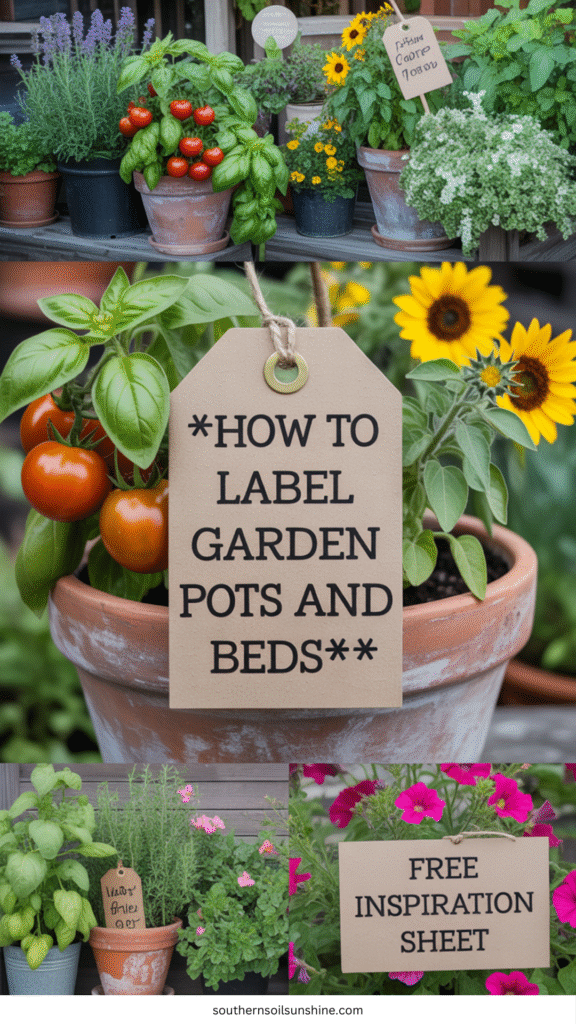
How to Label Pots and Beds for Next Year

Some of the links on this website are affiliate links, which means that if you make a purchase through these links, I may earn a small commission at no additional cost to you. As an Amazon Associate, I earn from qualifying purchases. I only recommend products I genuinely trust and believe will bring value to my readers. Also, some of the content was created with strategic use of AI tools. For more information, please visit the Privacy Policy page. Thank you for supporting my blog and helping me continue to provide valuable content.
Every spring, I tell myself I’ll remember where everything is planted. “Of course I’ll know that’s basil,” I think, or, “I’ll never forget which tomato variety I tucked in that corner.” But by mid-season, as plants fill out and others die back, I’m often left guessing. Was that spot for peppers or zinnias? Was this pot parsley or cilantro?
Labeling pots and beds may feel like a small task, but it carries big rewards. Clear labels save time, reduce mistakes, and help you track success year after year. In a Zone 9 garden, where we often plant in every season, labels also help distinguish fall plantings from spring crops, and annuals from perennials.
Spiritually, labeling reminds me of God’s clarity. He calls things by name—sheep, stars, even us. Labels in the garden are not just about order; they’re about remembering, noticing, and honoring what’s been entrusted to us.
🌱 1. Why Labeling Matters
- Avoid confusion: No more mixing up cilantro and parsley seedlings.
- Track varieties: Helps you remember which tomato thrived, or which pepper was too hot.
- Succession planting: Lets you rotate crops without guessing.
- Family/friend sharing: Makes it easy for others to help in your garden.
- Long-term memory: Your future self will thank you next season.
👉 Labeling is not about perfection—it’s about care and clarity.
🌿 2. Materials for Garden Labels
You don’t need fancy tools; many labels can be made with simple items:
- Wooden craft sticks or popsicle sticks. Easy, biodegradable, but fade faster.
- Plastic tags. Long-lasting, but less aesthetic.
- Metal markers. Copper, zinc, or aluminum for durability.
- Slate or stone tags. Stylish and weather-resistant.
- DIY recycled items: Old spoons, broken pots, paint sticks, or wine corks.
👉 Choose materials that fit your style—rustic, modern, or whimsical.
🌼 3. Writing Tools That Last
A label is only as good as the ink.
- Paint pens (oil-based): Last through rain and sun.
- UV-resistant permanent markers: Designed for outdoor use.
- Engraving tools: For metal or wood.
- Chalk markers: Only for indoor pots (will wash away outside).
👉 Zone 9’s sun is strong—regular Sharpies fade fast. Use paint pens for longevity.
🪴 4. Creative Labeling Ideas
- Stamped spoons: Flatten old spoons, stamp plant names, and stick them in beds.
- Painted rocks: Fun for kids—paint herb or veggie names and place in pots.
- Mini chalkboards: Clip-on labels for porch pots (best for shaded areas).
- Twig tags: Tie twigs together with twine and paper tags for rustic charm.
- Broken pot shards: Write names on terra cotta pieces and place at bed edges.
Labeling can be as creative as it is functional.
🌞 5. Labeling for Crop Rotation and Planning
Labels aren’t just for the season—they become records for next year:
- Permanent stakes: Mark crop families (tomatoes, beans, squash).
- Bed maps: Sketch labeled layouts in your journal.
- Color coding: Use colored tags to mark annuals, perennials, or rotations.
👉 In Zone 9, where we often double-crop beds, labels help you keep rotations healthy and organized.
🍂 6. Storing Labels for Reuse
At the end of the season:
- Clean plastic or metal labels with soap and water.
- Sand and re-seal wooden labels if reusing.
- Store all labels together in a jar, box, or bag labeled by year.
- Keep a master list in your garden journal to cross-reference.
Your labels tell the story of your garden over time.
🙏 7. Faith Reflection: Called by Name
Isaiah 43:1 says, “Fear not, for I have redeemed you; I have called you by name; you are mine.” Just as we name our plants and mark their places, God names us. Labels in the garden remind us of His care and His clarity: nothing is forgotten, nothing misplaced.
📝 Journal Prompt ✍️
Where in your life do you need more clarity or labeling—not as control, but as a way to honor what God is growing in you?
🌿 Grace Note
Friend, labeling your garden doesn’t mean being rigid—it means remembering. May every tag, spoon, or painted rock remind you that order and clarity are gifts. And may you rest in knowing that the same God who names the stars also names and tends you.
✨ Free Printable
👉 Download your Garden Labeling Inspiration Sheet, including:
- List of label materials and writing tools
- Creative DIY ideas
- Seasonal rotation tips
- Reflection prompt + grace note
🌻 Related Garden Wisdom
- Related: End-of-Season Bed Cleanup
- Related: Midseason Garden Journaling Ideas
- Related: Crop Rotation Ideas for Backyard Gardens
- Related: Replanting Gaps for Continuous Harvests
🎧 Podcast & 📖 eBook
For more encouragement, listen to The Rooted in Grace Podcast, where I share rhythms of soil, soul, and stewardship. And if you long for deeper grace-filled gardening rhythms, explore my eBook Rooted in Grace: A Christian Guide to Intuitive Gardening.
🍁 Final Thoughts
Labeling pots and beds may feel like a small task, but it is one of the most fruitful habits you can build. It saves time, reduces confusion, and carries lessons into the next season.
So gather your spoons, sticks, rocks, or tags. Write the names clearly. And let your labeled garden remind you of the beauty of being called, remembered, and cherished.