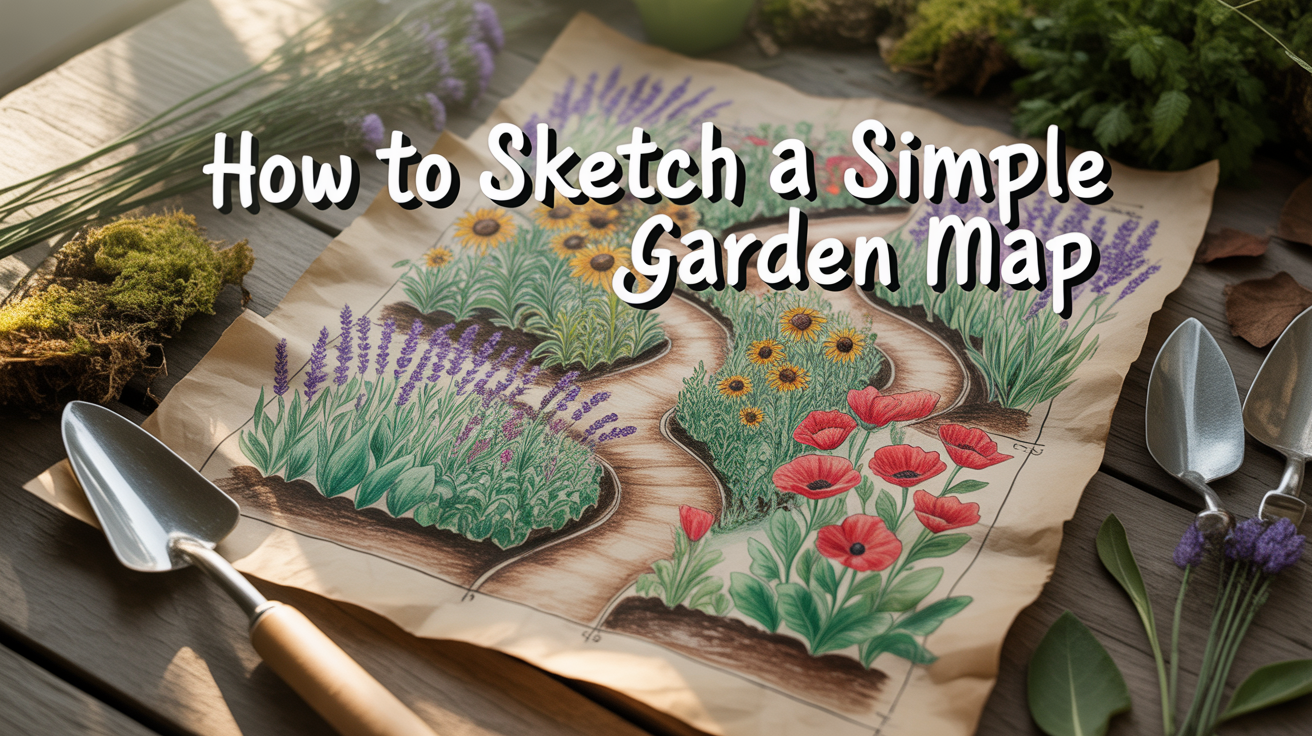
How to Sketch a Simple Garden Map
Some of the links on this website are affiliate links, which means that if you make a purchase through these links, I may earn a small commission at no additional cost to you. As an Amazon Associate, I earn from qualifying purchases. I only recommend products I genuinely trust and believe will bring value to my readers. Also, some of the content was created with strategic use of AI tools. For more information, please visit the Privacy Policy page. Thank you for supporting my blog and helping me continue to provide valuable content. Gardening is more than growing food—it's where God grows us. If you're hungry for a faith that feels grounded again, I wrote a book for you. Download my free eBook: Rooted in Grace: A Christian Guide to Intuitive Gardening
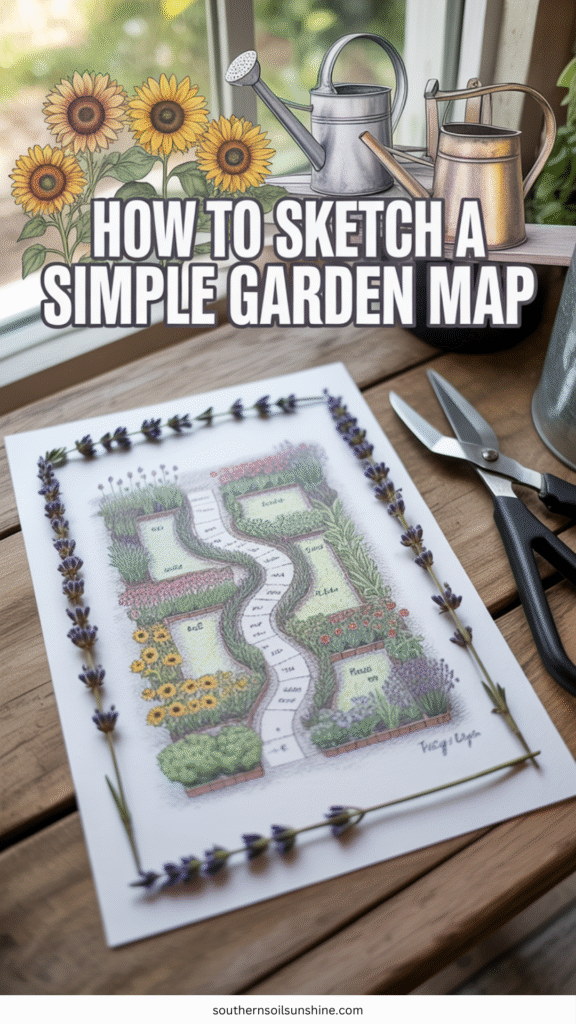
When I was younger, I thought garden maps were for professionals or perfectionists. But over time, I realized a simple sketch can save so much time, reduce confusion, and even spark creativity. A map doesn’t have to be artistic or complicated—it just needs to reflect your space.
In Zone 9, where we can plant year-round and often squeeze in multiple crops per bed, a map helps us track rotations, plan for successions, and remember what grew well where. More than that, sketching your garden map becomes a contemplative practice—an act of slowing down to notice your space and dream about what it can become.
Spiritually, garden maps remind me of God’s order and vision. He sets boundaries and patterns in creation, yet leaves room for beauty and surprise. When we sketch our own gardens, we participate in that same rhythm of order and creativity.
🌱 1. Why Sketch a Garden Map?
- Memory aid: Helps you remember what you planted and where.
- Rotation planning: Prevents planting the same crops in the same spot season after season.
- Succession planting: Tracks what’s done and what’s next.
- Sharing with others: Family or friends can help tend when they can see the layout.
- Reflection tool: Helps you notice what worked and what didn’t.
👉 A simple map saves you from the “what was here again?” problem next season.
🌿 2. What You Need
You don’t need fancy tools to make a map. Just gather:
- Paper: Plain, graph, or a journal page.
- Pencil & eraser: For flexibility.
- Ruler or straight edge: Helps with neat lines.
- Colored pencils or markers (optional): For coding crops, flowers, or perennials.
- Journal: Keep your map tucked inside for easy reference.
Digital tools (apps, spreadsheets) can be helpful, but there’s something grounding about pencil on paper.
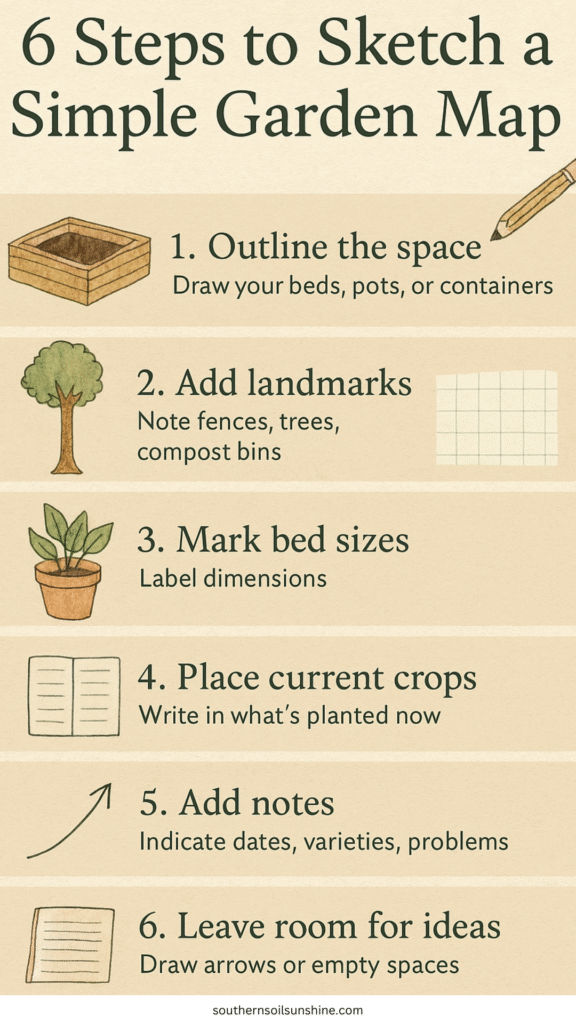
🪴 3. Steps to Sketch a Simple Map
- Outline the space. Draw your beds, pots, or containers. Don’t stress about scale—just keep proportions close.
- Add landmarks. Note fences, trees, compost bins, or water sources.
- Mark bed sizes. Label dimensions (e.g., 4×8 raised bed, 12” pots).
- Place current crops. Write in what’s planted now.
- Add notes. Indicate dates, varieties, or problems to remember.
- Leave room for ideas. Draw arrows or empty spaces for next season’s crops.
👉 The goal isn’t perfection—it’s clarity.
🌼 4. Using Colors and Codes
Color-coding helps you see patterns:
- Greens: Leafy crops (lettuce, kale, spinach).
- Yellows/Oranges: Fruit crops (tomatoes, peppers, squash).
- Browns: Root crops (carrots, beets, onions).
- Purples: Flowers or pollinator plants.
- Blue: Water sources.
You can also use symbols (e.g., ✿ for flowers, ★ for perennials).
🌞 5. Seasonal Mapping in Zone 9
Because Zone 9 allows multiple plantings, consider mapping by season:
- Fall map: Kale, carrots, lettuce, garlic.
- Winter map: Broccoli, peas, onions.
- Spring map: Tomatoes, beans, squash.
- Summer map: Okra, peppers, sweet potatoes.
Keeping seasonal maps helps track rotations and avoid disease buildup.
🍂 6. Reflecting Through Mapping
Sketching your map isn’t only functional—it’s reflective.
- As you draw, notice empty spaces—where might God be inviting you to rest or plant anew?
- As you record, celebrate successes—beds that thrived, herbs that spread.
- As you plan, dream—what new crops or flowers might you try next year?
Mapping becomes prayer on paper: both remembering and imagining.
🙏 7. Faith Reflection: God’s Garden Design
Genesis reminds us that God planted a garden in Eden, placing rivers, trees, and boundaries with intention. Our small sketches echo His greater design. We draw lines not to control, but to steward—offering order that invites beauty.
📝 Journal Prompt ✍️
What do you notice when you sketch your garden space—both what has grown and what is yet possible? How might God be inviting you to bring order and vision to your life, too?
🌿 Grace Note
Friend, you don’t have to be an artist to draw a garden map. A few lines and labels are enough. May your sketch remind you that order and imagination can dwell together, and that God delights in both.
✨ Free Printable
👉 Download your Simple Garden Map Template, including:
- Blank sketch grid for beds or pots
- Space for notes and dimensions
- Seasonal mapping prompts
- Journal prompt + grace note
🌻 Related Garden Wisdom
- Related: End-of-Season Bed Cleanup
- Related: Midseason Garden Journaling Ideas
- Related: Crop Rotation Ideas for Backyard Gardens
- Related: Replanting Gaps for Continuous Harvests
🎧 Podcast & 📖 eBook
For more encouragement, listen to The Rooted in Grace Podcast, where I share rhythms of soil, soul, and stewardship. And if you’d like to grow with grace-filled order and imagination, explore my eBook Rooted in Grace: A Christian Guide to Intuitive Gardening.
🍁 Final Thoughts
Sketching your garden map may feel small, but it’s one of the most powerful practices you can build. It grounds you in memory, guides your planting, and opens your imagination for what’s next.
So grab a pencil, draw a few lines, and sketch your space. Your future self—and your garden—will thank you.