Frost Date Calculator and Planning

Some of the links on this website are affiliate links, which means that if you make a purchase through these links, I may earn a small commission at no additional cost to you. As an Amazon Associate, I earn from qualifying purchases. I only recommend products I genuinely trust and believe will bring value to my readers. Also, some of the content was created with strategic use of AI tools. For more information, please visit the Privacy Policy page. Thank you for supporting my blog and helping me continue to provide valuable content. Gardening is more than growing food—it's where God grows us. If you're hungry for a faith that feels grounded again, I wrote a book for you. Download my free eBook: Rooted in Grace: A Christian Guide to Intuitive Gardening
❄️ A Gentle Start: Learning to Trust the Seasons
Every gardener eventually learns this hard truth: frost has the final word.
You can tend with diligence, water faithfully, and guard against pests, but one hard frost can bring the season to an abrupt halt. The lush basil blackens, the tender beans shrivel, and the tomatoes collapse in a single night.
And yet—this is not the end of the story. Knowing your frost dates—both the first frost in fall and the last frost in spring—gives you not control, but clarity. Frost dates help you plan wisely: when to plant, when to harvest, when to protect, and when to let go.
They are not promises, but guideposts. And spiritually, they remind us that just as the earth has set rhythms, so do our lives. “For everything there is a season, and a time for every matter under heaven” (Ecclesiastes 3:1). Frost dates are simply invitations to live faithfully within the limits of time.
🌱 What Is a Frost Date?
A frost date is the average date when a 32°F (0°C) freeze occurs in your region. These are based on decades of weather data.
- First Frost Date (Fall): The estimated date when frost will likely kill tender plants.
- Last Frost Date (Spring): The estimated date when frosts are finally over, signaling safe planting for tender crops.
⚠️ Frost dates are averages. They don’t guarantee frost won’t arrive early or linger late. Think of them as helpful boundaries, not fixed rules.
🧮 How to Calculate Your Frost Dates
1. Use Online Calculators
Trusted websites like:
Simply enter your ZIP code, and you’ll see:
- Your average first fall frost date.
- Your average last spring frost date.
- Probability charts (e.g., 50% vs. 90% chance of frost by a given date).
2. Consult Local Extension Offices
Your local agricultural extension service often updates frost date tables yearly. They’ll also provide regional microclimate notes, like coastal areas vs. inland valleys.
3. Track Your Own Microclimate
Even within one yard, frost behaves differently. Start a personal frost log:
- Low spots: Cold air sinks—frost comes earlier in valleys.
- Raised beds: Stay warmer and resist frost longer.
- Near structures: Walls, fences, and patios radiate warmth.
- Under trees: Canopies trap heat but may also shade.
👉 After 3–5 years of observation, you’ll know your garden’s frost pattern better than any chart.
📋 How to Plan Around Frost Dates
1. Backward Planning from First Frost (Fall)
Knowing your fall frost date helps you decide what you can plant late in the season.
Count backward from your first frost date:
- Radishes: 25–35 days before frost.
- Turnips: 40–50 days before frost.
- Carrots: 60–70 days before frost.
- Kale & Spinach: 40–60 days before frost.
- Beets: 45–60 days before frost.
💡 If your first frost is October 20, you’d plant carrots no later than August 10, radishes by mid-September, and kale in early September.
2. Forward Planning from Last Frost (Spring)
Your last frost date is the gardener’s green light for planting tender crops.
Count forward from your last frost date:
- Tomatoes, Peppers, Basil: 1–2 weeks after last frost.
- Beans, Cucumbers, Squash: Immediately after frost, when soil warms.
- Hardy Greens (Spinach, Kale): 2–4 weeks before last frost if protected.
- Root Crops (Carrots, Beets): Sow 2 weeks before last frost under row covers.
3. Build Wiggle Room
Because frost is unpredictable, always allow a 1–2 week buffer.
- For tender crops, wait until soil and air are consistently warm.
- For fall crops, sow early enough to beat unexpected frosts.
4. Use Succession Planting
Frost dates help you squeeze in extra sowings:
- Radishes every 10 days until 3 weeks before frost.
- Lettuce in staggered rows until 2 weeks before frost.
- Quick beets 6 weeks before frost for baby roots.
👉 Succession planting means even when frost ends one crop, you’ve already harvested many rounds.
5. Extend the Season
Frost doesn’t have to mean the end:
- Row covers hold in warmth and add 2–4 weeks of protection.
- Cold frames and tunnels keep root crops going into winter.
- Mulch shields soil, protecting carrots and beets well past frost.

Caption: Row covers can stretch your fall garden weeks beyond the average frost date.
🗺 Zone-Specific Frost Planning
Zones 9–10 (Warm Climates)
- Frost may come in December–January or not at all.
- Instead of frost planning, focus on heat relief for crops.
- Last frost often occurs in February or March, meaning an extended planting season.
Zones 7–8 (Mild Winters)
- First frost: October–November.
- Last frost: March–April.
- Excellent for fall crops like kale, turnips, and carrots under row covers.
Zones 5–6 (Moderate Winters)
- First frost: October.
- Last frost: mid–late April.
- Root crops and hardy greens can extend into late fall with mulch and cold frames.
Zones 3–4 (Cold Winters)
- First frost: September.
- Last frost: mid–May to early June.
- Short growing season—frost planning is critical. Cold frames and tunnels are essential.
🌿 Spiritual Lessons from Frost
Frost is both limit and gift. It draws boundaries, but it also sweetens roots, deepens flavors, and forces rest.
Spiritually, frost is a metaphor for endings—those moments when something in our life slows, stills, or even dies back. These seasons can feel harsh, but frost prepares the soil for spring.
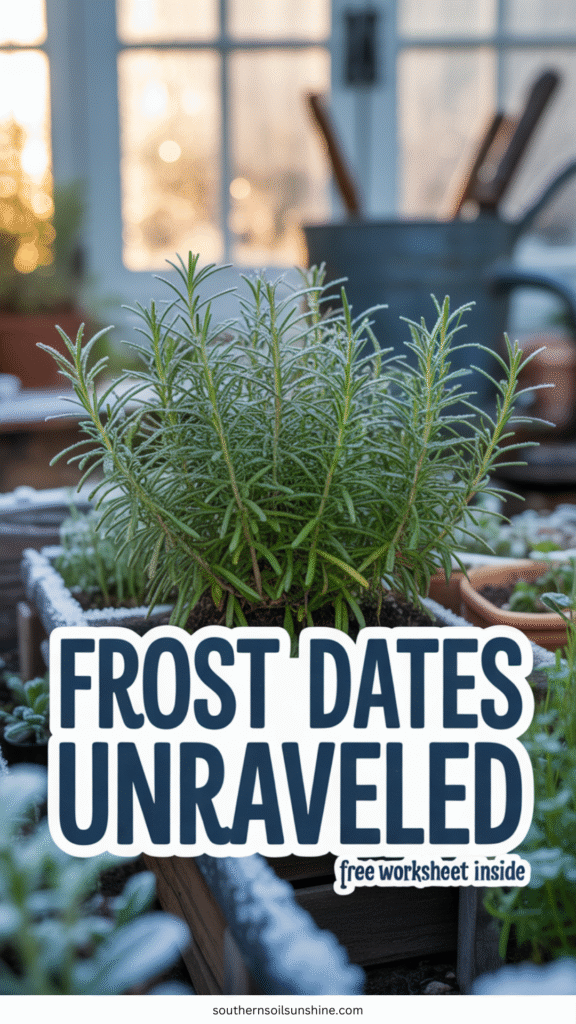
The herb bed after frost looks barren, but beneath, life waits. The same is true for us. What seems like a season of loss may actually be God’s preparation for renewal.
🧪 Common Mistakes to Avoid
- Treating frost dates as exact: Always give a 1–2 week margin.
- Ignoring microclimates: Your yard may frost earlier/later than neighbors.
- Planting tender crops too early in spring: Soil warmth matters as much as air.
- Forgetting to record your own frost history: Your notes are more reliable than any calculator.
📝 Journal Prompt
What season of my life feels like “frost” right now? How is God inviting me to see this ending not as loss, but as preparation for new growth?
✨ Grace Note
Frost teaches us surrender. Plants don’t resist—they yield, trusting that dormancy will give way to life again. In our walk with God, frost is not punishment; it’s part of His loving rhythm.
“He changes times and seasons; He removes kings and sets up kings; He gives wisdom to the wise and knowledge to those who have understanding.” – Daniel 2:21
🪴 Final Thoughts
Frost dates anchor us in the rhythms of the garden. They teach us humility—we cannot extend the season indefinitely without help. But they also teach us hope—spring always comes, and with it, a fresh beginning.
By learning your frost dates, planning around them, and preparing for flexibility, you’ll discover not just longer harvests but deeper peace. For both garden and soul, frost is not the end—it’s the beginning of rest and renewal.
🌿 Related Garden Wisdom
- Protecting Fall Crops with Row Covers
- Monitoring Fall Soil Moisture
- Replanting Gaps for Continuous Harvests
📄 Printable Resource
Download the Frost Date Planning Worksheet — track your personal frost dates, use backward/forward planning charts, and reflect on seasonal rhythms.
🎙️Listen to the Podcast!
Tune into The Rooted In Grace Podcast for faith-filled garden encouragement.
📘Rooted in Grace: The eBook
Feeling scattered or unsure about what to plant, when, or how to keep it all alive?
Grab Rooted in Grace—your soulful companion for gardening through every season.
This eBook will walk you through the rhythms of intuitive gardening, spiritual reflection, and simple seasonal wins.
💌Want More Grace in Your Inbox?
Sign up here to start growing with grace! Next?
- Early access to podcast episodes & products
- Weekly encouragement
- Exclusive download Monthly garden to-do lists