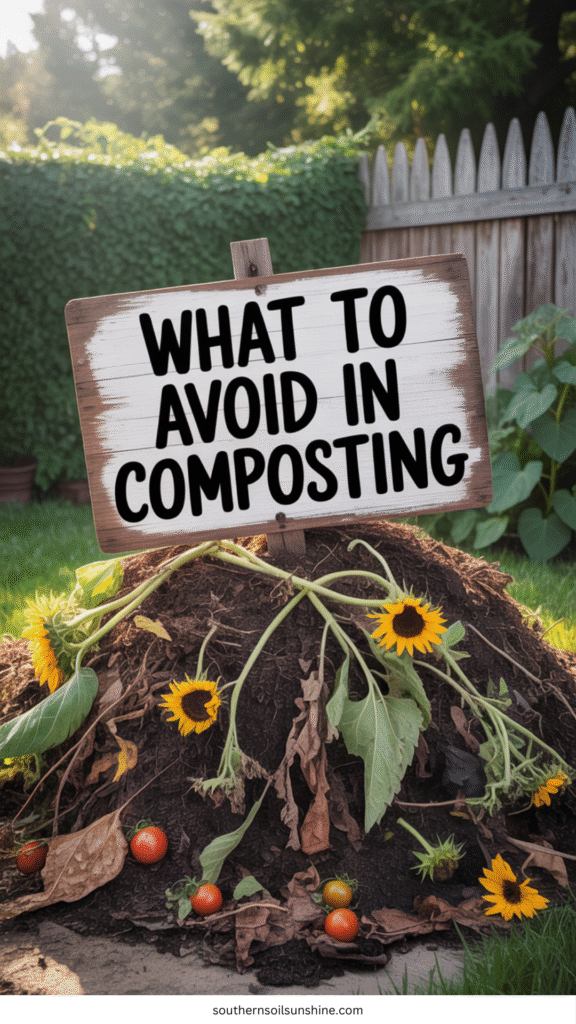
🌾 Composting End-of-Summer Plants: What to Avoid
Some of the links on this website are affiliate links, which means that if you make a purchase through these links, I may earn a small commission at no additional cost to you. As an Amazon Associate, I earn from qualifying purchases. I only recommend products I genuinely trust and believe will bring value to my readers. Also, some of the content was created with strategic use of AI tools. For more information, please visit the Privacy Policy page. Thank you for supporting my blog and helping me continue to provide valuable content. Gardening is more than growing food—it's where God grows us. If you're hungry for a faith that feels grounded again, I wrote a book for you. Download my free eBook: Rooted in Grace: A Christian Guide to Intuitive Gardening
A gentle guide to clearing beds, feeding the soil, and steering clear of composting mistakes
🌿 Opening Reflection: When the Season Ends, Begin Again
There’s a sacred rhythm to the end of summer in the garden. The vines collapse, the beans brown, the tomatoes wither—but beneath the decay, something beautiful is happening.
This is compost’s quiet promise: what dies can feed what’s next.
But not everything in the late summer garden belongs in the compost pile. Some plants harbor pests. Others carry disease. And some just need a different kind of goodbye.
This guide helps you compost confidently—and spiritually—as you clear your garden with grace and prepare your soil for what’s next.
🧺 Why Composting Your Own Garden Waste Matters
Composting your spent plants does more than recycle nutrients:
- It keeps organic matter on site
- Builds healthy soil for future seasons
- Reduces landfill waste and emissions
- Saves you money on bagged compost
- Offers a ritual of returning what you’ve received
But the key is knowing what not to include, especially when cleaning up after a long, hot season.
❌ What Not to Compost at Season’s End
1. Diseased Plants
If your squash had powdery mildew or your tomatoes had blight, don’t send them into your compost. Home piles rarely get hot enough to kill pathogens.
Common culprits to avoid:
- Powdery mildew
- Tomato blight
- Rust or black spot on greens
- Mosaic virus
- Root knot nematodes
🚫 Trash or bag these plants—don’t burn them unless local rules allow.
2. Pest-Infested Vines and Leaves
If your cucumbers were crawling with aphids, your squash vines were full of squash bugs, or your peppers had hornworms—you don’t want those eggs or larvae overwintering in your compost.
Watch for:
- Squash vine borers
- Aphid-covered leaves
- Hornworm droppings
- Leaf miner trails
3. Mature Seed Heads from Weeds
Composting weed seedlings? Usually okay.
Composting fully seeded purslane or crabgrass? Regret guaranteed.
Avoid adding:
- Grasses with mature seed heads
- Bolted lettuce or arugula with dry seeds
- Any weed you wouldn’t want 10,000 of
Even cold compost piles can preserve viable seeds, so unless you hot-compost with a thermometer, skip the gamble.
4. Thick, Woody Stems Without Chopping
Large stalks (like okra or sunflower) don’t break down easily. They’re not “bad,” but they need prep.
Chop or break up:
- Corn stalks
- Sunflower stems
- Okra or woody basil
- Thick tomato vines
Otherwise, you’ll be pulling out intact skeletons come spring.
5. Fleshy or Overripe Fruits (in large amounts)
Tomatoes, melons, and cucumbers are technically compostable—but in large batches they:
- Attract rodents
- Rot too fast
- Throw off pile balance
Add in small amounts, mixed well with dry materials like leaves or straw.
✅ What’s Great to Compost from Your Garden
End-of-summer “greens” (nitrogen-rich)
- Bean vines
- Spent basil or herbs
- Tomato foliage (disease-free)
- Bolted leafy greens
- Fresh weeds without seeds
End-of-summer “browns” (carbon-rich)
- Corn husks
- Dry leaves
- Chopped straw
- Paper towels, cardboard
- Shredded stems and stalks
Aim for a balanced mix: 2–3 parts browns to 1 part greens.
🧑🌾 Compost Pile Tips for Fall
- Keep the pile damp, like a wrung-out sponge
- Turn it weekly to encourage breakdown
- Cover with a tarp to manage moisture in rainy areas
- Add a shovelful of old compost or finished soil to kickstart microbes
Want a shortcut? Start a compost trench in a fallow bed—bury chopped green waste 6–8” deep and plant over it next season.
✍️ Journal Prompt
“What can I release with gratitude, trusting it will still nourish what’s to come?”
“What do I need to remove from my life that might poison the next season?”
Not every old vine belongs in the pile. Some need to be laid down, gently, outside of your growing spaces.
📖 Root Deeper in Rooted in Grace
In Rooted in Grace, I share how composting became a spiritual metaphor: not everything that’s old is wasted. And not everything that dies is trash.
But also—some things need to be left out, left behind, or burned. The garden teaches discernment.
🎧 Listen While You Clear
The podcast walks you through building intuitive gardening skills while strenghtening your relationship with God and helping you live a more rooted and peaceful life.
Listen on:
📝 Free Printable: Fall Composting Do’s & Don’ts
Includes:
- What to add vs. what to avoid
- Cut-or-chop list for stalks and vines
- Mini balance tracker (greens/browns)
- Journal space for spiritual composting
🔗 Related Resources
- Solarizing Your Soil: A Summer Reset for Fall Success
- Replenishing Soil for Late Summer and Fall Planting
- Planting a Reset: A Ritual for New Beginnings
- Fall Garden Journal Setup: What to Track and Why
🌺 Grace Note
Clearing the garden isn’t just cleanup.
It’s discernment.
What stays. What goes.
What lives on in another form.
💌 Stay Rooted
Join the newsletter for printables, soul-centered soil tips, and seasonal composting check-ins.