
Planting a Reset: A Ritual for New Beginnings in the Garden

Planting a Reset: A Ritual for New Beginnings in the Garden 🌱
A gentle practice to mark transition, release the past, and welcome grace into your growing space
Opening Reflection: Sometimes You Start Over
There are moments in the garden that feel like failure. The squash vine borer got to your favorite plant. The tomatoes blighted in our Houston humidity. The heat came early—maybe even in April. The plans didn’t unfold the way you’d hoped. And here in Zone 9, we know that feeling well. We’re always recovering from something.
But here’s the truth I’ve learned, season after season: the garden is always offering a reset. 🔄
Planting again isn’t giving up—it’s entering into a sacred rhythm. A ritual of hope. A chance to begin, not from scratch, but from experience. With soil that’s already been softened, broken open, and loved. With the kind of wisdom that only comes from getting your hands dirty and trying again.
Sanda’s Zone 9 Note: In our Houston area, the best times for a garden reset are late spring (after last frost in early April), mid-summer (to plant fall crops in July), and early fall (September, when our heat breaks). Pay attention to these natural turning points. They’re gifts.
Free eBook
Rooted in Grace
A Christian guide to intuitive gardening — the whole book, free. Tell me where to send it and it’s yours in a minute.
What Is a Garden Reset?
A garden reset is a physical and spiritual practice all woven together. It’s not about perfection or starting completely over. It’s about honoring what was, learning from it, and moving forward with intention.
When we reset the garden, we are:
Clearing what no longer serves us—the diseased plants, the spent beds, the disappointments we’ve been holding onto. Amending what’s been depleted—adding back richness, life, and promise to soil that’s given us everything. Replanting with intention—choosing what we truly want to grow this time, not just what we think we should. Honoring lessons and losses—acknowledging that failure teaches us just as much as success. Beginning again with grace, not guilt—remembering that the garden (and life) is made of cycles.
This reset can happen mid-season, after a pest invasion, or even at the start of a new chapter in your life. Maybe your kids left for college and you want to reclaim garden space. Maybe you had a health challenge and need to restart smaller. Maybe you’re simply tired of what didn’t work last summer. All of these are sacred enough reasons.
Step 1: Clear the Space with Intention ✂️
Start by pulling out anything that’s spent, diseased, or no longer fruitful. In Houston’s climate, this might mean yanking out spring crops that bolted in early May heat, or removing powdery mildew-covered plants from last season.
But here’s what I want you to know: this is not just cleaning up. It’s letting go.
As you pull each plant, feel the weight of it. Notice what you learned from it—even if that lesson is simply “that didn’t work.” Place the spent plants in your compost pile or green waste bin. Then, take a breath.
Say aloud or pray silently, whatever feels true for you:
“Lord, I release what didn’t grow. I clear away disappointment. I let go of the way I thought this would go. Make room in me for new things.”
This pause matters. It’s the difference between mindless yard work and a ritual that actually changes us. 🙏
Sanda’s Garden Wisdom: If you’re clearing diseased plants (like tomatoes with early blight), do NOT add them to your compost pile. Bag them up and put them in the trash. The spores can overwinter in compost. This is especially important in our humid climate where fungal diseases spread quickly.
Step 2: Tend the Soil—Feed What’s Depleted 🪱
Once the bed is empty, take time to nourish what’s beneath. This is where the real magic happens.
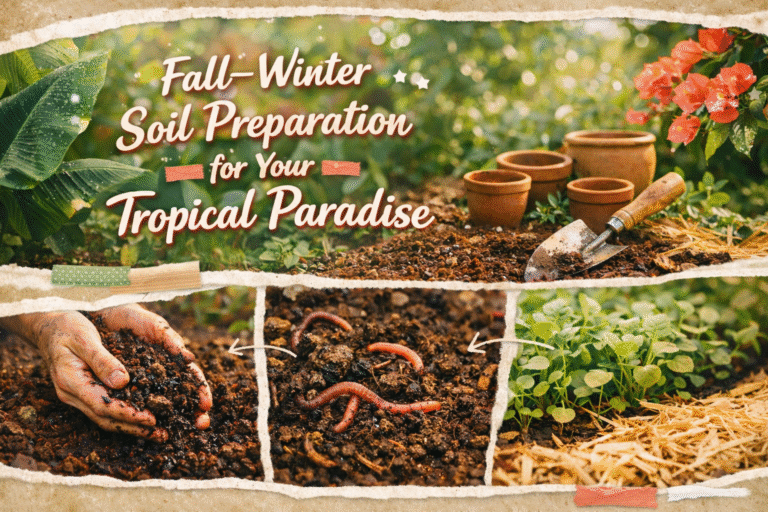
Turn the soil gently with a garden fork, working from one end to the other. As you do, break up any compacted areas. In Houston’s clay-heavy soil, this is especially important. Add 2-3 inches of compost or worm castings—this feeds the soil organisms and improves structure. If your soil is particularly clay-heavy (and ours usually is), add a bit of perlite or aged pine bark to improve drainage. Water deeply, letting the amendments settle in. Then rest the bed for a day or two if you can. Let the worms and microbes get to work.
While you’re doing this physical work, use the time to reflect on your own soil. What in your life has been depleted? What’s compacted, hard, and needs breaking open? What nourishment do you need right now? The garden mirrors us always.
| Soil Amendment | Best For Zone 9 Houston Soil | Amount to Add |
| Compost | Overall richness, structure, water retention | 2-3 inches, worked in |
| Worm castings | Quick nutrient availability, biology boost | 1 inch mixed in |
| Aged pine bark | Drainage (critical in clay), texture | 1-2 inches, worked in |
| Perlite | Aeration in heavy clay | 10-15% by volume |
| Sulfur | Lowering pH for acid-loving plants | Follow package directions |
Step 3: Choose Your Seeds Intentionally 🌱
Now comes the fun part—deciding what to plant. But this isn’t just browsing the seed catalog (though I love that too). This is intentional choosing.
Ask yourself these questions as you think about what comes next:
What do I truly want to grow now? Not what I think I should grow, or what I grew last year, or what looks pretty in a picture. What would actually bring you joy to tend and harvest? For some of us in Houston, that might be herbs that thrive in heat—basil, rosemary, and mint. For others, it’s the challenge of shade-tolerant vegetables like lettuce and spinach for our fall season.
What’s suited for this season and my actual energy? Be honest here. If you’re tired, choose low-maintenance plants. If you’re recovering from illness, pick perennials that don’t need replanting every year. If you’re excited and energized, this is your moment to try something new—maybe that okra, eggplant, or unusual squash variety.
What nourishes both my body and my spirit? There’s a difference between growing what’s efficient and growing what’s meaningful. Maybe you want to grow your grandmother’s tomato variety. Maybe you want to plant flowers just because they make you smile. Both are sacred work.
When you’re ready to plant, plant slowly. One seed or seedling at a time. Feel the soil in your hands. Notice the weight of the seed. As you place each one, say:
“I plant this with hope. I plant this with presence. I trust You to bring the increase.”
This takes maybe five minutes per bed, but oh, how it changes the energy of your planting. 💚
Sanda’s Tip: For Houston gardeners resetting in late spring or early summer, consider planting transplants rather than seeds. The heat comes so fast that seeds can struggle. Visit your local nursery in late June to find transplants of okra, eggplant, and sweet potato slips. They’ll get established faster than seeds in our intense summer sun.
Step 4: Bless the Bed 🌸
Once everything is planted and in place, gently water the bed. Let the water settle everything in. Then, pause.
Place your hands in the soil. Feel its richness. Feel the potential held in that dark earth. Offer a simple blessing, in whatever way feels right to you:
“Let this bed be a place of peace. May it grow beauty and nourishment. May it remind me that every ending is also a beginning. May what I’ve learned make what I plant stronger.”
If you want to make this more tangible, add a small marker—a stone with the word “grace” written on it, a little wooden cross, a note card with a verse that means something to you. I have a smooth river rock in my bed that says “renew” on it. Every time I see it, I remember why I planted there.
Garden Reset as a Spiritual Practice 🌿
This ritual is so much more than a tidy-up or a seasonal refresh. It’s a declaration. It says:
That failure is not final. The blight came. The pests won. The heat was too much. But the season isn’t over. You’re not giving up. You’re beginning again.
That your effort matters. Every plant you tended, every watering, every conversation with the soil—it all counted. Even the ones that didn’t make it. Even the learning.
That grace is greater than outcome. You can do everything right and still have things not work out. And that’s okay. Because grace doesn’t depend on your harvest. It depends on your willingness to keep showing up.
You can do a reset in a single bed or across the whole garden. You can do it after a hard season of growing or a hard season of life. You can even do it in a potted plant on your porch. The scale doesn’t matter. The intention is everything.
Quick Reset Reference Guide 📋
| Phase | What to Do | Time Needed | Zone 9 Timing |
| Clear | summer reset becomes not just practical, but essential to our sanity as Houston gardeners. Rather than watching plants limp along through July and August, many of us intentionally clear those spring beds in early June and pivot to a completely different growing strategy. Pull the bolted lettuce, the struggling tomatoes, the heat-stressed greens. Clear that space. This isn’t failure—it’s rhythm awareness.
Once cleared, amend heavily (our summer heat accelerates soil depletion), add 3-4 inches of compost, and then rest that bed through the absolute worst of July heat. In early August, as the intensity begins to crack just slightly, you can plant your fall crops—the okra, eggplant, and sweet potatoes that actually thrive in our lingering warmth. Or, if you prefer, wait until late August and September when you can grow the cool-season vegetables that are our true passion: lettuce, spinach, broccoli, cabbage, and kale. The reset acknowledges that Houston gardening has two entirely different seasons, and fighting against that rhythm exhausts us. Soil Healing: Why Our Clay Needs Different Care After DisappointmentWhen you’ve had a gardening disappointment—especially one rooted in disease—our Houston clay soil can hold onto that trauma, quite literally. If powdery mildew, early blight, or root rot took your plants, the spores and pathogens are still present in the soil structure. Standard composting won’t kill them. This is why the reset ritual in our region requires deeper soil work than gardeners in sandier climates might need. After clearing diseased plants (remember, bag them—don’t compost them), consider a soil solarization step if you have time. Lay clear plastic over the empty bed on a hot day in June or July—yes, our intense sun is actually useful here—and leave it for 4-6 weeks. The heat penetrates the clay and kills many fungal spores and pathogens. It’s gentle, chemical-free, and deeply aligned with working with our climate rather than against it. If you don’t have time for solarization, the next best thing is generous amendment with quality compost and a soil microbe booster (like mycorrhizal fungi products). These feed the beneficial organisms that actively compete with disease-causing pathogens. Think of it as planting an immune system into your soil. Once you’ve done this amendment work, let the bed rest for at least two weeks before planting new crops. This waiting period—harder though it is—gives the beneficial microbes time to establish and take root. Sanda’s Zone 9 Note: Our clay-heavy soil compacts easily after we’ve worked it, especially if we’re tilling or amending. After you add compost and amendments to a reset bed, avoid walking on it or working it too much. Let it settle naturally over a couple of weeks. When you do plant, use a dibbler or small trowel rather than disturbing the whole bed. This preserves the structure and the beneficial fungi you’ve just invited in. The Emotional Work: Releasing Shame From the GardenThere’s something particularly tender about the garden reset that I want to name, because I’ve lived it and I’ve watched many of you live it too. When our gardens fail—and they will, because we garden in one of the most challenging climates in the country—we often take it personally. We blame ourselves. We wonder if we’re doing something wrong. We compare our failing tomato plant to the perfect ones we see in magazines or on social media, and we feel shame. The ritual of a garden reset, I believe, is partly about releasing that shame. It’s about looking at the empty bed and saying aloud: “It wasn’t my fault. The blight is real. The heat is real. The humidity is real. I did my best in difficult circumstances.” And then it’s about forgiving ourselves in the way we forgive the garden—which is to say, completely and without condition. This is especially important for those of us who grew up being told that hard work always produces results. We learned that if you’re diligent and faithful, good things happen. And that’s true in many areas of life. But gardening in Zone 9 Houston teaches us something deeper: sometimes you do everything right and things still don’t work out. The squash vine borer doesn’t care how much you watered. The early blight doesn’t Ready to Go Deeper in the Garden?If this article resonated with you, you might be ready for something more than tips.
“The garden is not just a place to grow plants – it is a place to grow yourself.” Free eBook Before you go — the book is yours Rooted in Grace: A Christian Guide to Intuitive Gardening. No cost, no catch. Read it on any device, at whatever pace the season allows. |


4 Comments