Preventive Neem and Organic Sprays: Stopping Pest Stress Before It Starts
An Ounce of Prevention in the Garden 🌿
There is a saying every gardener eventually learns the truth of: an ounce of prevention is worth a pound of cure. Nowhere is it more true than with garden pests. By early May in Zone 9, pest pressure is climbing steadily toward its summer peak, and the gardener who waits until an infestation is obvious is always playing catch-up — fighting a battle that a little prevention could have avoided entirely. A light, preventive routine of neem oil or other gentle organic sprays, applied before pests take hold, keeps problems from ever reaching the crisis stage. It is the difference between quietly maintaining a healthy garden and desperately trying to rescue a stressed one.
This day’s task is to apply neem oil or organic sprays for pest prevention, and it carries a wise phrase: prevent stress before it takes hold. Let me show you how a preventive spray routine works and why preventing stress before it starts is one of the healthiest habits a gardener — or anyone — can build.
Free eBook
Rooted in Grace
A Christian guide to intuitive gardening — the whole book, free. Tell me where to send it and it’s yours in a minute.
Why Prevention Beats Cure With Pests
Pests rarely announce themselves until they are already established. By the time you see obvious damage — skeletonized leaves, colonies of aphids, wilting from an infestation — the problem has been building for a while, and the plant is already stressed. A stressed plant is more vulnerable to further pests and disease, so trouble compounds. Reacting to a full-blown infestation means harsher measures, more effort, and a plant that has already lost ground it may never fully recover.
Prevention flips the equation. A light preventive spray applied while pest numbers are still low — or before they arrive at all — keeps populations from ever exploding. Your plants stay unstressed and healthy, better able to shrug off what pressure does come. You use less product, spend less effort, and never face the crisis. In our long, pest-heavy Zone 9 summer, this preventive posture is what keeps a garden thriving through months when reactive gardeners are constantly firefighting.
A Gentle Preventive Spray Routine
Prevention does not mean drenching your garden in spray — quite the opposite. It means a light, thoughtful, regular touch. Here is a simple approach.
| Practice | How |
|---|---|
| Neem, light & regular | Diluted spray every 1–2 weeks on vulnerable plants |
| Cover the undersides | Where pests hide and begin |
| Time it right | Early morning or evening, never midday sun |
| Target the vulnerable | Pest-prone crops, not the whole garden |
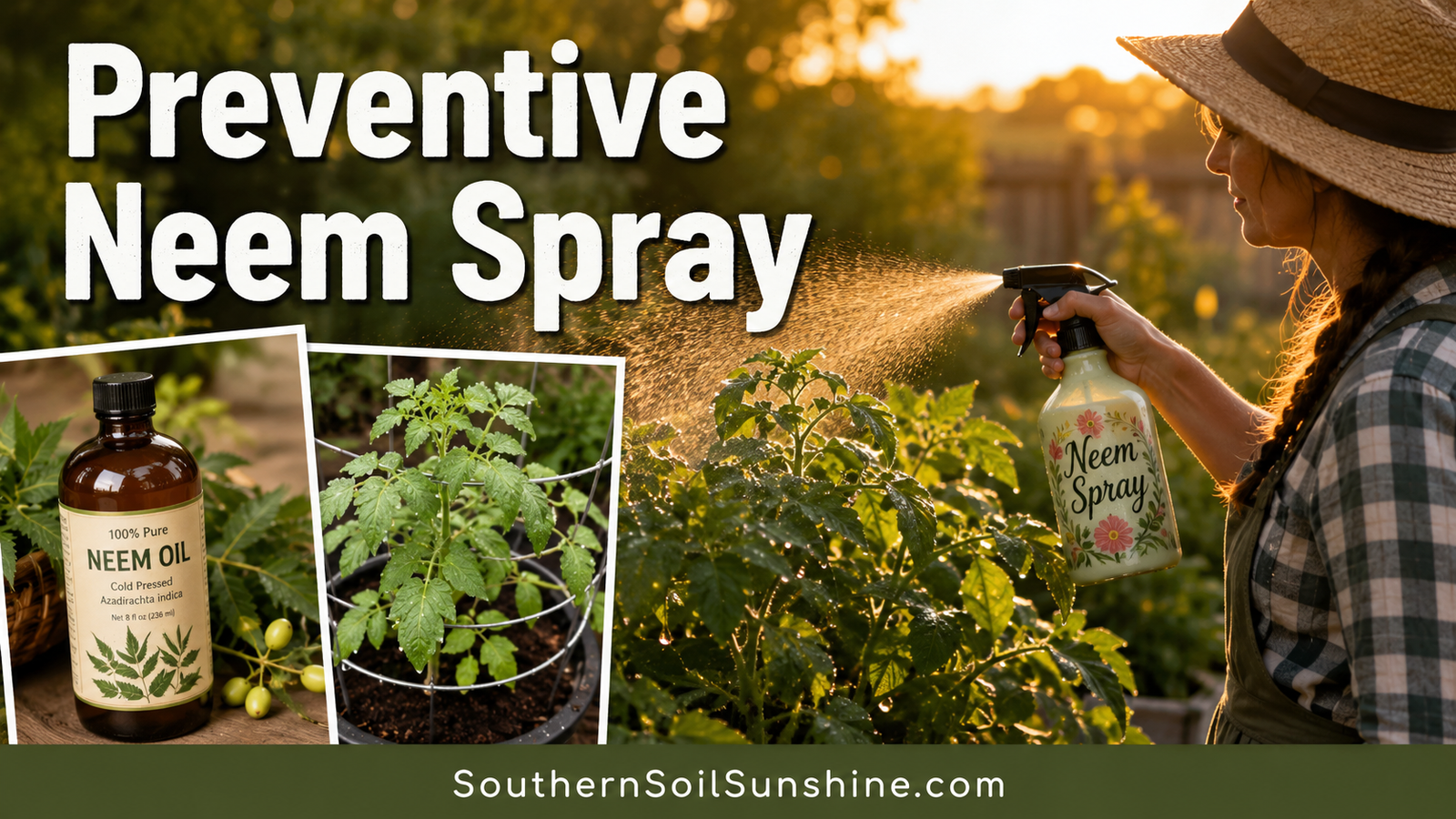
A light neem spray every week or two on your most pest-prone plants — before you have a visible problem — disrupts pests as they arrive rather than after they multiply. Always spray in the cool of early morning or evening, coat the undersides of leaves where pests begin, and focus on the vulnerable crops rather than blanketing everything. Other gentle options include insecticidal soap for soft-bodied pests and simple homemade sprays, but neem is the workhorse of preventive organic gardening for its broad, gentle action.
Prevention Is More Than Spraying
The best pest prevention is not a spray at all — it is a healthy, balanced garden. Strong, unstressed plants resist pests far better than weak ones, so good soil, steady watering, and proper spacing are your first line of defense. A diversity of flowers invites the beneficial insects that quietly control pests for free. A regular, attentive walk through the garden catches problems while they are tiny. Think of preventive spraying as one layer within this larger health approach — a gentle supplement to healthy plants and beneficial insects, not a substitute for them. The garden that prevents pest stress best is the one kept healthy and watched closely, with light spraying as backup.
Prevent Stress Before It Takes Hold
This day’s phrase carries wisdom that reaches far past the garden: prevent stress before it takes hold. It names something we so easily forget — that it is far easier, gentler, and more effective to prevent trouble than to cure it once it has established. In the garden, a light preventive touch keeps pests from ever stressing our plants into crisis. And in our own lives, the same principle holds with quiet power: the stresses that overwhelm us are so often the ones we let build unchecked, when a small, early, preventive practice could have kept them from ever taking hold.
How much of the stress that eventually floods our lives could have been prevented by gentle, early attention — the rest taken before exhaustion set in, the boundary set before resentment built, the small practice of renewal kept up before depletion became a crisis? We are so often reactive with our own wellbeing, waiting until we are already overwhelmed before we tend to ourselves, and then facing a hard recovery. The garden invites a wiser way: the light, regular, preventive care that keeps stress from ever establishing — the small walk, the steady rhythm, the gentle maintenance of health before trouble takes hold. So as you tend your garden’s preventive defenses today, let it ask you gently where a small, early practice might prevent stress in your own life before it establishes. Prevent stress before it takes hold — in the beds and in yourself. It is the gentlest, most effective care there is, and it is almost always easier than the cure.
Share your preventive gardening habits with us on Instagram @southernsoils — there is real wisdom in a garden kept healthy before trouble ever begins.
What to Watch and Protect First
Preventive care works best when it is aimed. Some crops are pest magnets and reward a little regular attention; others rarely need it. Focusing your light preventive spraying where it matters keeps the routine gentle and effective.
| Watch Closely | Common Early Pests |
|---|---|
| Squash & cucumbers | Cucumber beetles, squash bugs, aphids |
| Tomatoes & peppers | Aphids, hornworms, whiteflies |
| Beans | Bean beetles, aphids |
| Tender greens | Aphids, caterpillars, flea beetles |
Give these vulnerable crops your preventive attention — a light neem spray, a close look at the undersides of leaves, a check for the first signs of trouble. Meanwhile, established herbs, alliums, and many flowers rarely need spraying at all. Aiming your prevention this way keeps you from over-treating the whole garden and concentrates your gentle care exactly where pest stress is most likely to begin.
Healthy Plants Are the Best Prevention
It bears repeating, because it is the deepest truth of pest management: nothing prevents pest stress like a healthy, unstressed plant. Pests are opportunists that target the weak, the crowded, the drought-stressed, and the poorly-fed. A plant growing in rich soil, watered deeply and evenly, given room to breathe, and fed gently is far more resistant to pests than a struggling one — and it recovers quickly from what damage does occur. So the single most powerful thing you can do to prevent pest problems all summer is simply to keep your plants thriving. Good soil, steady water, proper spacing, gentle feeding, and a diversity of flowers to draw beneficial insects do more to prevent pests than any spray in the shed. The preventive neem routine is the supporting layer; vibrant plant health is the foundation.
This is worth holding onto, because it reframes pest prevention from something you do against pests to something you do for your plants. You are not primarily fighting insects; you are cultivating health, and health is what makes a garden resistant. Tend the wellbeing of your plants, and much of your pest prevention happens on its own.
The Wisdom of Staying Ahead
So make preventive care a gentle habit this season. Keep your plants healthy and unstressed, invite the beneficial insects, walk your garden with attentive eyes, and apply a light neem or organic spray to your vulnerable crops before trouble takes hold. It is quiet, low-drama gardening — the kind that never produces a dramatic rescue story precisely because it prevents the crisis in the first place. And carry the same wisdom into your own life: the small, early, preventive practices that keep stress from ever establishing are almost always gentler and more effective than the hard work of recovery once you are already overwhelmed. Stay ahead. Prevent stress before it takes hold. In the garden and in yourself, it is the most peaceful way to thrive through a demanding season.
A Simple Weekly Habit
To make prevention stick, tie it to a rhythm you will keep. Once a week, on a set evening, take a slow walk through your pest-prone crops with a spray bottle in hand. Turn a few leaves, look for the first signs of trouble, and give a light neem misting to anything vulnerable, coating the undersides. The whole thing takes ten or fifteen unhurried minutes, and done weekly it keeps pest populations from ever building to a crisis. Woven into your evening garden time, it stops feeling like a chore and simply becomes part of how you tend the place — a quiet, faithful pass that keeps everything healthy. That is the heart of preventive gardening: not dramatic intervention, but a small, steady habit kept up faithfully, so that the big problems never get the chance to start. Build the weekly habit now, at the beginning of the pest season, and your summer garden will sail through months of pressure that leave less-prepared gardens struggling.
Start the gentle weekly rhythm today, keep your plants thriving, and let steady prevention carry your garden peacefully through the whole pest-heavy season ahead.
Ready to Go Deeper in the Garden?
If this article resonated with you, you might be ready for something more than tips.
- Download the FREE Rooted in Grace eBook
- Join Rooted Reset
- Follow on Instagram – @southernsoils
“The garden is not just a place to grow plants – it is a place to grow yourself.”
Free eBook
Before you go — the book is yours
Rooted in Grace: A Christian Guide to Intuitive Gardening. No cost, no catch. Read it on any device, at whatever pace the season allows.