Staying Ahead of the Weeds: A Mid-Spring Bed and Path Tidy
The Quiet Power of Staying Ahead 🌿
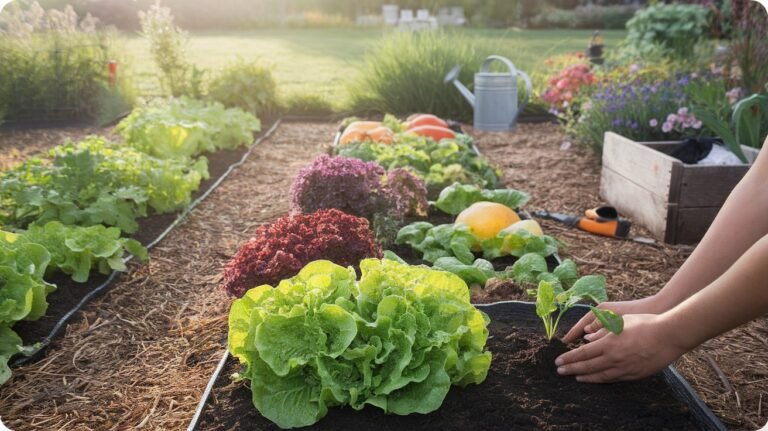
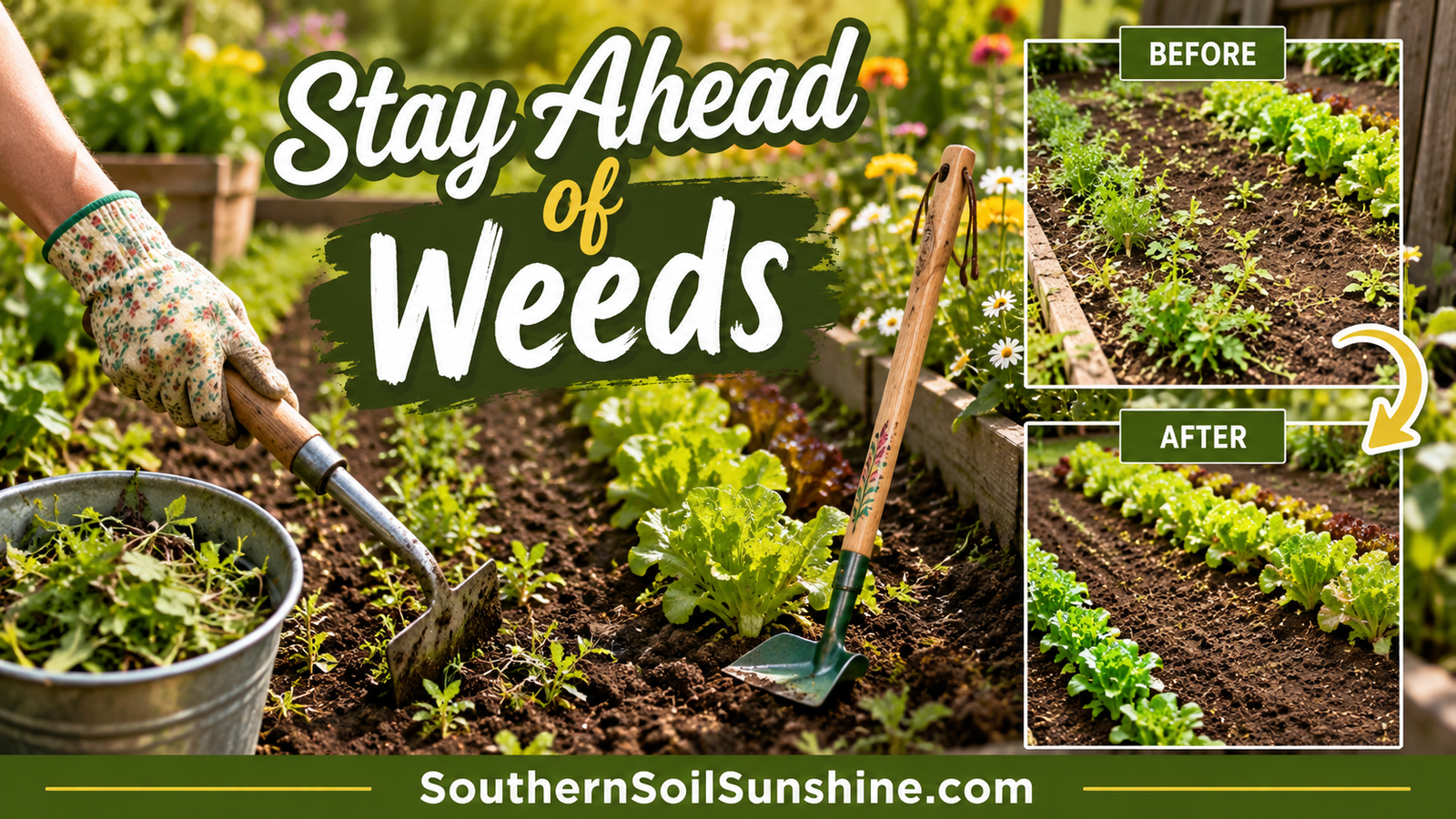
By mid-April, a Zone 9 garden is growing fast — and so is everything you did not plant. The warmth that is powering your vegetables is powering the weeds too, and this is the season when a garden can get away from you almost overnight if you let it. But it does not have to. The secret is not working harder; it is staying ahead. A little regular tidying — a quick pass through the beds, a tending of the pathways — keeps a garden clear and peaceful with a fraction of the effort that a once-a-month battle against overgrowth requires. Today’s task is exactly this kind of maintenance: a mid-spring tidy of beds and paths, done not to conquer a jungle but to keep one from ever forming.
And it carries a phrase worth holding: clear the way so walking here feels peaceful. Because a well-tended garden is not just more productive — it is a place you actually want to be. Let me share how staying ahead of the weeds keeps your garden both healthy and peaceful, and why the rhythm of regular tending is so much gentler than the alternative.
Free eBook
Rooted in Grace
A Christian guide to intuitive gardening — the whole book, free. Tell me where to send it and it’s yours in a minute.
Why Staying Ahead Beats Catching Up
There are two ways to deal with weeds, and they could not be more different in their toll. The first is to let them grow — to get busy, look away, and return weeks later to a garden overrun, then spend an exhausting, back-breaking day trying to reclaim it, often disturbing your crops’ roots and never quite catching up. The second is to stay ahead — to pass through regularly, pulling the few small weeds that have appeared since last time, so the garden never becomes overwhelming in the first place. The same garden, tended these two ways, produces two entirely different experiences: one of dread and struggle, one of ease and peace.
The math strongly favors staying ahead. Small weeds pull in seconds; large ones fight back. A few minutes several times a week keeps everything manageable; a monthly reckoning exhausts you and never fully succeeds. And crucially, weeds caught before they flower never get to sow the thousands of seeds that become next month’s problem. Staying ahead is not just easier today — it makes every future day easier too, because the weed pressure steadily decreases instead of constantly renewing itself.
A Simple Mid-Spring Maintenance Rhythm
Keeping ahead does not require a plan so much as a rhythm. Here is a light, sustainable one.
| How Often | What to Do |
|---|---|
| Every visit | Pull the few weeds you pass as you water or harvest |
| Weekly | A 15-minute pass through beds and paths |
| As needed | Refresh mulch on any bare spots |
| Watch for | Anything about to flower — pull it first |
The heart of it is simply this: pull weeds while they are small, cover bare soil with mulch so fewer appear, and never let anything go to seed. Keep a hoe or a kneeling pad by the garden door so a quick pass feels effortless. Tend the pathways as faithfully as the beds, since neglected paths are where weed problems are born and spread. Done as a light, regular rhythm, this maintenance never becomes a burden — it becomes a pleasant, grounding habit woven into your normal time in the garden.
Tending the Path You Walk
There is something worth noticing in this task’s attention to the pathways, not just the beds. The paths are where you walk — how you move through and experience your garden. A path choked with weeds and overgrowth makes the whole garden feel like a struggle to enter, something to push through rather than move through with ease. A clear, tended path invites you in. It says the garden is cared for, welcoming, a place to stroll slowly rather than battle. Tending the pathways is not merely tidiness; it is caring for your own experience of the garden, clearing the way so that being here feels peaceful.
Clear the Way So Walking Here Feels Peaceful
This day’s phrase is one I have come to love: clear the way so walking here feels peaceful. It reframes the humble task of weeding as something almost sacred — not merely removing unwanted plants, but tending the peace of a place so that moving through it is a gift rather than a burden. When you clear the beds and tidy the paths, you are not just gardening; you are making a space where peace is possible, where you and anyone else can walk slowly, breathe, and be at ease.
And how much this mirrors the tending our inner lives require. Our hearts and days, like a spring garden, are always growing things we did not plant — the small worries, the accumulated clutter, the low-grade tangles that, left alone, quietly overgrow the paths we walk within. And the remedy is the same gentle rhythm: not a dramatic overhaul, but the steady, faithful practice of clearing the small things regularly, before they take over, so that the way through our own days feels peaceful rather than choked and overwhelming. Staying ahead of the weeds — in the garden and in the soul — is one of the quiet disciplines of a peaceful life. So do this light, faithful tending today. Clear the beds, tidy the paths, and step back to walk slowly through a garden made peaceful by your care. And carry the same clearing rhythm into the overgrown corners of your own life, so that there, too, the way feels peaceful to walk.
Share your tended beds and welcoming pathways with us on Instagram @southernsoils — there is real peace in a garden kept clear and cared for.
Keeping the Paths Themselves Clear
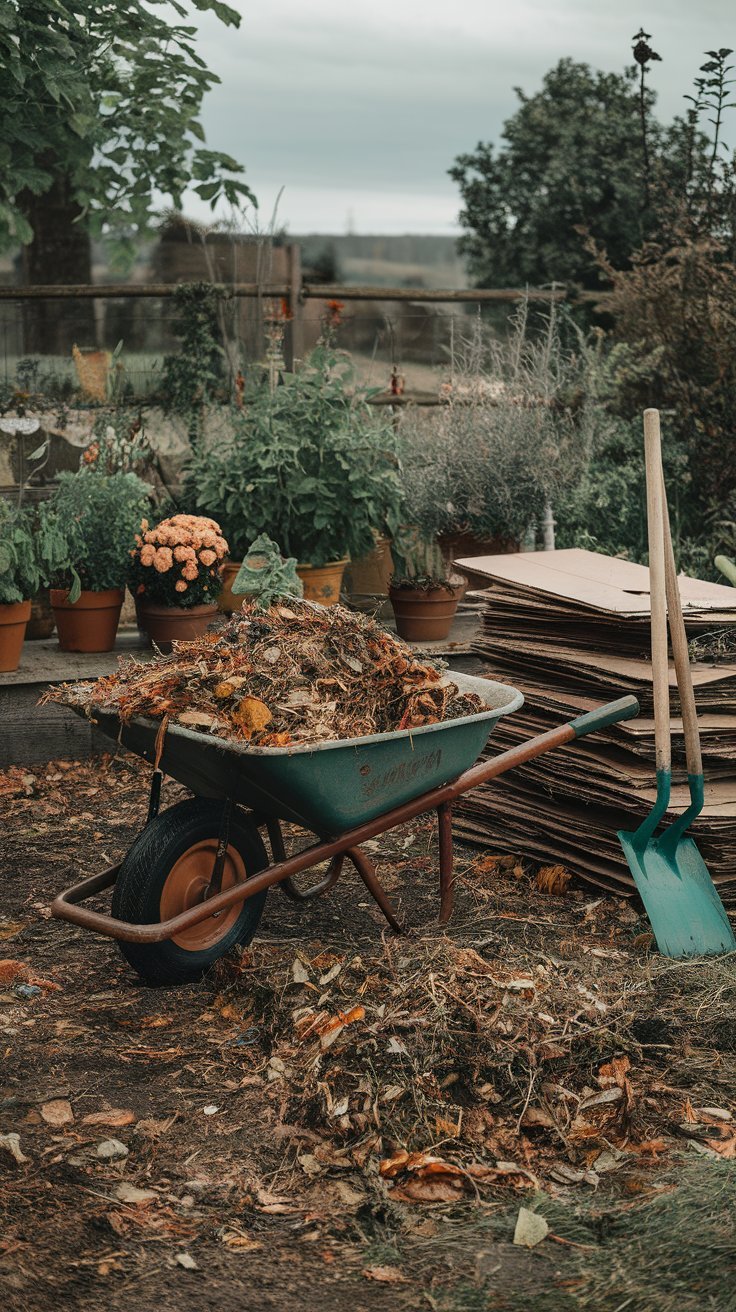
Since the pathways carry so much of the garden’s peace, they are worth a little dedicated care. A path that is simply bare soil will grow weeds endlessly; a path that is covered stays clear with almost no effort. A generous layer of wood chips, straw, or even cardboard topped with mulch smothers weeds underfoot and gives you a clean, comfortable surface to walk and kneel on. Refresh it once or twice a season as it breaks down. This small investment transforms the maintenance equation: instead of weeding your paths again and again, you cover them once and simply top them up, and they stay welcoming all season.
| Path Covering | Why It Works |
|---|---|
| Wood chips | Long-lasting, comfortable, smothers weeds |
| Straw | Cheap, soft underfoot; top up often |
| Cardboard + mulch | Blocks tough weeds; breaks down to soil |
A covered path is one less thing to weed and one more thing that makes the garden feel finished and cared for. It is worth the afternoon it takes to lay down.
A Rhythm You Will Actually Keep
The best maintenance routine is the one you will genuinely stick with, so make it small and pleasant rather than large and dreaded. Tie your weeding to something you already do — pull a handful each time you go out to water, keep a bucket by the gate for the weeds you gather, do one relaxed fifteen-minute pass on a set morning each week. Woven into your ordinary garden time this way, staying ahead never feels like a separate chore. It simply becomes part of how you move through the garden, as natural as watering or harvesting.
And there is a real gift hidden in this rhythm: it keeps you in your garden, close to your plants, noticing everything. The gardener who passes through regularly to pull small weeds is also the gardener who spots the first aphids, the plant that needs water, the fruit that is ready, the small problem while it is still small. Staying ahead of the weeds turns out to be staying ahead of nearly everything — a single gentle habit that keeps the whole garden healthy, simply because it keeps you present and attentive. That presence, more than any tool or technique, is what a thriving garden runs on.
The Peace of a Garden Kept
When you finish today — beds tidy, paths clear, bare soil covered — take a slow walk through your garden and feel the difference. A kept garden has a peace that an overgrown one never can. The plants stand with room to breathe, the way through is open and inviting, and the whole space reflects the quiet, steady care you have given it. That peace is available to you not through occasional heroic effort but through this gentle rhythm of staying ahead — a little, often, faithfully. So keep the rhythm. Clear the small things before they grow large, cover the ground so fewer return, tend the paths as lovingly as the beds, and let your garden remain, week after week, a peaceful place to walk. It is one of the truest gifts a gardener can give — to herself, and to everyone who wanders through.
Start Small, Stay Faithful
If your garden has already gotten a little ahead of you, do not be discouraged — simply begin. You do not have to reclaim everything today. Pull the weeds about to seed first, clear one bed, tidy one path, and let that be enough for this morning. Then keep the light rhythm going from here. Staying ahead is not about a perfect starting point; it is about the steady, faithful practice of clearing small things regularly from wherever you are now. Begin the rhythm today, keep it gently through the season, and watch your garden settle into the easy, cared-for peace that comes not from working harder, but from tending faithfully. The way will be clear, and walking here will feel peaceful — which is, in the end, exactly what a garden is for.
Ready to Go Deeper in the Garden?
If this article resonated with you, you might be ready for something more than tips.
- Download the FREE Rooted in Grace eBook
- Join Rooted Reset
- Follow on Instagram – @southernsoils
“The garden is not just a place to grow plants – it is a place to grow yourself.”
Free eBook
Before you go — the book is yours
Rooted in Grace: A Christian Guide to Intuitive Gardening. No cost, no catch. Read it on any device, at whatever pace the season allows.