How to Prevent Cabbage Worms for Brassicas
Some of the links on this website are affiliate links, which means that if you make a purchase through these links, I may earn a small commission at no additional cost to you. As an Amazon Associate, I earn from qualifying purchases. I only recommend products I genuinely trust and believe will bring value to my readers. Also, some of the content was created with strategic use of AI tools. For more information, please visit the Privacy Policy page. Thank you for supporting my blog and helping me continue to provide valuable content. Gardening is more than growing food—it's where God grows us. If you're hungry for a faith that feels grounded again, I wrote a book for you. Download my free eBook: Rooted in Grace: A Christian Guide to Intuitive Gardening
🥬 Introduction: Protecting the Harvest Before It Begins
Few pests are as persistent—and as destructive—as the humble cabbage worm. In Zone 9 gardens, where warm weather stretches well into fall, these tiny green caterpillars can strip a healthy kale plant to bare stems in a matter of days.
If you’ve ever checked your broccoli patch one morning to see perfect leaves, then returned the next day to find lace-like holes, you’ve met them.
And while they might seem like an inevitable nuisance, cabbage worms can be prevented—and controlled—without harsh chemicals or frantic damage control. It just takes a thoughtful mix of timing, observation, and gentle, consistent action.
🌱 Related Garden Wisdom:
How to Harden Off Brassicas in a Warm September
Using Row Cover Systems for Fall
Best Soil Amendments for Fall Planting Success
🐛 The Cabbage Worm Life Cycle—and Why It Matters
Cabbage worms are the larval stage of the small white butterfly (Pieris rapae), often called the cabbage white.
In Zone 9, the warmth means these butterflies are active for months, producing multiple generations. That’s why control isn’t just about killing what you see now—it’s about breaking the cycle.
Life Cycle Stages:
- Egg — Tiny, pale yellow, often laid singly on the underside of leaves.
- Larva — Green caterpillar stage; feeds for 2–3 weeks, causing the most visible damage.
- Pupa — Cocoon stage, often hidden along plant stems or nearby surfaces.
- Adult Butterfly — White with black wing spots; lays eggs to start the process again.
Why it matters: If you interrupt the life cycle at the egg stage, you stop future generations without needing to spray or kill caterpillars later.
🧑🌾 Prevention Strategies in Detail
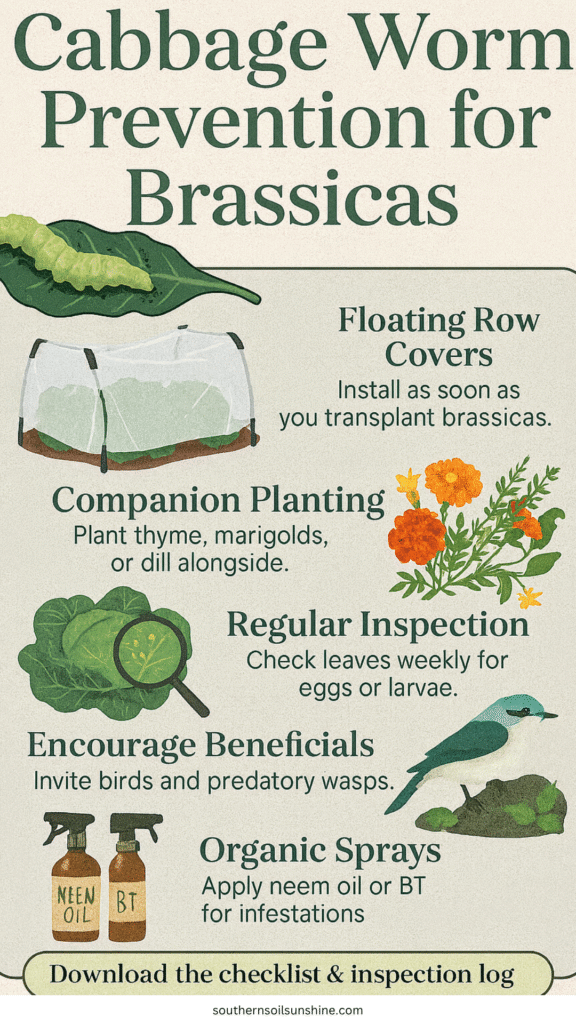
1. Floating Row Covers
Your first and best line of defense.
- Keeps adult butterflies from accessing plants to lay eggs.
- Choose lightweight covers that allow light, rain, and airflow.
- Install immediately after transplanting brassicas and secure edges.
- Remove only when plants need pollination (most brassicas don’t until bolting).
🛠 Related: How to Plan a Row Cover System for Fall
2. Companion Planting for Pest Disruption
Planting certain herbs and flowers around your brassicas can make the area less inviting.
- Aromatic herbs: Thyme, sage, rosemary, and dill mask the scent of brassicas.
- Trap crops: Nasturtiums can lure cabbage whites away from main crops.
- Marigolds: Help deter other pests, creating an overall healthier garden ecosystem.
Bonus: Many of these plants attract beneficial pollinators and predators.
3. Regular Inspection Routine
Make leaf checks part of your garden rhythm.
- Look under leaves for small yellow eggs.
- Remove and crush any eggs or larvae.
- If you see a butterfly in the garden, check brassicas within 48 hours.
Pro Tip: Take a bucket of soapy water with you—drop caterpillars in as you go.
4. Encouraging Natural Predators
Your garden has allies—invite them in.
- Birds, ladybugs, lacewings, and parasitic wasps naturally reduce cabbage worm numbers.
- Avoid chemical pesticides that harm these beneficial insects.
- Add birdbaths and native flowering plants nearby.
5. Organic Sprays When Needed
Even with prevention, you may still see damage.
- BT (Bacillus thuringiensis): Targets caterpillars only, safe for other insects.
- Neem oil: Works on eggs and young larvae, disrupting their development.
- Spinosad: Another organic option for severe infestations.
Apply in early morning or late evening to protect pollinators and avoid leaf burn.
📅 Timing in Zone 9
Because of our extended warm season:
- Start prevention as soon as seedlings are transplanted in September or October.
- Maintain row covers and inspections until temperatures drop consistently below 60°F.
- Succession plantings? Repeat protection steps each time.
💡 Troubleshooting: If You Already Have an Infestation
If you’ve missed the prevention window:
- Handpick daily until numbers drop.
- Remove heavily damaged leaves to prevent further stress.
- Use BT spray every 7–10 days until no fresh damage appears.
- Rotate crops—don’t plant brassicas in the same spot next season.
🧘♀️ Intuitive Gardening Insight
Cabbage worm prevention isn’t glamorous.
It’s small work—checking leaves, tying down covers, planting a bit of thyme.
It’s the hidden work that saves the harvest, much like the hidden disciplines in life: a whispered prayer, a note of encouragement, a moment of quiet that strengthens the day ahead.
✍️ Journal Prompt
What small, unseen actions could I take today to protect and nurture my future self? How can I apply the same faithfulness I give my garden to my spiritual walk?
🌼 Grace Note
Sometimes the most important work in the garden is invisible to others.
It’s not the harvest, not the flowers, not the big show—
It’s the quiet, steady guarding of what’s tender.
And in both soil and soul, that quiet work is never wasted.
📘 Grow With Grace
Rooted in Grace weaves together the seasons of the garden with the seasons of the heart.
- Seasonal garden plans
- Devotionals rooted in faith
- Practical steps for abundance
🎧 Listen While You Garden
🎙 Rooted in Grace Podcast — Faith-filled garden wisdom for your walk, weeding, or watering:
📨 Join the Garden & Grace Community
Weekly devotionals, garden printables, and more straight to your inbox.