
How to Build a Small Intuitive Garden in Zone 9
Some of the links on this website are affiliate links, which means that if you make a purchase through these links, I may earn a small commission at no additional cost to you. As an Amazon Associate, I earn from qualifying purchases. I only recommend products I genuinely trust and believe will bring value to my readers. Also, some of the content was created with strategic use of AI tools. For more information, please visit the Privacy Policy page. Thank you for supporting my blog and helping me continue to provide valuable content. Gardening is more than growing food—it's where God grows us. If you're hungry for a faith that feels grounded again, I wrote a book for you. Download my free eBook: Rooted in Grace: A Christian Guide to Intuitive Gardening
A garden doesn’t begin with seeds.
It begins with a quiet noticing — a sense that you want something more grounded in your life. Something slower. Something that asks you to show up faithfully, not perfectly.
Many women come to gardening carrying a mix of hope and hesitation. They want fresh food, beauty, and a deeper connection to the land — but they’re afraid of doing it wrong, wasting money, or starting something they can’t keep up with.
If that’s you, let me offer this reassurance right away:
A small garden is not a lesser garden.
It is often the wisest place to begin.
In Zone 9, where long growing seasons and warm temperatures offer generous opportunity, a thoughtfully built small garden can become a place of nourishment, learning, and peace — both in the soil and in your soul.
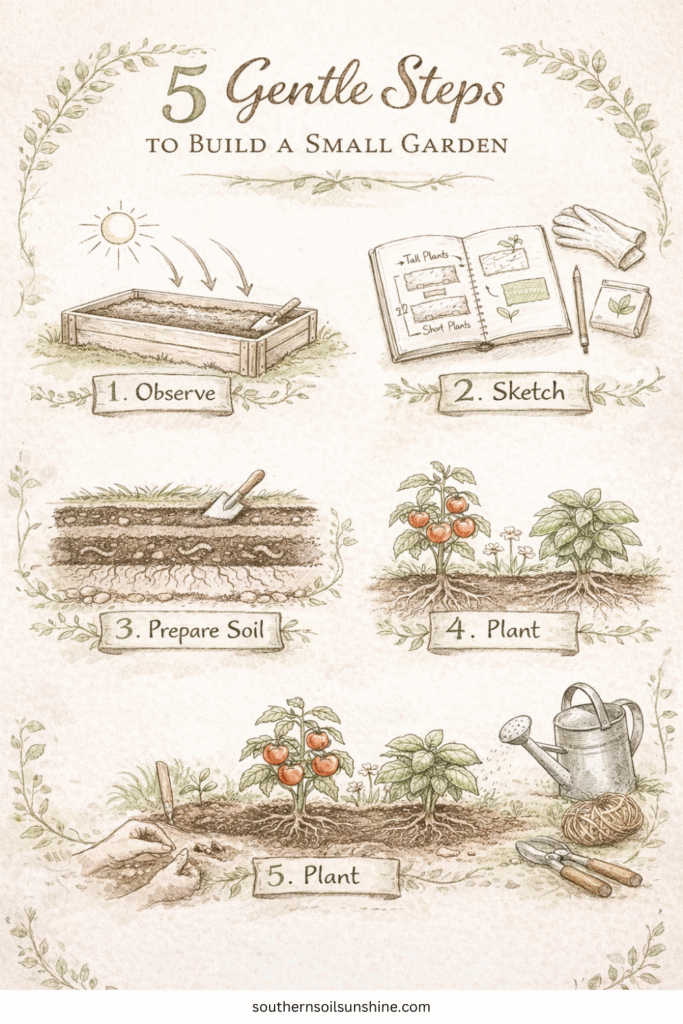
This guide will walk you through five gentle steps to build a small garden that fits your space, your season, and your real life.
Not rushed.
Not overwhelming.
Rooted in grace.
🌞 Why Starting Small Works So Well in Zone 9
Zone 9 gardening is often described as “easy” — but that’s only partly true.
Yes, we can grow nearly year-round. But that abundance comes with its own challenges: intense heat, sudden weather shifts, long stretches of maintenance, and the temptation to do too much too fast.
Starting with a small garden allows you to:
- learn how your yard behaves in heat, rain, and wind
- build healthy soil without rushing or overspending
- establish rhythms of care that don’t exhaust you
- grow confidence through repetition and observation
A small garden invites you to stay present.
It gives you room to learn without pressure.
And it creates space for joy to return to the work of growing.
If you’re looking for a steady rhythm to support this kind of gardening, the year-long approach shared in Grow your dream garden in just 15 minutes a day pairs beautifully with the steps below.
🌿 The Five Gentle Steps to Building Your Garden
We’ll move through this process slowly and intentionally:
| Step | Focus | What This Prevents |
|---|---|---|
| 1 | Observe your space | planting in the wrong place |
| 2 | Choose your structure | burnout + overspending |
| 3 | Prepare the soil | weak plants + constant problems |
| 4 | Plant with the season | heat stress + poor timing |
| 5 | Tend with simple rhythms | overwhelm + inconsistency |
You don’t need to master all five at once.
You’ll cycle through them again and again — with more confidence each time.
☀️ Step One: Observe Your Space (Learning to Listen)
Before you plant anything, give yourself permission to watch.
Observation is not delay — it’s preparation.
Spend a few days noticing how your space behaves. Walk outside in the morning, midday, and late afternoon if you can. Let yourself become familiar with the land you’re about to tend.
What to Pay Attention To
Sunlight
- Where does morning sun land first?
- Which areas receive intense afternoon heat?
- Are there walls, fences, or concrete that reflect heat?
Morning sun is especially valuable in Zone 9. Afternoon sun can be harsh and dehydrating.
Water
- Does rain soak in or run off quickly?
- Are there low spots where water pools?
- Which areas dry out first?
Wind and Exposure
- Are there breezy corners that dry plants quickly?
- Is anything sheltered naturally?
Your Daily Rhythm
- Will you naturally pass this garden each day?
- Is it easy to reach with a hose?
- Does it feel inviting to step into?
A garden you see often becomes a garden you tend naturally.
Some gardeners find it helpful to keep a small notebook during this stage — jotting down sun patterns, questions, or simple sketches. A basic garden journal, a soil moisture meter to check dryness below the surface, or even a simple outdoor thermometer can help you notice details you might otherwise miss.
If your space is limited, don’t be discouraged. This post on Zone 9 garden layout ideas for small spaces offers creative ways to work with what you have.
What You’re Watching For
| Element | Why It Matters in Zone 9 |
|---|---|
| Morning sun | gentler light, less stress |
| Afternoon heat | can scorch plants quickly |
| Water flow | prevents rot or drought |
| Wind | dries soil faster than you expect |
Gentle Location Checklist
- 6–8 hours of sun (morning preferred)
- Hose access nearby
- You’ll walk past it daily
- Room to move without stepping on soil
A garden that fits into your daily rhythm will quietly invite you back.
Helpful tools many gardeners use here:
- a small garden notebook for observations
- a soil moisture meter to learn how deep dryness really goes
- a simple outdoor thermometer to notice hot pockets.
🪴 Step Two: Choose a Garden Structure That Supports Faithfulness
This step matters more than most people realize.
Many gardens fail not because the gardener lacked skill, but because the structure they chose required more time, strength, or attention than they could realistically give.
Before deciding, ask yourself honestly:
- How much time do I have most weeks?
- How much bending, lifting, or hauling feels realistic?
- Do I need flexibility, or do I prefer something permanent?
Common Small-Garden Structures in Zone 9
Raised Beds
Raised beds are one of the most forgiving options for beginners, especially in areas with heavy clay soil.
They offer clear boundaries, improved drainage, and warmer soil early in the season. Pre-made metal or cedar beds can simplify setup, and a sturdy garden cart or wheelbarrow makes filling them far easier.
Containers
Containers are excellent for patios, rentals, or gardeners who want flexibility.
Large pots or fabric grow bags (5–10 gallons for fruiting plants) work best. They dry out faster in heat, so consistent watering matters — self-watering containers can be especially helpful here.
In-Ground Beds
In-ground gardens are cost-effective and allow for deep root growth, but they require patience as soil health is built over time.
Tools like a digging shovel, garden fork, and good gloves make this work gentler on your body.
Vertical Growing
Trellises, arches, and cages allow plants to grow upward instead of outward, saving space and improving airflow. This guide to DIY trellises for small gardens offers several simple options.
Choose the structure that makes it easiest for you to return to the garden again and again.
Small-Garden Structure Comparison
| Structure | Best For | Watch Outs |
|---|---|---|
| Raised beds | beginners, clay soil | upfront setup |
| Containers | patios, flexibility | dry out faster |
| In-ground | larger yards | slower soil improvement |
| Vertical | tight spaces | needs early support |
A Gentle Rule of Thumb
If you’re new, tired, or short on time:
one raised bed or 6–8 containers is enough.
Tools that make this step easier:
- raised bed kits
- large pots or grow bags
- sturdy gloves
- a wheelbarrow or garden cart for moving soil.
🧡 Step Three: Prepare the Soil (The Hidden Work That Changes Everything)
Soil preparation is where gardens are quietly won or lost.
Healthy soil supports steady growth, resists pests and disease, holds moisture in heat, and reduces the need for constant intervention later.
How to Prepare Soil Based on Your Structure
For Raised Beds
- Lay cardboard over grass to smother weeds
- Fill with a quality soil blend mixed with compost
- Water deeply and allow the soil to settle before planting
For In-Ground Beds
- Remove grass and weeds
- Loosen the top 8–10 inches of soil
- Add compost generously and mix lightly
- Water and allow the soil to rest
For Containers
- Use fresh potting mix (not garden soil)
- Mix in compost or worm castings
- Ensure drainage holes are open
Hand tools like a sturdy trowel, soil scoop, or garden fork make this work more precise and less tiring.
Gentle Soil Guardrails
Do
- add organic matter every season
- keep soil covered with mulch
- water deeply after planting
Don’t
- plant straight into compacted clay
- skip compost
- leave soil bare in the sun
Mulch plays a major role in Zone 9 success. If you’d like to go deeper here, The ultimate guide to mulching is an excellent companion.
Soil Prep by Garden Type
| Garden Type | What to Do |
|---|---|
| Raised bed | cardboard + soil + compost |
| In-ground | loosen 8–10 inches + compost |
| Containers | fresh potting mix + compost |
Soil Prep: Gentle Guardrails
DO
- add compost every season
- loosen, don’t pulverize
- water deeply after planting
DON’T
- plant into hard clay
- skip organic matter
- leave soil bare
Preparing soil is an act of hope — believing nourishment matters before growth appears.
Common tools used here:
hand trowel, soil scoop, garden fork, compost, worm castings, mulch.
🌱 Step Four: Plant With the Season (Not With Pressure)
Zone 9 allows for incredible diversity — but timing matters.
Instead of memorizing dozens of planting dates, think in two main seasonal lanes.
Cool-Season Planting
- leafy greens
- herbs like parsley, dill, and cilantro
- broccoli, cabbage, cauliflower
- carrots, radishes, beets
These crops prefer milder temperatures and often struggle in sustained heat.
Warm-Season Planting
- tomatoes, peppers, eggplant
- squash, cucumbers, beans
- okra and basil
These plants thrive when soil and air temperatures are warm.
If you want a reliable reference point, Frost dates and gardening in Zone 9 offers a helpful overview of timing without overwhelm.
Seed trays, humidity domes, seed-starting mix, and plant labels can make starting seeds simpler and more organized. For gardeners who want to grow from seed indoors, this guide on year-round seed starting for warm climates is a strong next step.
A first garden doesn’t need to include everything. One or two “hero” crops, supported by herbs and flowers, is often more than enough.
Zone 9 Planting Lanes
| Season Lane | What Thrives |
|---|---|
| Cool-season | greens, herbs, roots |
| Warm-season | tomatoes, peppers, squash |
A Simple First-Garden Plan
Option A: Low-stress bed
- leafy greens
- herbs
- green onions
Option B: One “hero” crop
- 1–2 tomatoes or peppers
- basil
- flowers for pollinators
Your first garden should build confidence, not require heroics.
Tools often used at this stage:
seed trays, seed-starting mix, plant labels, dibber or transplanting tool.
💧 Step Five: Tend With Simple Rhythms (Where Gardens Are Sustained)
Gardens don’t thrive on intensity.
They thrive on consistency.
A small, repeatable rhythm keeps your garden connected to your daily life without becoming a burden.
A Simple 15-Minute Garden Rhythm
- Look – Notice changes and new growth
- Touch – Check soil moisture 2 inches down
- Water – Deep and slow if needed
- Tidy – Pull a few weeds or prune lightly
- Harvest – Take something small
Watering Rhythm at a Glance
| Condition | Focus |
|---|---|
| Mild weather | deep watering |
| Heat wave | morning + mulch |
| Containers | daily check |
| New plants | steady moisture |
Plants don’t need hovering. They need rhythm.
Helpful tools here:
soaker hoses, hose timers, watering can with gentle spout, pruning shears, kneeling pad.
For detailed watering guidance, How to water your edible garden in Zone 9 walks through common challenges and solutions.
🐛 Gentle Troubleshooting (Without Shame)
| What You See | Likely Cause | First Response |
|---|---|---|
| droopy midday plants | heat stress | check soil in morning |
| yellow leaves | watering imbalance | adjust frequency |
| chewed leaves | pests | inspect + hand-pick |
It’s okay — every gardener has days like this.
This isn’t failure; it’s feedback.
🌦️ Seasonal Notes for Zone 9
Spring brings rapid growth and the need for early support structures.
Summer requires consistent watering, heavy mulching, and occasional shade.
Fall offers a beautiful second chance for cool-season crops.
Winter allows for continued harvests, soil building, and quiet observation.
Each season invites a different kind of care — and a different kind of attentiveness.
🤍 Faith Reflection
“I planted the seed, Apollos watered it, but God has been making it grow.” — 1 Corinthians 3:6
Gardening reminds us that we are participants, not controllers.
We prepare the soil.
We plant carefully.
We tend faithfully.
And then we trust God with the growth — both in the garden and in our hearts.
📓 Journal Prompts
- Where am I tempted to do too much, too quickly?
- What would faithful tending look like in this season?
- What is the garden teaching me about patience and trust?
✨ Free Printable
Download the beautiful printable below. It guides you gently through the 5 steps to building a small garden!
🌻 Related Garden Reading
- Zone 9 garden layout ideas for small spaces
- Frost dates and gardening in Zone 9
- How to water your edible garden in Zone 9
- The ultimate guide to mulching
🌱 Keep Growing With Grace
If this guide stirred something in you, you’re not meant to walk this path alone.
The Rooted in Grace podcast offers gentle encouragement, practical wisdom, and faith-centered reflection for women growing gardens and hearts side by side.
The Rooted in Grace eBook goes deeper into intuitive gardening as a way of life.
And the Southern Soil Sunshine community is a place to learn, ask questions, and grow together.
Final Thoughts
A small garden is not a trial run.
It is a real place of learning, healing, and partnership with God.
Begin where you are. Tend what’s been given. Let growth unfold in its time.
May your garden — and your heart — find rest in the slow places.



3 Comments