How to Set Up Year-Round Seed Starting for Warm Climates
How to Set Up Year-Round Seed Starting for Warm Climates 🌱
The basil is ready, and I know it the way you know when bread dough has risen enough—not by the clock, but by what your hands tell you, what your eyes have learned to see. It’s early June in Houston, and the heat is settling in like a houseguest who plans to stay. I step out to the herb bed in the cool part of the morning, and there it is: the basil plant has grown from a lanky starter to a small bush, its leaves tender and fragrant enough to perfume the air around it. This is not a metaphor. This is what happens when you show up, pay attention, and let a plant teach you what it needs. I cut a generous handful this morning—the top third of the plant, just above a node where two new stems will branch out—and as I work the scissors through the soft green growth, I’m struck again by how quickly this happens. Three weeks ago, this was a tiny transplant from a cell pack, uncertain in the soil. Now it’s an abundant producer. In a week or two, I’ll harvest again. And again. The basil, the mint in its pot near the deck, the oregano creeping along the garden’s edge—they teach us something we desperately need to know in our driven, delayed-gratification world. Some things grow fast. Some blessings arrive on a schedule measured in weeks, not years. And maybe, just maybe, that’s exactly what we need to experience right now.Free eBook
Rooted in Grace
A Christian guide to intuitive gardening — the whole book, free. Tell me where to send it and it’s yours in a minute.
The Gift of Quick Growth in a Season of Waiting 🌿
There’s a reason herbs have always held a special place in gardens, especially in the gardens of women who are learning to belong somewhere new. When you move as many times as I have—four times in three years—you start to understand that some roots grow faster than others. Trees take years to establish. Perennials need seasons to settle. But basil? Mint? Oregano? They meet you in the present tense. They say yes in weeks. In our Houston Zone 9 garden, this matters more than it might in cooler climates. Our growing season is long and generous, but it’s also intense. The heat accelerates growth in ways that feel almost miraculous if you’re paying attention. A basil plant in midsummer can double in size in two weeks. Mint will take over if you let it—and honestly, sometimes the abundance feels like grace breaking into your carefully planned garden beds. This is what intuitive gardening teaches us: pay attention to what your plants are trying to tell you. In this case, the herbs are saying, “You can have victory. You can have harvest. You can have fresh, abundant nourishment, and it won’t take forever.” I think about this as a spiritual formation principle. We live in an age of delayed everything—degrees, mortgages, approval, belonging. We’re told that deep change takes years of therapy, that real faith is forged through prolonged suffering, that meaningful growth is by definition slow and expensive. And some of that is true. But basil? Basil says that some growth is swift. Some victories are real and near. Some blessings arrive on a schedule that makes sense to human hearts, not just to geological time.Why Year-Round Seed Starting Changes Everything 🌱
Most gardening advice treats seed starting like a spring-only activity. You gather your supplies in February, start your seeds indoors, and then… you wait until next year. But here in Houston, that’s leaving abundance on the table. Our climate is a gift, and year-round seed starting is how we unwrap it. The difference between understanding seed starting and living seed starting is this: it’s not about having a perfect setup. It’s about understanding the rhythm of your particular place, your specific hardiness zone, and your unique growing season. In Zone 9, we’re not fighting against nature—we’re cooperating with it. Our winters are mild. Our springs are long. Our summers are fierce, and our falls are generous. When you align your seed-starting schedule with what’s actually happening in your climate, rather than what gardeners in New England are doing, everything shifts.Understanding Your Zone 9 Seed-Starting Calendar 📅
The intuitive gardening approach begins with observe—and observing means tracking what actually happens in your garden throughout the year, not what the packets tell you. In Houston, we’re working with a different timeline than gardeners in Zones 5 or 6. Our first frost doesn’t arrive until November 15th or later. Our last frost is typically around March 15th. But here’s where it gets interesting: the real limitation isn’t frost. It’s heat. Summer heat above 95°F slows seed germination, stresses transplants, and makes things generally miserable. So our planning isn’t about avoiding frost—it’s about timing our plantings to land in the sweet spot between germination and transplanting. This is where year-round seed starting becomes not just possible, but essential. Instead of one long pushing season, we’re working in waves, each timed to the natural rhythm of our climate.| Season | When to Start Seeds Indoors | What to Plant | Transplant Window |
|---|---|---|---|
| Late Winter/Spring | Late January–Mid February | Tomatoes, peppers, eggplant, herbs | Mid-March–April |
| Late Spring | Late March–Early April | Basil, more herbs, fast-growing greens | May–Early June |
| Summer (Direct Sow Only) | June–July (outdoors only, no seedlings) | Heat-loving herbs, okra, yard-long beans | Direct to garden |
| Late Summer/Fall | Late July–Mid August | Cool-season crops: broccoli, cabbage, lettuce, kale | September–Early October |
Building Your Seed-Starting Station 💧
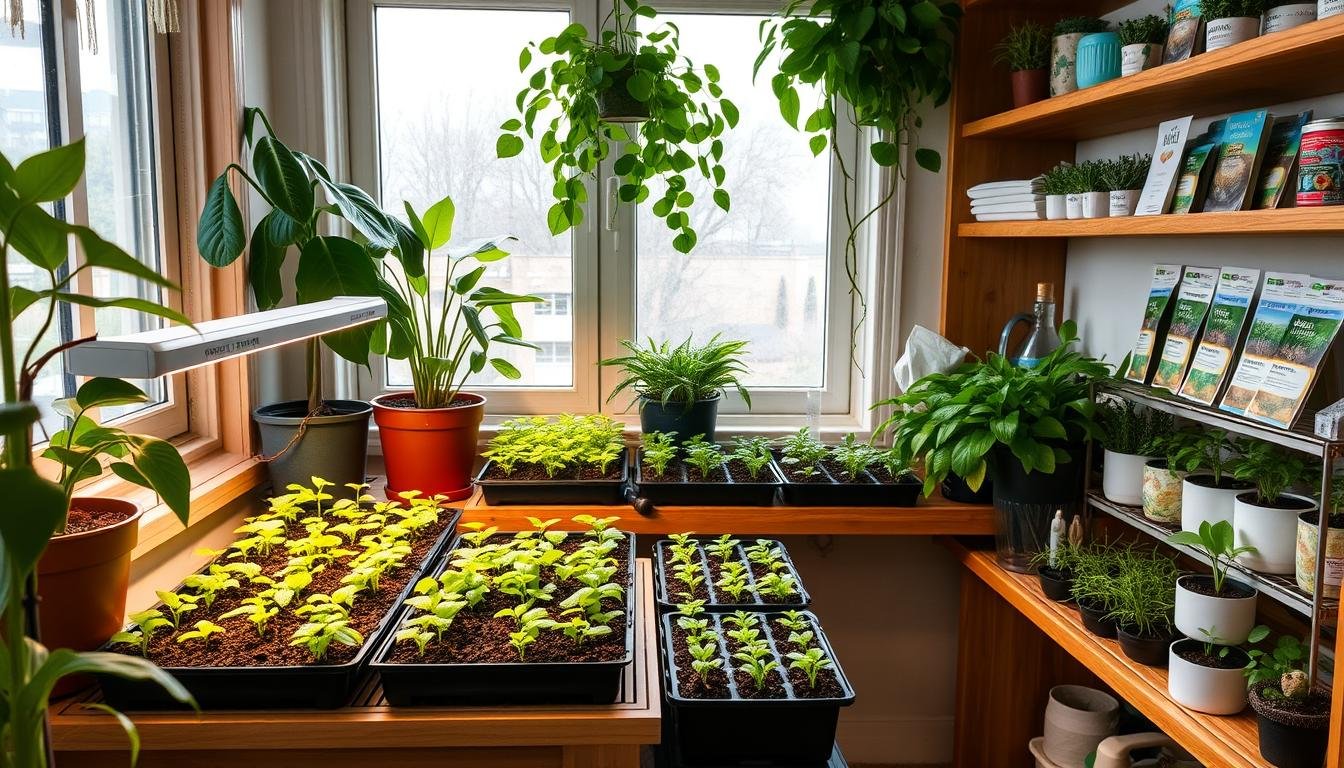
Now, let’s talk about the practical setup. You don’t need an elaborate grow light system or a greenhouse to start seeds successfully in Houston. What you need is intentionality and a system that fits your actual life.The Essential Elements
Light is your first priority. Seeds need 14–16 hours of consistent light daily. In a Houston home, a south-facing windowsill might work during spring, but it’s not reliable year-round. The investment in basic LED grow lights—whether a simple LED shop light or a fancier tiered system—pays for itself in healthy seedlings. Position your lights 2–3 inches above the seedlings and adjust as they grow. Warmth matters. Most seeds germinate best at 70–75°F. Our typical house temperature is fine for spring and fall. In summer, your seedlings might actually overheat indoors. In winter, a seedling heat mat under your trays keeps soil at the right temperature without heating your whole room. These are inexpensive and make an enormous difference. Water access and drainage. Seedlings need consistent moisture but not waterlogged soil. A simple setup—whether you’re using seed-starting trays with bottom drainage holes, a shelving unit, and a watering can—beats a complicated system you’ll abandon. The best practice is to water from below by setting trays in a shallow pan of water and letting them wick moisture up, rather than splashing from above. Air circulation. A small oscillating fan running a few hours daily prevents fungal issues and builds stronger stems. This is especially important in Houston’s humid environment.Choosing Seeds Wisely for Your Climate 🌿
Not all seeds are created equal for our zone and our timeline. This is where the reflect part of intuitive gardening comes in. What actually grows well in Houston? What finishes before our heat becomes overwhelming? What thrives in our humidity? For spring planting, our classics are tomatoes and peppers. These need 6–8 weeks indoors before transplanting. Start them in late January or early February so they’re ready to go into the ground by mid-March. Choose varieties suited to heat—look for heat-tolerant tomatoes like ‘Heatwave II’ or ‘Phoenix’ and peppers that genuinely produce in summer humidity. Basil, oregano, and other tender herbs can be started alongside peppers or even a bit later. These germinate quickly—often within a week—and transplant easily. Unlike peppers, which prefer stability, herbs actually seem to thrive when they’re moved around a bit, as if they’re learning adaptability. For fall, the entire game changes. Cool-season crops—broccoli, cabbage, kale, lettuce—are our gift second season. These are started in late July or August and transplanted in September and October. They grow through our mild winters and produce heavily from December through March. This is when many Houston gardeners finally feel like they can grow what other people grow.The Respond Faithfully Part:
Timing Your Second Plantings: The Fall Garden Advantage 🍂
Here’s what many first-time Houston gardeners don’t realize: summer isn’t your garden’s peak season—fall is. While gardeners in cooler zones are winding down in August, we’re gearing up for what might be our most productive season. The key is starting your cool-season seeds at exactly the right moment, which in Houston means late July through mid-August. This timing feels counterintuitive when the heat is at its fiercest, but it’s precisely when your seedlings need to germinate indoors, away from the scorching sun.
The magic happens when you transplant these seedlings into the garden around mid-September. Suddenly, the heat breaks just slightly, humidity shifts, and these little broccoli, cabbage, and kale starts experience something they’ve been waiting for—conditions that feel like home. They’ll grow steadily from October through February, producing heavily during months when fresh vegetables from your garden feel almost miraculous. Instead of one growing season, you’re essentially living two.
This is where seed starting becomes more than a technique—it becomes a rhythm that honors how your specific climate actually works. You’re not trying to force your garden into a spring-summer-fall-winter pattern. You’re recognizing that you live in a place with two distinct productive seasons, and planning accordingly. The discipline of marking your calendar in July, even when it feels far too early, is actually you responding to what your land is asking for.
Managing Seedling Space and Light Without Perfectionism
One reason many gardeners abandon seed starting is that they imagine it requires a dedicated greenhouse or elaborate setup. The truth is gentler than that. You need light, warmth, water, air, and a willingness to work with what you have rather than waiting for perfect conditions.
A simple shelving unit in a basement, garage, or bright corner of your home works beautifully. Stack your seed trays on one shelf, position LED grow lights 2–3 inches above them on the shelf above, and you’ve got a functional seed-starting station that takes up maybe two square feet of space. As seedlings grow taller, you adjust the light upward. When they’re ready to transplant, you’ve already released that space for the next batch. This isn’t complicated—it’s just purposeful use of vertical space.
The Houston heat actually helps here. In spring, your home naturally stays warm enough for germination. In fall, you might add an inexpensive heat mat to keep soil at the 70–75°F sweet spot. The point isn’t perfection; it’s consistency. Your seedlings care far more about predictable warmth and light than they care about your setup being Instagram-worthy.
Hardening Off and Transplanting Into Houston’s Heat
Starting seeds indoors is only half the journey. The other half is helping your seedlings transition from their controlled indoor environment to the more challenging outdoor world. This is called hardening off, and it’s non-negotiable if you want sturdy, thriving plants rather than stressed, stunted ones.
Begin hardening off about two weeks before your transplant date. Start by placing seedlings outdoors in a shaded, protected spot for one hour. Increase the time and light exposure gradually over 10–14 days until they’re sitting in dappled shade for a full day. This isn’t babying them—it’s preparing them. Their cell walls thicken. They develop a waxy coating. They learn to handle wind and variable moisture. By the time they go into the garden, they’re ready.
In Houston spring, transplanting happens in March and April when daytime temperatures are rising but nighttime temperatures haven’t become treacherous. Dig holes, amend your soil with compost, plant firmly, and water deeply. Then watch them. If afternoon temps suddenly spike above 85°F within days of transplanting, shade cloth becomes your friend. Even tough plants appreciate a few weeks of afternoon protection while roots establish.
For fall transplanting, the window is September and early October. Soil is still warm from summer, which helps roots establish quickly. Nighttime temperatures are dropping, which is exactly what cool-season crops need. Water deeply after planting and mulch well. These plants will grow steadily through the winter, and by January you’ll understand why fall gardening feels like a gift.
Keeping Records and Learning from Each Cycle
The most underrated tool in seed starting is a simple notebook. Not for artistry—for honesty. Each time you start seeds, jot down the date, variety, germination time,
🌱 What I Reach For to Start Seeds
You do not need a greenhouse — just light, warmth, and a few honest pieces that fit on two square feet of shelf. This is the little station I actually use.
LED grow light →
Seedlings need 14 to 16 hours of steady light; a clip-on full-spectrum light beats a fickle windowsill year-round.
Seedling heat mat →
Holds the soil at that 70 to 75 degree germination sweet spot without heating the whole room.
Seed-starting trays with dome →
Bottom-draining cells plus a humidity dome — water from below and watch them sprout.
Sterile seed-starting mix →
The single best defense against damping-off; never start seeds in plain garden soil.
Small clip-on fan →
A few hours of airflow a day builds sturdier stems and fights fungus in our humidity.
Watering can with long spout →
A gentle, long spout so you can water without knocking tender seedlings flat.
As an Amazon Associate I earn from qualifying purchases, at no extra cost to you. I only point you toward things I would actually use in my own garden.
Ready to Go Deeper in the Garden?
If this article resonated with you, you might be ready for something more than tips.
- Download the FREE Rooted in Grace eBook
- Get the Rooted in Grace Print Book on Amazon
- Join Rooted Reset
- Follow on Instagram – @southernsoils
- Save on Pinterest – @southernsoilsunshine
- Join on Facebook – Southern Soil Sunshine
“The garden is not just a place to grow plants – it is a place to grow yourself.”
Free eBook
Before you go — the book is yours
Rooted in Grace: A Christian Guide to Intuitive Gardening. No cost, no catch. Read it on any device, at whatever pace the season allows.
🌱 What I Reach For to Start Seeds
You do not need a greenhouse — just light, warmth, and a few honest pieces that fit on two square feet of shelf. This is the little station I actually use.
Seedlings need 14 to 16 hours of steady light; a clip-on full-spectrum light beats a fickle windowsill year-round.
Holds the soil at that 70 to 75 degree germination sweet spot without heating the whole room.
Bottom-draining cells plus a humidity dome — water from below and watch them sprout.
The single best defense against damping-off; never start seeds in plain garden soil.
A few hours of airflow a day builds sturdier stems and fights fungus in our humidity.
A gentle, long spout so you can water without knocking tender seedlings flat.
As an Amazon Associate I earn from qualifying purchases, at no extra cost to you. I only point you toward things I would actually use in my own garden.
Ready to Go Deeper in the Garden?
If this article resonated with you, you might be ready for something more than tips.
- Download the FREE Rooted in Grace eBook
- Get the Rooted in Grace Print Book on Amazon
- Join Rooted Reset
- Follow on Instagram – @southernsoils
- Save on Pinterest – @southernsoilsunshine
- Join on Facebook – Southern Soil Sunshine
“The garden is not just a place to grow plants – it is a place to grow yourself.”
Free eBook
Before you go — the book is yours
Rooted in Grace: A Christian Guide to Intuitive Gardening. No cost, no catch. Read it on any device, at whatever pace the season allows.



3 Comments