
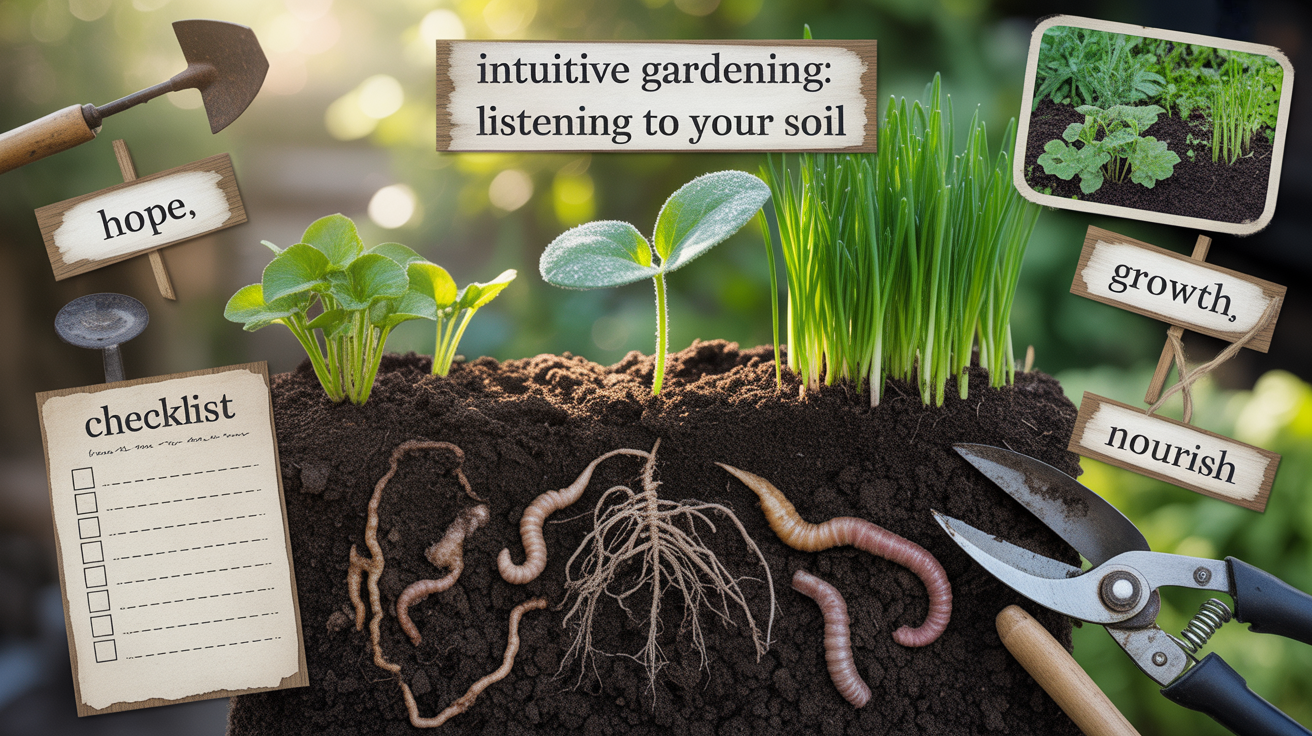
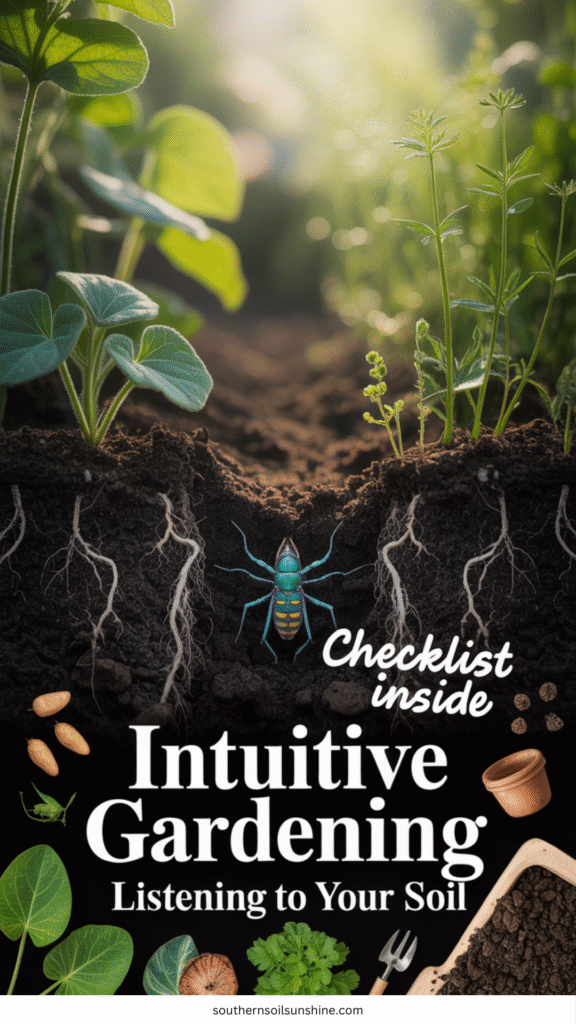
Intuitive Gardening: Listening to Your Soil
Some of the links on this website are affiliate links, which means that if you make a purchase through these links, I may earn a small commission at no additional cost to you. As an Amazon Associate, I earn from qualifying purchases. I only recommend products I genuinely trust and believe will bring value to my readers. Also, some of the content was created with strategic use of AI tools. For more information, please visit the Privacy Policy page. Thank you for supporting my blog and helping me continue to provide valuable content. Gardening is more than growing food—it's where God grows us. If you're hungry for a faith that feels grounded again, I wrote a book for you. Download my free eBook: Rooted in Grace: A Christian Guide to Intuitive Gardening
🌿 A Gentle Start: The Soil’s Silent Language
In every garden season, the soil speaks. Not in words, but in a language of texture, scent, and subtle shifts—the way it smells after rain, the way water sinks in or runs off, the feel of earth between your fingers.
Listening to your soil is an act of attentive stewardship. It’s not simply about diagnosing problems—it’s about honoring what God has already placed in your care. In the quiet of fall, when the rush of planting is behind you and the stillness of winter approaches, there is space to truly hear what the soil is saying.
Like prayer, this listening requires us to slow down, remove distractions, and incline our hearts and hands toward what matters. Soil listening is a practice in being present—both to the needs of creation and to the voice of the Creator.
🌱 Why “Listening” to Your Soil Matters
- Prevents Reactive Gardening – By noticing early shifts, you address issues before they become crises.
- Strengthens Plant Health – Healthy soil supports strong, resilient plants able to withstand seasonal challenges.
- Builds Seasonal Wisdom – Patterns you notice now become guideposts for next year’s planting.
- Honors God’s Design – Stewardship means tending creation with awareness, not assumption.
- Deepens Spiritual Connection – Listening to the soil mirrors listening to God’s Spirit—both require quiet attention.
📋 Step-by-Step: Practicing Soil Awareness
1. Observe Moisture Levels
Press your fingers into the soil. Is it cool and damp, dry and crumbly, or heavy and waterlogged? Your soil’s “feel” tells you when to water, rest, or protect.
Just as the Holy Spirit searches the depths of our hearts (1 Corinthians 2:10), a gardener’s touch searches the depths of the soil to discern what is needed.
2. Feel the Texture
- Gritty: Drains quickly, may need organic matter.
- Silky: Holds water but can compact; benefits from compost.
- Sticky: Rich but slow to drain; mulch and structure are key.
Healthy loam feels like a promise—it holds together but crumbles easily, ready to nourish life.
3. Notice the Smell
A living soil has an earthy aroma that tells you beneficial microbes are at work. Sour, stagnant smells warn of suffocation—often from compaction or overwatering.
4. Watch How Water Behaves
Water pooling means compaction. Fast infiltration may point to sandy, low-retention soil. In either case, the soil is telling you what to amend and how to care.
5. Look for Life
Earthworms, beetles, and fine fungal threads are signs of a healthy underground community. A silent, lifeless soil needs revival—through compost, mulch, and gentle care.
6. Track Changes Over Time
Keep a dedicated section in your garden journal for soil notes—seasonal smells, textures, moisture patterns, and life signs. Over years, these observations form a map of your soil’s story.
🗺 Seasonal Listening in Fall
Fall is a hinge season—a moment to listen closely before the deep rest of winter.
- Early Fall: Soil still holds summer’s heat. Check moisture daily for new plantings.
- Mid Fall: Cooler days slow evaporation. Let the soil breathe; avoid unnecessary watering.
- Late Fall: Protect structure and life—cover crops, mulch, or compost blankets keep “living roots” in place until spring.
🌿 Integrating Intuition and Wisdom
Intuitive gardening doesn’t reject science—it blends lived observation with the insights of soil tests, pH checks, and infiltration studies. God calls us to both discernment and diligence: using what we see, feel, and test to care well for what He’s given us.
📝 Journal Prompt
What has my soil been “telling” me this season? Where might God be inviting me to adjust my rhythms—adding nourishment, allowing rest, or simply being still and listening?
✨ Grace Note
The soil is one of God’s oldest storytellers. From Eden to the parables of Jesus, it holds lessons about preparation, receptivity, and fruitfulness. When we learn to listen—to creation and to the Creator—we are shaped as much as our gardens are.
“Incline your ear, and come to me; hear, that your soul may live.” – Isaiah 55:3
🪴 Final Thoughts
Listening to your soil is more than a gardening skill—it’s a spiritual discipline. Each time you stoop to touch the earth, you enter a moment of connection: between yourself and the living soil, between creation and Creator, between present action and future harvest.
As you practice this attentiveness, you’ll find your gardening becomes less about control and more about relationship. You’ll begin to notice the rhythms of rest and work, of receiving and giving, that God has written into both your soil and your soul.
🌿 Related Garden Wisdom
- Monitoring Fall Soil Moisture
- How to Know if Your Soil Needs a Boost
- Best Mulching Practices for Cooler Weather
📄 Printable Resource
Download the Intuitive Soil Listening Checklist — sensory cues, seasonal listening guide, and journaling prompts for aligning soil care with attentive stewardship.
🎙️Listen to the Podcast!
Tune into The Rooted In Grace Podcast for faith-filled garden encouragement.
📘Rooted in Grace: The eBook
Feeling scattered or unsure about what to plant, when, or how to keep it all alive?
Grab Rooted in Grace—your soulful companion for gardening through every season.
This eBook will walk you through the rhythms of intuitive gardening, spiritual reflection, and simple seasonal wins.
💌Want More Grace in Your Inbox?
Sign up here to start growing with grace! Next?
- Exclusive download Monthly garden to-do lists
- Early access to podcast episodes & products
- Weekly encouragement




One Comment