
Intuitive Gardening: Listening to Your Soil
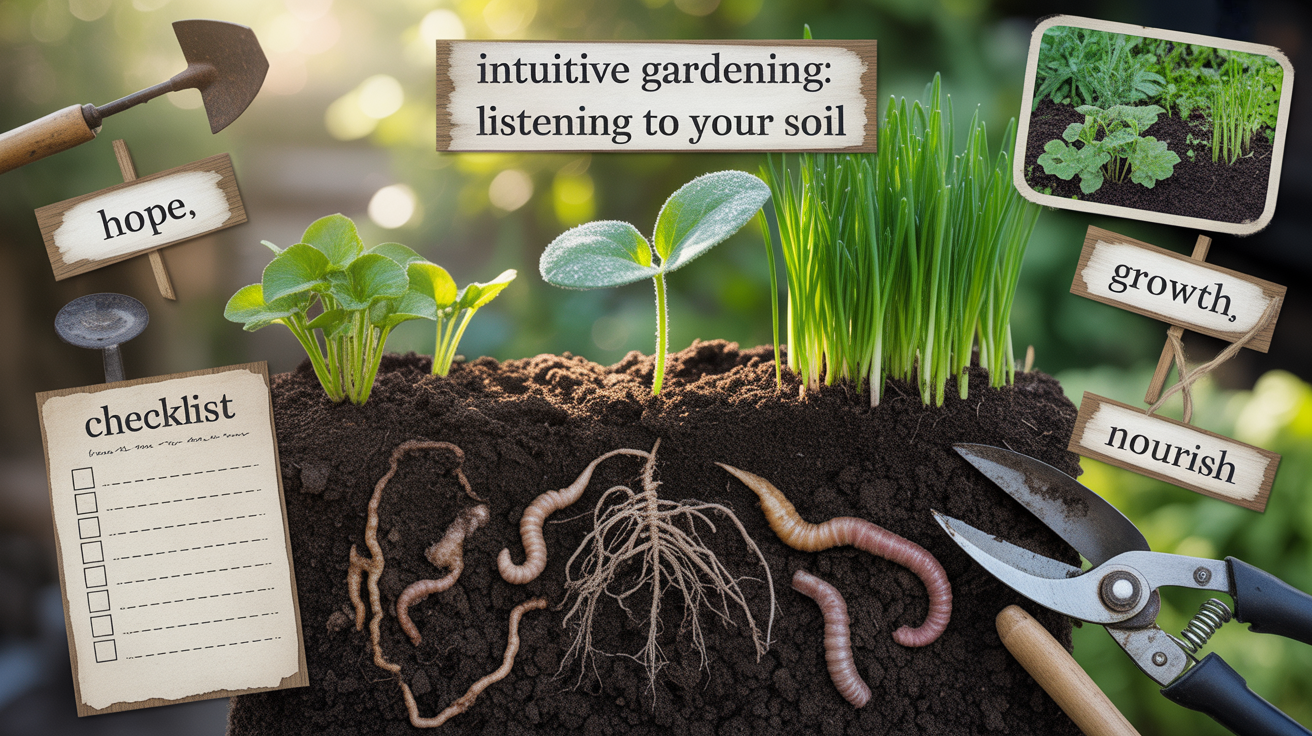
Intuitive Gardening: Listening to Your Soil 🌿
A Gentle Start: The Soil’s Silent Language
In every garden season, the soil speaks. Not in words, but in a language of texture, scent, and subtle shifts—the way it smells after one of our Houston summer thunderstorms, the way water sinks in or runs off across our clay-heavy beds, the feel of earth between your fingers on a cool November morning. Here in Zone 9, our soil has its own particular dialect, shaped by our subtropical heat, our heavy rains, and the red clay that’s been speaking to gardeners in this region for generations.
Listening to your soil is an act of attentive stewardship. It’s not simply about diagnosing problems—it’s about honoring what God has already placed in your care. In the quiet of fall, when the rush of summer planting is behind you and the gentle rest of our mild winter approaches, there is space to truly hear what the soil is saying. Like prayer, this listening requires us to slow down, remove distractions, and incline our hearts and hands toward what matters. Soil listening is a practice in being present—both to the needs of creation and to the voice of the Creator.
Why “Listening” to Your Soil Matters 🌱
There’s wisdom in paying attention to what’s beneath our feet. When we take time to truly observe our soil, we move from reactive gardening to responsive stewardship. We prevent small issues from becoming season-ending disasters. We build a relationship with the living world beneath our raised beds and in-ground plots that deepens each year.
Sanda’s Garden Wisdom: In our Houston heat, soil temperatures can swing dramatically from season to season. Listening to your soil helps you catch the moments when conditions shift—like that first cool spell in late September when your soil finally exhales after months of heat stress. That’s when your soil is speaking its readiness for fall planting.
Free eBook
Rooted in Grace
A Christian guide to intuitive gardening — the whole book, free. Tell me where to send it and it’s yours in a minute.
When we listen carefully, we prevent reactive gardening by noticing early shifts and addressing issues before they become full-blown crises. We strengthen plant health because healthy, living soil supports strong, resilient plants able to withstand our seasonal challenges—the intense summer heat, the occasional freeze, the sporadic dry spells between deluges. We build seasonal wisdom as patterns we notice this year become guideposts for next year’s planting calendar. Most importantly, we honor God’s design by practicing stewardship that’s grounded in awareness, not assumption, and we deepen our own spiritual connection through the act of listening itself.
Step-by-Step: Practicing Soil Awareness
1. Observe Moisture Levels
Press your fingers into the soil—this is where real knowing begins. Is it cool and damp, dry and crumbly, or heavy and waterlogged? Your soil’s “feel” tells you when to water, when to rest, and when to protect. Just as the Holy Spirit searches the depths of our hearts, a gardener’s touch searches the depths of the soil to discern what is needed.
In our Houston clay, you might notice that even after rain, the top two inches dry quickly while deeper layers stay damp for days. This uneven drying is your soil’s way of telling you something important about its structure and drainage patterns.
2. Feel the Texture
Every soil type has a story to tell. Gritty soil drains quickly but may need organic matter to hold nutrients and moisture. Silky soil holds water well but can compact under our heavy spring rains; it benefits greatly from compost mixed throughout. Sticky soil is rich but slow to drain; mulch and raised bed structure become your allies here.
Here’s what I’ve learned from years of gardening in this region: healthy loam feels like a promise—it holds together but crumbles easily in your palm, ready to nourish life. Most Houston suburban soils start on the stickier side, so we spend a season or two amending and building. That’s not a failure; it’s just the conversation our soil needs us to have.
3. Notice the Smell
A living soil has an earthy aroma that tells you beneficial microbes are at work—that rich, almost sweet smell after you’ve turned compost into the beds. Sour, stagnant smells warn of suffocation, often from compaction or overwatering. In our humid climate, this can happen faster than you’d expect, especially in areas where water pools or where we’ve compacted the soil over years of foot traffic.
4. Watch How Water Behaves
Water pooling on the surface means compaction. Fast infiltration that leaves the surface dry within minutes may point to sandy, low-retention soil. Slow absorption that eventually gets there suggests clay with room for improvement. In each case, the soil is telling you exactly what to amend and how to care. Our Zone 9 clay typically falls into the slow-absorption category, which is actually an asset once you work with it rather than against it.
5. Look for Life
Earthworms, beetles, millipedes, and fine fungal threads are signs of a healthy underground community. Dig into a healthy area of your garden bed and count how many creatures you find in a handful of soil. A silent, lifeless soil needs revival—through compost, mulch, and gentle care. These aren’t just nice-to-haves; they’re indicators that your soil ecosystem is awake and working.
6. Track Changes Over Time
Keep a dedicated section in your garden journal for soil notes—seasonal smells, textures, moisture patterns, and life signs. Over years, these observations form a map of your soil’s story. I note things like “September 15: soil finally cool to the touch” or “February: found three earthworm castings near the compost edge” or “August: clay still compacted near the shed despite spring amendments.” These seemingly small observations become invaluable guides.
Sanda’s Zone 9 Note: Our Houston summer rains can be deceptive. Two inches of rain might seem like plenty, but if it falls in an hour, much of it runs off rather than soaking in. Check your soil moisture two or three days after a heavy rain—you might be surprised to find it drier than you expected at the root level. This teaches you where your real water retention issues are hiding.
Seasonal Listening in Fall 🗺
Fall is a hinge season here in Zone 9—a moment to listen closely before the quieter months of winter. Our “fall” looks different than other regions, but the listening practice matters just as much.
| Early Fall (Aug-Sept) | What to Notice | Your Response |
| Soil still holds summer’s heat; temps often 85°F+ | Check moisture daily, especially for newly planted seedlings and transplants | Water deeply but allow soil surface to dry between waterings; watch for heat stress signs |
| Mid Fall (Oct) | Cooler days slow evaporation; soil finally starting to cool | Let the soil breathe; avoid unnecessary watering unless conditions are truly dry |
| Late Fall (Nov-Dec) | Protect structure and life—cover crops, mulch, or compost blankets keep roots active | Establish mulch layers, plant cover crops like crimson clover, allow soil rest while maintaining microbe activity |
Reading Your Soil: A Quick Reference for Zone 9 Gardeners
| Soil Signal | What It Means | What to Do |
| Earthy, fresh smell | Active microbial life; healthy decomposition | Continue current practices; you’re doing well |
| Sour, rotten smell | Anaerobic conditions; poor drainage or compaction | Add mulch, reduce watering, consider raised beds or soil amendment |
| Sticky, hard to crumble | High clay content; compaction likely | Amend with compost; avoid working soil when wet |
| Water pools on surface | Compaction or poor slope; water runoff | Create mounding or raised areas; add compost to improve structure |
| Dries dust-dry quickly | Low organic matter; sandy or depleted soil | Increase mulch layer; add 2-3 inches of compost; water more frequently |
| Earthworms, beetles, fungal threads visible | Thriving soil ecosystem; excellent soil health | Maintain mulch, limit chemical inputs, continue feeding soil life |
Integrating Intuition and Wisdom 🌿
Intuitive gardening doesn’t mean abandoning knowledge—it means combining observation with what you’ve learned, both from experience and from others. It’s the marriage of head and hands, of science and spirit.
When I run my fingers through my soil in October and feel that first hint of coolness, I’m drawing on intuition built from years of noticing. But I’m also drawing on knowledge: I know that cooler soil temperatures mean my beneficial microbes slow down but don’t die, that my nitrogen-fixing bacteria are still working, that my fall crops’ roots will penetrate deeper. The intuition says, “This feels right.” The knowledge says, “Yes, and here
The Spiritual Practice of Soil Attentiveness
There’s something profoundly grounding about kneeling at the soil’s edge with nothing but your senses and an open heart. In our fast-paced world, where we’re constantly reaching for quick fixes and external solutions, soil listening invites us into a different rhythm—one of patience, presence, and trust in processes we can’t fully control. When you pause to press your fingers into the earth, to notice the weight of moisture or the crumble of good structure, you’re engaging in an ancient practice that saints and farmers have known for centuries: that the soil teaches us about surrender.
In Zone 9, where our growing season stretches long and our weather swings can be dramatic, this attentiveness becomes even more vital. We learn to trust the soil’s signals rather than rigid calendar dates. That first cool night in late August when the earth finally releases some of its summer heat—that’s not something you read in a guide. That’s something your hands and intuition learn to recognize. It’s the difference between gardening *by* the soil and gardening *with* it.
This kind of listening also teaches humility. You realize quickly that despite your best plans, the soil has its own needs, its own timeline, its own ecosystem that operates on principles far more complex than any single gardener’s intentions. That clay bed that stays soggy no matter what you do? It’s not punishing you; it’s telling you something true about what that spot needs. That corner where earthworms seem to gather even when other areas are bare? It’s showing you what thriving looks like. The soil becomes a teacher, and we become students willing to learn at its pace rather than our own.
Building a Seasonal Soil Journal for Zone 9 🌍
One of the most powerful intuitive gardening practices is keeping a simple soil journal—not a formal record with charts and graphs (unless that feeds your soul), but a living document where you jot observations as seasons unfold. In Zone 9, where our seasons don’t follow the traditional spring-summer-fall-winter rhythm, this becomes especially valuable. We have extended growing windows, erratic cold snaps, and heat patterns that shift year to year. Your journal becomes a conversation with your particular soil across multiple seasons.
What might you notice and record? The date when your soil first feels cool enough to work with comfort in late summer—August 28th one year, September 2nd the next. The smell after a September rain versus a June downpour, and what those differences tell you about microbial activity at different times. The first appearance of earthworm castings in fall, usually around late October in our region. The way your soil’s color shifts from a darker, richer tone after amendments to a lighter, more compacted appearance if you’ve walked through a bed repeatedly. The relationship between heavy clay areas and where water pools after our afternoon thunderstorms.
Your journal doesn’t need to be elaborate. A simple notebook in your potting shed, or even notes in your phone with photos of your soil in different conditions, becomes an invaluable archive. When you’re wondering whether your bed needs more water in October, you can flip back and see that last year on this date, your soil was holding moisture well and you backed off watering. When that mysterious wilting appears on a transplant, you can check your notes and see that this spot tends to hold water longer than others, suggesting a drainage issue rather than drought. Over time, patterns emerge that are specific to *your* soil, in *your* microclimate, in *your* Houston suburb—more valuable than any generic gardening advice.
Translating Soil Signals Into Zone 9 Action
The beauty of soil listening is that it moves you from guesswork to responsive action. In our region, where we’re often gardening against the clock (Will that freeze come? Will our late-spring heat arrive early?), this responsiveness becomes critical. Your soil is constantly sending signals about what it needs and what your plants need—you just have to learn the dialect.
Consider the signal of compacted soil, which is nearly universal in Houston suburbs. Over years of foot traffic, mowing around beds, and the natural settling of soil under our heavy rains, beds become compressed. A compacted bed feels dense and hard when dry, slick and airless when wet. Your intuitive response might be to deeply amend it in fall (our best amendment season), working compost and aged bark into the top four to six inches without digging so deep that you disturb the root zone further. Or you might decide to build a raised bed on top, converting that space to a better-draining growing environment. Your soil is telling you what’s needed; you’re simply listening and responding.
Or consider the signal of drainage trouble—water that pools on the surface or sits heavy and slow to absorb. In our Houston clay, this is extremely common. Your intuitive response might include creating gentle mounding to encourage runoff away from the wet spot, adding a layer of mulch to slow evaporation and protect the soil structure underneath, or in extreme cases, installing a French drain or rain garden to redirect water flow. Again, the soil is communicating; you’re simply translating its language into action tailored to your specific conditions.
The seasonal table earlier shows how to listen through fall in Zone 9, but the principle applies year-round. In summer, your soil tells you through moisture loss and compaction stress that it needs protection. In spring, it might signal readiness for planting through temperature shifts and the emergence of early earthworm activity. In winter, even our mild Zone 9 winter, it’s communicating through cover crop growth and microbial slowdown what kind of rest and renewal it needs. Every signal deserves a response grounded in attentiveness rather than assumption.
Listening to soil is, ultimately, an exercise in reverence. When we take time to know the earth beneath our feet—to press our fingers into it, to smell its stories, to notice the small creatures living their lives in its depths—we
Ready to Go Deeper in the Garden?
If this article resonated with you, you might be ready for something more than tips.
- Download the FREE Rooted in Grace eBook
- Get the Rooted in Grace Print Book on Amazon
- Join Rooted Reset
- Follow on Instagram – @southernsoils
- Save on Pinterest – @southernsoilsunshine
- Join on Facebook – Southern Soil Sunshine
“The garden is not just a place to grow plants – it is a place to grow yourself.”
Free eBook
Before you go — the book is yours
Rooted in Grace: A Christian Guide to Intuitive Gardening. No cost, no catch. Read it on any device, at whatever pace the season allows.





2 Comments