
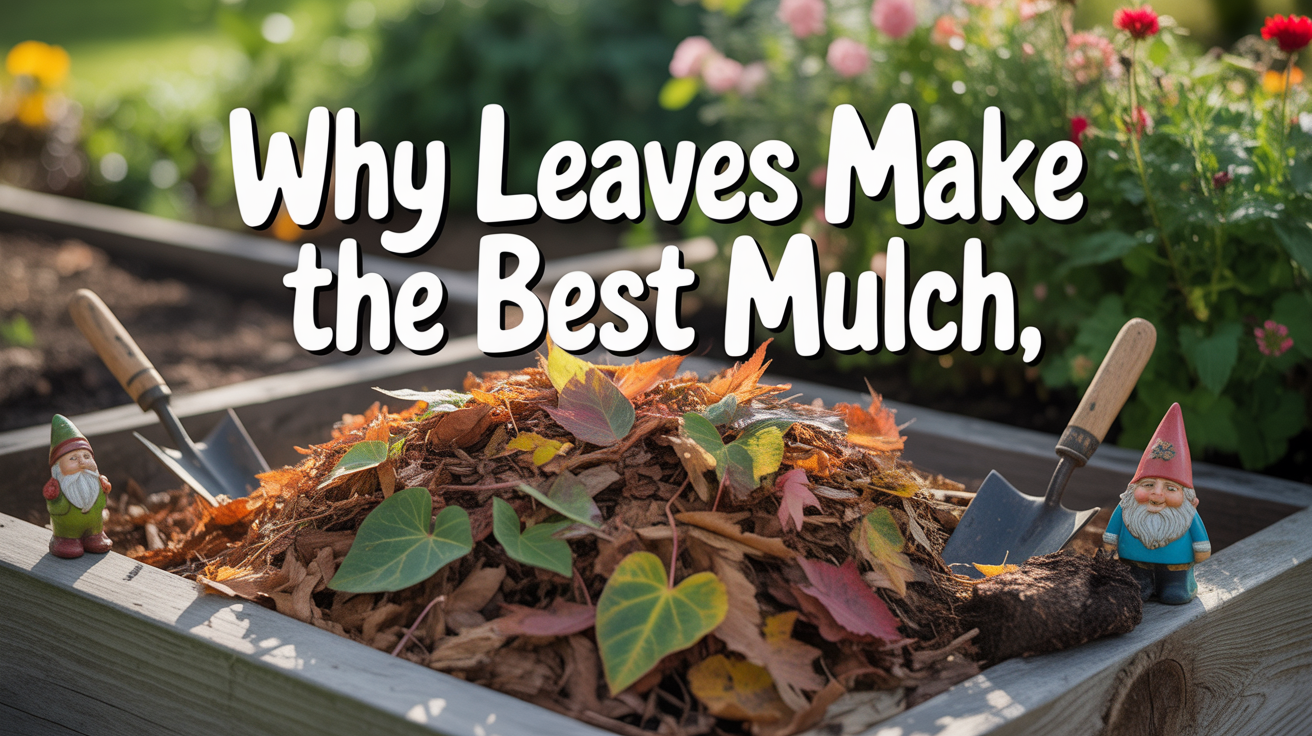
Why Leaves Make the Best Mulch
Some of the links on this website are affiliate links, which means that if you make a purchase through these links, I may earn a small commission at no additional cost to you. As an Amazon Associate, I earn from qualifying purchases. I only recommend products I genuinely trust and believe will bring value to my readers. Also, some of the content was created with strategic use of AI tools. For more information, please visit the Privacy Policy page. Thank you for supporting my blog and helping me continue to provide valuable content.
🍂 Every fall, I remember the rhythm of my childhood in Romania: raking leaves with my parents until the piles were taller than I was, then jumping into them with squeals of joy. Back then, I thought of leaves as work—or at best, play. I didn’t yet understand their quiet wisdom.
Years later, as a suburban gardener in Houston, I finally realized what my parents knew but never said: leaves are not waste. They are a gift. A covering. A mulch sent straight from God’s hand to feed the soil.
I’ll be honest—when I first started gardening in America, I made the rookie mistake of bagging up my leaves and leaving them for the trash truck. Now it almost makes me ache to think of the nutrients I threw away! Over time, I’ve learned that leaves are the best mulch I could ask for: abundant, free, and perfectly designed to nourish the soil.
Leaves remind me of grace. Just as God covers us in His mercy, protecting and nurturing us, leaves fall to cover the soil—protecting, feeding, and holding moisture close. They are an annual parable whispered through the trees.
🌱 1. What Makes Leaves Excellent Mulch
Mulch is any material that covers the soil to protect it. Leaves do this job better than almost anything else.
Key Benefits:
- Moisture retention: Leaves keep soil cool and damp, reducing watering needs.
- Weed suppression: A thick layer blocks sunlight from weed seeds.
- Soil enrichment: As they decompose, leaves add organic matter and nutrients.
- Erosion control: Leaves shield soil from pounding rain and harsh sun.
- Habitat creation: They shelter beneficial insects, worms, and microbes.
Leaves are God’s ready-made mulch—no plastic bags, no trips to the store. Just abundance falling from the trees at your feet.
🍁 2. Preparing Leaves for Mulching
While you can toss whole leaves straight onto your beds, you’ll get the best results with a little prep:
- Shredding: Run over leaves with a mower or use a leaf shredder. Shredded leaves break down faster and won’t mat as easily.
- Drying: Slightly dry leaves spread more easily than soggy piles.
- Mixing: Combine different leaf types (oak, maple, pecan) for a balanced mulch.
👉 Tip: Keep a pile of bagged leaves handy year-round. In Zone 9, where heat is intense, you’ll want extra mulch for summer beds.
🌿 3. Best Times and Places to Use Leaf Mulch
When to Apply
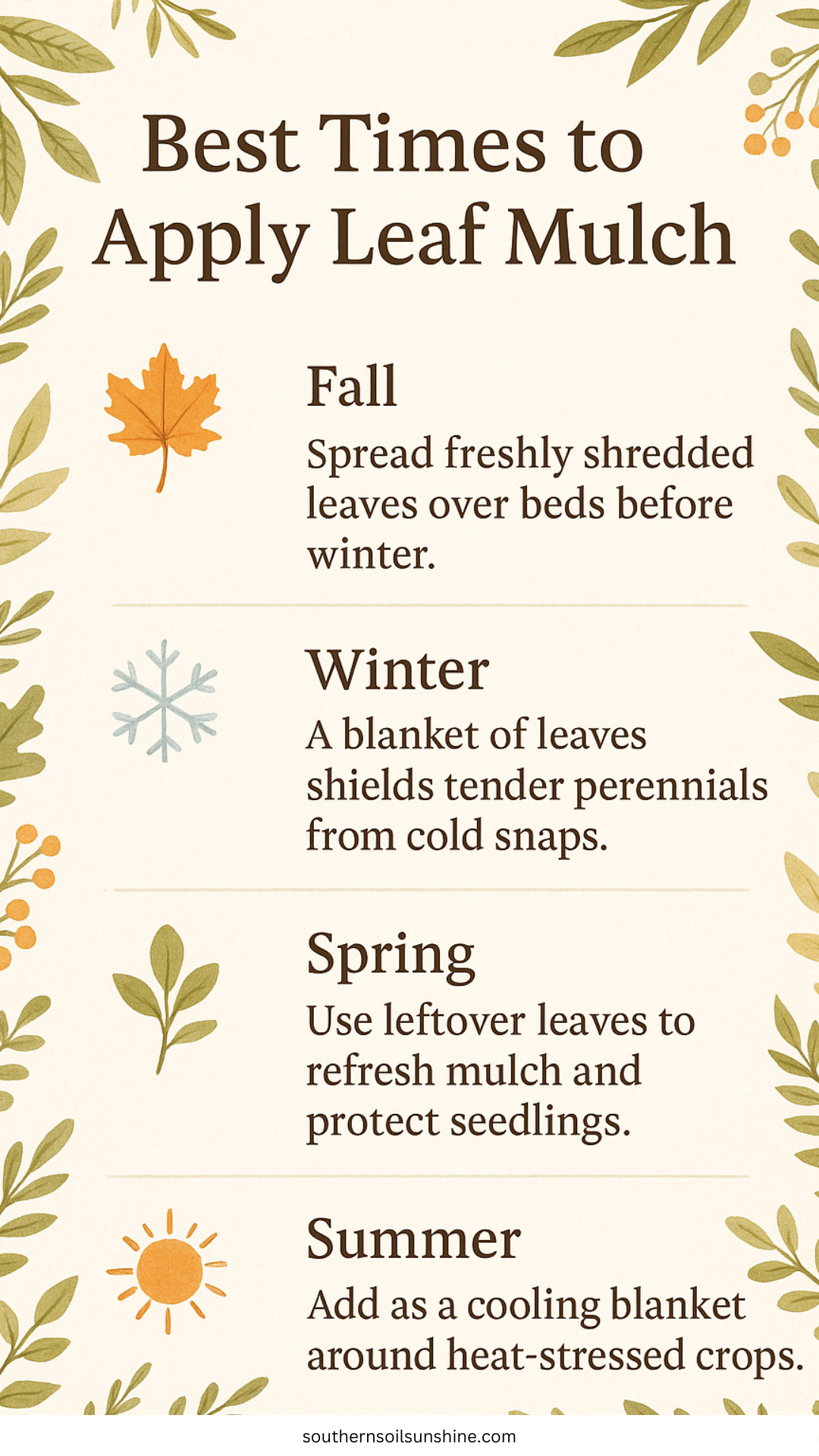
- Fall: Spread freshly shredded leaves over beds before winter.
- Spring: Use leftover leaves to refresh mulch and protect seedlings.
- Summer: Add as a cooling blanket around heat-stressed crops.
Where to Apply
- Vegetable beds: Place around tomatoes, peppers, beans, and herbs.
- Flower borders: Roses, zinnias, and perennials thrive under leaf mulch.
- Fruit trees: Leaves protect shallow feeder roots.
- Containers: Shredded leaves keep potted soil from drying too quickly.
Leaves are adaptable. Whether in large garden beds or tiny balcony pots, they work.
🌞 4. Seasonal Adjustments in Zone 9
- Fall Abundance: Leaves are everywhere! Stockpile them now.
- Winter Protection: A blanket of leaves shields tender perennials from cold snaps.
- Spring Prep: Pull back leaf mulch to let soil warm, then tuck it back once seedlings establish.
- Summer Survival: In our blazing Zone 9 summers, 2–3 inches of leaf mulch can mean the difference between wilted plants and thriving ones.
God sends leaves in season. If we steward them wisely, they’ll carry us through the whole year.
🐛 5. Supporting Soil Life
Leaves aren’t just a covering—they’re a feast for soil life. Worms pull bits underground. Microbes break them down into humus. Beetles and fungi make a home beneath them.
In a way, mulching with leaves is partnering with God’s design: you provide the covering, and creation takes care of the rest.
When I spread leaves on my beds, I often pause, press my hands into the mulch, and thank God for the hidden life beneath. It’s humbling to know that unseen creatures are working with me.
🛠️ 6. Common Questions & Concerns
- Won’t leaves steal nitrogen?
Only if you till them in raw. As surface mulch, they enrich rather than deplete. - Do leaves attract pests?
Not usually. A thick mat may harbor slugs, but shredded mulch reduces this risk. - Can I use black walnut leaves?
Best avoided—they contain juglone, which inhibits plant growth. - What if I only have a few leaves?
Even a thin layer helps! Combine with other mulches if needed.
🌼 7. Creative Ways to Use Leaves Beyond Mulch
- Leaf mold: Aged, decomposed leaves make a rich soil conditioner.
- Compost booster: Add to your pile as “browns.”
- Pathways: Spread along garden paths to suppress weeds and create a rustic look.
- Wildlife corners: Leave a pile in a corner for pollinators and overwintering insects.
🙏 8. Faith Lessons from Falling Leaves
Every year, trees let go of their leaves without fear. They release, trusting that spring will bring new growth.
In our lives, too, there are seasons of letting go—habits, burdens, even good things that have run their course. As the leaves cover and protect the soil, God’s grace covers and protects us in seasons of rest.
Isaiah 61:3 speaks of God giving us “a crown of beauty for ashes.” I think of leaves as a crown for the soil: covering, protecting, and preparing it for beauty to come.
📝 Journal Prompt ✍️
What is God inviting you to “let fall” in your life right now? How might that release become a covering of grace for the next season?
🌿 Grace Note
Friend, remember: leaves are not trash. They are treasure. God designed them to fall, to cover, to nourish. When you spread them over your soil, you are practicing abundance—trusting that the small, quiet gifts at your feet are enough.
May the rustle of leaves remind you of grace, falling fresh and free, covering every bare place in your life.
✨ Free Printable
👉 Download your Leaf Mulch Quick-Start Guide. It includes:
- Best times to apply leaf mulch
- Step-by-step shredding & spreading tips
- Zone 9 seasonal checklist
- A reflection space for your journal
🌻 Related Garden Wisdom
- Related: How to Use Leaves for Garden Mulch
- Related: Direct Sowing Lettuce in Summer? Yes, But Smartly
- Related: Crop Rotation Ideas for Backyard Gardens
- Related: How to Maximize a Small Garden in the Heat
🎧 Podcast & 📖 eBook Mentions
For more encouragement, listen to The Rooted in Grace Podcast, where I share rhythms of soil and soul. And if you’d like to root your life in intuitive, grace-filled gardening, explore my eBook Rooted in Grace: A Christian Guide to Intuitive Gardening.
🍁 Final Thoughts
Every autumn, leaves fall quietly. They don’t ask for applause. They simply cover the earth, doing the work God designed them to do.
In the same way, our small, faithful acts—choosing mulch over waste, choosing trust over fear—become coverings of grace in our lives.
So next time you hear the rustle of leaves underfoot, don’t reach for the trash bag. Reach for the rake. Gather them as a gift. Spread them as a blessing. And let your garden remind you: what looks like loss is often the beginning of renewal.


7 Comments